-
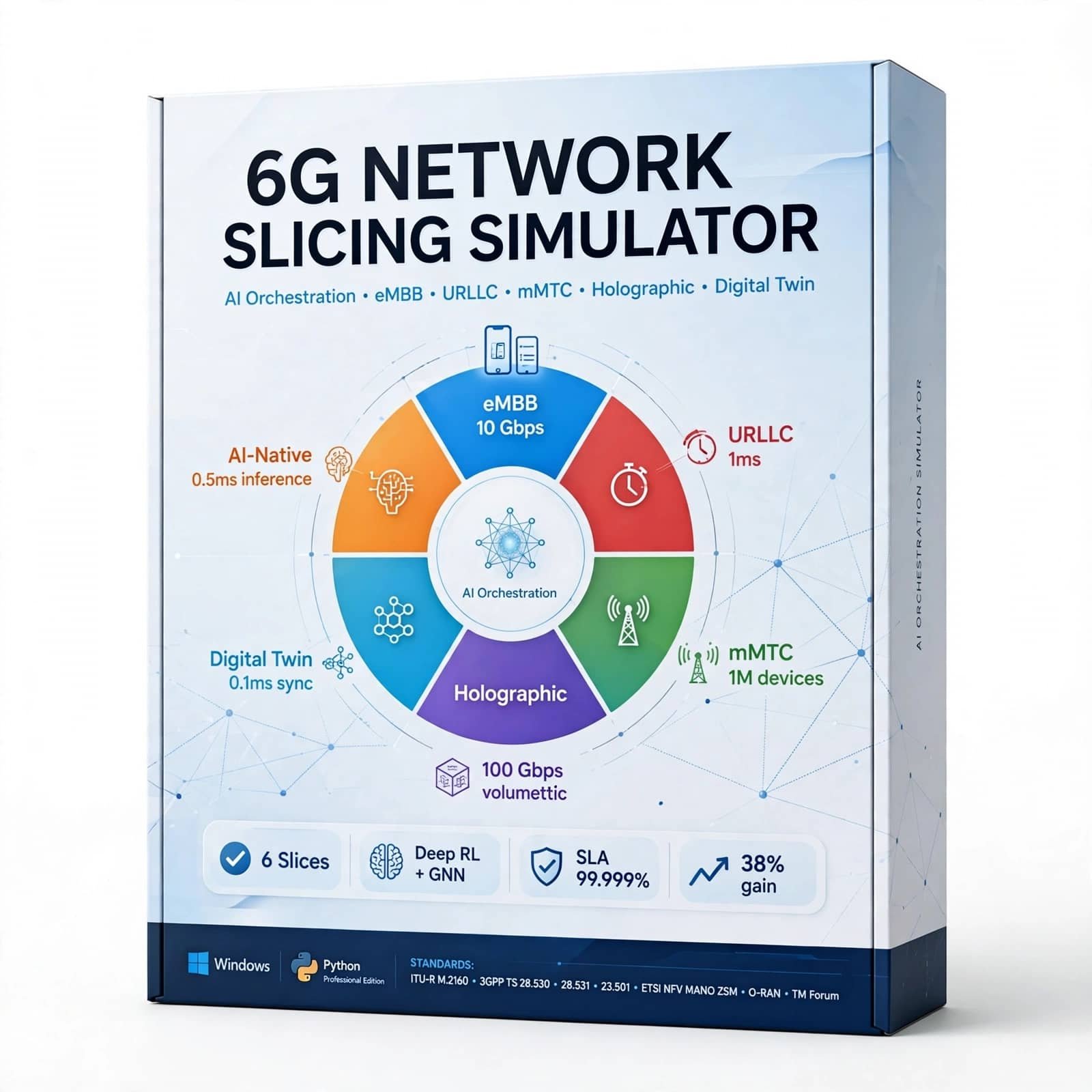
6G Network Slicing Simulator is a software-based simulation tool for studying network slicing concepts in next-generation 6G wireless communication systems. It provides a practical environment for exploring virtual network slices, resource allocation, quality-of-service management, traffic requirements, network optimization, and intelligent network orchestration. Designed for researchers, telecom engineers, students, and developers, the simulator is suitable for 6G research, academic projects, algorithm development, and network-management experimentation.
Original price was: ₹249,999.00.₹24,999.00Current price is: ₹24,999.00. -
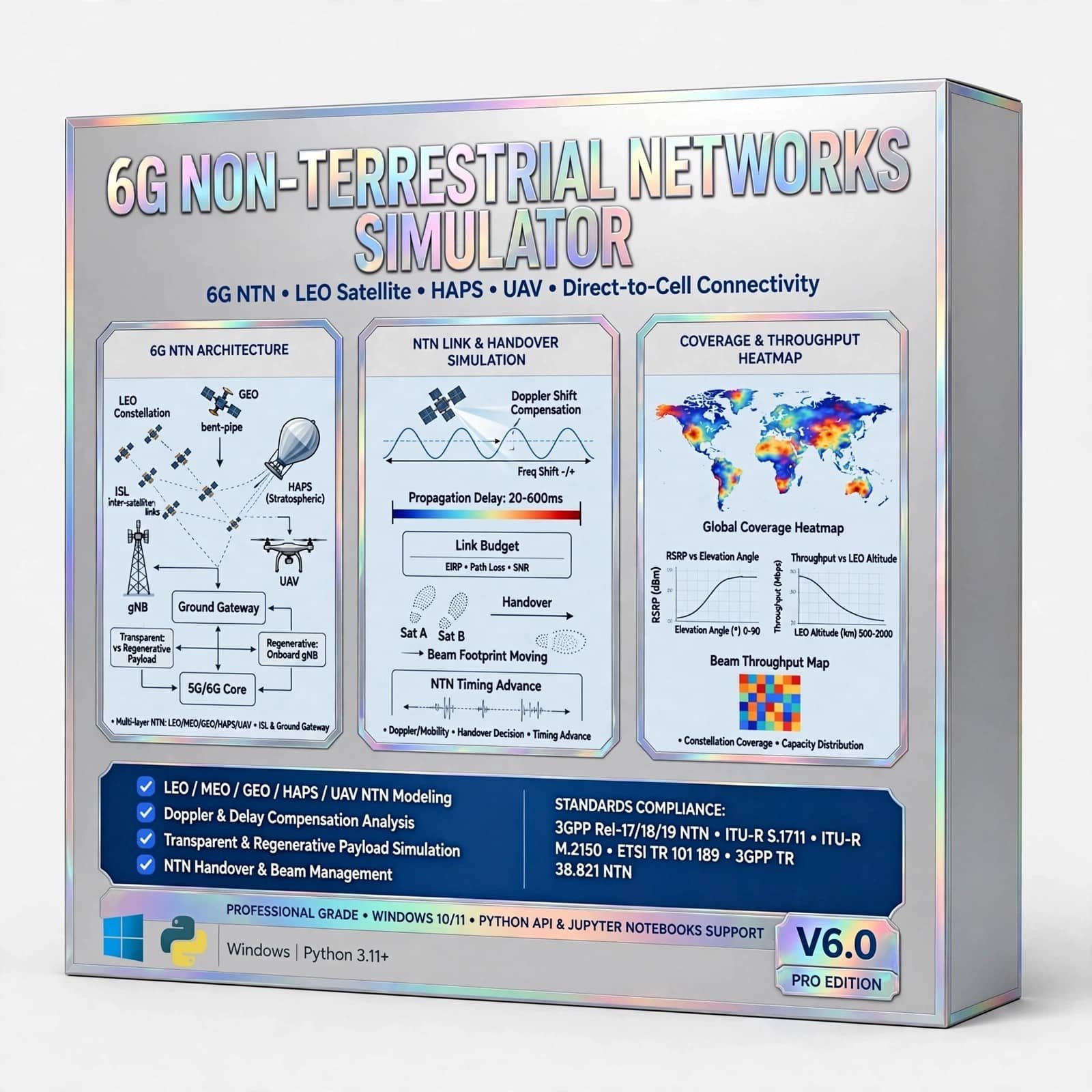
6G Non-Terrestrial Networks Simulator i.e NTN Simulator with Python is a Python-based simulation platform for modeling next-generation wireless communication systems involving satellites, high-altitude platforms, unmanned aerial vehicles, and other non-terrestrial communication infrastructure. The simulator can be used to study 6G network architecture, satellite communication, coverage, mobility, latency, connectivity, resource allocation, and network performance in integrated terrestrial and non-terrestrial environments.
Original price was: ₹399,999.00.₹39,999.00Current price is: ₹39,999.00. -
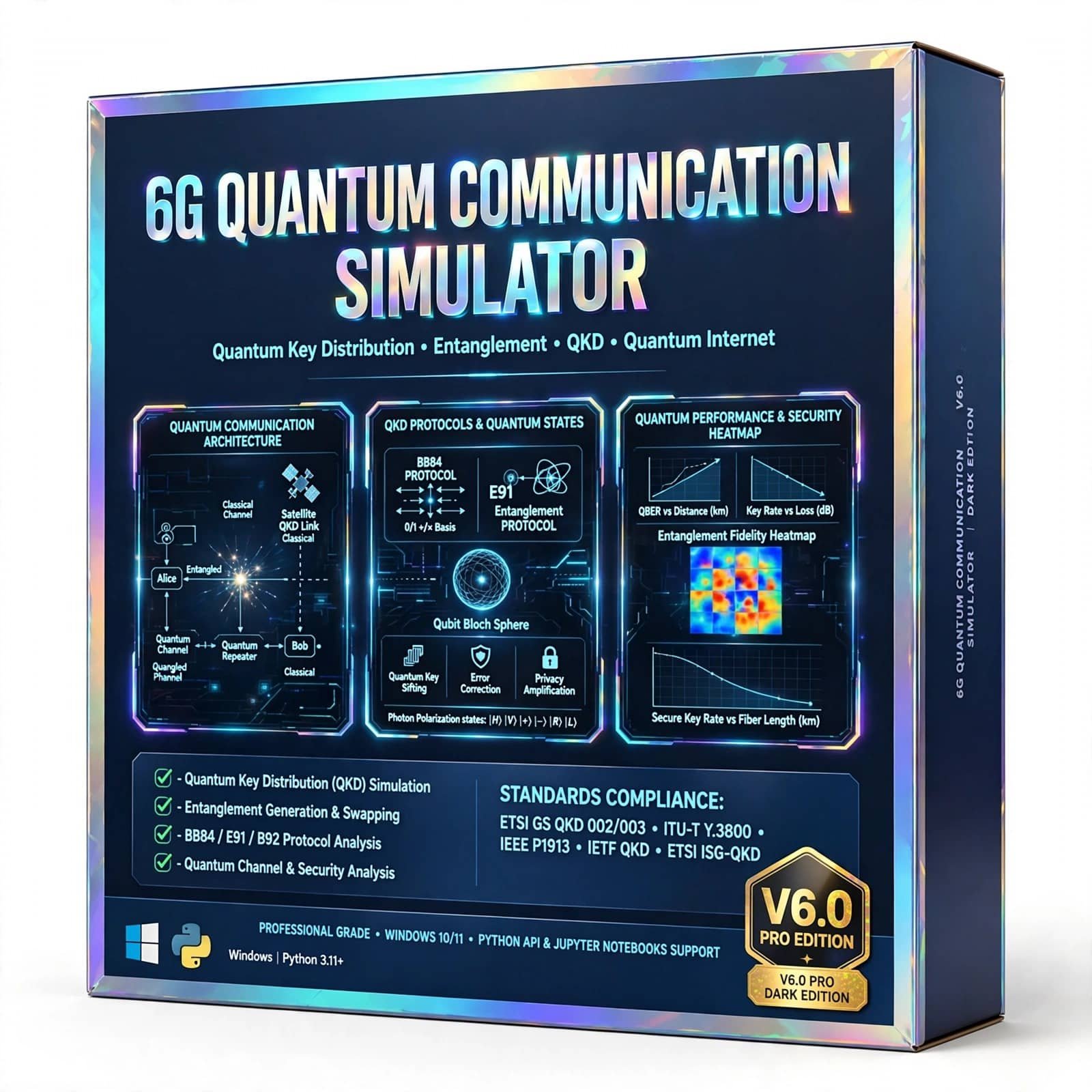
6G Quantum Communication Simulator with Python is a Python-based simulation platform for modeling and analyzing quantum-enabled communication concepts for next-generation 6G networks. It can be used to study quantum communication channels, quantum key distribution, qubits, quantum states, quantum noise, secure communication, transmission performance, and the integration of quantum technologies with future wireless communication systems.
Original price was: ₹599,999.00.₹59,999.00Current price is: ₹59,999.00. -
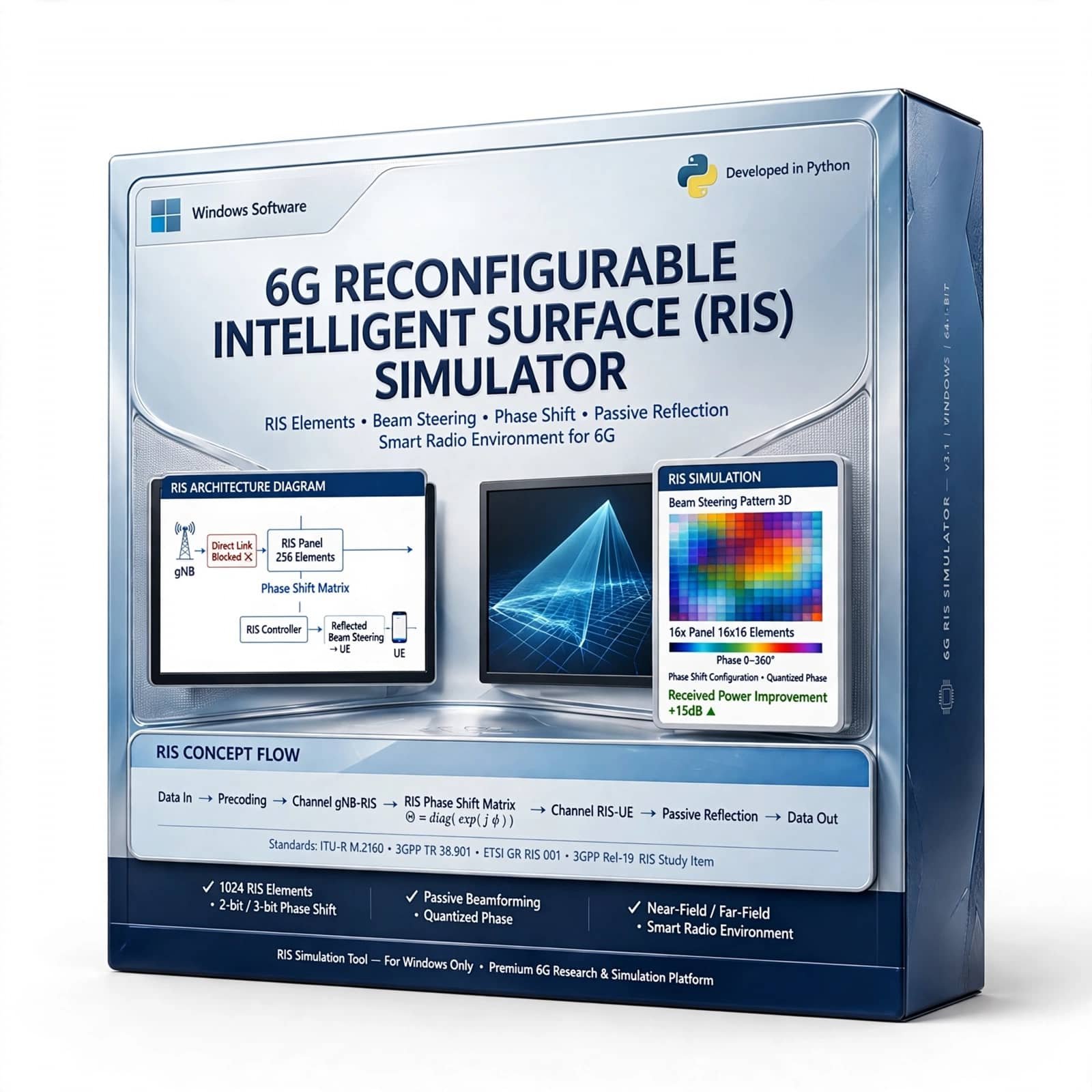
6G RIS Simulator is a software-based simulation tool for exploring Reconfigurable Intelligent Surfaces (RIS) and their potential applications in next-generation 6G wireless communication systems. It is designed for researchers, wireless communication engineers, students, and developers working on RIS-assisted communication, beamforming, wireless channel modeling, signal processing, and intelligent radio environments. Use the simulator for academic projects, algorithm development, research, and experimentation with advanced wireless communication scenarios.
Original price was: ₹399,999.00.₹39,999.00Current price is: ₹39,999.00. -
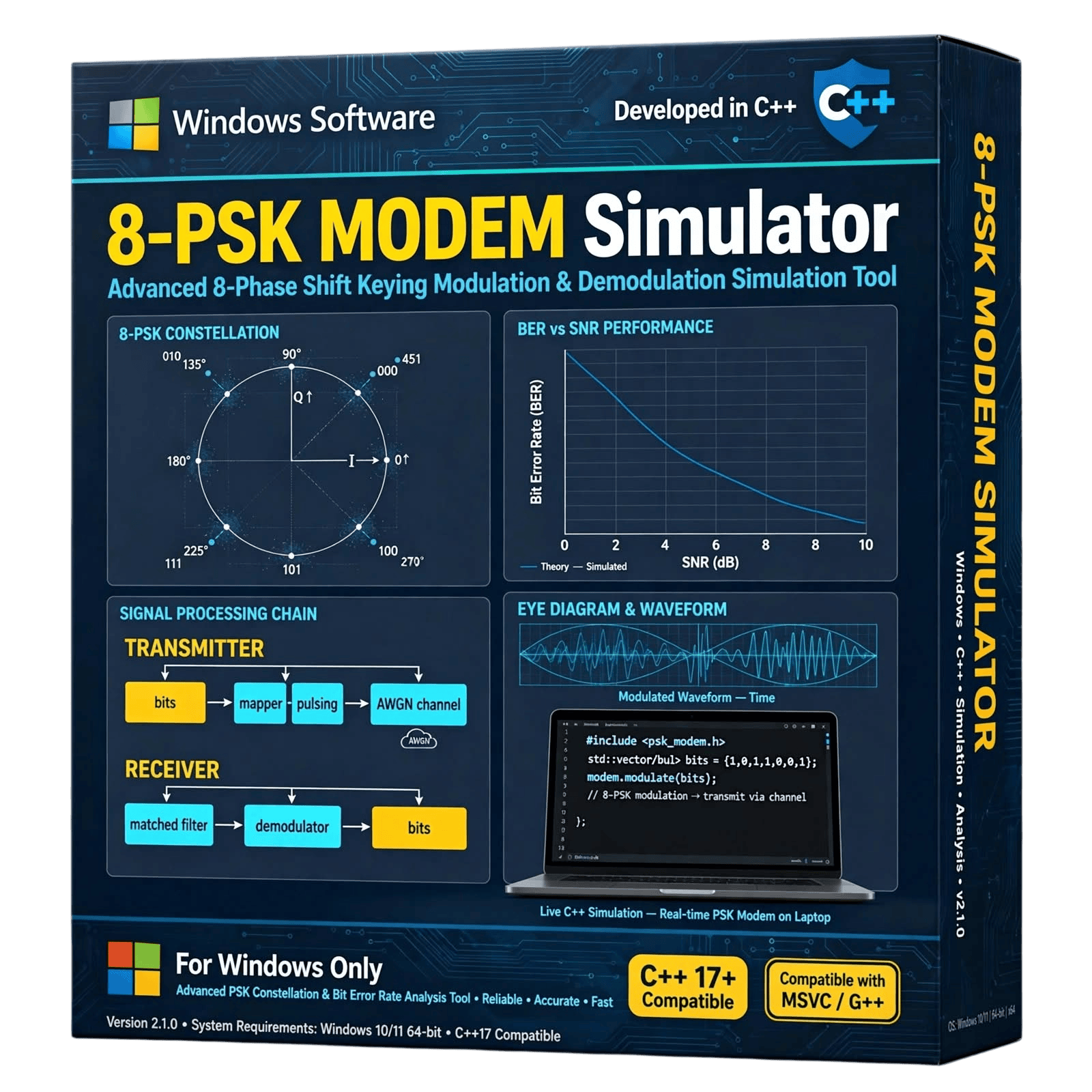
The 8-PSK Modem Simulator is a C++-based software solution designed for students, researchers, communication engineers, developers, and academic institutions working with digital communication and modulation techniques. The simulator provides a practical environment for studying 8-Phase Shift Keying (8-PSK) modulation and demodulation concepts.
Developed using C++, the simulator can be used for digital communication research, academic projects, laboratory demonstrations, signal-processing studies, experimentation, and educational purposes.
Available for sale as a software product. Contact us for pricing, licensing, technical specifications, customization, and purchase information.
₹1,999.00 -
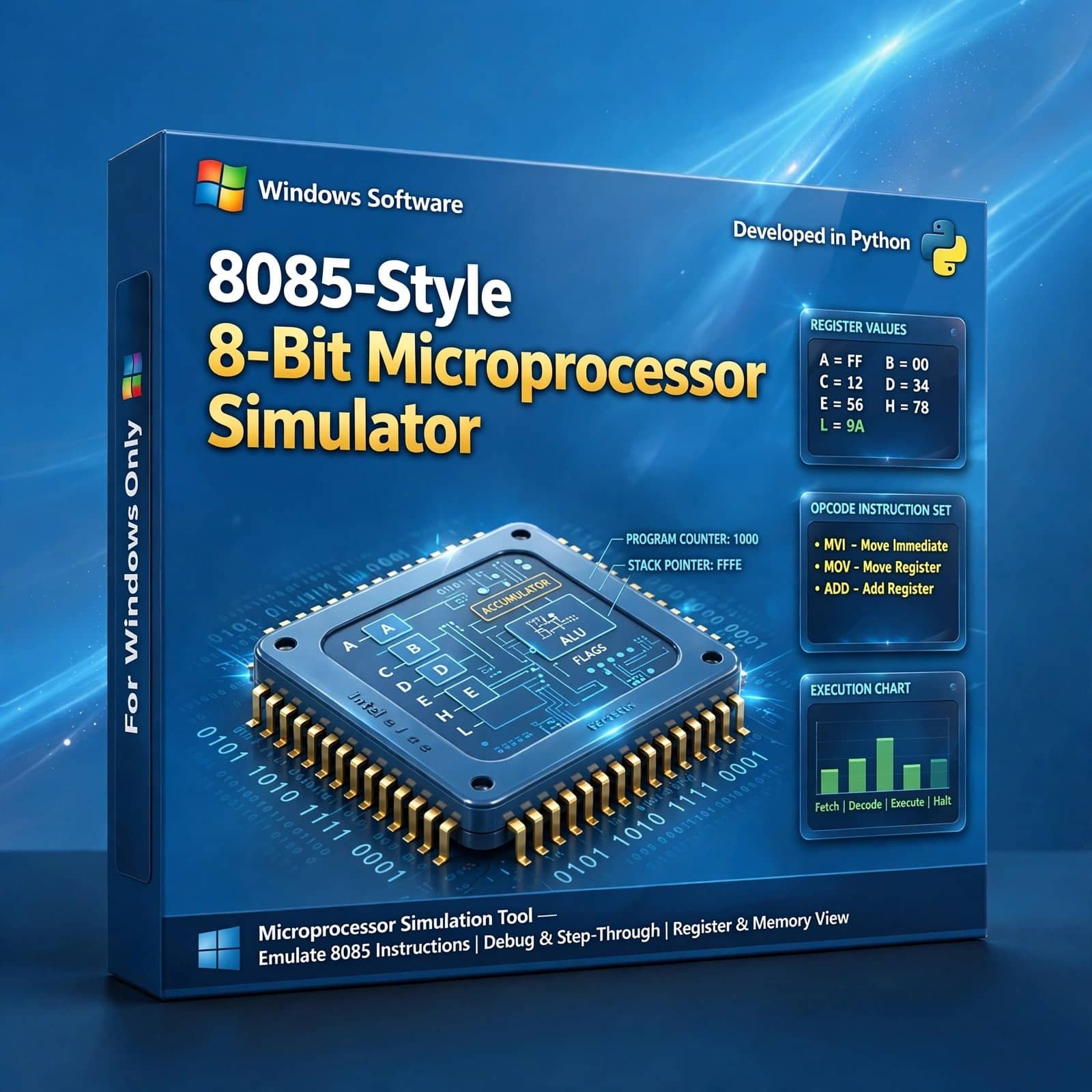
Master assembly language and computer architecture with this light, powerful 8085-style 8-bit Microprocessor Simulator built in Python.
Designed for computer science students, educators, and electronics enthusiasts, this software emulates an 8-bit CPU core, registers, flags, memory mapping, and the core 8085 instruction set. Run custom assembly code, step through execution in real time, inspect register states, and debug hardware concepts directly from your desktop.
- Pure Python Implementation: Cross-platform, customizable, and easy to extend.
- Interactive Visual Debugging: Monitor A, B, C, D, E, H, L registers, Stack Pointer, and Program Counter in real time.
- Comprehensive Instruction Set: Supports data transfer, arithmetic, logical, branching, and stack operations.
- Instant Digital Download: Includes full source code, sample assembly programs, and installation setup guide.
Original price was: ₹750.00.₹100.00Current price is: ₹100.00. -
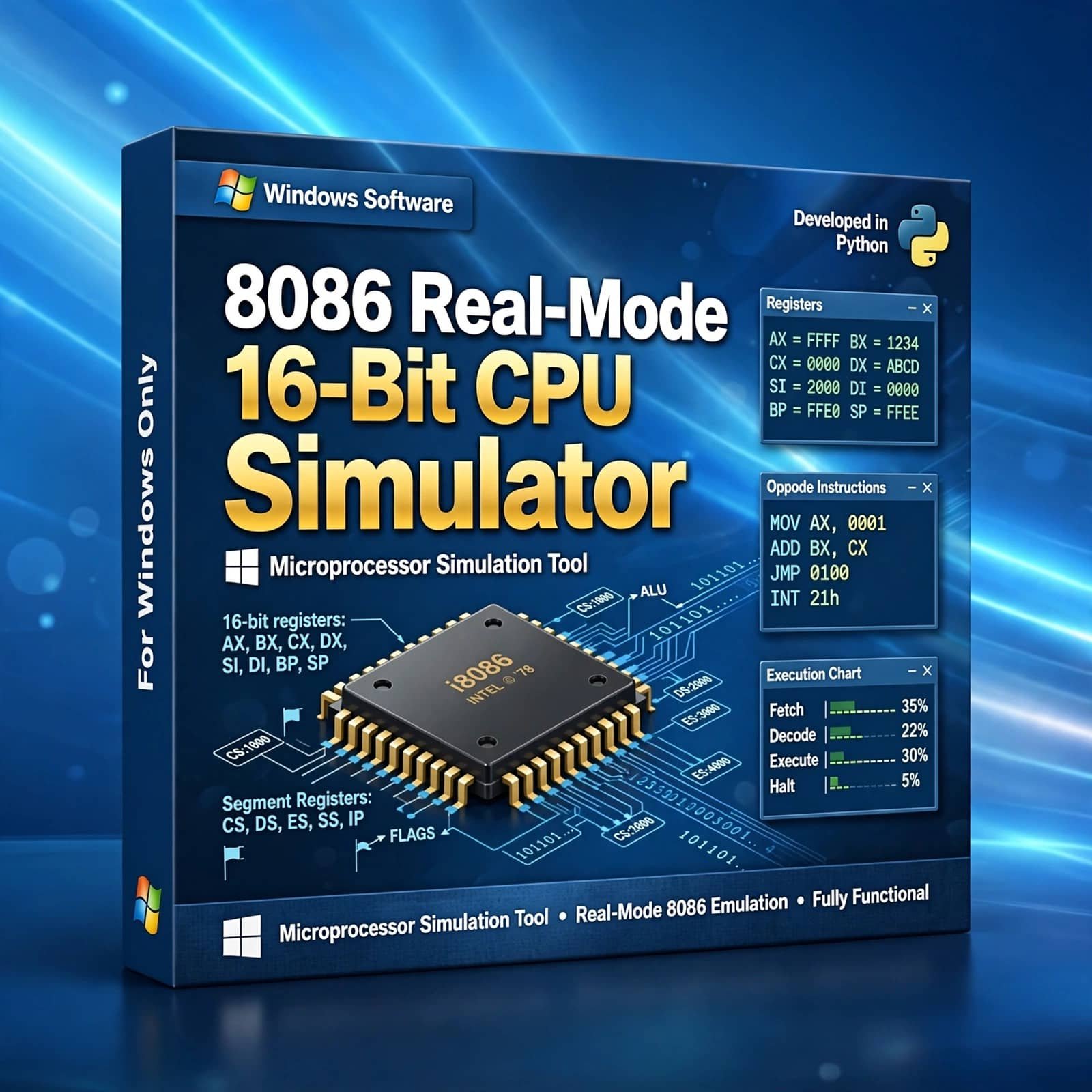
Experience the 8086 Real-Mode 16-bit CPU Simulator, a Python-powered educational tool designed for students, developers, and computer architecture enthusiasts. Simulate instruction execution, visualize registers, memory, and flags, and gain hands-on mastery of Intel’s legendary 8086 processor. Perfect for learning assembly language, debugging, and teaching microprocessor concepts.
Original price was: ₹750.00.₹100.00Current price is: ₹100.00. -
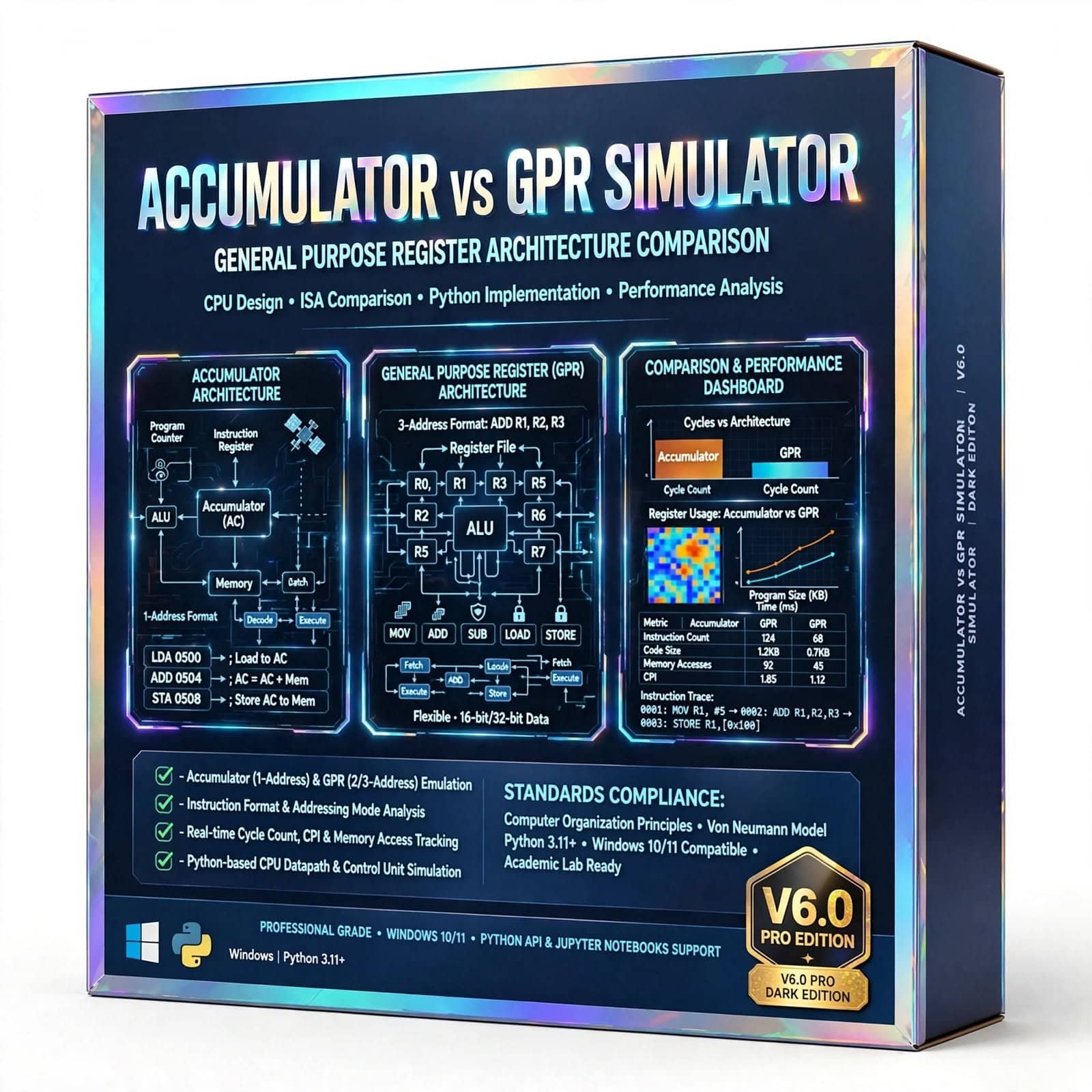
Python-based Accumulator vs General Purpose Register Simulator for Windows. Compare 1-Address vs 3-Address CPU architecture, cycles, CPI & performance in real-time. An educational Python simulator that compares Accumulator (1-Address) vs General Purpose Register (2/3-Address) CPU architectures side-by-side. Tried to emulates datapath, register file, ALU & memory, runs the same program on both machines, and provides performance analysis – instruction count, code size, memory access, CPI, and execution time graphs. Built in pure Python for Windows 7+. Ideal for Computer Architecture labs and understanding modern CPU design evolution.
Original price was: ₹750.00.₹100.00Current price is: ₹100.00. -
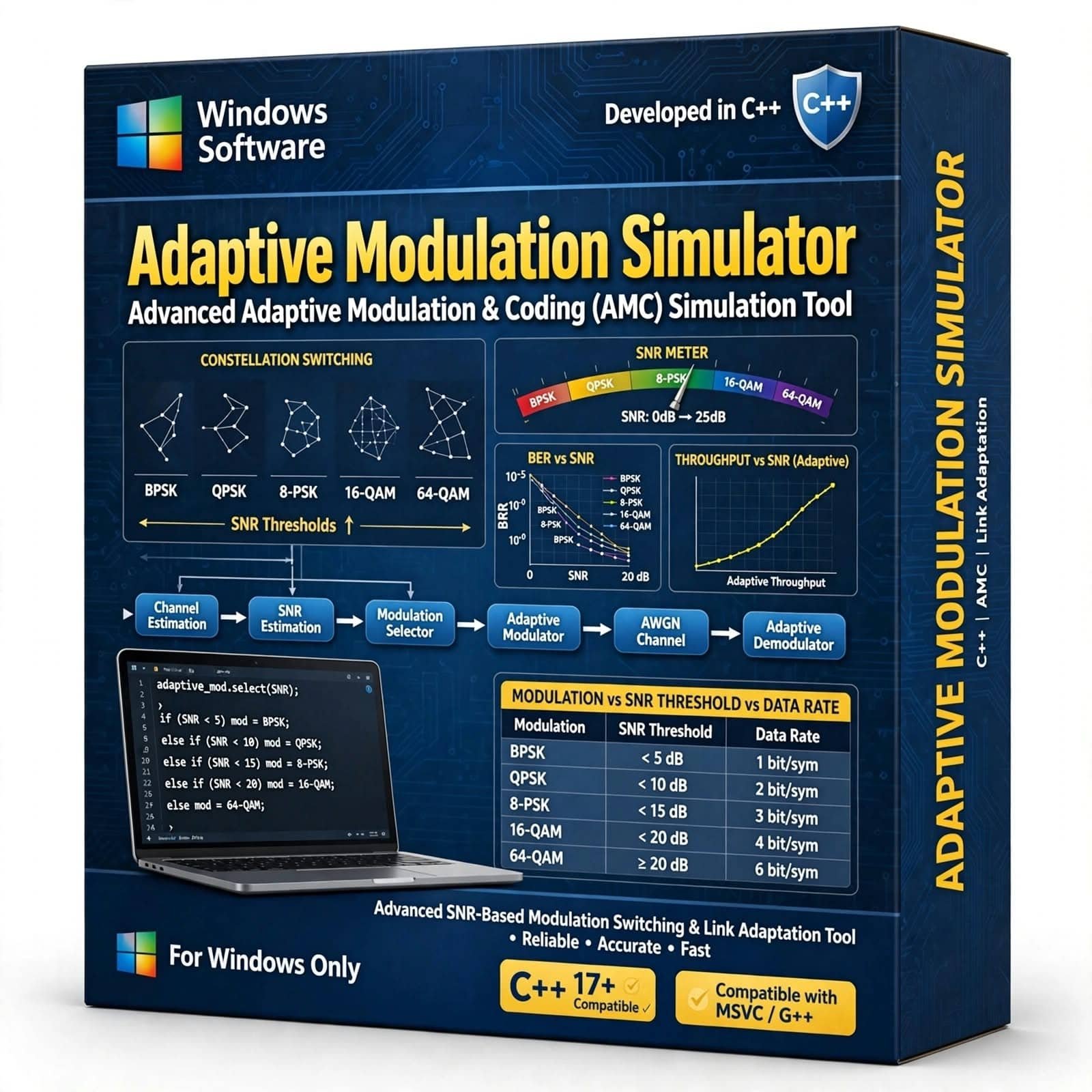
The Adaptive Modulation Simulator is a C++-based software solution designed for students, researchers, engineers, developers, and telecommunications professionals working with digital communication and adaptive modulation techniques. The simulator provides a practical environment for studying how modulation schemes can be selected or adapted according to communication-system conditions.
Developed using C++, the simulator is suitable for academic projects, digital communication research, laboratory demonstrations, signal-processing studies, algorithm development, and educational applications.
Available for sale as a software product. Contact us for pricing, licensing, technical specifications, customization, and purchase information.
₹1,999.00 -
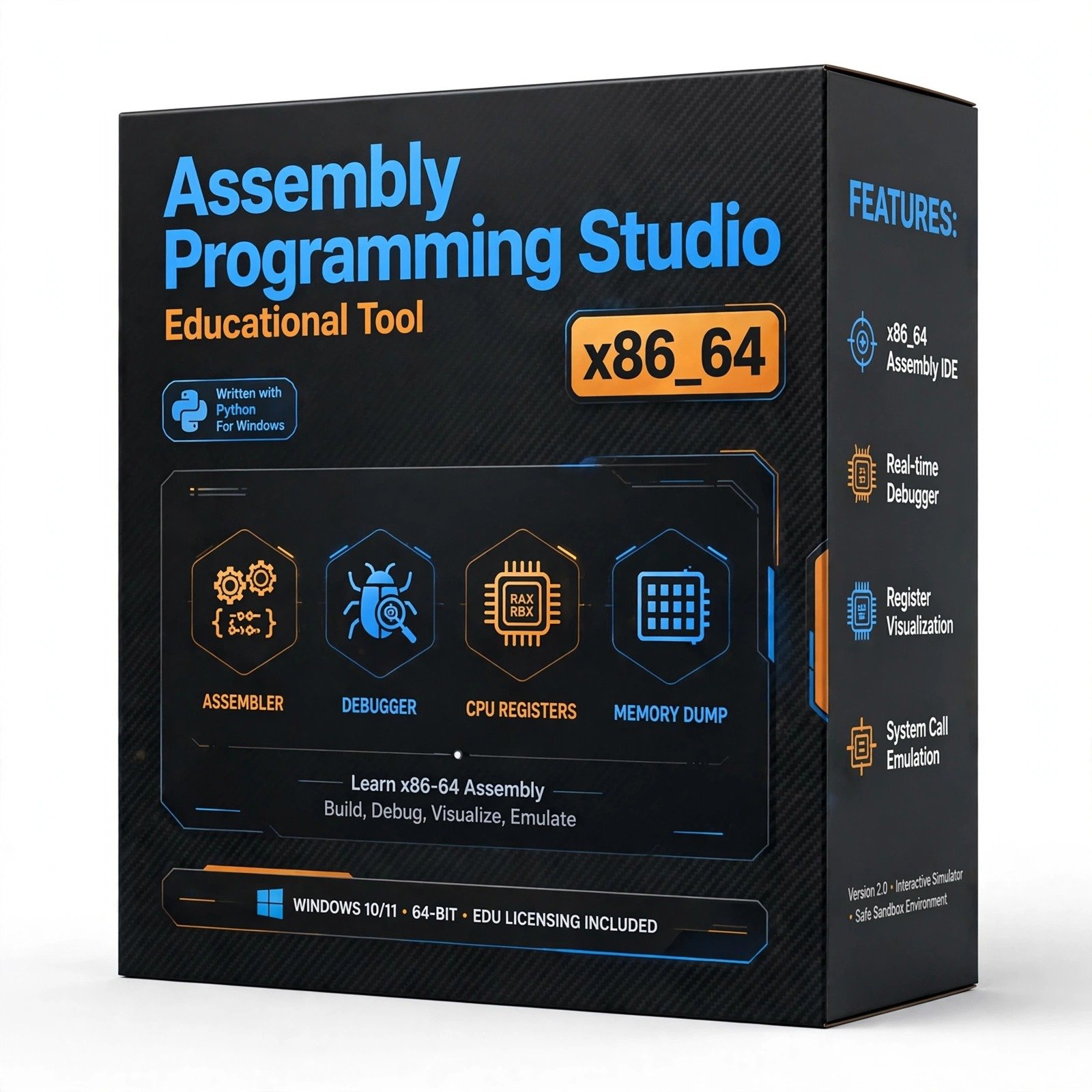
Assembly Programming Studio for x86-64 with Python is a practical software environment for learning, writing, testing, and experimenting with x86-64 assembly programming. Designed for students, developers, educators, and computer architecture enthusiasts, it combines assembly-language concepts with Python-based tools for exploring registers, memory, instructions, addressing modes, control flow, and low-level program execution. Ideal for assembly programming courses, computer architecture projects, reverse-engineering education, and low-level software development.
Original price was: ₹750.00.₹250.00Current price is: ₹250.00. -
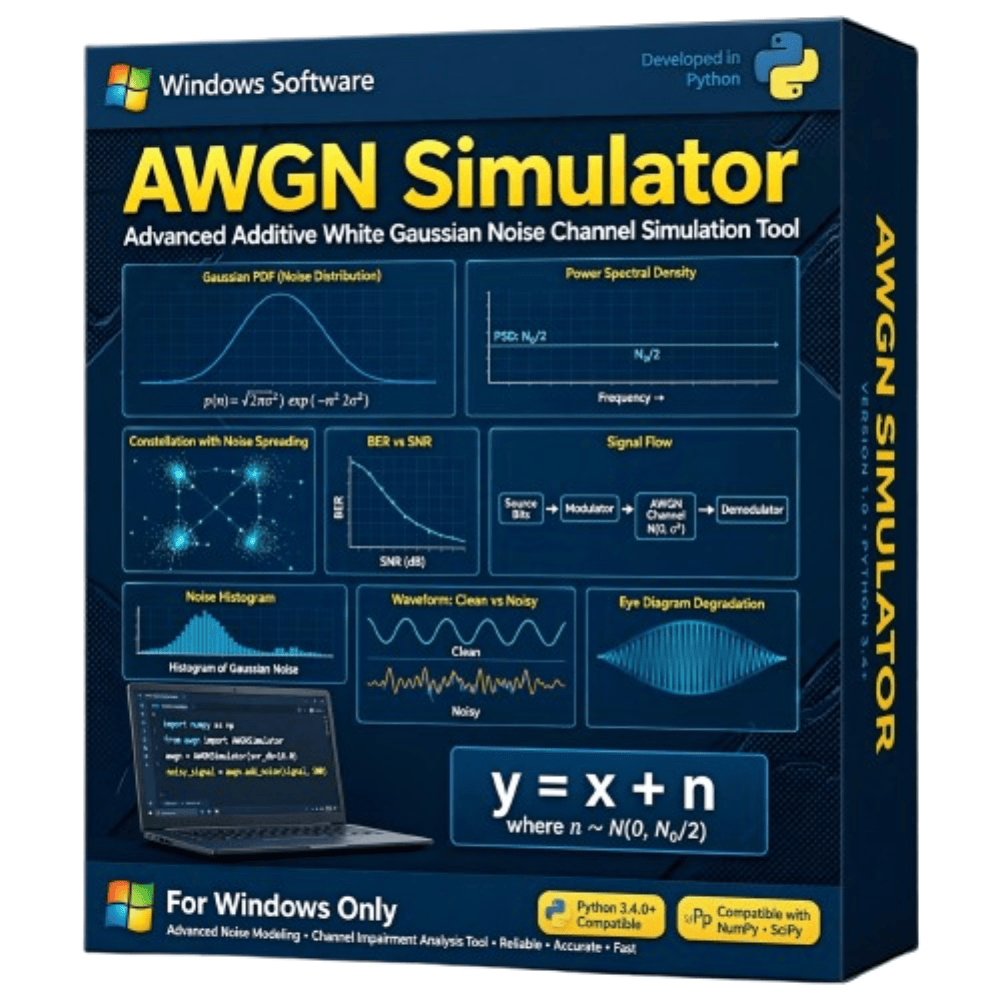
An AWGN Simulator i.e. Additive White Gaussian Noise Simulator developed using Python is a software-based tool designed to demonstrate and analyze the effect of Gaussian noise on digital communication signals. The simulator generates a clean input signal, adds controlled amounts of AWGN, and displays both the original and noisy signals for comparison. Users can vary parameters such as noise power, signal-to-noise ratio (SNR), and signal characteristics to observe how communication quality changes under different noise conditions. Python libraries such as NumPy, SciPy, and Matplotlib can be used for signal generation, noise modeling, numerical processing, and graphical visualization but this is purely from tkinter only. The simulator is useful for understanding fundamental concepts of wireless and digital communication systems.
₹1,999.00 -
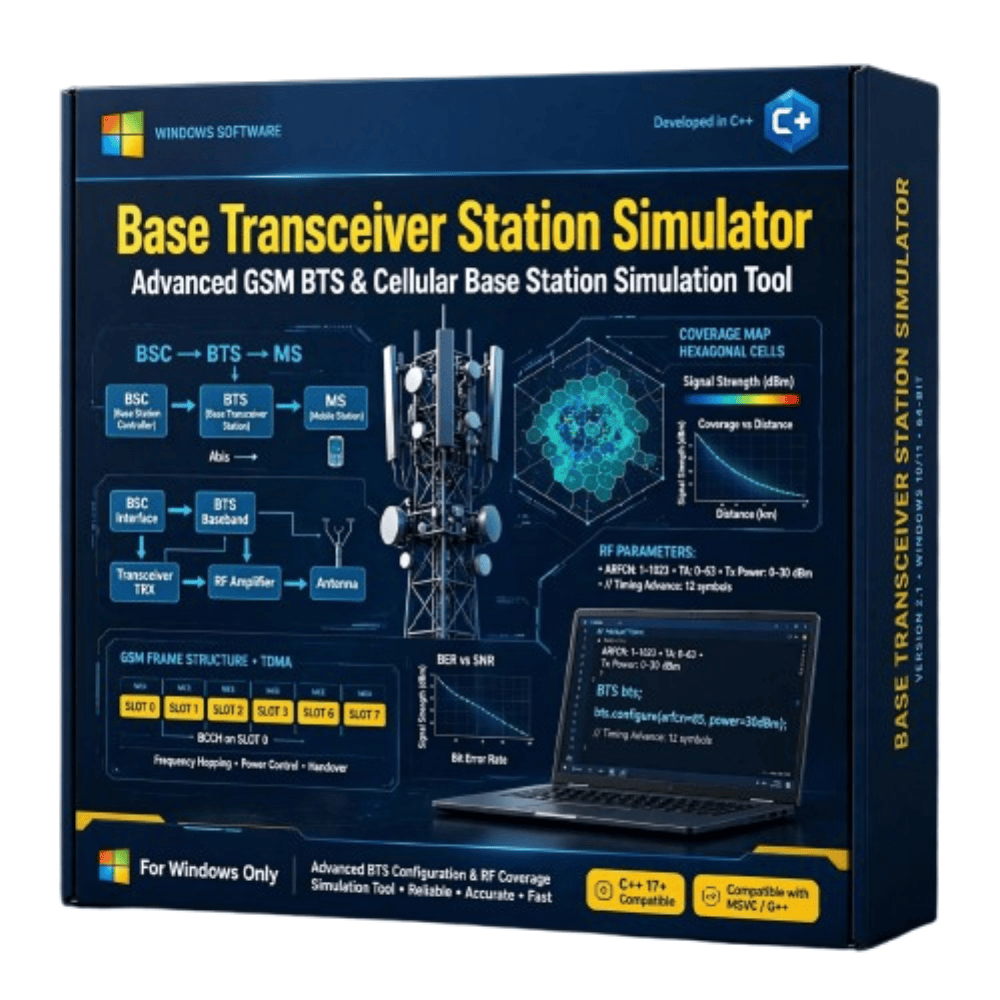
The Base Transceiver Station Simulator Using C++ is a practical cellular communication simulation project designed to demonstrate the basic operation of a BTS in a mobile communication network. Developed using C++, the simulator can model communication between mobile users and a base station, including signal handling, user connectivity, channel allocation, and basic network operations. This BTS Simulator project is suitable for engineering students, researchers, and learners working on GSM, wireless communication, cellular networks, and C++ programming projects.
Original price was: ₹750.00.₹250.00Current price is: ₹250.00.