
New
67% Off

6G Network Slicing Simulator

Original price was: ₹750.00.₹250.00Current price is: ₹250.00.
In Stock6G Network Slicing Simulator is a software-based simulation tool for studying network slicing concepts in next-generation 6G wireless communication systems. It provides a practical environment for exploring virtual network slices, resource allocation, quality-of-service management, traffic requirements, network optimization, and intelligent network orchestration. Designed for researchers, telecom engineers, students, and developers, the simulator is suitable for 6G research, academic projects, algorithm development, and network-management experimentation.
Description
6G Network Slicing Simulator
Future wireless networks are expected to support a wide range of applications with very different communication requirements. A single physical network infrastructure may need to support high-data-rate applications, massive numbers of connected devices, low-latency services, mission-critical communication, and emerging intelligent services simultaneously.
Network slicing is an important concept for creating logically separated virtual networks over shared physical infrastructure. The 6G Network Slicing Simulator provides a software-based environment for studying, modeling, and experimenting with network slicing concepts in next-generation wireless communication systems.
Designed for researchers, telecom engineers, network developers, students, and educators, the simulator can be used to explore resource allocation, traffic management, slice configuration, quality-of-service requirements, and network optimization through controlled simulation scenarios.
Explore Network Slicing Concepts
Network slicing enables a shared network infrastructure to be logically divided into multiple virtual network environments. Each slice can be configured to support particular application requirements, traffic characteristics, or service-level objectives.
A simulation environment makes it possible to study how different slices coexist within the same network and how resources can be assigned according to changing requirements.
The 6G Network Slicing Simulator provides a practical way to investigate these concepts without requiring a complete commercial telecom network or large-scale physical infrastructure.

Study 6G Network Architecture
6G research involves the investigation of advanced wireless architectures, intelligent networking, automation, distributed computing, sensing, and highly adaptive communication systems.
Network slicing can play an important role in managing heterogeneous services over shared infrastructure. Simulation allows researchers to investigate how network resources may be distributed among different logical network slices under varying traffic and service conditions.
Users can develop scenarios that represent different types of network services and examine how changes in traffic or resource availability affect individual slices.
Resource Allocation and Management
One of the central challenges in network slicing is allocating shared network resources among multiple virtual slices. Resources may include communication capacity, processing capabilities, bandwidth, or other network resources depending on the modeled architecture.
A simulation platform provides an environment for developing and evaluating resource-allocation strategies. Researchers can investigate different approaches and observe their impact on slice performance.
This makes the simulator useful for research into resource management, scheduling, optimization, and network orchestration.
Quality of Service Simulation
Different applications can have different requirements for throughput, latency, reliability, availability, and other service characteristics. Network slicing provides a framework for creating service-specific logical networks.
The 6G Network Slicing Simulator can be used to explore how different requirements can be represented within a simulation and how network resources can be managed to accommodate multiple services.
This is particularly useful for studying the relationship between traffic demand, resource allocation, and service performance.
Useful for 6G Research Projects
The simulator can support a variety of research and development activities related to next-generation wireless networks.

Typical applications include:
- 6G network slicing simulation
- Network resource allocation research
- Virtual network simulation
- Quality-of-service studies
- Network optimization
- Slice management research
- Traffic management experiments
- Network orchestration studies
- Wireless network research
- Academic and university projects
Academic and Educational Applications
Network slicing involves concepts from wireless communication, networking, virtualization, optimization, and resource management. Students can use simulation to explore these concepts in a controlled environment.
For academic projects, the simulator can help demonstrate how multiple logical services can operate over shared network infrastructure. Students can create different traffic scenarios, examine resource requirements, and study how network management strategies influence simulated system behavior.
It can therefore be useful for undergraduate projects, postgraduate research, dissertations, laboratory assignments, and classroom demonstrations.
Algorithm Development and Prototyping
Network slicing research frequently involves optimization and intelligent resource-management algorithms. Simulation provides a convenient environment for testing these algorithms before considering deployment in a real network.
Researchers can experiment with resource-allocation strategies, scheduling methods, slice-management policies, traffic models, and optimization techniques. Simulation also makes it possible to repeat experiments under controlled conditions and compare different configurations.
Study Dynamic Network Conditions
Real-world communication networks experience changing traffic patterns and resource demands. Network slicing systems need to adapt to these changes while maintaining appropriate service characteristics.
A simulator allows users to create dynamic scenarios in which traffic demand or available resources change over time. These experiments can be used to investigate how network slices respond to changing conditions and how resource-management strategies can be adapted.
Explore Intelligent Network Management
Future wireless networks are expected to incorporate increasingly automated network management and optimization. Network slicing can provide a foundation for dynamically allocating resources to different services.
The 6G Network Slicing Simulator can be used to explore these concepts and develop simulation models for intelligent network management, optimization, and orchestration.
Key Benefits
- Software-based 6G network slicing simulation
- Useful for virtual network and slice management studies
- Supports resource allocation experimentation
- Suitable for quality-of-service research
- Useful for network optimization and orchestration
- Helps study multiple services over shared infrastructure
- Suitable for traffic and resource-management experiments
- Useful for academic and research projects
- Supports network-management algorithm development
- Provides a practical environment for exploring next-generation network concepts

Who Can Use This Product?
The 6G Network Slicing Simulator is suitable for telecom engineers, wireless communication researchers, network engineers, computer science researchers, university students, professors, and developers working on next-generation network technologies.
It is particularly useful for users researching 6G, network virtualization, resource allocation, network optimization, quality of service, network orchestration, and intelligent network management.
Product Summary
The 6G Network Slicing Simulator provides a practical software environment for studying how multiple virtual network slices can operate over shared infrastructure. It allows users to explore resource allocation, traffic management, quality-of-service requirements, network optimization, and slice-management concepts relevant to next-generation wireless networks.
Whether you are developing an academic project, researching 6G network architectures, testing a resource-allocation algorithm, or studying virtualized network management, the simulator provides a flexible environment for experimentation and analysis.
Explore 6G network slicing through simulation and develop practical experience with virtual networks, resource allocation, service management, traffic scenarios, and next-generation wireless network optimization.
Related products
-
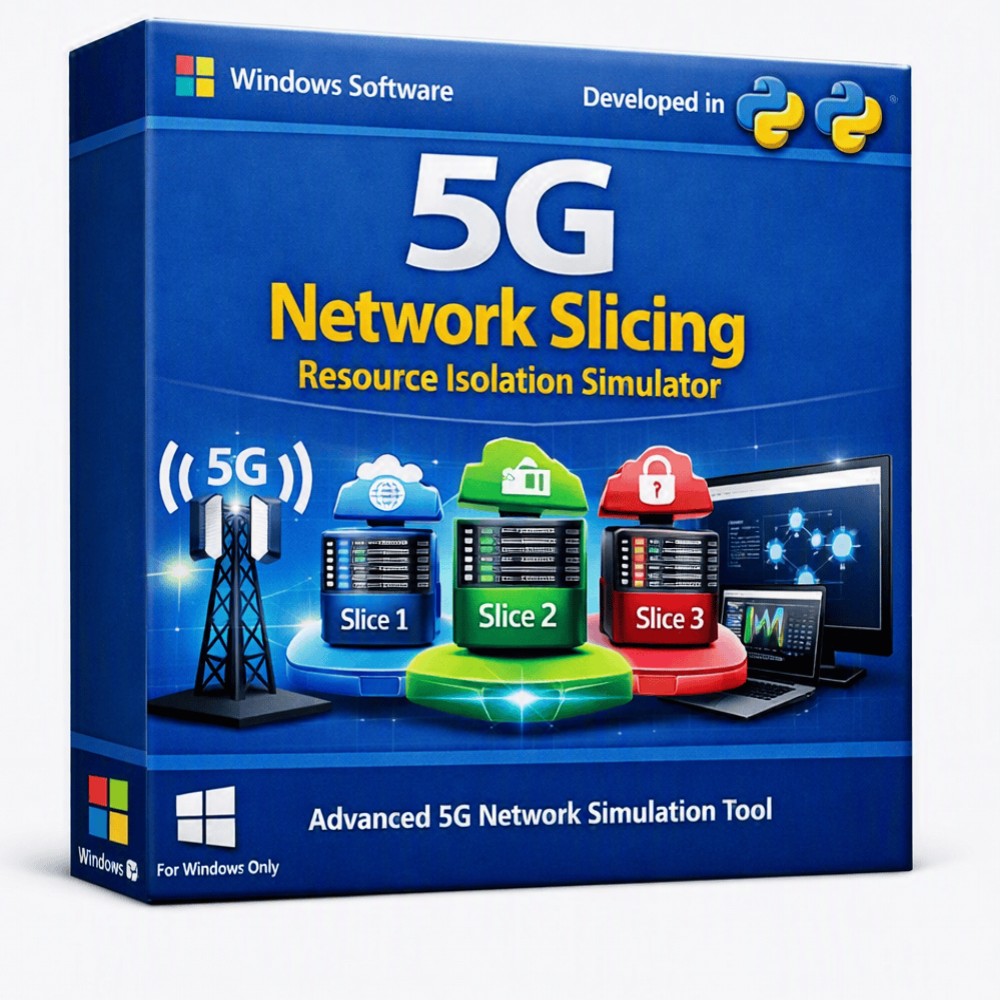
A Python-based 5G Network Slicing and Resource Isolation Simulator designed to model and analyze how multiple logical network slices can share physical 5G infrastructure while maintaining resource isolation. The simulator enables users to study CPU, memory, bandwidth, network capacity, traffic allocation, and resource management across different 5G network slices.
Ideal for 5G research, telecom engineering, academic projects, network optimization, resource allocation studies, and university laboratories.
Original price was: ₹750.00.₹250.00Current price is: ₹250.00. -
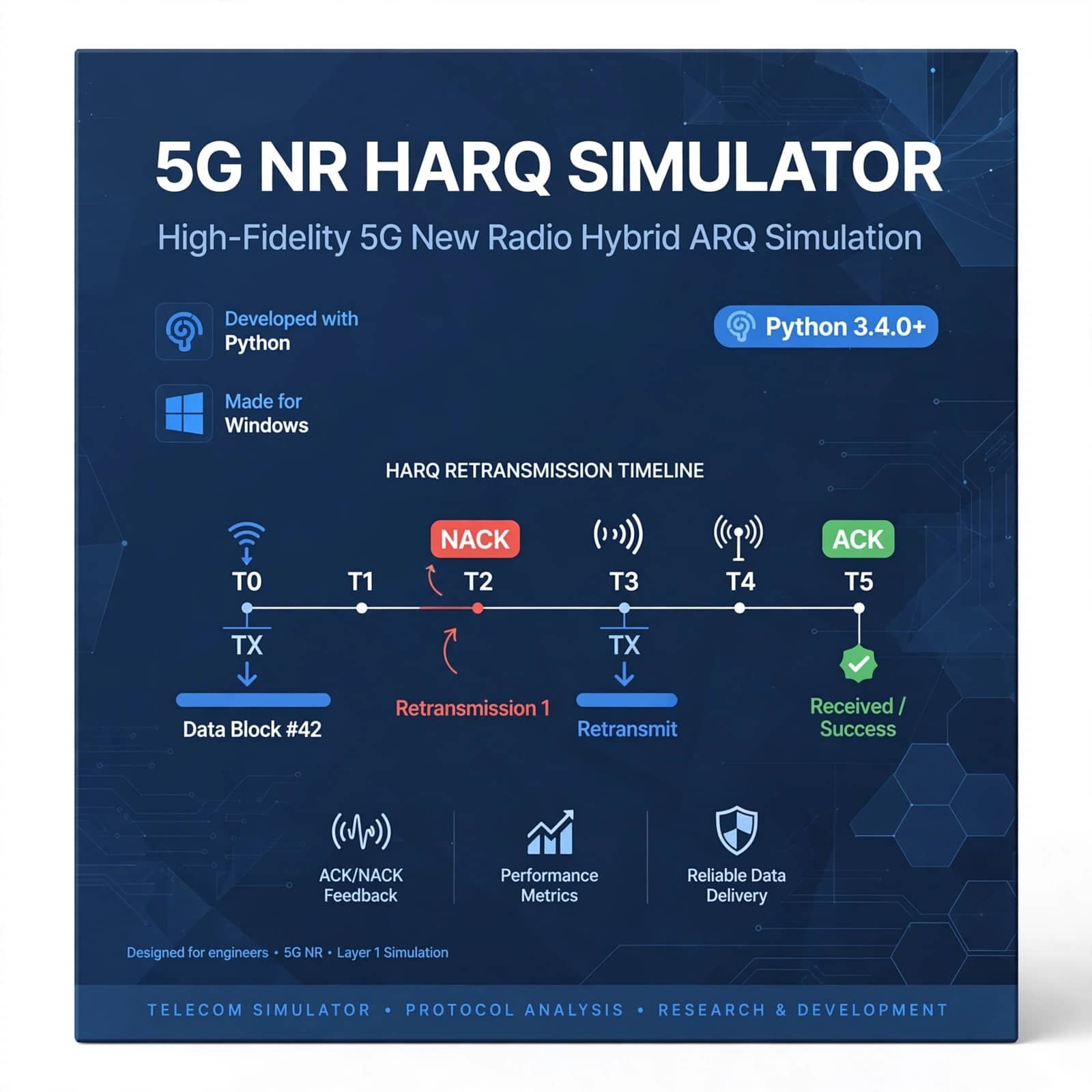
5G NR HARQ Simulator is an advanced simulation solution for modeling and analyzing Hybrid Automatic Repeat Request (HARQ) mechanisms in 5G New Radio networks. It enables users to study HARQ processes, ACK/NACK feedback, retransmissions, link adaptation, channel errors, and communication reliability under configurable network conditions. The simulator supports analysis of throughput, BLER, latency, retransmission rate, packet errors, spectral efficiency, and other key performance metrics, making it suitable for 5G NR research, algorithm development, academic projects, and wireless communication system optimization.
Original price was: ₹750.00.₹250.00Current price is: ₹250.00. -
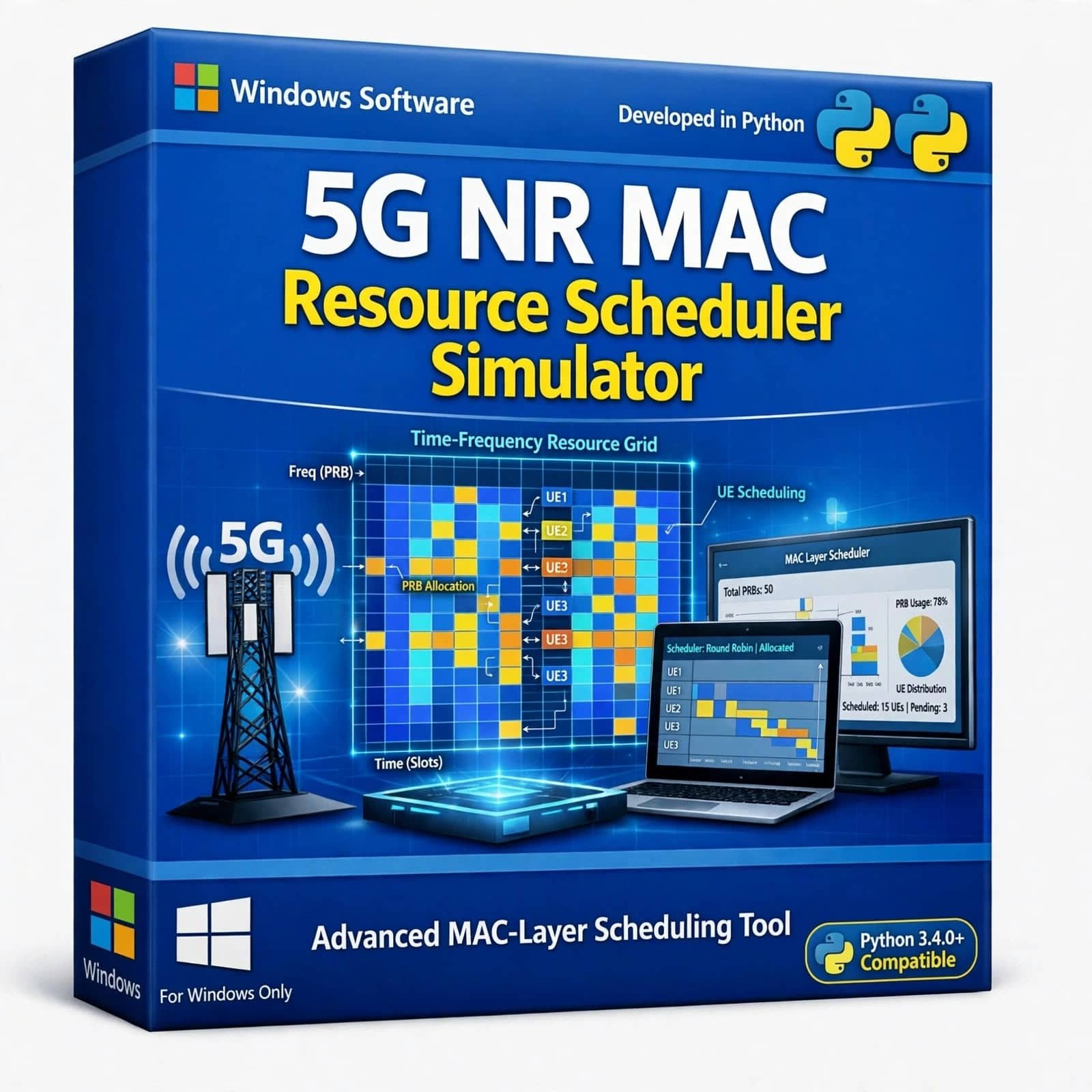
5G NR MAC Resource Scheduler Simulator is an advanced simulation solution for modeling and analyzing Medium Access Control (MAC) layer resource scheduling in 5G New Radio networks. It enables users to evaluate dynamic resource allocation, multi-UE scheduling, uplink and downlink resource management, QoS-aware scheduling, traffic conditions, and scheduling algorithms. The simulator supports analysis of throughput, latency, fairness, spectral efficiency, resource utilization, packet loss, and QoS performance, making it ideal for 5G NR research, scheduler algorithm development, academic projects, and wireless network optimization.
Original price was: ₹750.00.₹250.00Current price is: ₹250.00. -
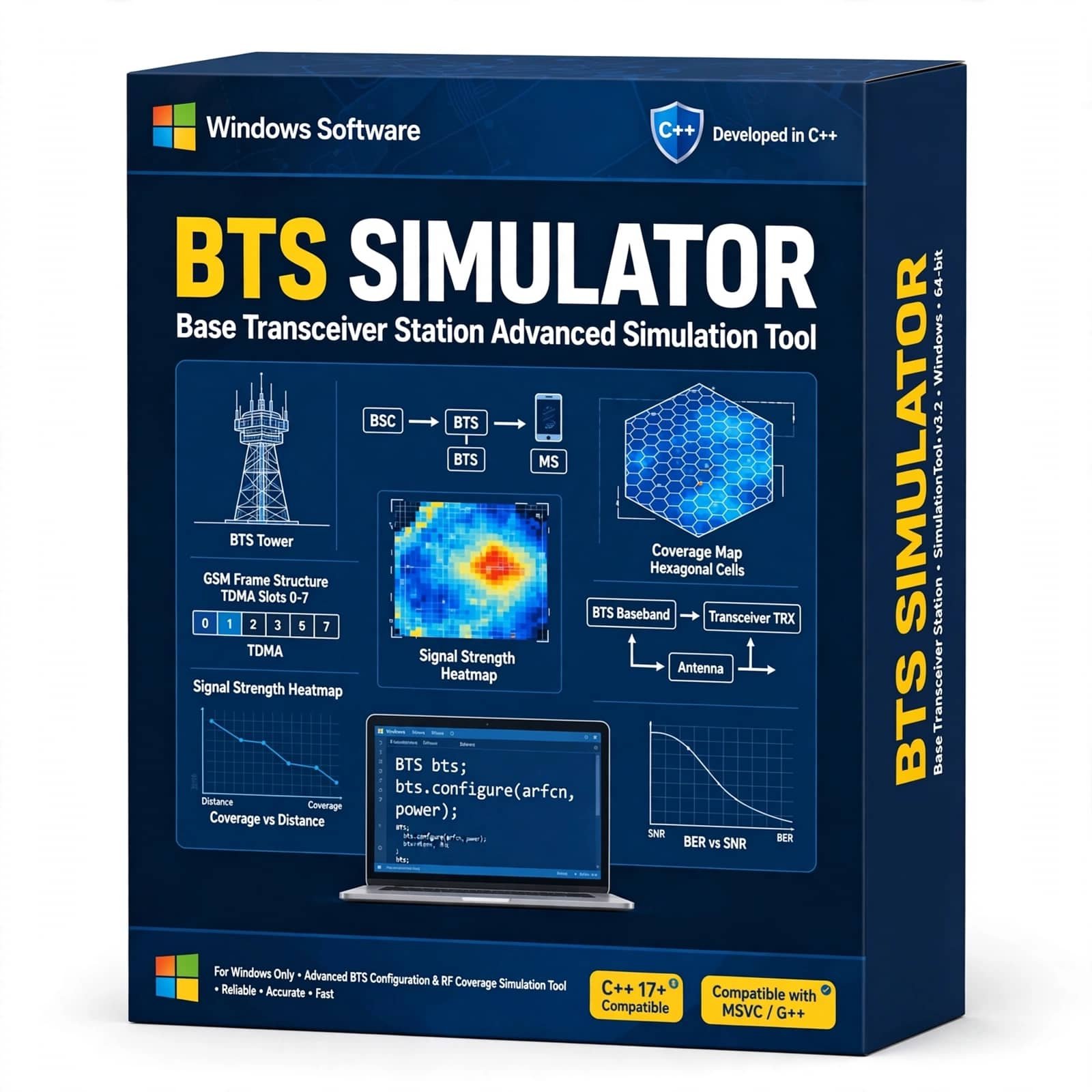
The BTS Simulator with C++ is a software-based Base Transceiver Station simulation tool designed for studying mobile communication, wireless networks, and telecommunications concepts. Developed using C++, it provides a practical environment for understanding BTS operation, communication processes, signal transmission and reception, and cellular network fundamentals. The simulator is ideal for telecommunication laboratories, engineering education, student projects, technical training, and communication-system research.
Original price was: ₹750.00.₹250.00Current price is: ₹250.00. -
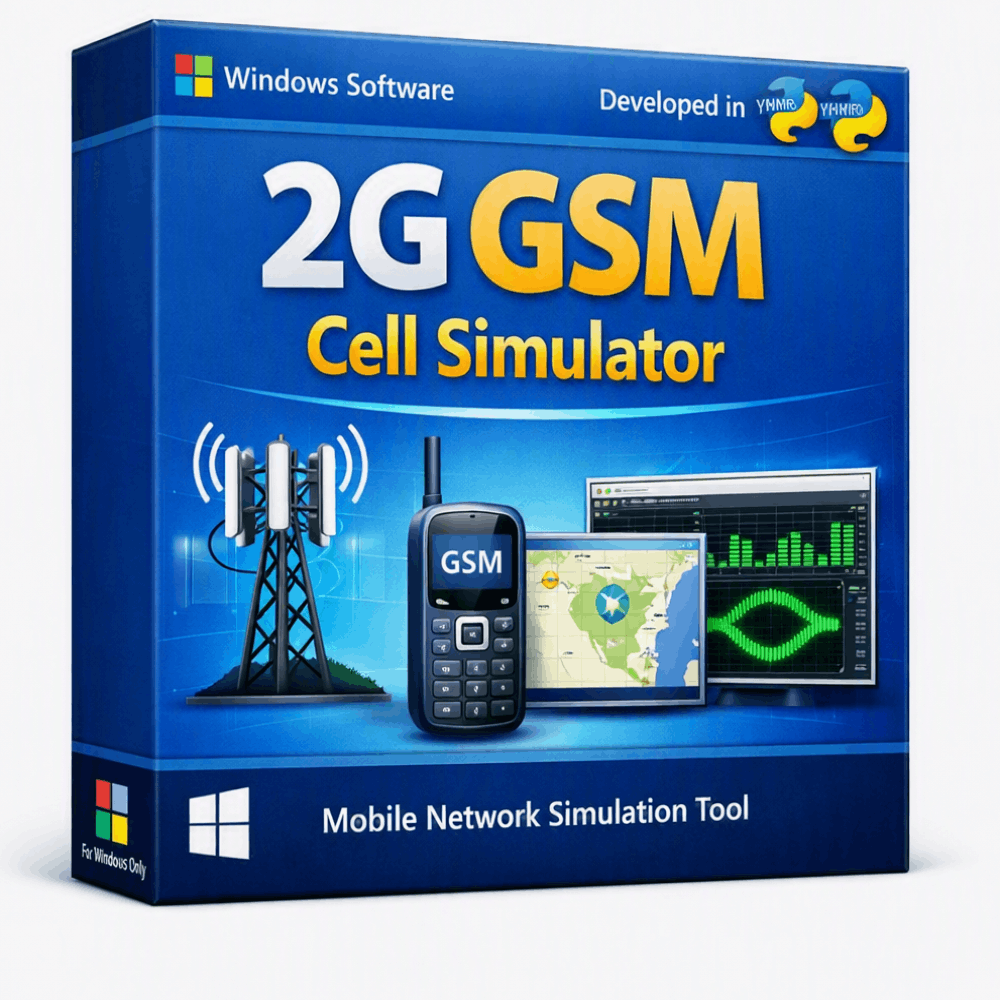
The 2G GSM Cell Simulator is a Python-based software project designed to simulate fundamental GSM cellular-network concepts. It provides a practical environment for understanding mobile stations, GSM cells, base stations, cellular coverage, mobility, communication channels, and basic network behavior. The project includes Python source code that can be studied, customized, and extended for academic projects, demonstrations, research, and learning. It is ideal for Electronics & Communication Engineering, Telecommunications, Computer Science, and related students looking to explore 2G GSM technology and cellular network simulation through a software-based implementation.
Original price was: ₹750.00.₹250.00Current price is: ₹250.00. -
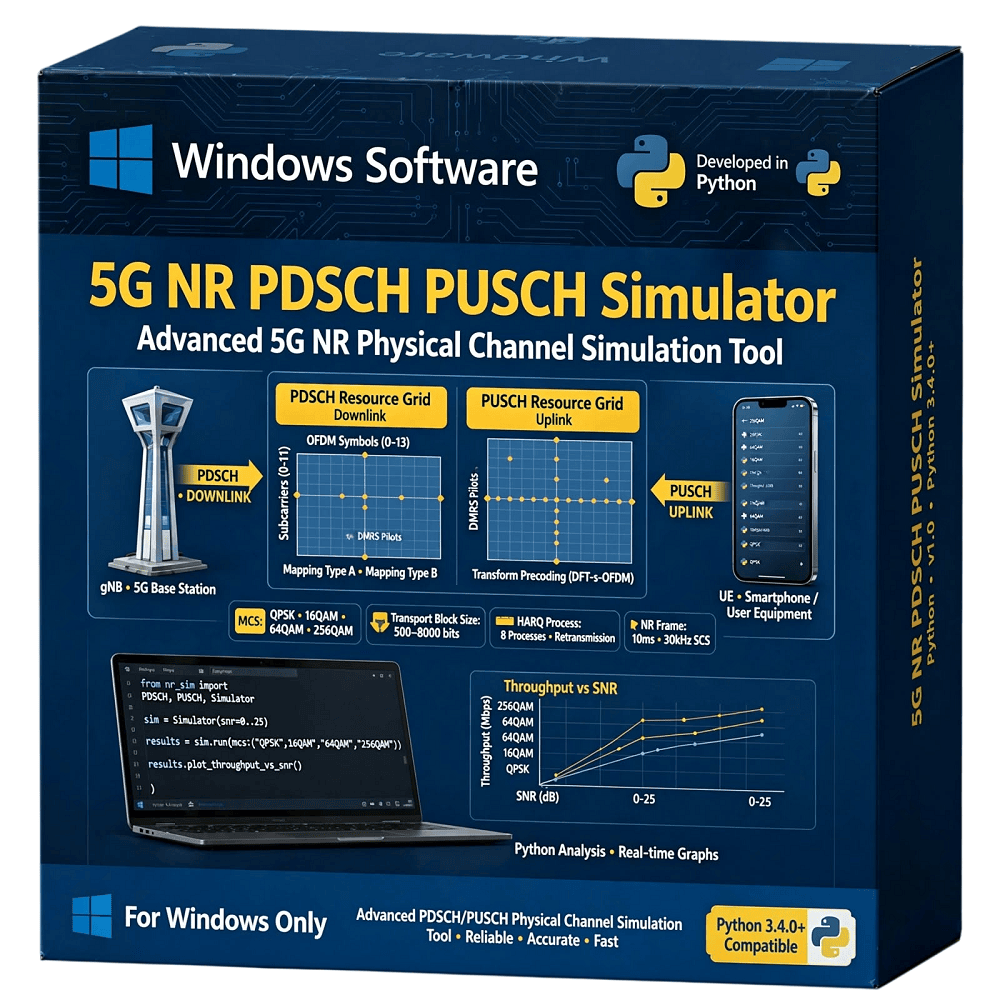
The 5G NR PDSCH PUSCH Simulator is a Python-based simulation software solution designed for researchers, engineers, students, and telecommunications professionals working with 5G New Radio (NR) physical-layer technologies. The simulator provides a practical environment for studying and experimenting with PDSCH (Physical Downlink Shared Channel) and PUSCH (Physical Uplink Shared Channel) transmission concepts.
Developed using Python, the simulator is suitable for academic research, algorithm development, demonstrations, testing, and educational applications related to 5G NR communication systems.
Available for sale as a software product. Contact us for product details, licensing, and purchase information.
Original price was: ₹750.00.₹250.00Current price is: ₹250.00.


Reviews
There are no reviews yet.