-
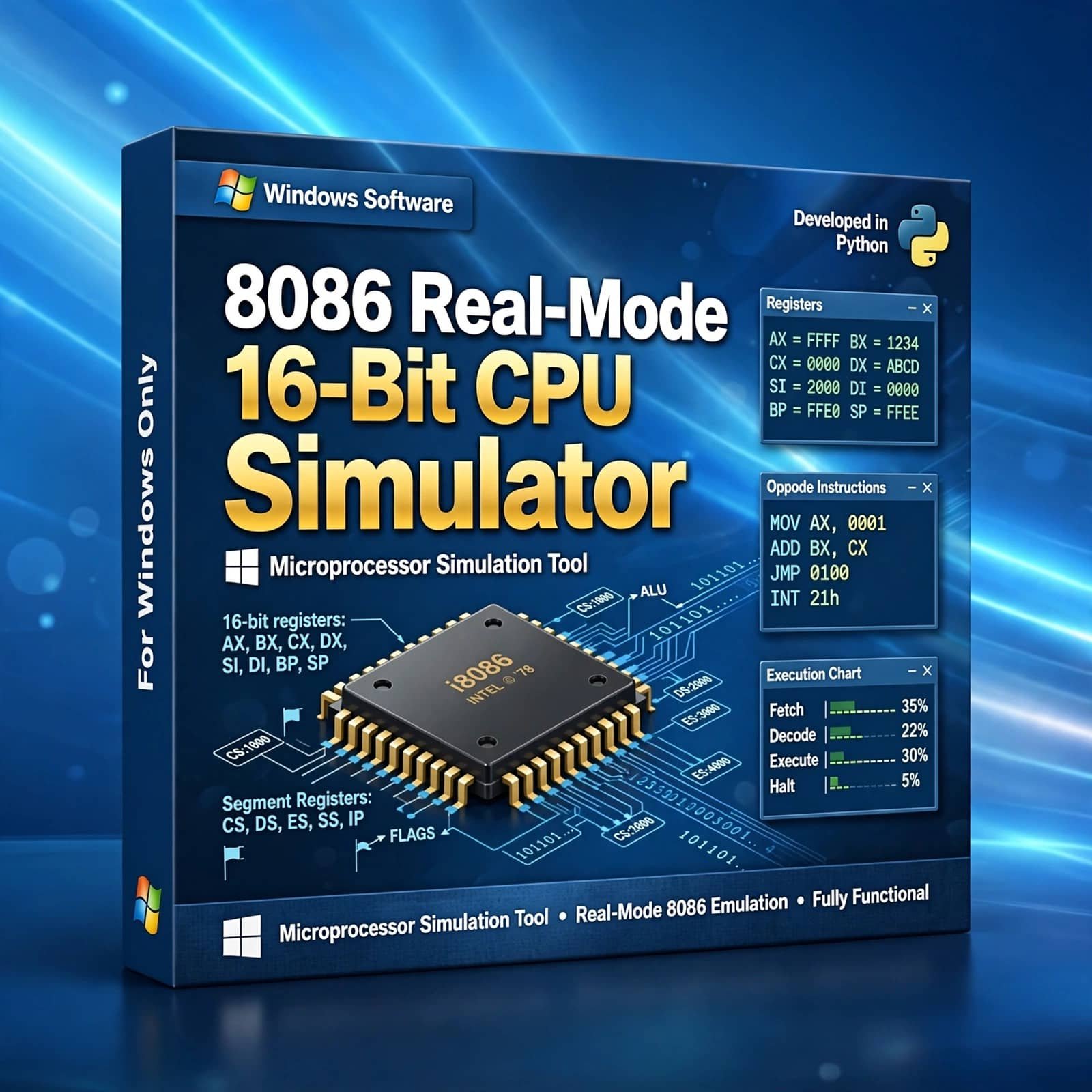
Experience the 8086 Real-Mode 16-bit CPU Simulator, a Python-powered educational tool designed for students, developers, and computer architecture enthusiasts. Simulate instruction execution, visualize registers, memory, and flags, and gain hands-on mastery of Intel’s legendary 8086 processor. Perfect for learning assembly language, debugging, and teaching microprocessor concepts.
Original price was: ₹750.00.₹100.00Current price is: ₹100.00. -
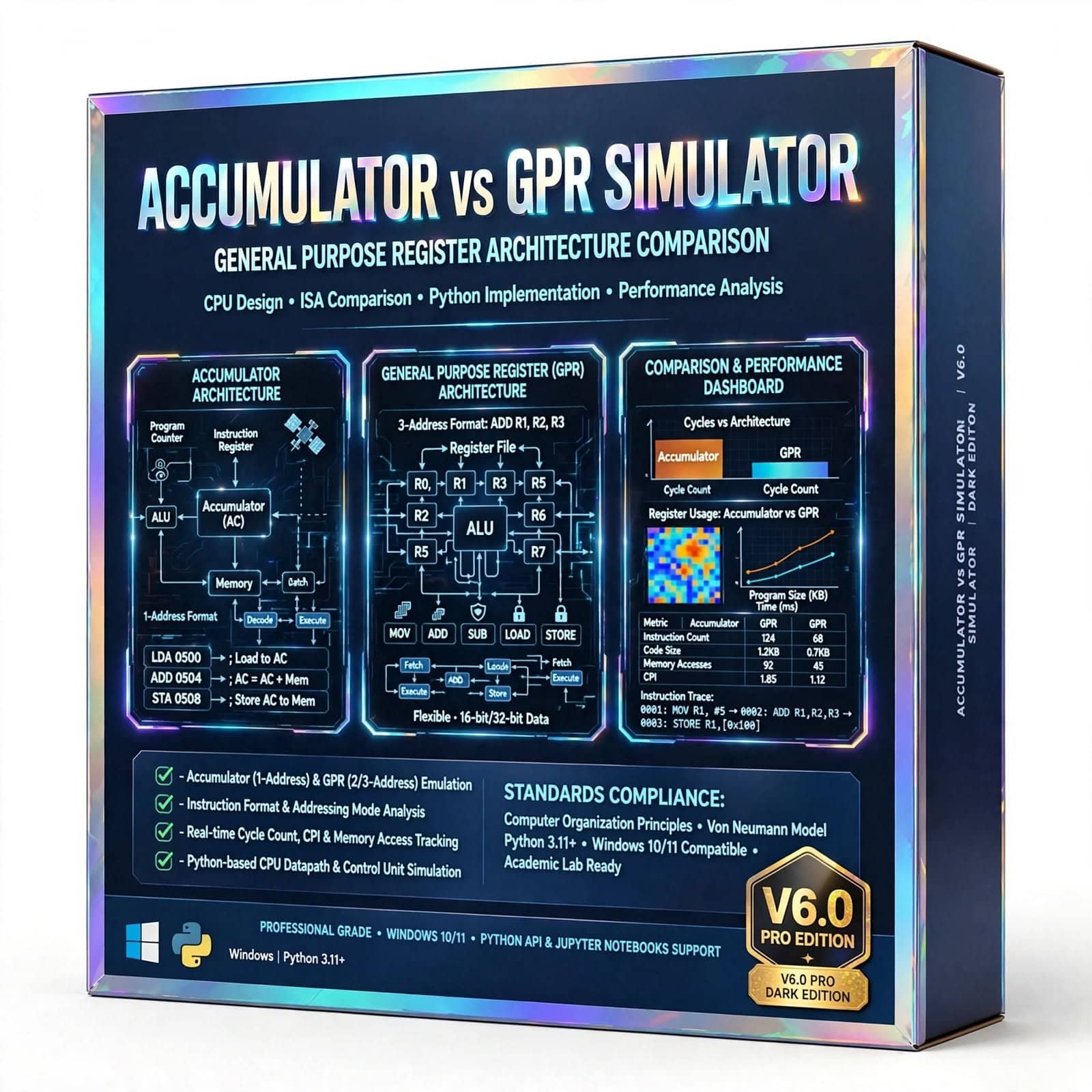
Python-based Accumulator vs General Purpose Register Simulator for Windows. Compare 1-Address vs 3-Address CPU architecture, cycles, CPI & performance in real-time. An educational Python simulator that compares Accumulator (1-Address) vs General Purpose Register (2/3-Address) CPU architectures side-by-side. Tried to emulates datapath, register file, ALU & memory, runs the same program on both machines, and provides performance analysis – instruction count, code size, memory access, CPI, and execution time graphs. Built in pure Python for Windows 7+. Ideal for Computer Architecture labs and understanding modern CPU design evolution.
Original price was: ₹750.00.₹100.00Current price is: ₹100.00. -
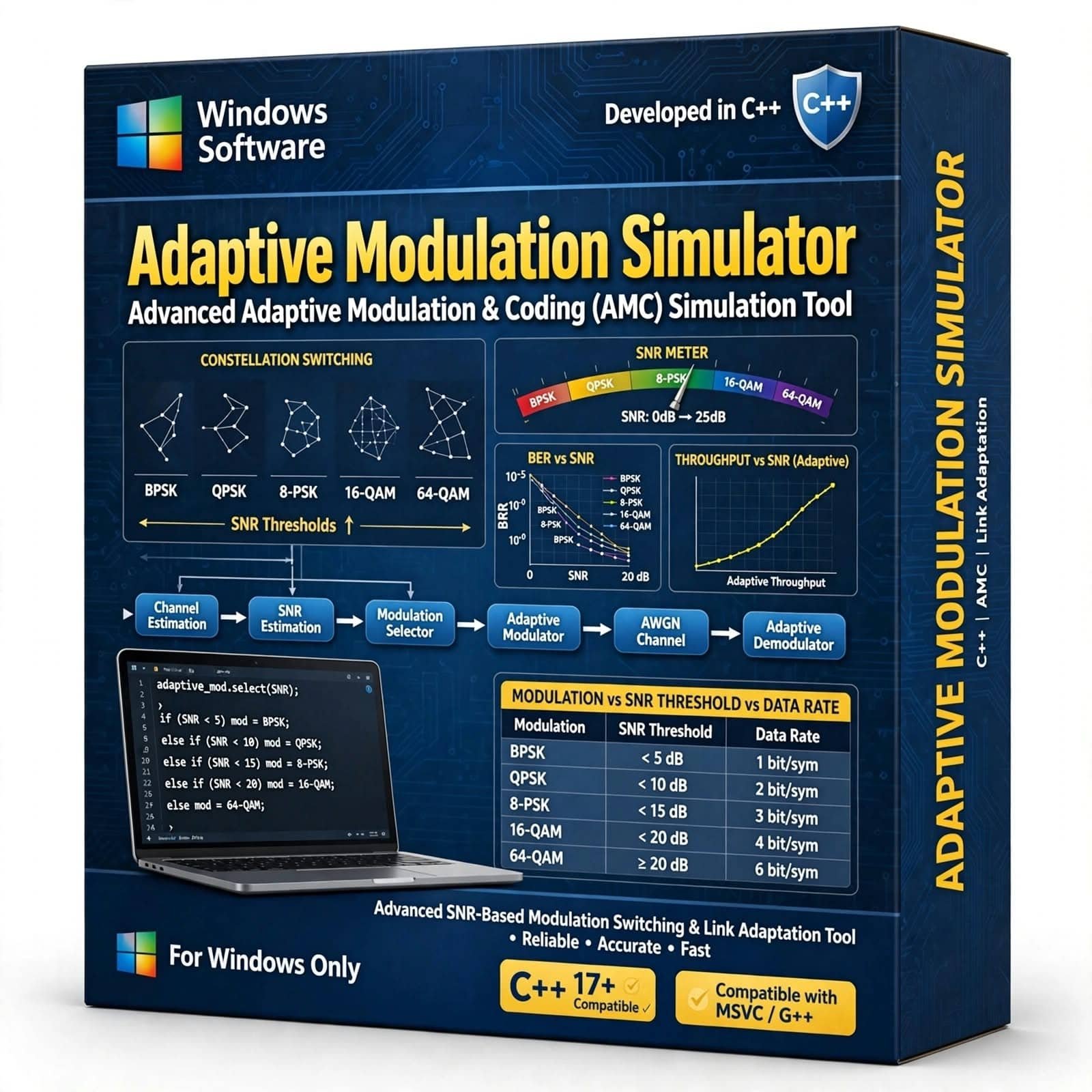
The Adaptive Modulation Simulator is a C++-based software solution designed for students, researchers, engineers, developers, and telecommunications professionals working with digital communication and adaptive modulation techniques. The simulator provides a practical environment for studying how modulation schemes can be selected or adapted according to communication-system conditions.
Developed using C++, the simulator is suitable for academic projects, digital communication research, laboratory demonstrations, signal-processing studies, algorithm development, and educational applications.
Available for sale as a software product. Contact us for pricing, licensing, technical specifications, customization, and purchase information.
₹1,999.00 -
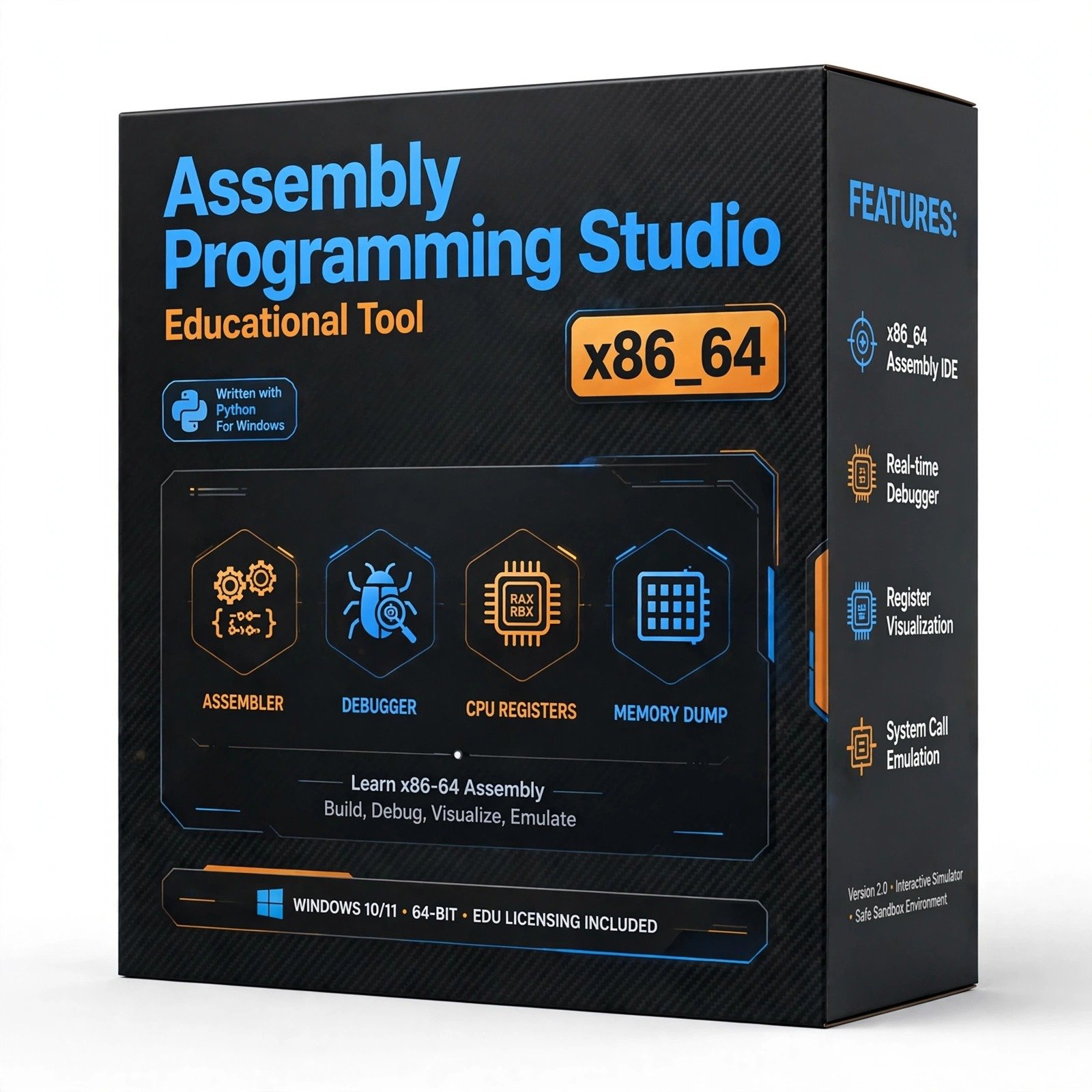
Assembly Programming Studio for x86-64 with Python is a practical software environment for learning, writing, testing, and experimenting with x86-64 assembly programming. Designed for students, developers, educators, and computer architecture enthusiasts, it combines assembly-language concepts with Python-based tools for exploring registers, memory, instructions, addressing modes, control flow, and low-level program execution. Ideal for assembly programming courses, computer architecture projects, reverse-engineering education, and low-level software development.
Original price was: ₹750.00.₹250.00Current price is: ₹250.00. -
An AWGN Simulator i.e. Additive White Gaussian Noise Simulator developed using Python is a software-based tool designed to demonstrate and analyze the effect of Gaussian noise on digital communication signals. The simulator generates a clean input signal, adds controlled amounts of AWGN, and displays both the original and noisy signals for comparison. Users can vary parameters such as noise power, signal-to-noise ratio (SNR), and signal characteristics to observe how communication quality changes under different noise conditions. Python libraries such as NumPy, SciPy, and Matplotlib can be used for signal generation, noise modeling, numerical processing, and graphical visualization but this is purely from tkinter only. The simulator is useful for understanding fundamental concepts of wireless and digital communication systems.
₹1,999.00 -
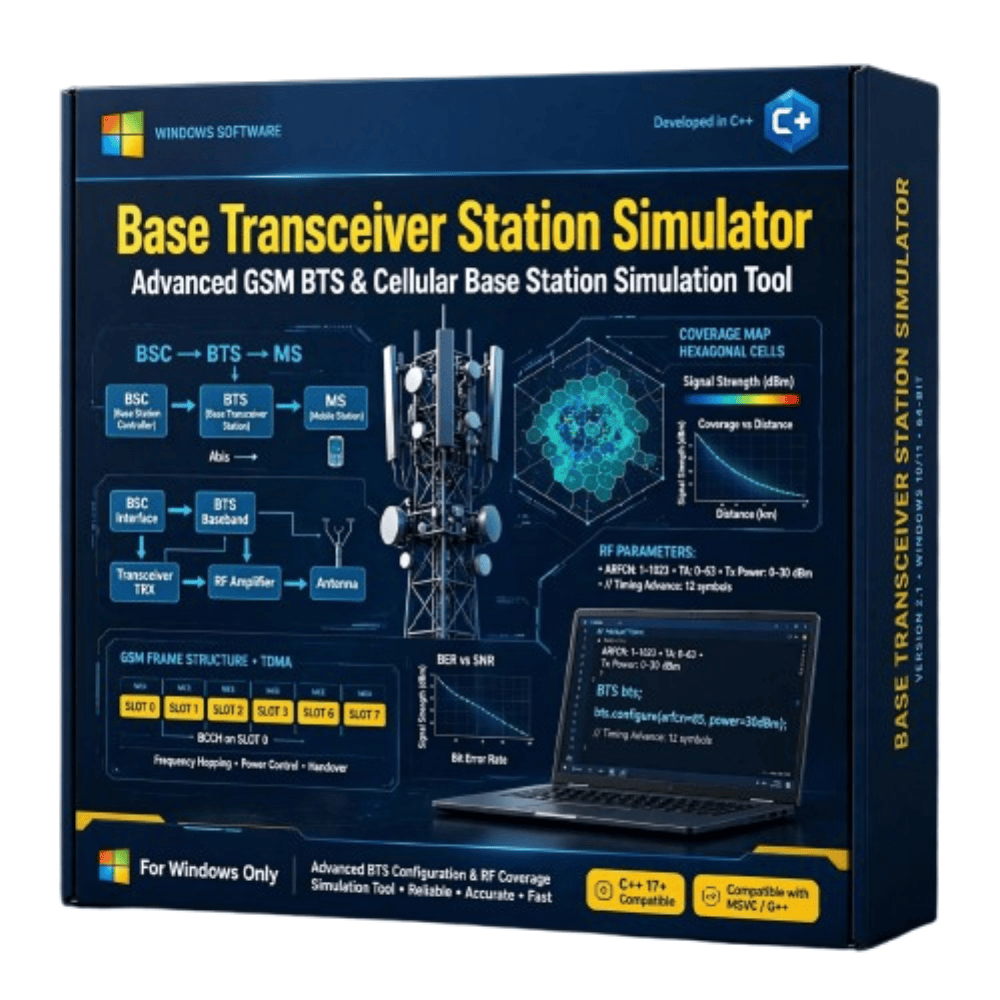
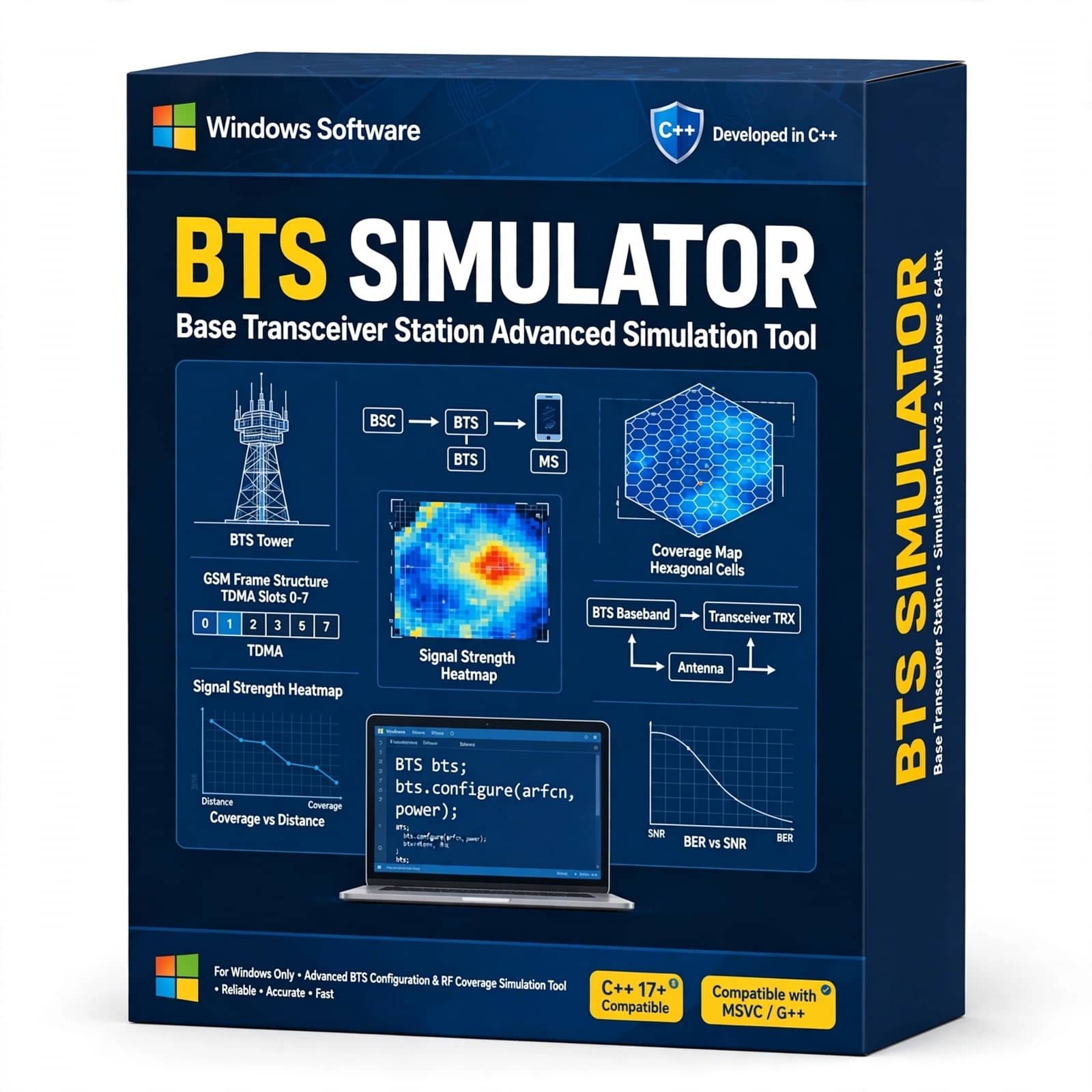
The Base Transceiver Station Simulator Using C++ is a practical cellular communication simulation project designed to demonstrate the basic operation of a BTS in a mobile communication network. Developed using C++, the simulator can model communication between mobile users and a base station, including signal handling, user connectivity, channel allocation, and basic network operations. This BTS Simulator project is suitable for engineering students, researchers, and learners working on GSM, wireless communication, cellular networks, and C++ programming projects.
Original price was: ₹750.00.₹250.00Current price is: ₹250.00. -
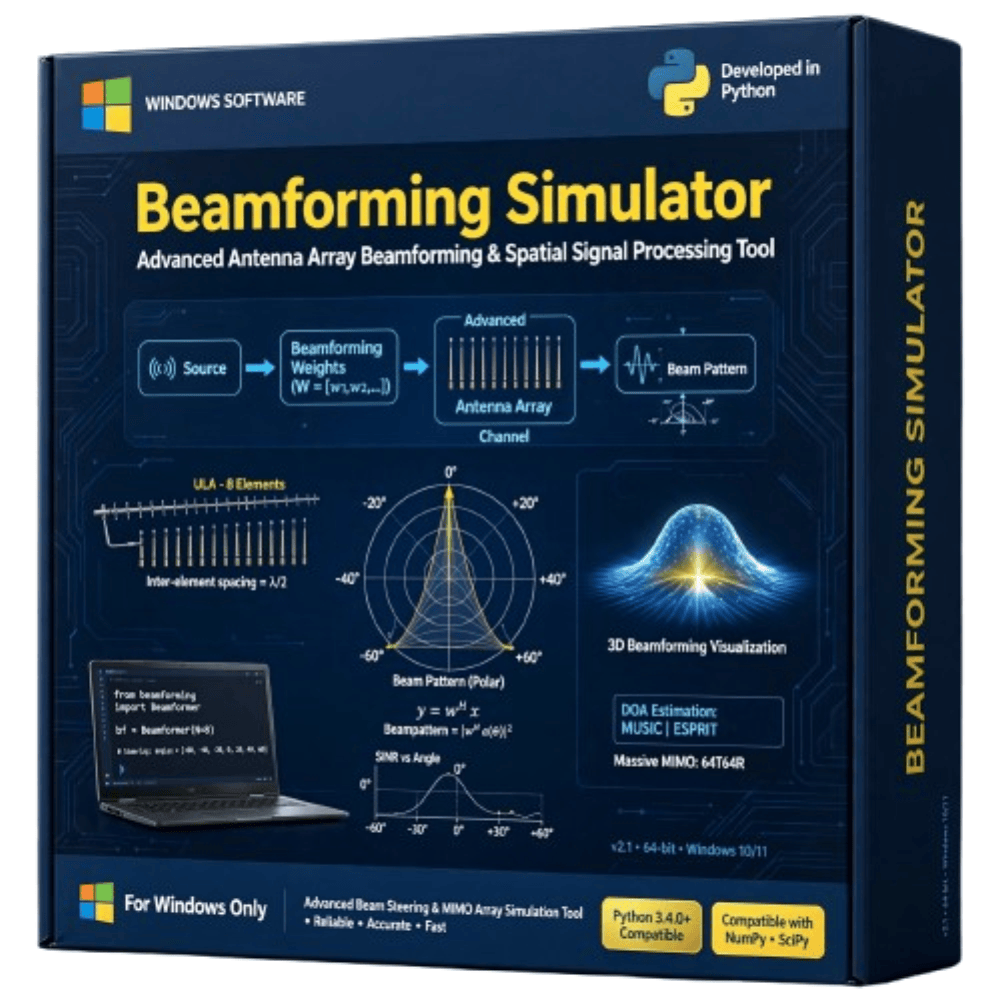
The Beamforming Simulator is a practical wireless communication simulation project designed to demonstrate how antenna arrays can control and direct radio-frequency signals toward desired users or directions. The simulator helps visualize beam patterns, signal direction, antenna-array behavior, and beam steering under different parameters. It is suitable for studying beamforming, antenna arrays, MIMO, 5G communication, wireless networks, and signal processing. This project is ideal for engineering students, researchers, and learners working on wireless communication and advanced antenna technologies.
₹1,999.00 -
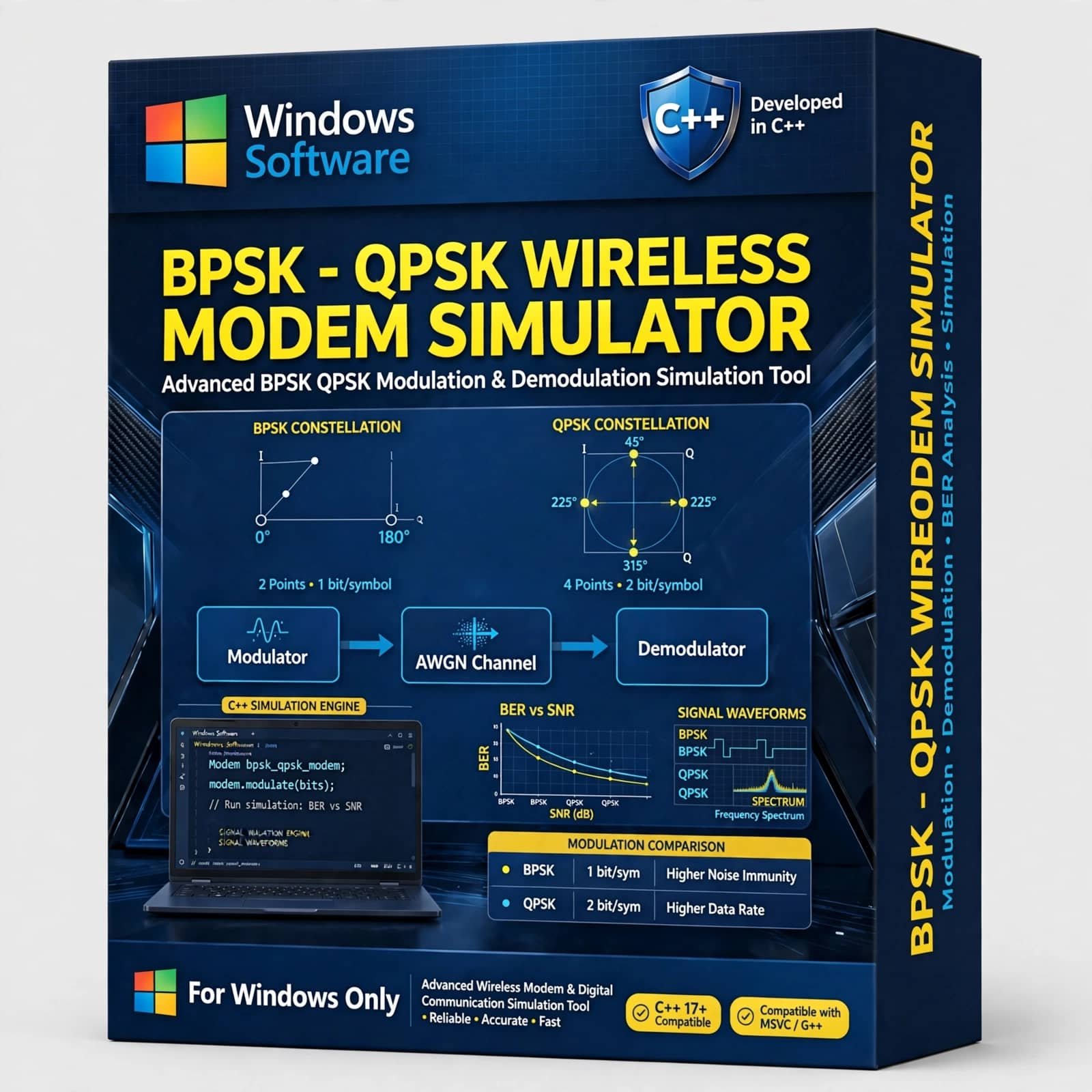
The BPSK – QPSK WIRELESS MODEM SIMULATOR with C++ is a software-based digital communication simulation tool designed for studying, demonstrating, and analyzing BPSK and QPSK modulation and demodulation techniques. Developed using C++, this wireless modem simulator provides a practical environment for understanding how digital information is converted into modulated signals, transmitted through a communication channel, received, and recovered at the receiver.
Designed for electronics and communication engineering laboratories, universities, colleges, research institutions, and technical training environments, the BPSK–QPSK simulator helps students and professionals connect digital communication theory with practical software implementation. It is suitable for learning fundamental concepts related to digital modulation, wireless communication, signal processing, modem technology, and communication system design.
₹1,999.00 -
The BTS Simulator with C++ is a software-based Base Transceiver Station simulation tool designed for studying mobile communication, wireless networks, and telecommunications concepts. Developed using C++, it provides a practical environment for understanding BTS operation, communication processes, signal transmission and reception, and cellular network fundamentals. The simulator is ideal for telecommunication laboratories, engineering education, student projects, technical training, and communication-system research.
Original price was: ₹750.00.₹250.00Current price is: ₹250.00. -
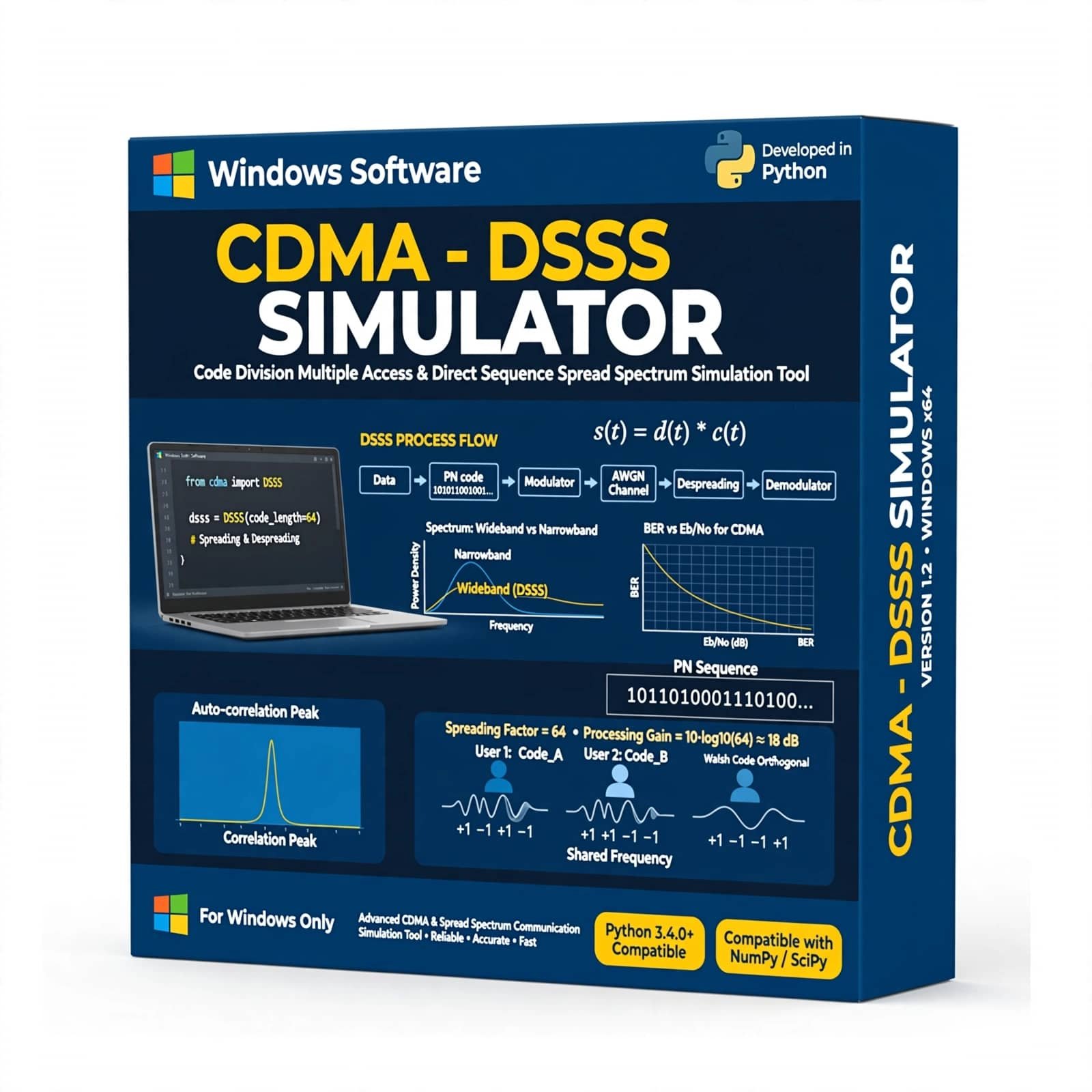
The CDMA – DSSS Simulator with Python is a software-based communication simulation tool designed to demonstrate and analyze Code Division Multiple Access (CDMA) and Direct Sequence Spread Spectrum (DSSS) techniques. Developed using Python, the simulator provides a practical environment for studying spreading codes, signal spreading and despreading, data transmission, multiple-access communication, interference, and signal recovery. It is ideal for digital communication and wireless communication laboratories, engineering education, student projects, technical training, and communication-system research.
₹3,999.00 -
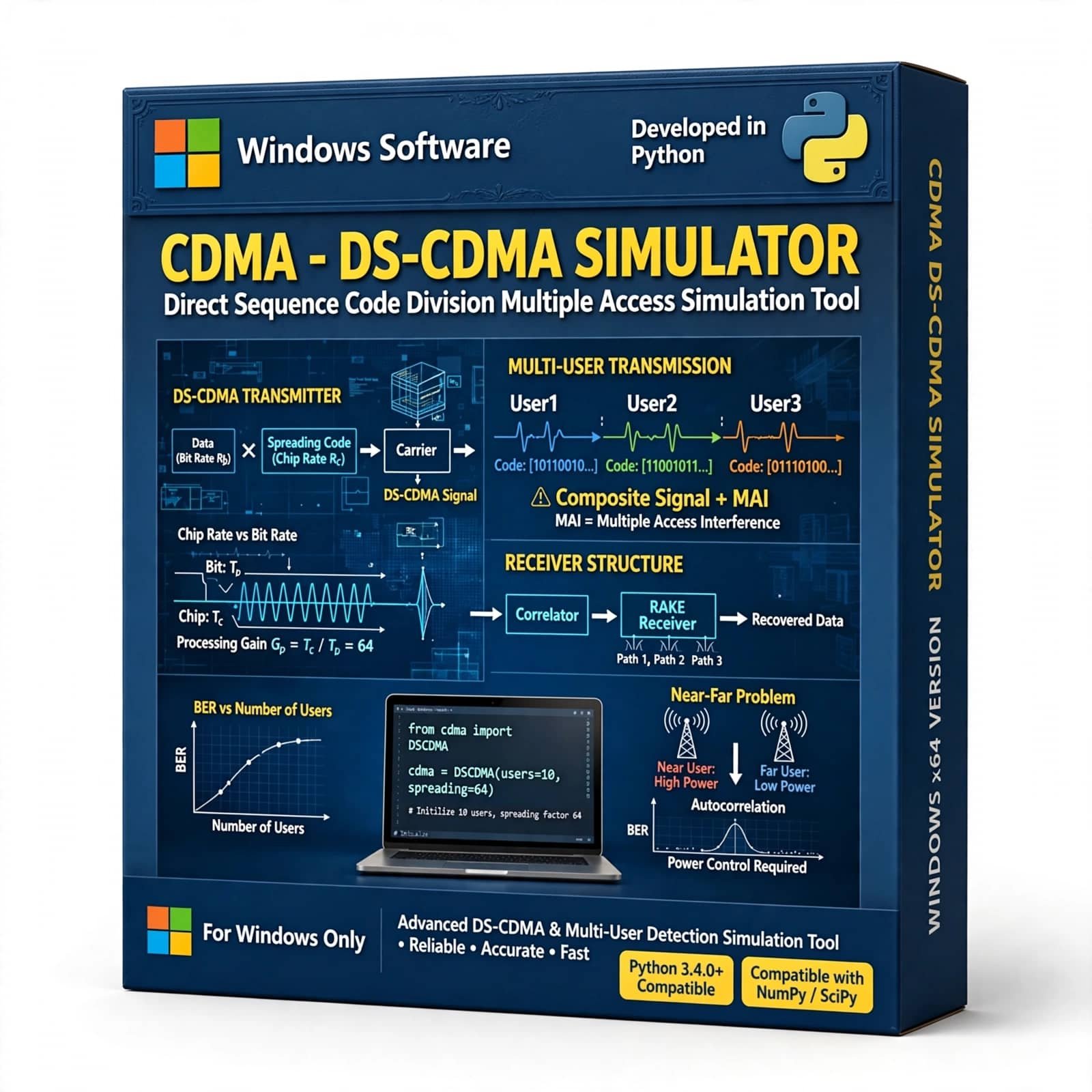
The CDMA DS-CDMA Simulator with Python is a software-based communication simulation tool designed to demonstrate and analyze Direct Sequence Code Division Multiple Access (DS-CDMA) technology. Developed using Python, the simulator provides a practical environment for studying spreading codes, chip sequences, multiple-user communication, signal spreading and despreading, interference, correlation, and transmitted-data recovery. It is suitable for digital communication laboratories, wireless communication education, telecommunications training, student projects, and communication-system research.
Original price was: ₹3,999.00.₹2,499.00Current price is: ₹2,499.00. -
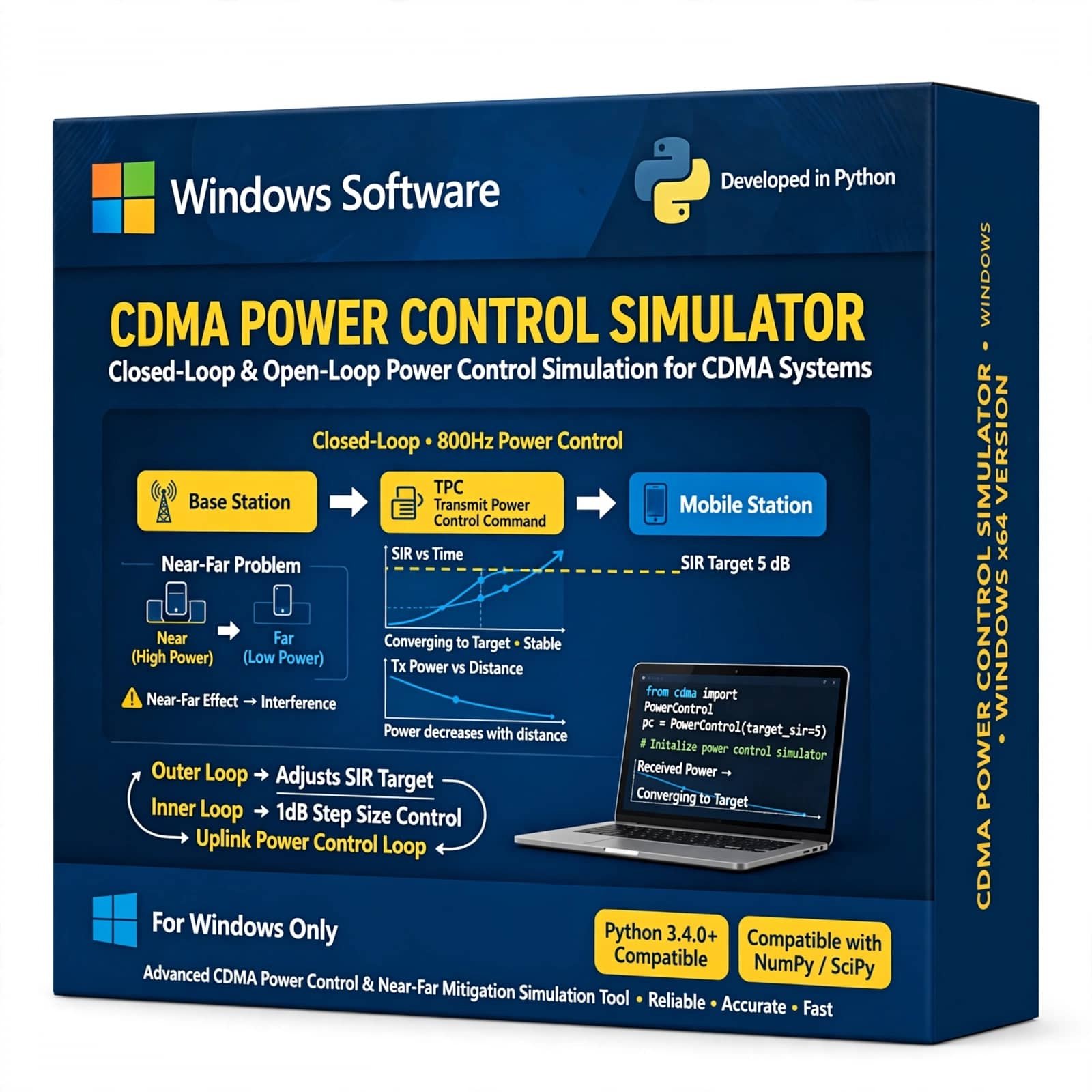
CDMA Power Control Simulator is an advanced communication engineering simulation tool designed to help students, researchers, and professionals understand and analyze power control techniques in Code Division Multiple Access (CDMA) wireless communication systems. It enables practical study of uplink and downlink power control, signal interference, power levels, and system performance.
₹3,999.00