
67% Off


Original price was: ₹750.00.₹250.00Current price is: ₹250.00.
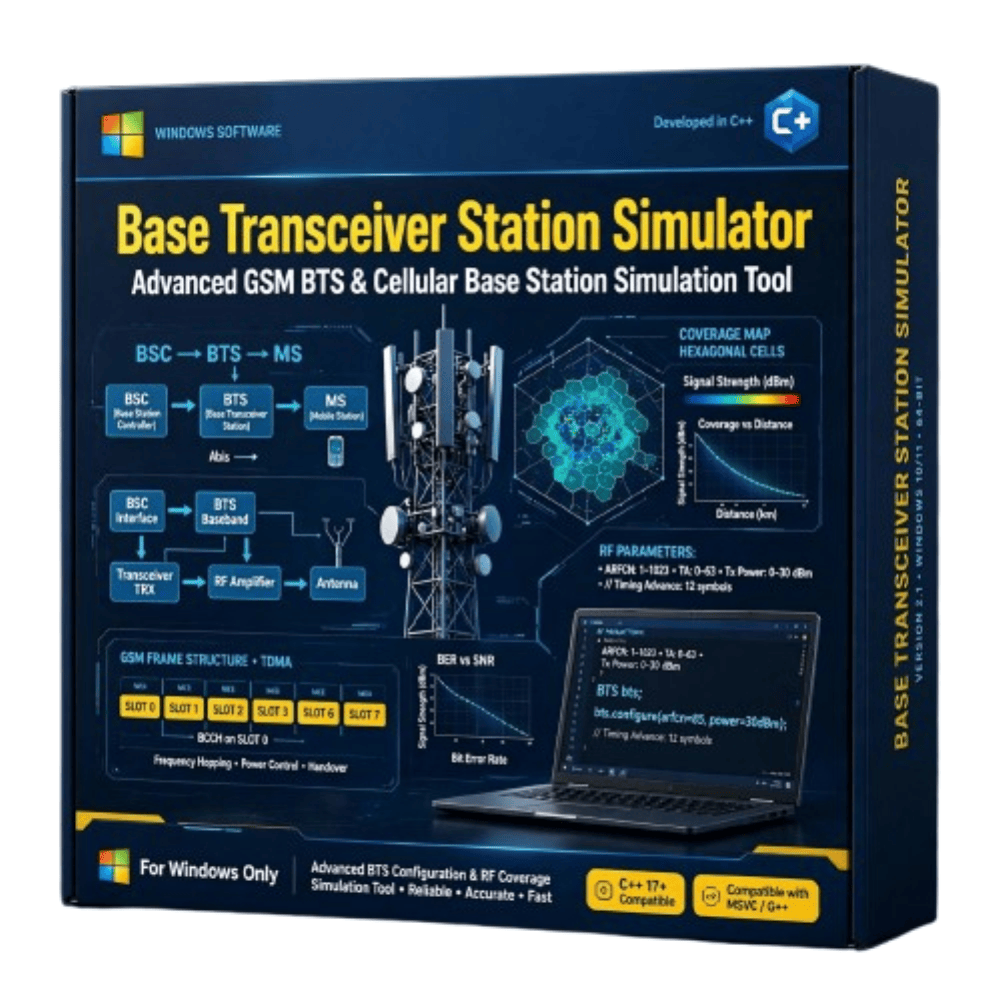
In StockThe BTS Simulator with C++ is a software-based Base Transceiver Station simulation tool designed for studying mobile communication, wireless networks, and telecommunications concepts. Developed using C++, it provides a practical environment for understanding BTS operation, communication processes, signal transmission and reception, and cellular network fundamentals. The simulator is ideal for telecommunication laboratories, engineering education, student projects, technical training, and communication-system research.
Description
BTS Simulator
The BTS Simulator with C++ is a software-based telecommunications simulation tool designed for studying and understanding the fundamental operation of a Base Transceiver Station (BTS) in a mobile communication network. Developed using C++, the simulator provides a practical environment for exploring BTS functionality, communication processes, signal handling, and network-related concepts through software-based simulation.
A BTS is an important component of a cellular communication network, responsible for facilitating wireless communication between mobile devices and the network infrastructure. The BTS Simulator provides students, educators, communication engineers, researchers, and telecommunications professionals with an effective platform for understanding the role and operation of a base transceiver station without requiring a complete physical cellular network setup.
C++ Based BTS Simulation
The BTS Simulator is developed using C++, providing a high-performance programming environment for implementing the processing and communication logic required for BTS simulation. C++ is widely used for applications that require efficient processing, structured software architecture, and control over computational resources, making it well suited for communication-system simulation and telecommunications software development.
The C++ implementation also makes the simulator useful for students and developers who want to understand how telecommunications concepts can be represented through software algorithms. By combining C++ programming with BTS and mobile communication concepts, the simulator can support both communication engineering education and software-oriented learning.
Understanding BTS Operation
The simulator is designed to help users understand the basic functions associated with a Base Transceiver Station. It provides a software-based environment in which users can study communication processes between mobile users and network infrastructure and understand the role of the BTS within a cellular communication system.
Through simulation, users can explore concepts such as communication signaling, transmission and reception processes, channel-related operations, network communication flow, and the interaction between different stages of a mobile communication system.
This practical approach helps bridge the gap between theoretical telecommunications concepts and their software-based implementation.
Practical Telecommunications Learning
Understanding cellular communication networks can involve complex concepts that are difficult to visualize through theoretical study alone. The BTS Simulator with C++ provides a practical simulation environment that can help users observe and analyze communication processes in a controlled setting.
Students can use the simulator as part of telecommunications and communication-engineering laboratory activities to understand the basic role of a BTS and its relationship with mobile communication systems. Educators can also use it as a demonstration tool for explaining network architecture and communication workflows.
The software-based approach provides an opportunity to study BTS-related concepts without depending entirely on physical BTS equipment, making it useful for academic environments where practical experimentation with commercial cellular infrastructure may not be feasible.

BTS Simulator for Engineering Education
The C++ BTS Simulator is suitable for universities, engineering colleges, telecommunications training centers, technical institutes, research laboratories, and organizations involved in communication-system education.
It can be incorporated into courses and laboratory activities covering:
- Mobile Communication
- Wireless Communication
- Telecommunication Systems
- Cellular Network Fundamentals
- Communication Engineering
- Digital Communication
- Network Architecture
- Communication-System Simulation
- C++ Programming for Telecommunications
- Telecommunications Software Development
The simulator can also be useful for student assignments, academic demonstrations, mini-projects, final-year projects, technical workshops, and research-oriented experimentation.
Software-Based BTS Experimentation
One of the major advantages of a BTS simulation platform is the ability to perform experiments in a controlled software environment. Users can study BTS-related processes, modify simulation parameters where supported, observe system behavior, and analyze the results.
A software simulator can make it easier to repeat experiments and investigate different operating conditions. Students can use these experiments to develop a better understanding of how a base transceiver station participates in wireless communication and how information flows between mobile devices and network infrastructure.
The BTS Simulator developed in C++ can therefore serve as an educational bridge between communication-system theory and practical software implementation.
C++ Programming and Communication Systems
In addition to telecommunications learning, the simulator can provide an opportunity to understand the role of programming in communication-system development. C++ can be used to implement simulation logic, data processing, communication algorithms, system states, and other computational operations associated with the simulated BTS environment.
This makes the product particularly valuable for learners who want to develop skills across both telecommunication engineering and C++ software development.
By studying the simulator, users can gain insight into how communication-system concepts can be translated into software structures and algorithms. This multidisciplinary approach can be useful for students preparing for careers and projects involving telecommunications, wireless systems, network software, embedded applications, and communication-system engineering.
Applications of BTS Simulator
The BTS Simulator with C++ can be used in a variety of academic and technical applications, including:
- Telecommunications laboratory training
- Mobile communication education
- Wireless communication demonstrations
- BTS operation studies
- Cellular network concept demonstrations
- Communication-system simulation
- C++ programming projects
- Engineering student projects
- Final-year telecommunications projects
- Technical training programs
- Academic research and experimentation
- Communication-network demonstrations
Its software-based architecture makes it convenient for educational environments where users need a practical way to explore BTS concepts and communication workflows.
Key Benefits
The BTS Simulator offers a practical approach to learning the fundamentals of base transceiver station operation. Its C++ implementation provides a strong software foundation while its telecommunications focus makes it relevant to communication-engineering and mobile-network education.
Key benefits include:
- C++ based implementation for efficient software simulation
- Practical study of BTS concepts and operation
- Suitable for telecommunications and communication-engineering laboratories
- Supports software-based experimentation and demonstrations
- Helps connect theoretical concepts with practical simulation
- Useful for C++ and telecommunications-related academic projects
- Suitable for students, educators, researchers, and communication engineers
- Can reduce dependence on dedicated physical BTS equipment for basic educational demonstrations
Why Choose the BTS Simulator with C++?
The BTS Simulator with C++ provides an effective software platform for learning and demonstrating the fundamental principles of a Base Transceiver Station and its role in mobile communication networks. Instead of relying solely on theoretical diagrams and descriptions, users can explore BTS-related communication processes through simulation and gain a better understanding of how telecommunications concepts can be implemented using software.
The combination of BTS simulation, mobile communication concepts, and C++ development makes the product suitable for modern engineering education and technical training. It can help students develop both communication-system knowledge and practical programming skills while providing educators with a useful tool for demonstrations and laboratory activities.
Overall, the C++ BTS Simulator is a practical solution for telecommunication laboratories, mobile communication education, wireless communication training, engineering projects, technical demonstrations, and communication-system research. It provides a structured software environment for exploring BTS functionality and understanding the relationship between wireless communication, network infrastructure, and software-based simulation.
Related products
-
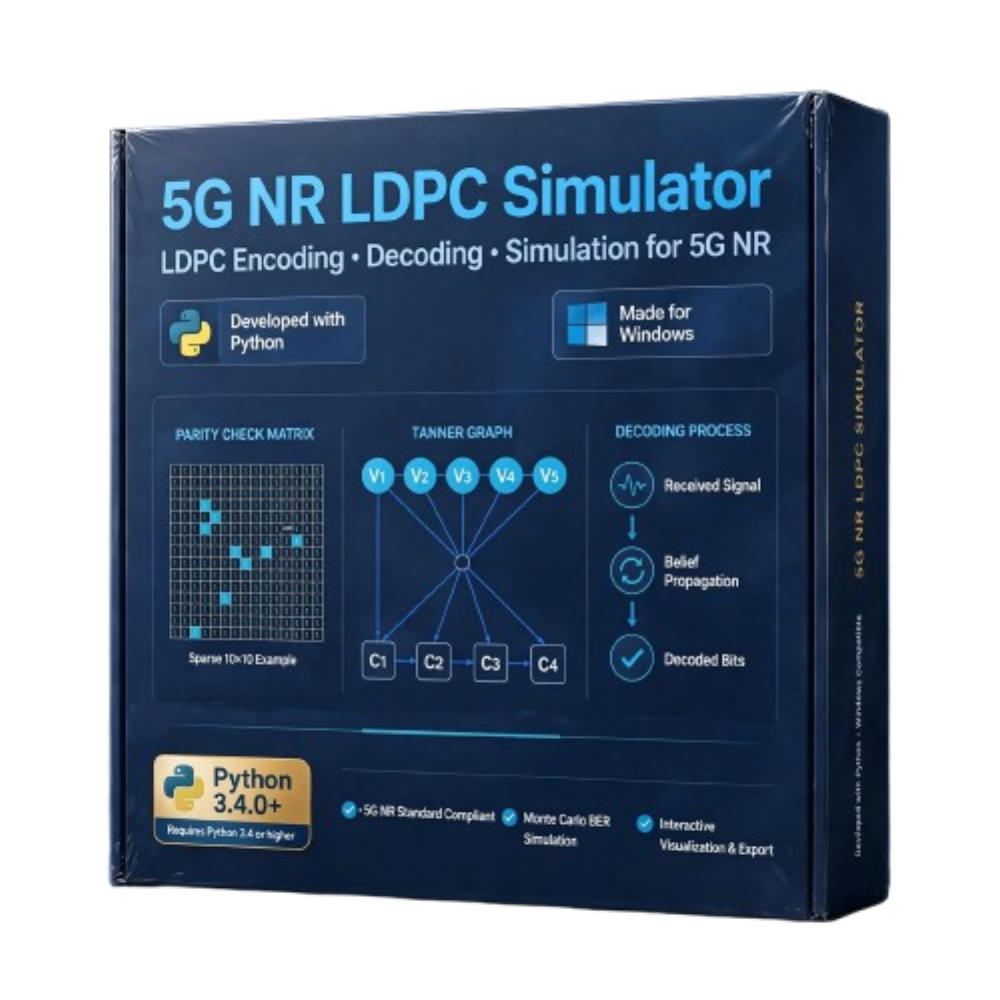
5G NR LDPC Simulator is an advanced simulation solution for modeling and analyzing Low-Density Parity-Check (LDPC) channel coding used in 5G New Radio systems. It enables users to simulate LDPC encoding and decoding, evaluate error correction performance, and analyze BER, BLER, SNR, coding rate, decoding iterations, throughput, and convergence under configurable channel conditions. The simulator is ideal for 5G NR channel coding research, algorithm development, academic projects, decoder performance analysis, and next-generation wireless communication system optimization.
Original price was: ₹129,999.00.₹12,999.00Current price is: ₹12,999.00. -
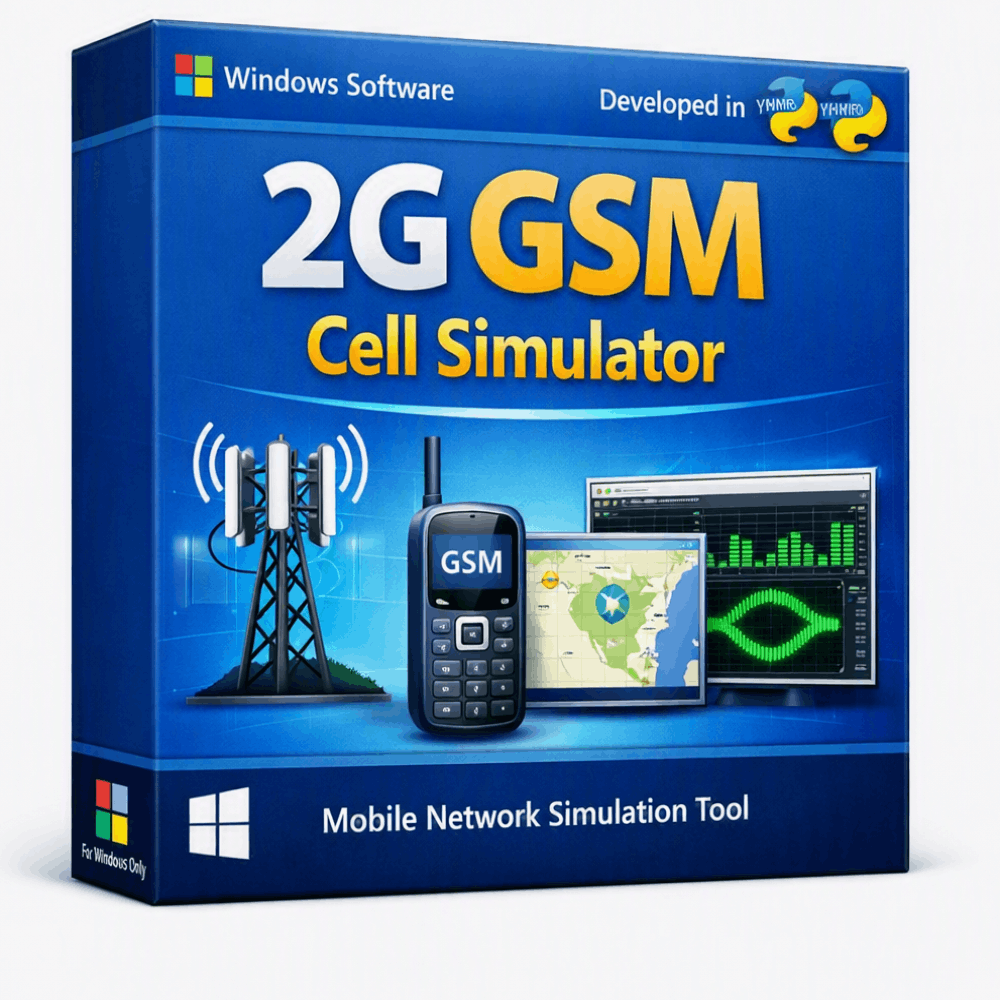
The 2G GSM Cell Simulator is a Python-based software project designed to simulate fundamental GSM cellular-network concepts. It provides a practical environment for understanding mobile stations, GSM cells, base stations, cellular coverage, mobility, communication channels, and basic network behavior. The project includes Python source code that can be studied, customized, and extended for academic projects, demonstrations, research, and learning. It is ideal for Electronics & Communication Engineering, Telecommunications, Computer Science, and related students looking to explore 2G GSM technology and cellular network simulation through a software-based implementation.
₹3,999.00 -
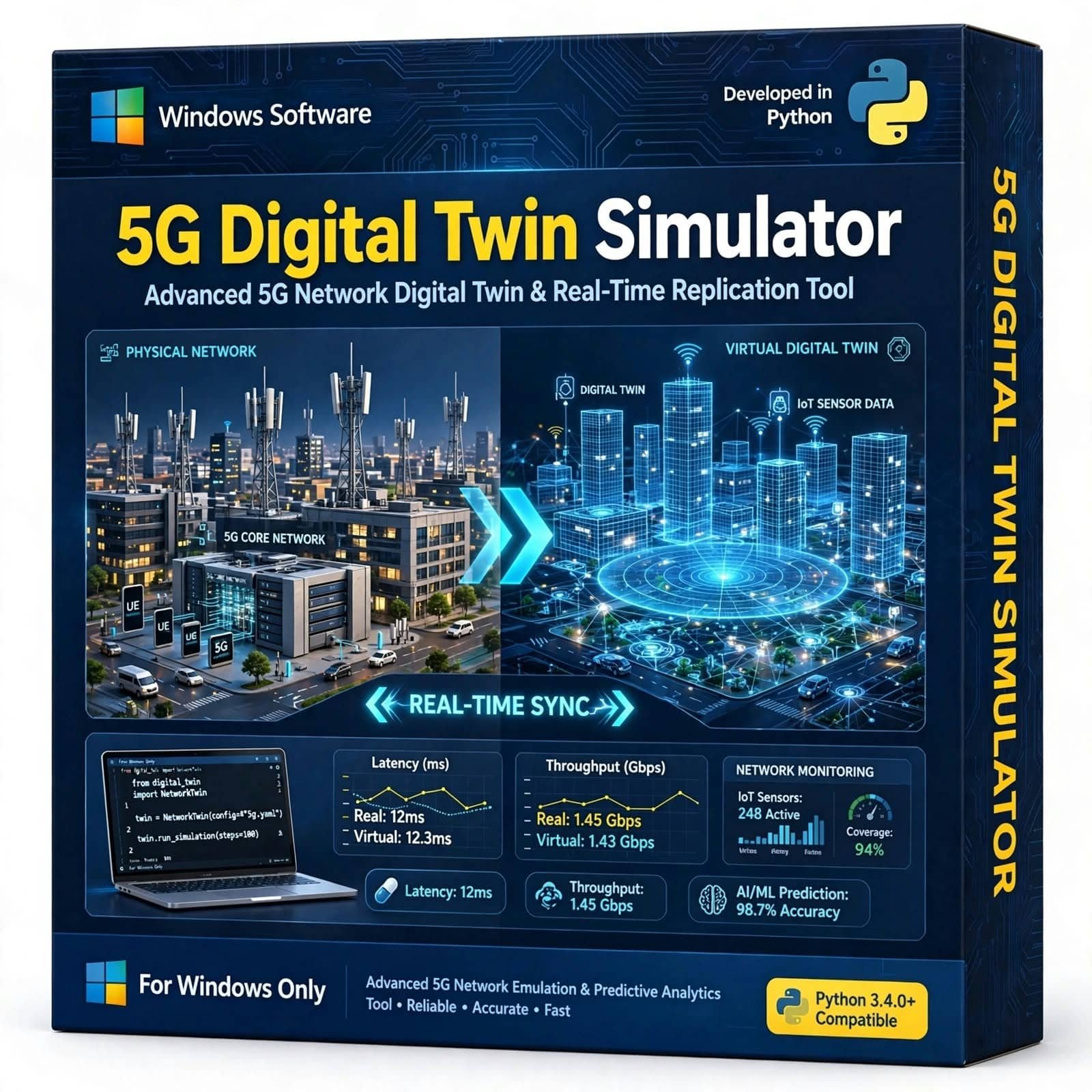
The 5G Digital Twin is a Python-based software solution designed for researchers, engineers, developers, students, and telecommunications professionals interested in modeling, simulating, and analyzing 5G communication networks and their real-world behavior in a virtual environment.
A digital twin provides a virtual representation of a physical or network system, enabling users to study system behavior, evaluate scenarios, analyze performance, and experiment with different configurations. Developed using Python, this 5G Digital Twin can support research, education, network analysis, experimentation, and proof-of-concept development.
Available for sale as a software product. Contact us for pricing, licensing, technical specifications, customization, and purchase information.
₹9,999.00 -
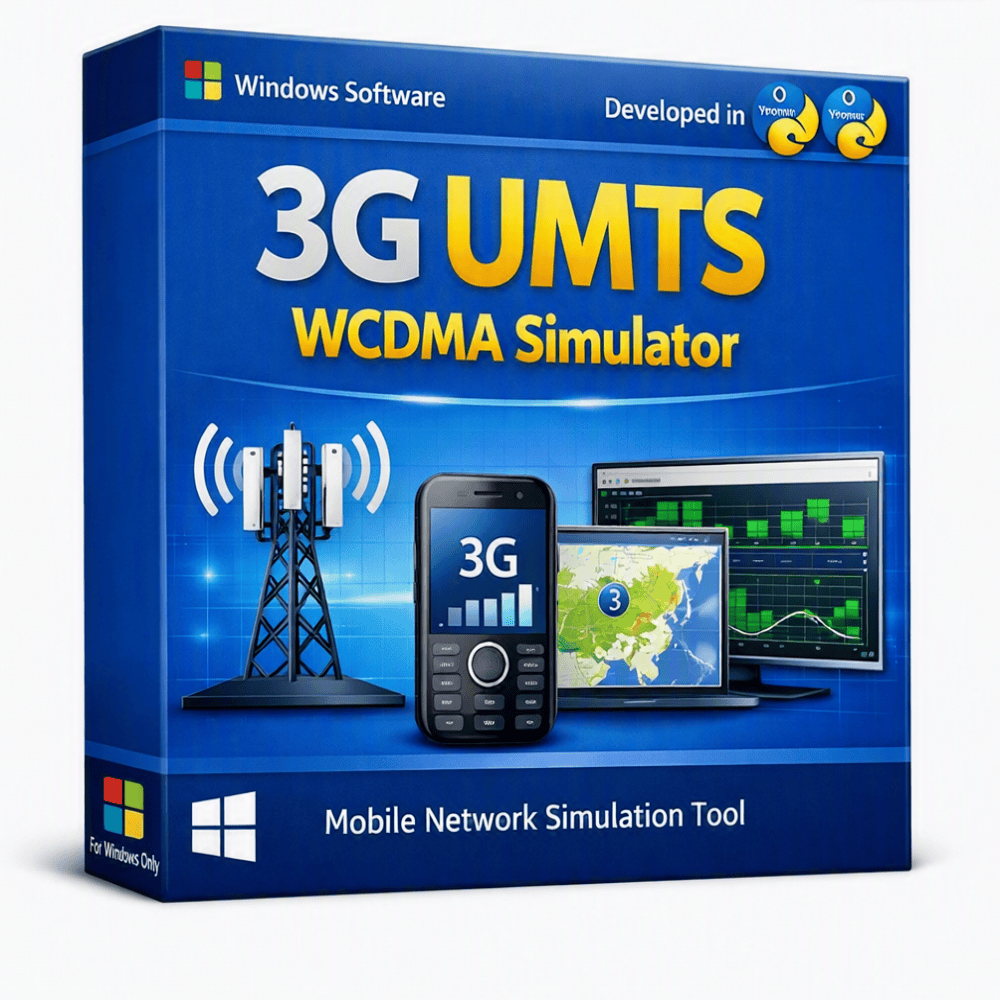
The 3G UMTS – WCDMA Simulator is a software-based simulation project designed to demonstrate the fundamental concepts of 3G Universal Mobile Telecommunications System (UMTS) and Wideband Code Division Multiple Access (WCDMA) technology. It provides a practical environment for studying cellular communication, spreading codes, signal transmission, mobile users, network connectivity, and WCDMA-based communication principles. The simulator is suitable for students, researchers, and developers working on telecommunications and wireless communication projects. It can be used for academic demonstrations, engineering projects, research, experimentation, and learning about 3G mobile communication and WCDMA network technologies.
₹3,999.00 -
The Base Transceiver Station Simulator Using C++ is a practical cellular communication simulation project designed to demonstrate the basic operation of a BTS in a mobile communication network. Developed using C++, the simulator can model communication between mobile users and a base station, including signal handling, user connectivity, channel allocation, and basic network operations. This BTS Simulator project is suitable for engineering students, researchers, and learners working on GSM, wireless communication, cellular networks, and C++ programming projects.
Original price was: ₹750.00.₹250.00Current price is: ₹250.00. -
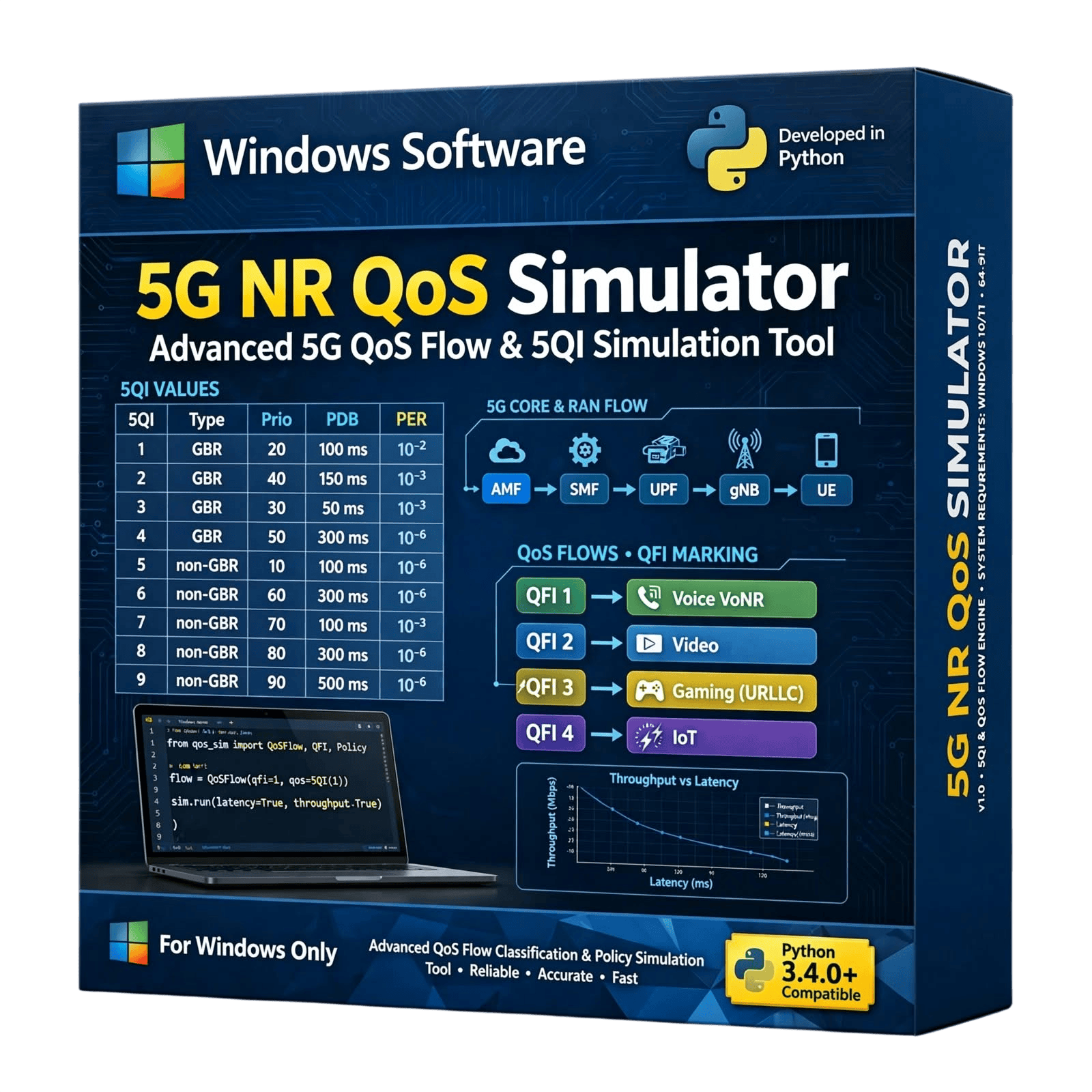
The 5G QoS Simulator is a Python-based software solution designed for researchers, engineers, students, developers, and telecommunications professionals working with 5G Quality of Service (QoS) concepts. The simulator provides a software-based environment for studying and analyzing QoS-related aspects of 5G communication networks, including service performance, traffic behavior, resource management, and network performance evaluation.
Developed using Python, the simulator is suitable for academic research, telecommunications projects, demonstrations, experimentation, algorithm development, and educational applications.
Available for sale as a software product. Contact us for pricing, licensing, features, customization, and purchase information.
Original price was: ₹74,999.00.₹9,999.00Current price is: ₹9,999.00.

Reviews
There are no reviews yet.