-
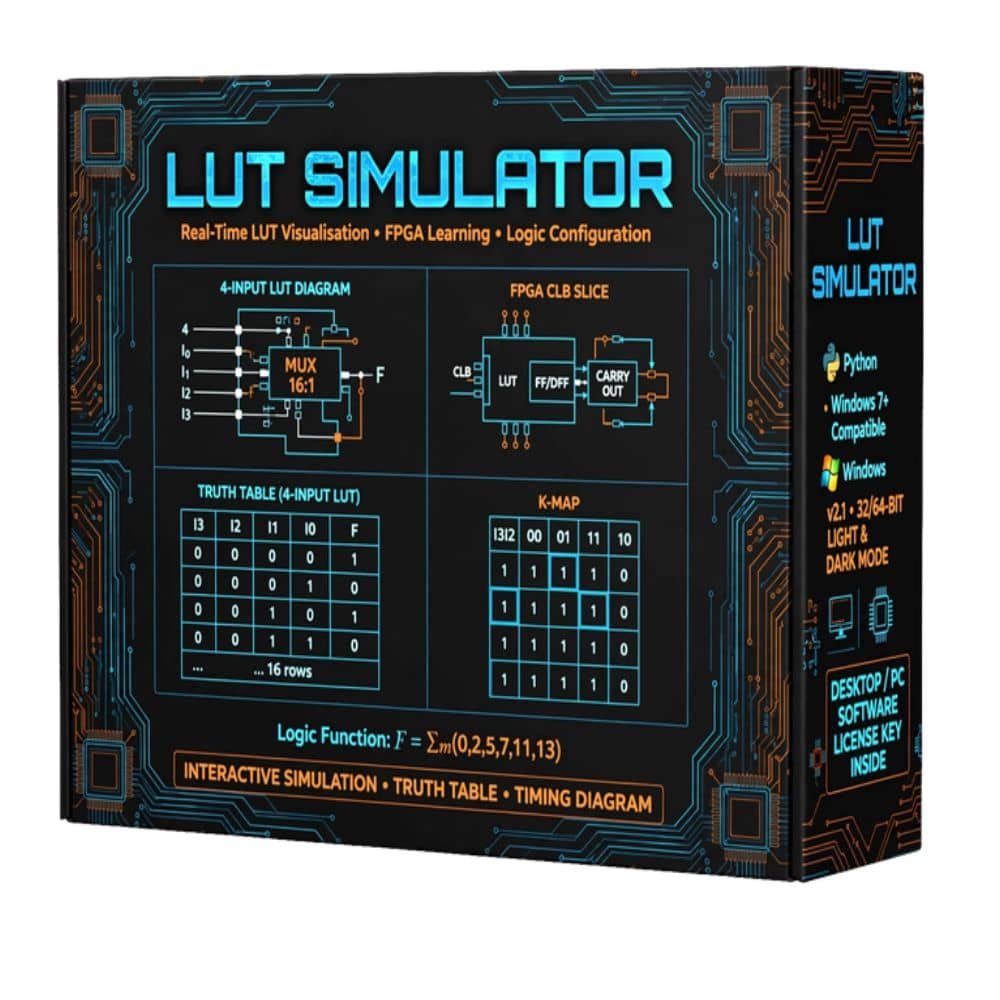
LUT Simulator with Python is an educational digital logic project that demonstrates Look-Up Tables (LUTs) used in programmable gate array and FPGA-based systems. Explore binary inputs, truth tables, stored LUT values, Boolean functions, and combinational logic through a practical Python simulation. Ideal for students, electronics enthusiasts, FPGA learners, and digital design projects.
Original price was: ₹750.00.₹250.00Current price is: ₹250.00. -
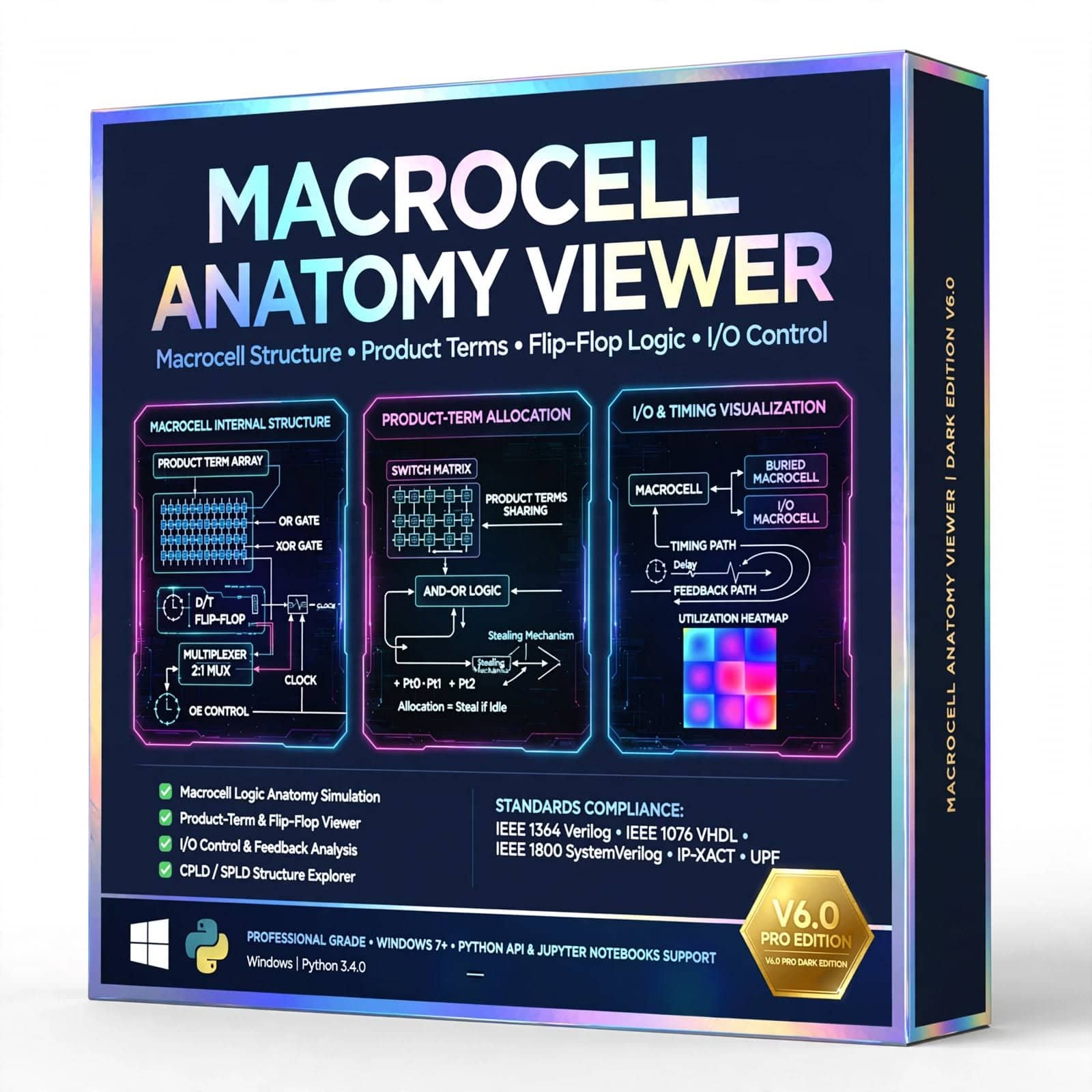
Macrocell Anatomy Viewer with Python is an educational visualization tool designed to help users understand the internal structure and operation of programmable logic macrocells. The project provides a practical way to explore components such as programmable logic, product terms, multiplexers, registers, feedback paths, and output logic.
Ideal for electronics students, digital logic learners, FPGA and CPLD enthusiasts, hardware designers, educators, and Python developers studying programmable logic devices, CPLD architecture, macrocell design, and digital circuit fundamentals.
Original price was: ₹750.00.₹250.00Current price is: ₹250.00. -
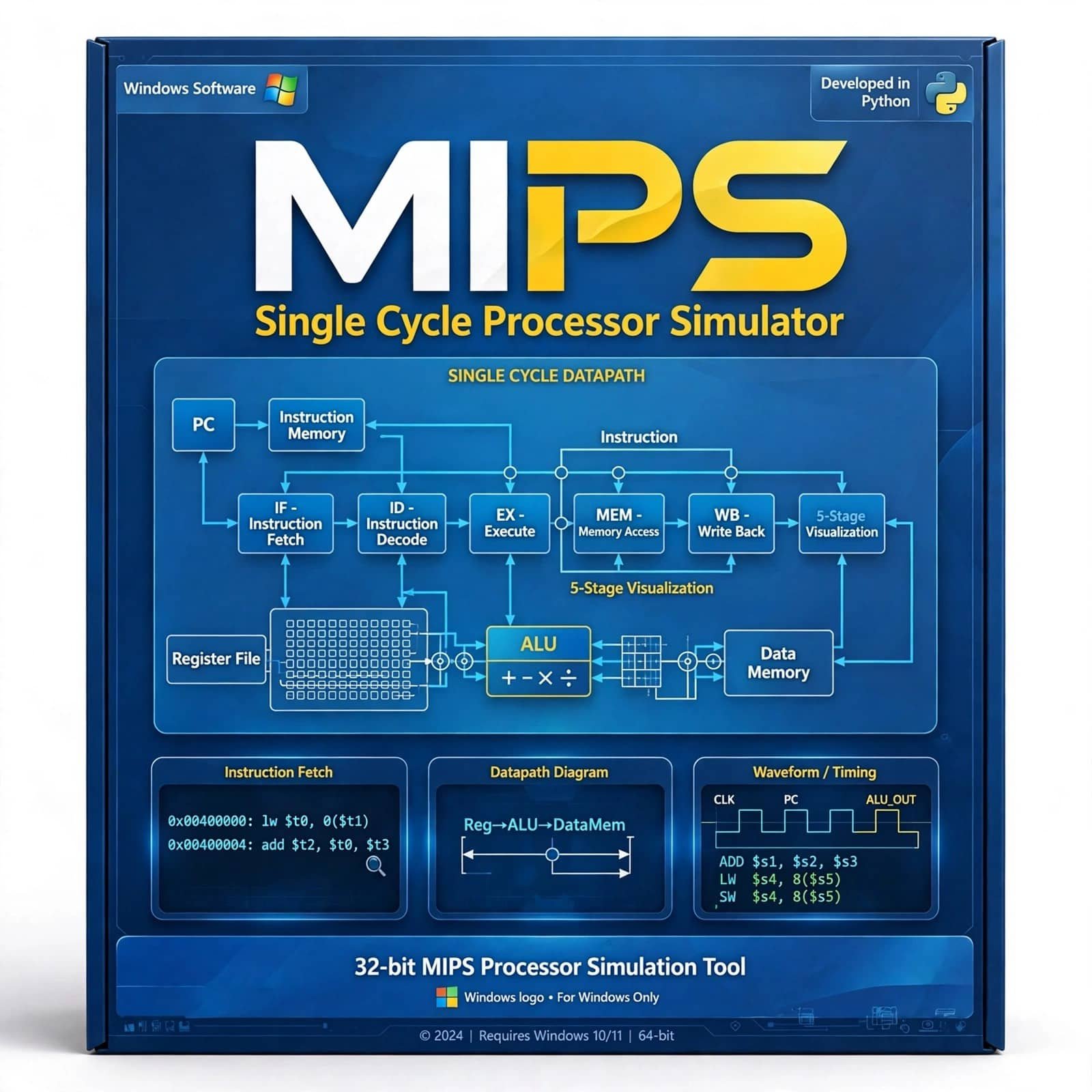
Master computer architecture hands-on with the MIPS Single Cycle Processor Simulator—an interactive software environment designed to bridge the gap between assembly language programming and hardware execution. Engineered for students, educators, and embedded systems developers, this simulator offers real-time visual tracking of data paths, register states, memory operations, and control line activations. By executing every MIPS instruction—from arithmetic and logical operations to branches and memory loads—in a single clock cycle, the tool provides immediate clarity on fundamental CPU operations. Step through code, inspect $t0-$s7 registers, edit RAM values, and debug complex assembly routines in an intuitive interface. Whether you are preparing for CS exams, designing custom FPGA hardware, or teaching micro-architecture, this light, responsive tool turns abstract micro architecture theories into visual, interactive learning.
Original price was: ₹750.00.₹250.00Current price is: ₹250.00. -
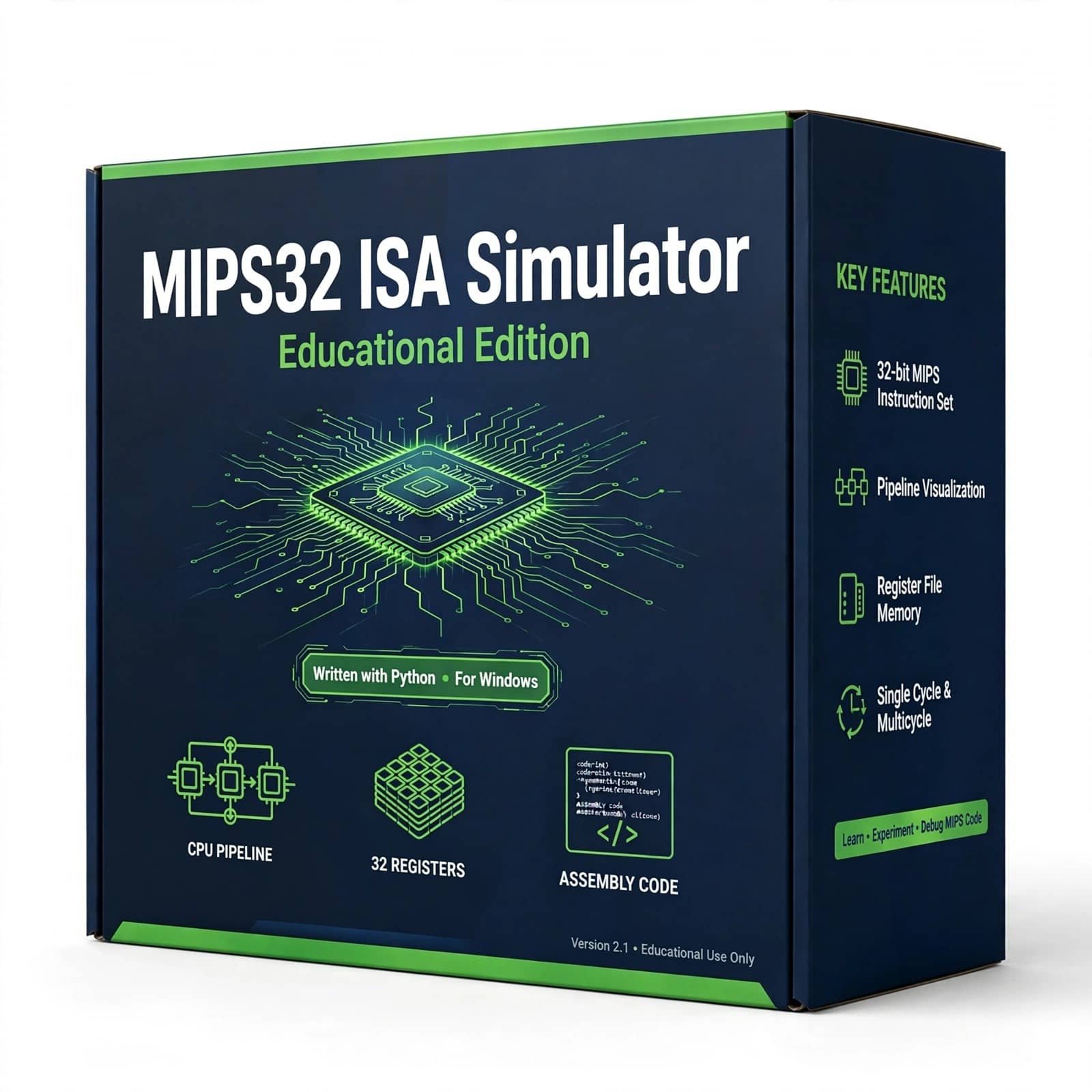
MIPS32 ISA Simulator with Python is a practical software simulator for learning, developing, and experimenting with the MIPS32 Instruction Set Architecture. Built for students, educators, computer architecture researchers, and developers, it provides a Python-based environment for executing and analyzing MIPS32 instructions, registers, memory operations, arithmetic and logical instructions, branching, and program execution. Ideal for computer architecture courses, processor simulation, assembly programming, academic projects, and instruction-set research.
Original price was: ₹750.00.₹250.00Current price is: ₹250.00. -
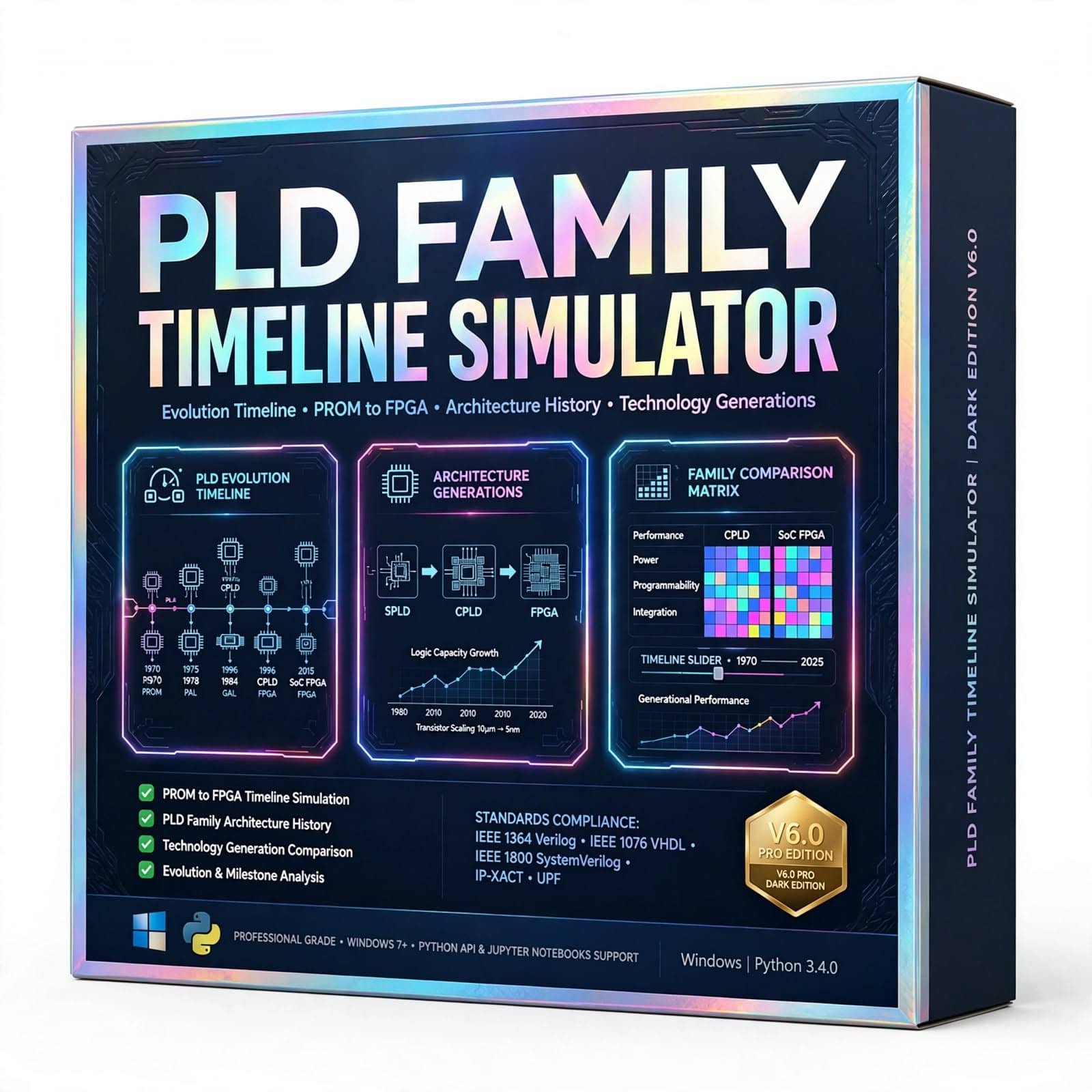
PLD Family Timeline Simulator with Python 3.4.0 is an educational and analytical software tool for exploring the historical evolution of Programmable Logic Devices (PLDs). Designed with Python 3.4.0, the simulator helps users study major PLD families, understand their technological progression, and visualize the transition from early programmable logic technologies to more advanced programmable devices.
Ideal for electronics students, digital design learners, researchers, educators, and hardware enthusiasts studying PLD architecture, programmable logic, FPGA history, CPLD technology, and digital electronics.
Original price was: ₹750.00.₹150.00Current price is: ₹150.00. -
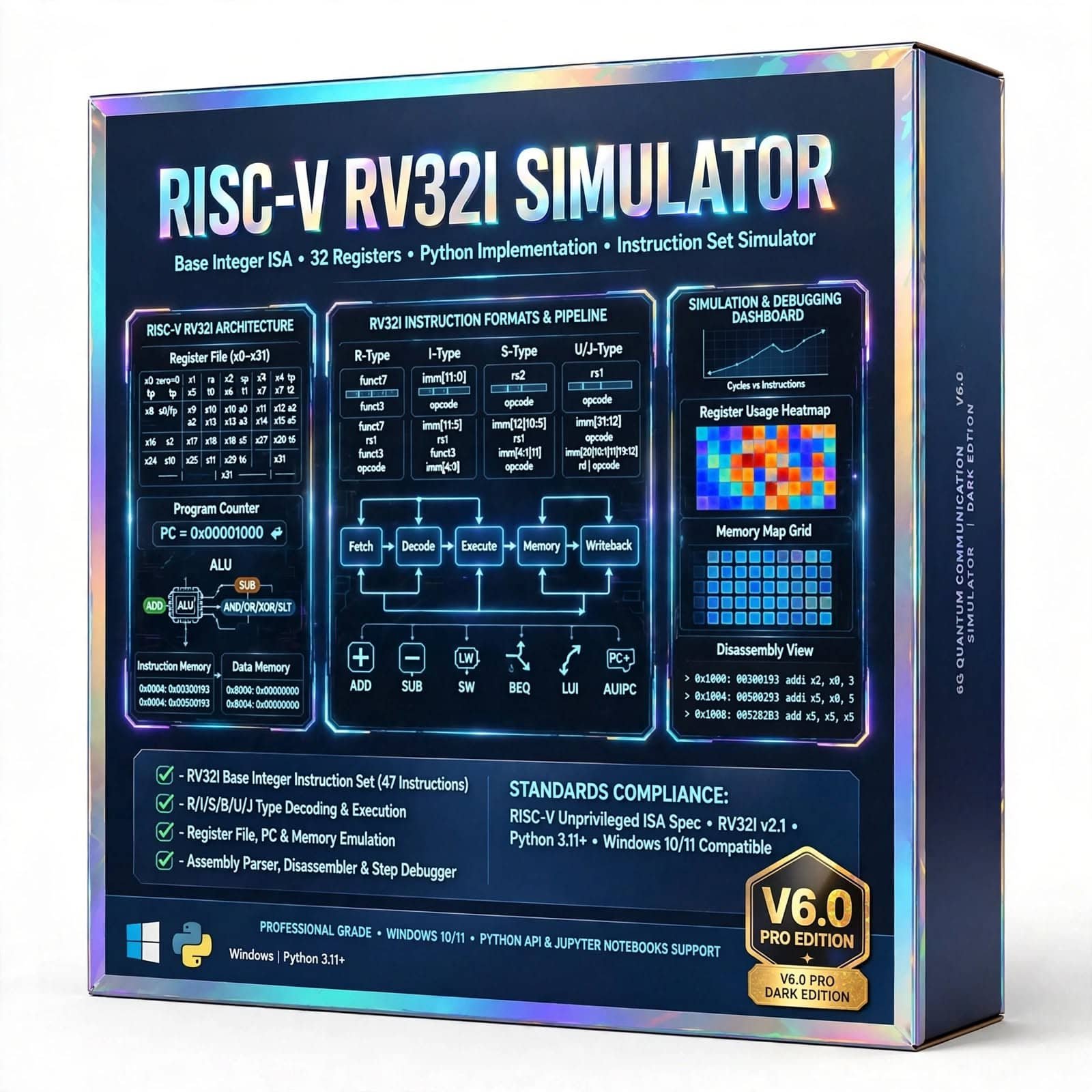
RISC-V RV32I Simulator in Python It can be able to emulate 47 base instructions, 32 registers & memory. Perfect for students, developers & researchers. A lightweight, pure-Python RISC-V RV32I Instruction Set Simulator (ISS). Accurately emulates the complete 32-bit base integer ISA with 32 registers, full memory model, and step-through debugging. Supports RISC-V assembly parsing, disassembly, and execution tracing. No dependencies, highly readable code – the best tool to learn computer architecture and test RISC-V programs without hardware.
Original price was: ₹750.00.₹100.00Current price is: ₹100.00. -
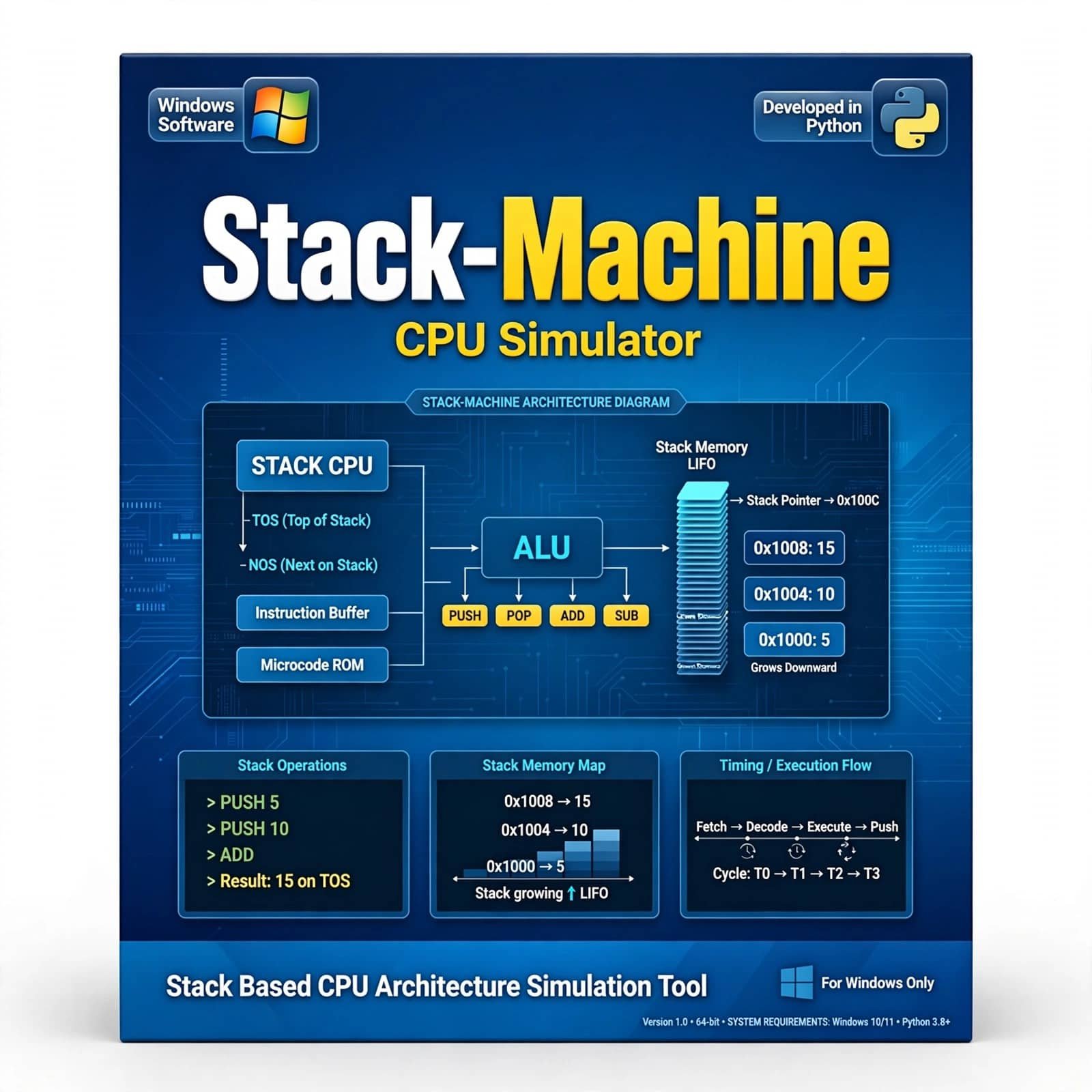
Master zero-address computer architecture with the Stack-Machine CPU Simulator—an interactive visual environment built to demonstrate evaluation stack mechanics, Reverse Polish Notation (RPN), and low-level memory operations. Engineered for computer science students, compiler developers, and embedded system designers, this lightweight tool turns implicit CPU execution into a clear, visual learning experience.
Watch data flow through Push, Pop, ALU operations, and function call frames without the overhead of explicit register files. Step through bytecode step-by-step, inspect Top-of-Stack (TOS) and Next-on-Stack (NOS) states in real time, and gain immediate insight into how virtual machines like Java JVM, Forth, and WebAssembly process instructions. Whether you are building custom compilers, studying computer organization, or teaching microarchitecture, this software bridges abstract expression evaluation and physical execution.
Original price was: ₹750.00.₹250.00Current price is: ₹250.00.