
New
67% Off

MIPS32 ISA Simulator

Original price was: ₹750.00.₹250.00Current price is: ₹250.00.
In StockMIPS32 ISA Simulator with Python is a practical software simulator for learning, developing, and experimenting with the MIPS32 Instruction Set Architecture. Built for students, educators, computer architecture researchers, and developers, it provides a Python-based environment for executing and analyzing MIPS32 instructions, registers, memory operations, arithmetic and logical instructions, branching, and program execution. Ideal for computer architecture courses, processor simulation, assembly programming, academic projects, and instruction-set research.
Description
MIPS32 ISA Simulator
Understanding how a processor executes instructions is a fundamental part of computer architecture and assembly language programming. The MIPS32 Instruction Set Architecture (ISA) provides a structured and widely studied example of a RISC-style processor architecture. The MIPS32 ISA Simulator with Python provides a software-based environment for exploring processor instructions, registers, memory, program execution, and instruction-level behavior.
Designed for students, educators, researchers, and software developers, this simulator makes it possible to study MIPS32 instruction execution without requiring physical processor hardware. By simulating the instruction set in Python, users can experiment with assembly programs, examine processor state, and develop a practical understanding of how instructions are processed.
Explore MIPS32 Instruction Set Architecture
An instruction set architecture defines the instructions, registers, memory model, and programmer-visible behavior of a processor. MIPS32 is a well-known RISC architecture that provides an excellent foundation for studying these concepts.
The simulator allows users to investigate how MIPS32 instructions operate and how individual instructions affect registers and memory. This provides a practical bridge between theoretical computer architecture concepts and actual instruction execution.
Students can use the simulator to understand how assembly-language instructions are translated into operations performed by a processor.
Python-Based MIPS32 Simulation
Python provides a flexible environment for implementing and studying processor architectures. A Python-based MIPS32 simulator makes it easier to experiment with instruction execution, modify simulation logic, create test programs, and analyze processor state.
The simulator can be useful for academic laboratories and projects where students need to understand the relationship between assembly instructions and processor behavior.
Study Instruction Execution
A processor executes instructions through a sequence of operations that may involve fetching an instruction, decoding it, reading registers, performing an operation, accessing memory, and updating processor state.
Instruction-level simulation allows users to observe these operations in a controlled software environment. Instead of treating assembly instructions as abstract commands, students can examine how each instruction changes the simulated processor state.
This can be especially useful when learning arithmetic operations, logical operations, memory access, control flow, and register manipulation.
Understand Registers and Memory
Registers and memory are fundamental components of processor architecture. MIPS32 provides a register-based instruction model that is useful for demonstrating how processors work with operands and intermediate results.
The simulator provides an environment for experimenting with registers, memory addresses, data movement, and instruction execution. Users can write or test assembly programs and observe the resulting state changes.
This practical experience can make processor architecture concepts easier to understand.
Branching and Program Control
Control-flow instructions are an important part of assembly programming. Branches and jumps allow programs to make decisions, create loops, and execute different sections of code.
A MIPS32 simulator provides a useful environment for studying these operations. Students can create simple programs and observe how control-flow instructions change program execution.
This is valuable for understanding the relationship between assembly-language programming and processor-level control flow.
Useful for Computer Architecture Projects
The simulator can support a wide variety of academic and technical projects related to processor architecture and assembly programming.
Typical applications include:
- MIPS32 instruction simulation
- Computer architecture education
- Assembly language programming
- Processor architecture projects
- RISC architecture studies
- Instruction-set research
- CPU simulation projects
- Compiler and assembly experiments
- Academic laboratory exercises
- Python-based processor modeling
Educational Applications
Computer architecture can be difficult to learn when students only study block diagrams and instruction descriptions. A simulator provides a practical way to execute instructions and observe their effects.
Students can experiment with MIPS32 programs and investigate how different instructions affect registers, memory, and program flow. This can help reinforce concepts taught in computer architecture, operating systems, embedded systems, and assembly-language courses.
Educators can also use a simulator to demonstrate instruction execution during lectures and laboratory sessions.

Assembly Programming Practice
Learning assembly language requires understanding how high-level programming concepts map to low-level instructions. A MIPS32 simulator can provide a controlled environment for practicing these concepts.
Users can experiment with arithmetic calculations, logical operations, data movement, conditional branches, loops, and memory operations. By examining the simulated processor state, users can develop a better understanding of how assembly programs execute.
Processor and ISA Research
A software simulator can also be useful for researchers and developers exploring instruction-set concepts. Python makes it possible to modify and extend simulation logic for experimental purposes.
Researchers can use a simulator as a starting point for instruction-set experimentation, educational processor modeling, architecture demonstrations, and academic research projects.
Key Benefits
- Python-based MIPS32 ISA simulation
- Useful for learning MIPS32 architecture
- Supports instruction-level execution experiments
- Helps understand registers and memory
- Useful for assembly-language programming
- Suitable for computer architecture courses
- Useful for processor and ISA projects
- Supports branching and program-control studies
- Suitable for academic research and prototyping
- Provides a software environment for CPU instruction experimentation
Who Can Use This Product?
The MIPS32 ISA Simulator with Python is suitable for computer science students, computer engineering students, educators, researchers, embedded-system developers, assembly programmers, and professionals interested in processor architecture.
It is particularly useful for university courses and projects involving computer architecture, assembly language, processor design, instruction-set architectures, compiler development, and low-level programming.
Product Summary
The MIPS32 ISA Simulator with Python provides a practical environment for studying and experimenting with the MIPS32 instruction set architecture. By simulating processor instructions, registers, memory, and program execution, it helps users connect computer architecture theory with instruction-level behavior.
Whether you are learning assembly programming, teaching computer architecture, developing an academic project, or researching processor and ISA concepts, the simulator provides a flexible software environment for experimentation and learning.
Explore MIPS32 processor architecture with Python and gain practical experience with instruction execution, registers, memory, branching, assembly programming, and instruction-set simulation.
Related products
-
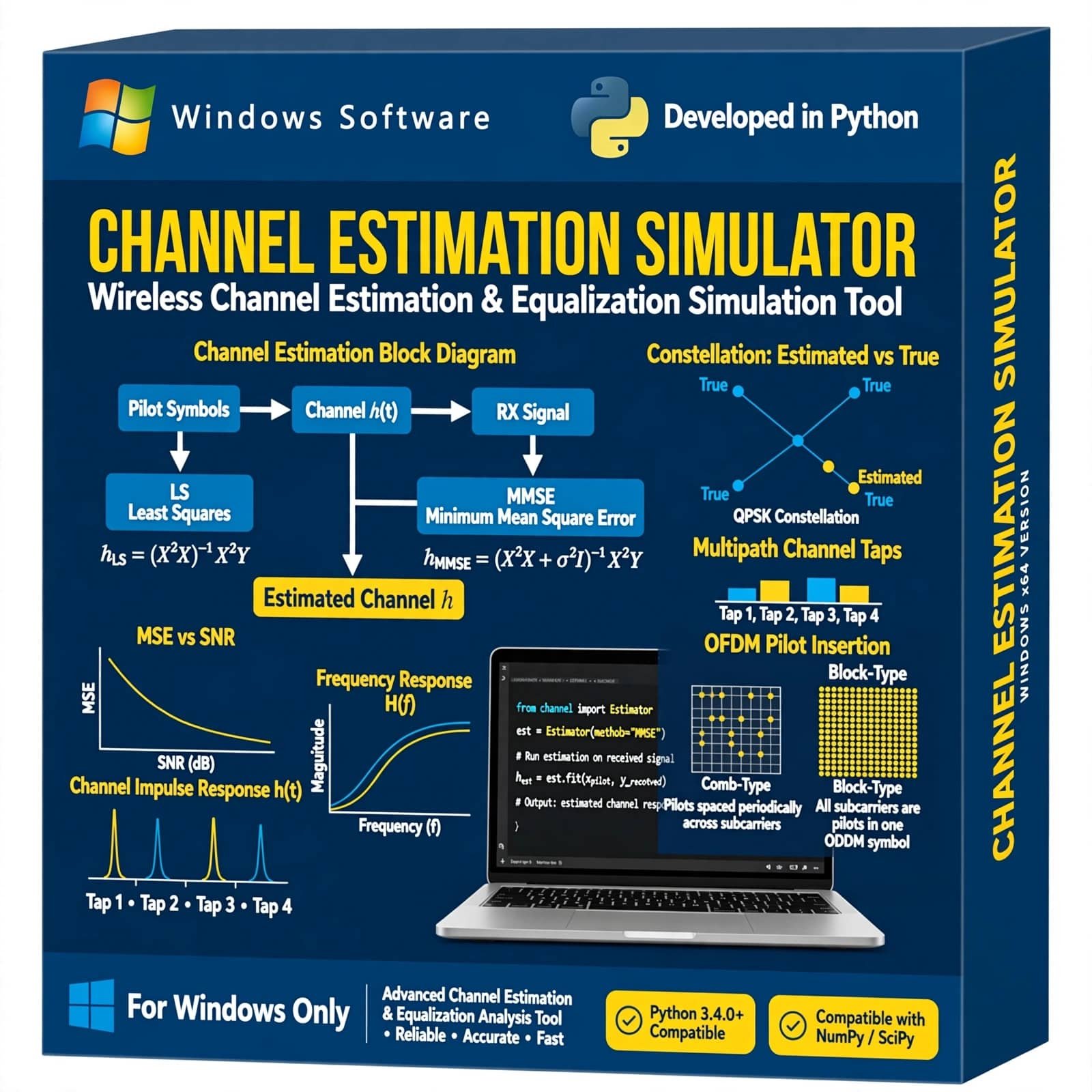
Channel Estimation Simulator is a wireless communication simulation tool designed to demonstrate and analyze channel estimation techniques in digital communication systems. It helps students, researchers, and communication engineers study channel effects, pilot-based estimation, signal distortion, and estimation performance through practical simulation.
Original price was: ₹750.00.₹250.00Current price is: ₹250.00. -
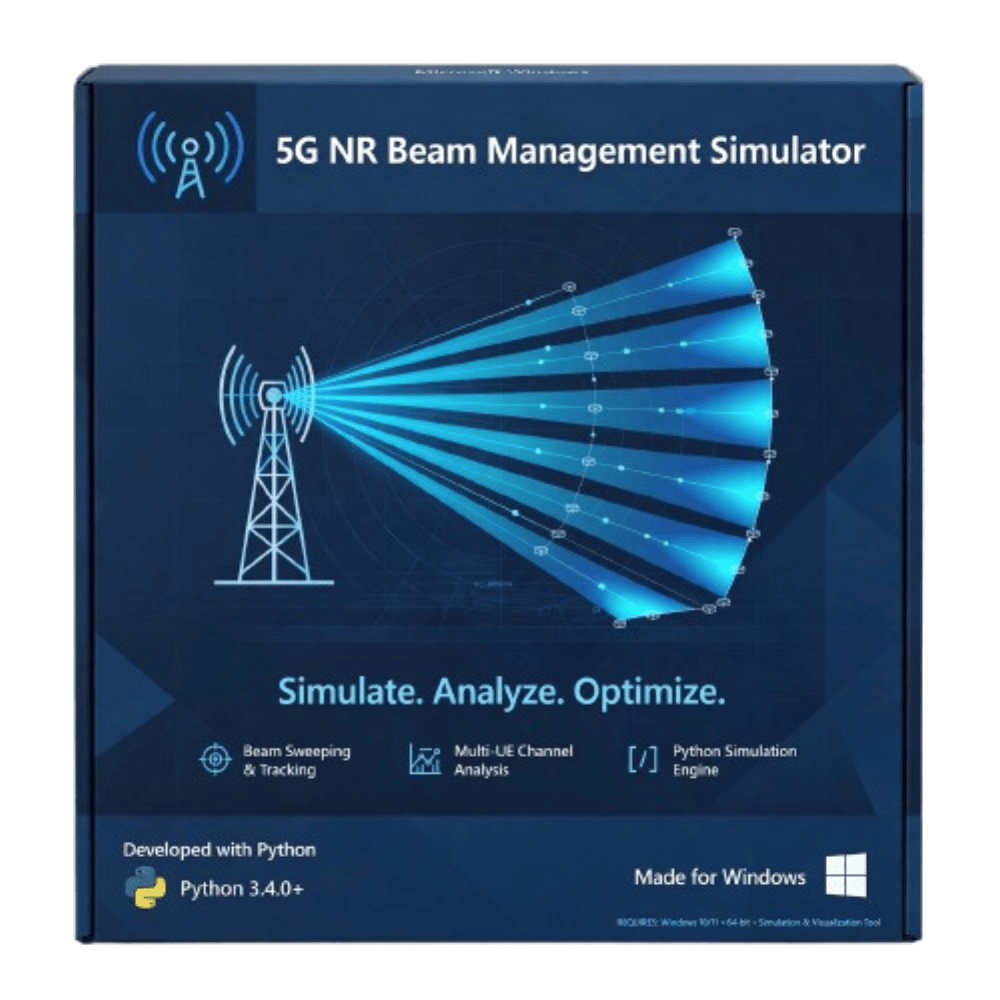
5G NR Beam Management Simulator is an advanced simulation solution designed to model, analyze, and optimize beam management procedures in 5G New Radio (NR) networks. It enables engineers and researchers to evaluate beam sweeping, beam measurement, beam selection, beam reporting, and beam recovery under diverse network and channel conditions. The simulator supports performance analysis of directional communication, helping users assess beamforming strategies, mobility scenarios, link reliability, and system-level performance before real-world deployment.
Original price was: ₹750.00.₹250.00Current price is: ₹250.00. -
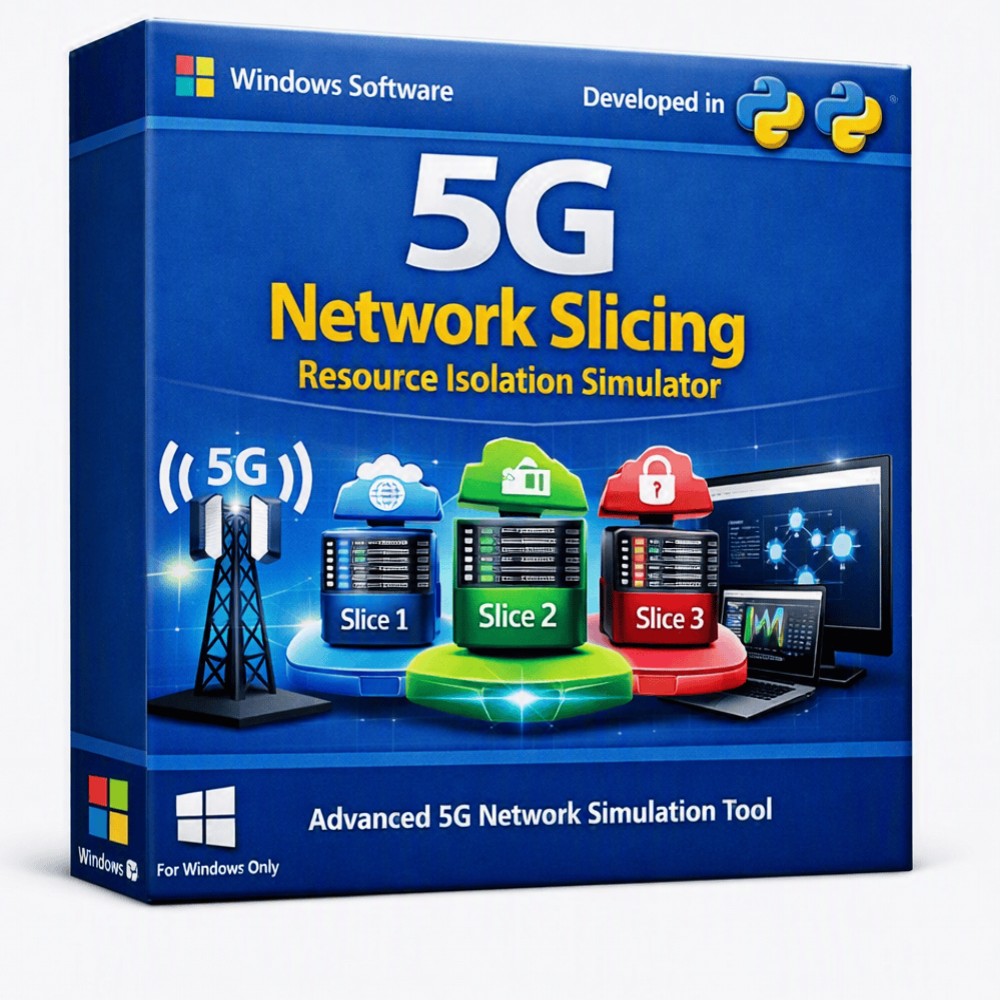
A Python-based 5G Network Slicing and Resource Isolation Simulator designed to model and analyze how multiple logical network slices can share physical 5G infrastructure while maintaining resource isolation. The simulator enables users to study CPU, memory, bandwidth, network capacity, traffic allocation, and resource management across different 5G network slices.
Ideal for 5G research, telecom engineering, academic projects, network optimization, resource allocation studies, and university laboratories.
Original price was: ₹750.00.₹250.00Current price is: ₹250.00. -
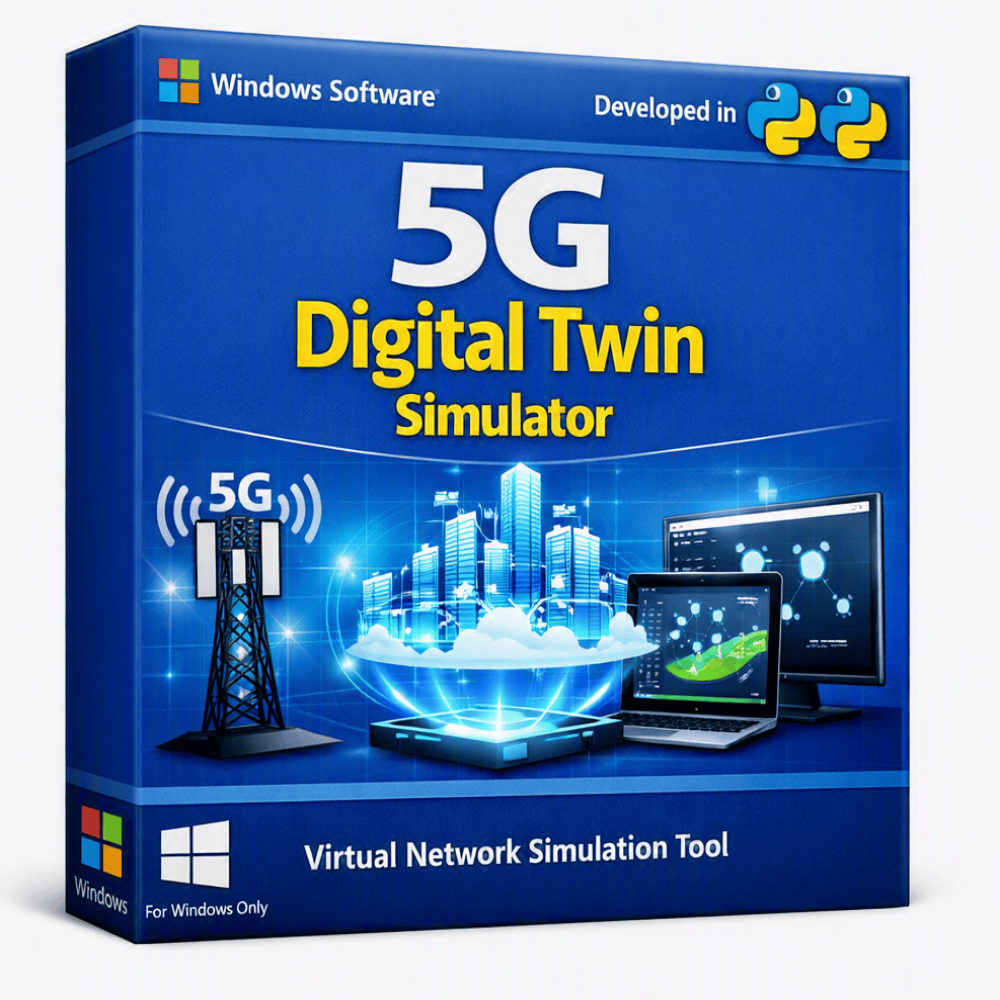
A Python-based 5G Digital Twin solution for creating a virtual representation of 5G network environments, components, and operational behavior. Designed for 5G research, network analysis, simulation, optimization, and academic projects, it enables users to model network scenarios, monitor virtualized network behavior, and experiment with different configurations in a controlled software environment.
Ideal for telecom engineers, researchers, developers, students, and academic institutions working on 5G network planning, performance analysis, intelligent network management, and digital twin research.
Original price was: ₹750.00.₹250.00Current price is: ₹250.00. -
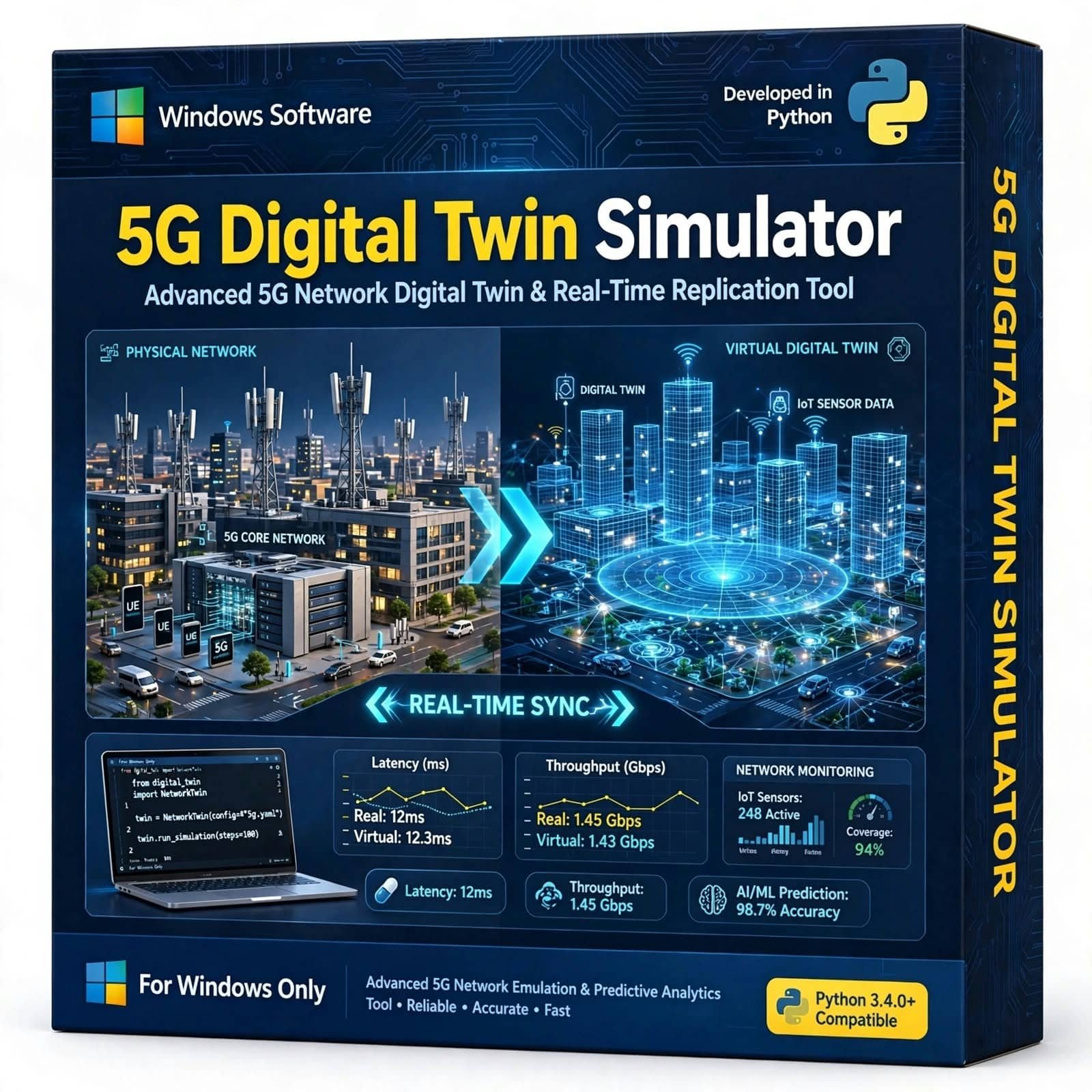
The 5G Digital Twin is a Python-based software solution designed for researchers, engineers, developers, students, and telecommunications professionals interested in modeling, simulating, and analyzing 5G communication networks and their real-world behavior in a virtual environment.
A digital twin provides a virtual representation of a physical or network system, enabling users to study system behavior, evaluate scenarios, analyze performance, and experiment with different configurations. Developed using Python, this 5G Digital Twin can support research, education, network analysis, experimentation, and proof-of-concept development.
Available for sale as a software product. Contact us for pricing, licensing, technical specifications, customization, and purchase information.
Original price was: ₹750.00.₹250.00Current price is: ₹250.00. -
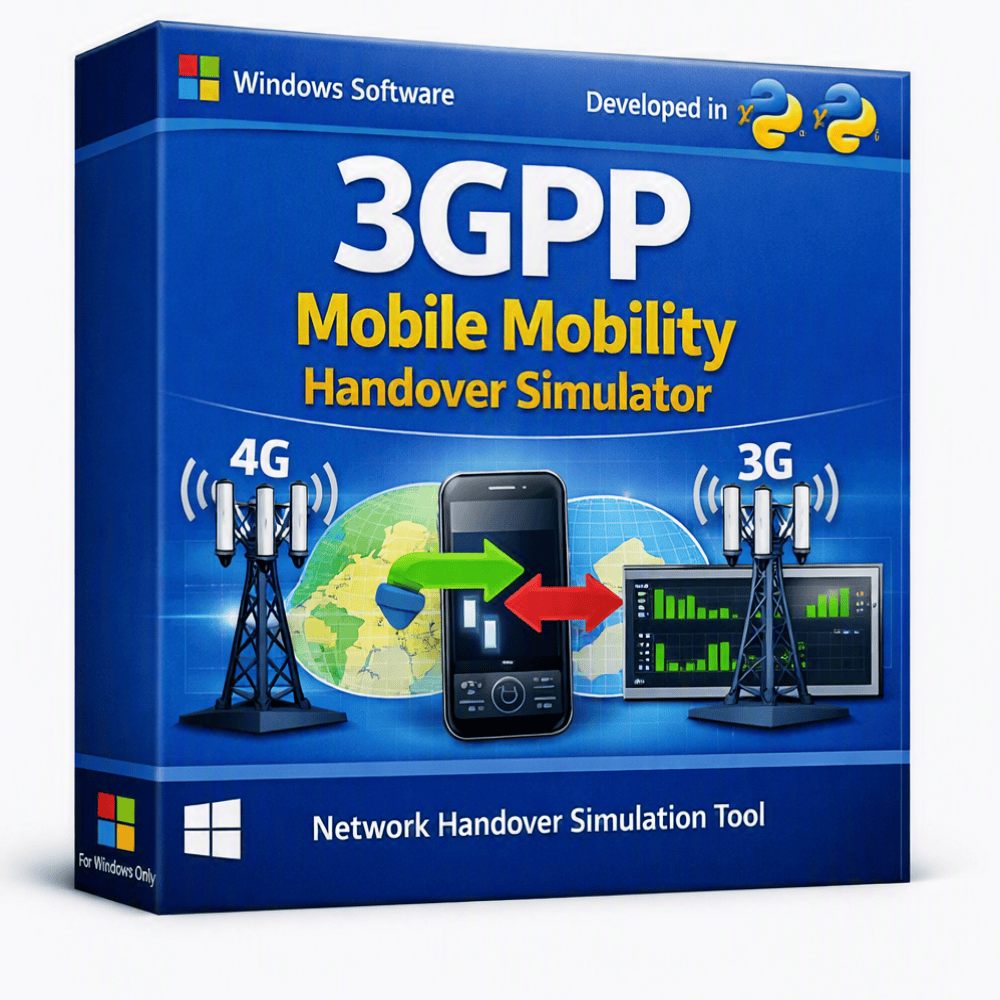
A powerful simulation tool for analyzing and validating 3GPP mobile mobility and handover procedures. The simulator enables users to model mobile network scenarios, study handover behavior, and evaluate mobility performance under different network conditions.
Key Features:
- 3GPP-compliant mobility and handover simulation
- Configurable network and mobility scenarios
- Analysis of handover performance and behavior
- Supports research, testing, and network optimization
- Useful for telecom engineers, researchers, and academic projects
Ideal for 5G/4G/3G mobility research, protocol testing, network planning, and academic simulation studies.
Original price was: ₹750.00.₹250.00Current price is: ₹250.00.


Reviews
There are no reviews yet.