
New
67% Off

Macrocell Anatomy Viewer


Original price was: ₹750.00.₹250.00Current price is: ₹250.00.
In StockMacrocell Anatomy Viewer with Python is an educational visualization tool designed to help users understand the internal structure and operation of programmable logic macrocells. The project provides a practical way to explore components such as programmable logic, product terms, multiplexers, registers, feedback paths, and output logic.
Ideal for electronics students, digital logic learners, FPGA and CPLD enthusiasts, hardware designers, educators, and Python developers studying programmable logic devices, CPLD architecture, macrocell design, and digital circuit fundamentals.
Description
Macrocell Anatomy Viewer
Understanding the internal architecture of programmable logic devices can be challenging when concepts such as product terms, programmable logic arrays, multiplexers, registers, feedback paths, and output logic are studied only through static diagrams. The Macrocell Anatomy Viewer with Python provides a practical visualization-oriented approach to learning how a programmable logic macrocell is structured and how its different functional elements work together.
Designed as a Python-based educational project, the Macrocell Anatomy Viewer can help students, electronics enthusiasts, digital design learners, researchers, and hardware developers explore the anatomy of a programmable logic macrocell in a more interactive and understandable way.
The project is particularly relevant to the study of CPLD architecture, programmable logic devices (PLDs), digital logic design, macrocell architecture, configurable hardware, and programmable digital circuits.

What Is a Macrocell?
A macrocell is a fundamental building block used in various programmable logic architectures. Depending on the device family and architecture, a macrocell can contain programmable logic resources along with elements such as product-term logic, multiplexers, registers, output controls, and feedback paths.
Understanding the macrocell is important for anyone studying how programmable logic devices implement digital functions.
Rather than treating a programmable logic device as a black box, the Macrocell Anatomy Viewer with Python focuses on the internal building blocks that contribute to its operation. This makes the project useful for learning how logic equations can be implemented, processed, registered, and routed toward outputs or feedback paths.

Explore Macrocell Architecture
The Macrocell Anatomy Viewer is designed to provide a structured representation of the different sections that can make up a programmable logic macrocell.
Depending on the implementation, users can explore concepts such as:
- Programmable logic inputs
- Product-term generation
- AND/OR logic structures
- Multiplexers
- D-type registers
- Combinational and registered outputs
- Output enable logic
- Feedback paths
- Logic routing
- Programmable connections
- Macrocell configuration
These elements are important when learning how CPLDs and other programmable logic technologies implement configurable digital circuits.
Learn Through Visualization
Digital hardware architecture is often easier to understand when logical relationships are represented visually. A macrocell may contain several interconnected functional blocks, and understanding how signals move between these blocks can help learners develop a stronger foundation in programmable logic design.

The Macrocell Anatomy Viewer with Python provides a software-based approach to examining these relationships. Instead of simply reading about a macrocell, users can use the viewer as a conceptual representation of its internal structure.
This approach can be especially helpful for students studying digital electronics, programmable logic, computer engineering, FPGA/CPLD architecture, and hardware design.
Python-Based Educational Project
Python is widely used for educational software, simulations, visualization applications, and engineering tools. Developing a Macrocell Anatomy Viewer with Python provides an opportunity to combine programming concepts with digital hardware architecture.
Students can use the project to explore how software can represent hardware structures and logical relationships. Developers can also use the project as a foundation for creating more advanced digital logic visualization tools.
Depending on the implementation, the project can be extended with additional device configurations, interactive controls, logic-state indicators, timing information, or other educational features.

Understanding CPLD Macrocells
Macrocells are particularly important when studying Complex Programmable Logic Devices (CPLDs). CPLDs typically contain multiple programmable logic blocks and macrocells connected through programmable routing resources.
A macrocell can provide the logic required to implement specific Boolean functions while also supporting registered logic and output connectivity. The exact architecture varies between device families, so studying macrocell anatomy provides a useful conceptual foundation rather than assuming that every programmable logic device uses an identical implementation.
The Macrocell Anatomy Viewer can help learners examine these concepts at the building-block level.
Combinational and Registered Logic
One important concept in macrocell architecture is the distinction between combinational logic and registered logic.
Combinational logic produces outputs based on current input conditions, while registered logic uses storage elements such as flip-flops to retain state between clock events.
Many programmable logic macrocells can support both types of operation through configurable logic paths. Exploring these paths helps students understand how a single macrocell can be used for different types of digital logic functions.
The viewer therefore provides a useful starting point for studying the relationship between programmable logic, Boolean functions, multiplexing, registers, and output control.

Who Can Use the Macrocell Anatomy Viewer?
This project is suitable for a wide range of users, including:
- Electronics engineering students
- Electrical engineering students
- Computer engineering students
- Digital electronics learners
- CPLD beginners
- FPGA enthusiasts
- Hardware design students
- Programmable logic researchers
- Electronics educators
- Python developers
- Embedded systems learners
It can also be useful as a college project, academic demonstration, Python visualization project, digital electronics laboratory resource, or programmable logic learning tool.
Educational Applications
The Macrocell Anatomy Viewer can be incorporated into courses and projects covering digital logic design, programmable logic devices, CPLDs, FPGA fundamentals, computer engineering, and hardware architecture.
Students can use the project to investigate how individual logic elements interact within a macrocell and how those elements contribute to a larger programmable logic architecture.
Educators can also use the concept as a demonstration aid when introducing programmable logic architectures and explaining the difference between high-level device functionality and the underlying hardware building blocks.
Customizable and Extendable
Because the project is implemented in Python, it can provide a foundation for additional experimentation and development. Users with Python programming knowledge can adapt the viewer to represent different macrocell configurations, add new visualization elements, or incorporate interactive logic demonstrations.
Possible extensions can include signal-flow visualization, configurable logic states, Boolean equation input, timing demonstrations, register-state visualization, or comparisons between different programmable logic architectures.
This makes the project useful not only as a learning resource but also as a starting point for developing more advanced digital hardware visualization and simulation software.
Key Features
- Python-based Macrocell Anatomy Viewer
- Visualization of programmable logic structures
- Study of macrocell architecture
- Exploration of product-term logic
- Understanding of multiplexers and registers
- Combinational and registered logic concepts
- Feedback and output-path visualization
- Useful for CPLD architecture studies
- Suitable for digital electronics education
- Customizable Python project
- Useful for academic and hardware design projects
Get the Macrocell Anatomy Viewer with Python
The Macrocell Anatomy Viewer with Python provides a practical way to explore the internal building blocks of programmable logic macrocells. By combining Python programming with digital hardware concepts, the project can help users develop a clearer understanding of how programmable logic architectures implement configurable digital functions.
Whether you are studying CPLD macrocells, programmable logic devices, digital circuit design, Boolean logic, FPGA fundamentals, or hardware architecture, this project offers a useful foundation for visualization, experimentation, and further development.
Use the Macrocell Anatomy Viewer as an educational project, classroom demonstration, research foundation, or customizable Python tool for exploring the anatomy of programmable logic hardware.
Related products
-
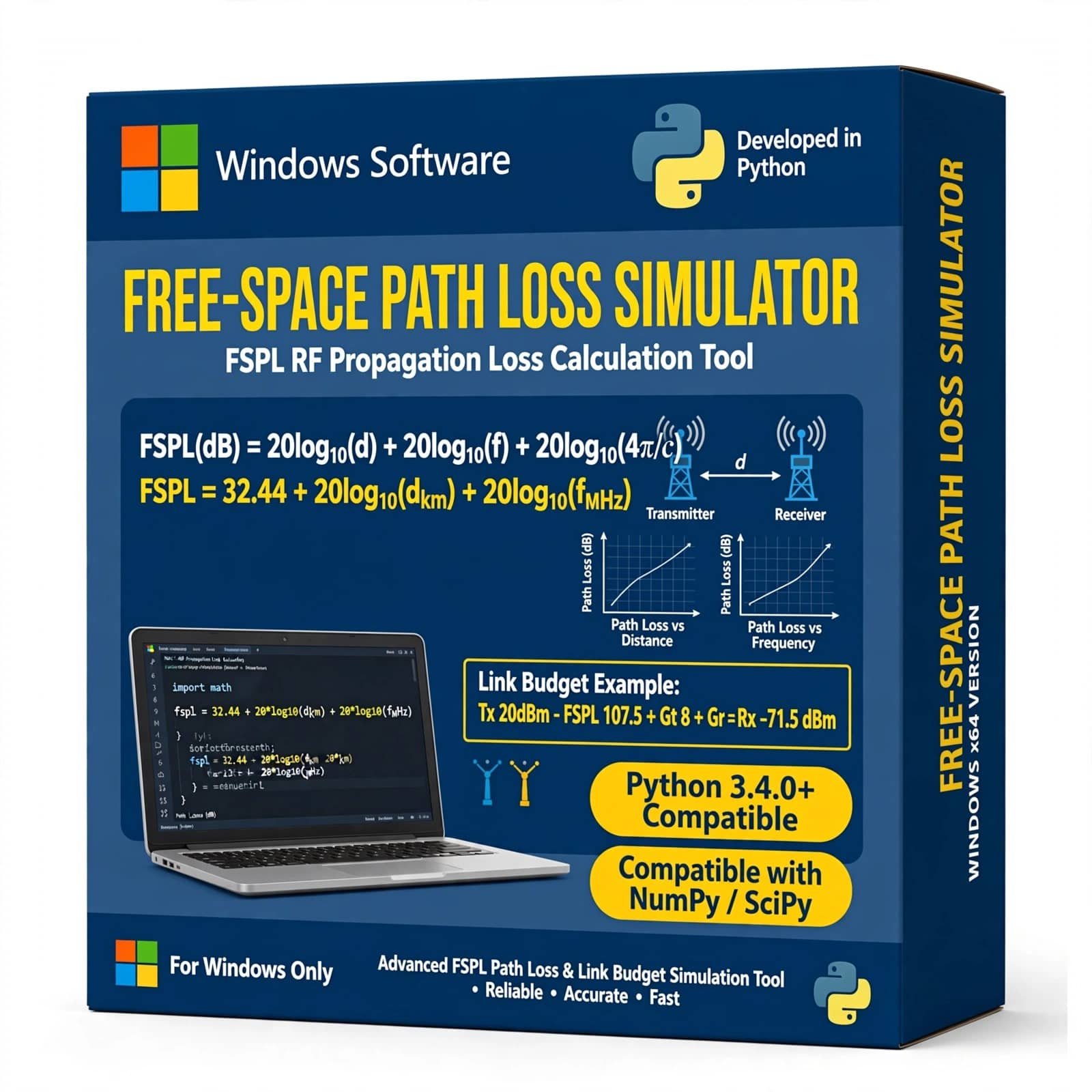
Free Space Path Loss Simulator Using Python is a practical wireless communication simulation project designed to calculate and visualize signal power loss as a radio wave travels through free space. Developed using Python, this simulator helps students, researchers, and communication engineers understand Free Space Path Loss (FSPL), transmission distance, frequency, received signal power, and wireless link performance.
The project provides an easy-to-understand simulation environment for analyzing how distance and operating frequency affect signal propagation. It is suitable for B.Tech, M.Tech, engineering students, academic projects, wireless communication studies, RF analysis, and Python-based simulation projects.
Original price was: ₹750.00.₹250.00Current price is: ₹250.00. -
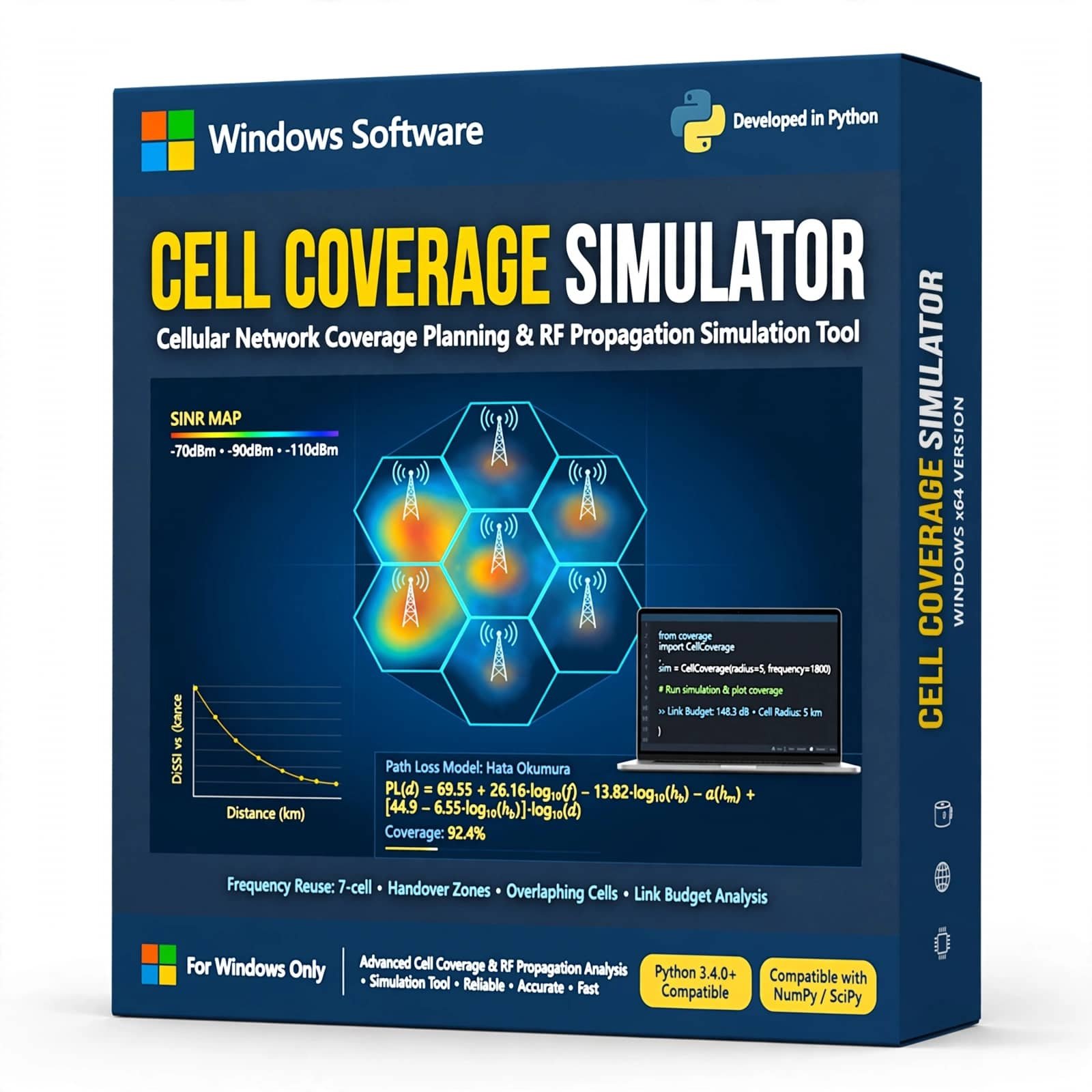
Cell Coverage Simulator is a wireless communication simulation tool designed to model and analyze cellular network coverage using Python. It helps students, researchers, and telecom professionals visualize cell coverage, signal propagation, coverage areas, and network planning concepts through practical simulation and analysis.
Original price was: ₹750.00.₹250.00Current price is: ₹250.00. -
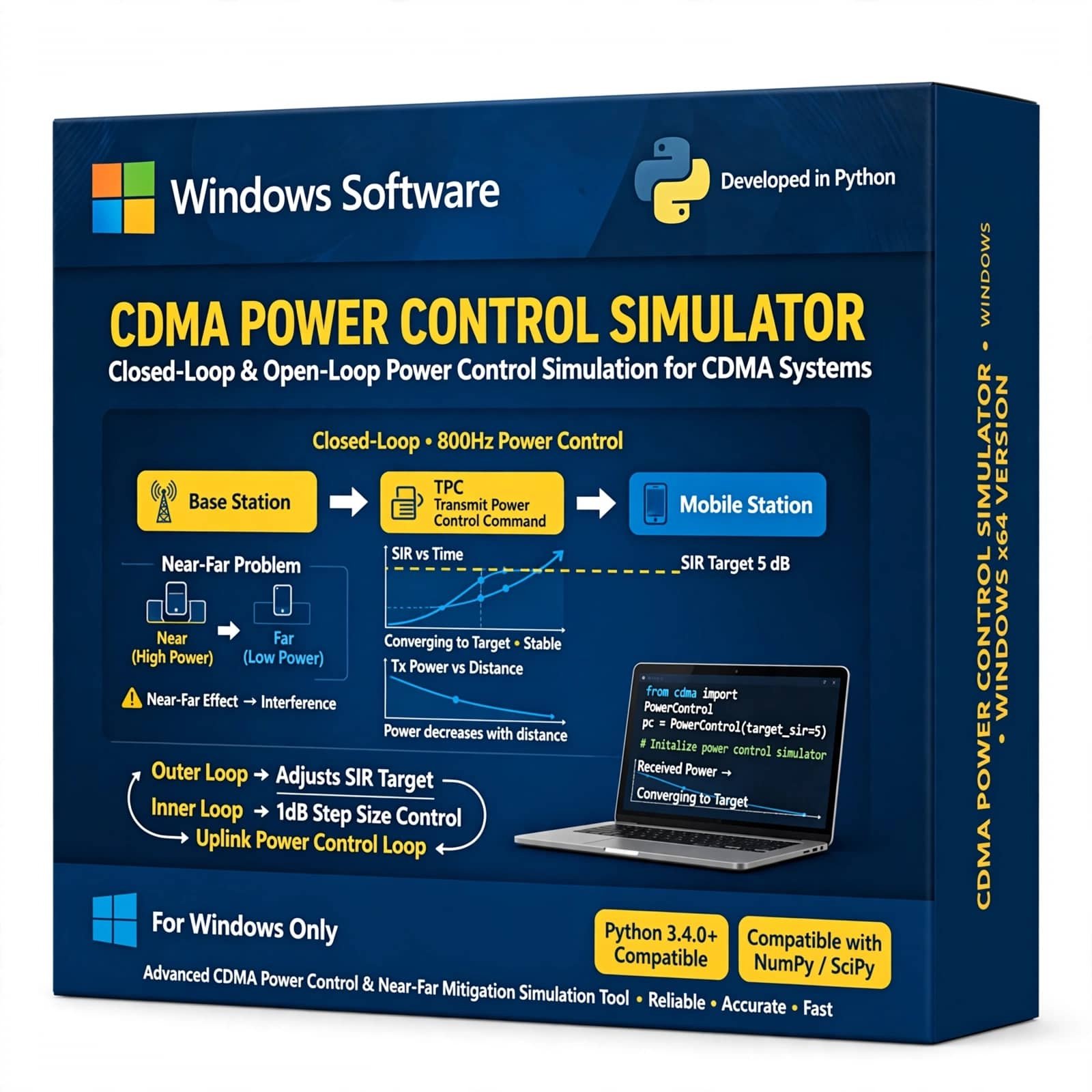
CDMA Power Control Simulator is an advanced communication engineering simulation tool designed to help students, researchers, and professionals understand and analyze power control techniques in Code Division Multiple Access (CDMA) wireless communication systems. It enables practical study of uplink and downlink power control, signal interference, power levels, and system performance.
Original price was: ₹750.00.₹250.00Current price is: ₹250.00. -
The 3G UMTS – WCDMA Simulator is a software-based simulation project designed to demonstrate the fundamental concepts of 3G Universal Mobile Telecommunications System (UMTS) and Wideband Code Division Multiple Access (WCDMA) technology. It provides a practical environment for studying cellular communication, spreading codes, signal transmission, mobile users, network connectivity, and WCDMA-based communication principles. The simulator is suitable for students, researchers, and developers working on telecommunications and wireless communication projects. It can be used for academic demonstrations, engineering projects, research, experimentation, and learning about 3G mobile communication and WCDMA network technologies.
Original price was: ₹750.00.₹250.00Current price is: ₹250.00. -
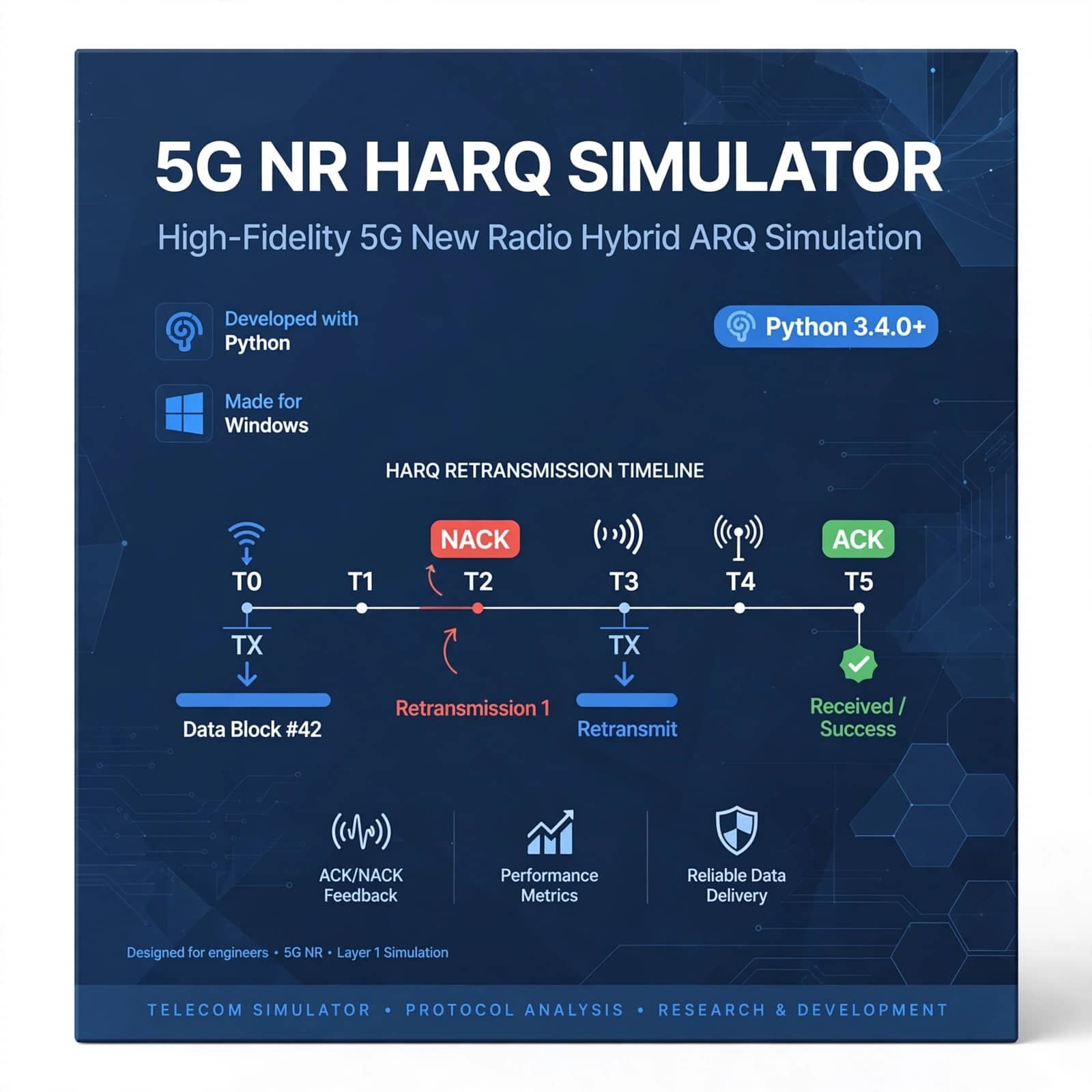
5G NR HARQ Simulator is an advanced simulation solution for modeling and analyzing Hybrid Automatic Repeat Request (HARQ) mechanisms in 5G New Radio networks. It enables users to study HARQ processes, ACK/NACK feedback, retransmissions, link adaptation, channel errors, and communication reliability under configurable network conditions. The simulator supports analysis of throughput, BLER, latency, retransmission rate, packet errors, spectral efficiency, and other key performance metrics, making it suitable for 5G NR research, algorithm development, academic projects, and wireless communication system optimization.
Original price was: ₹750.00.₹250.00Current price is: ₹250.00. -
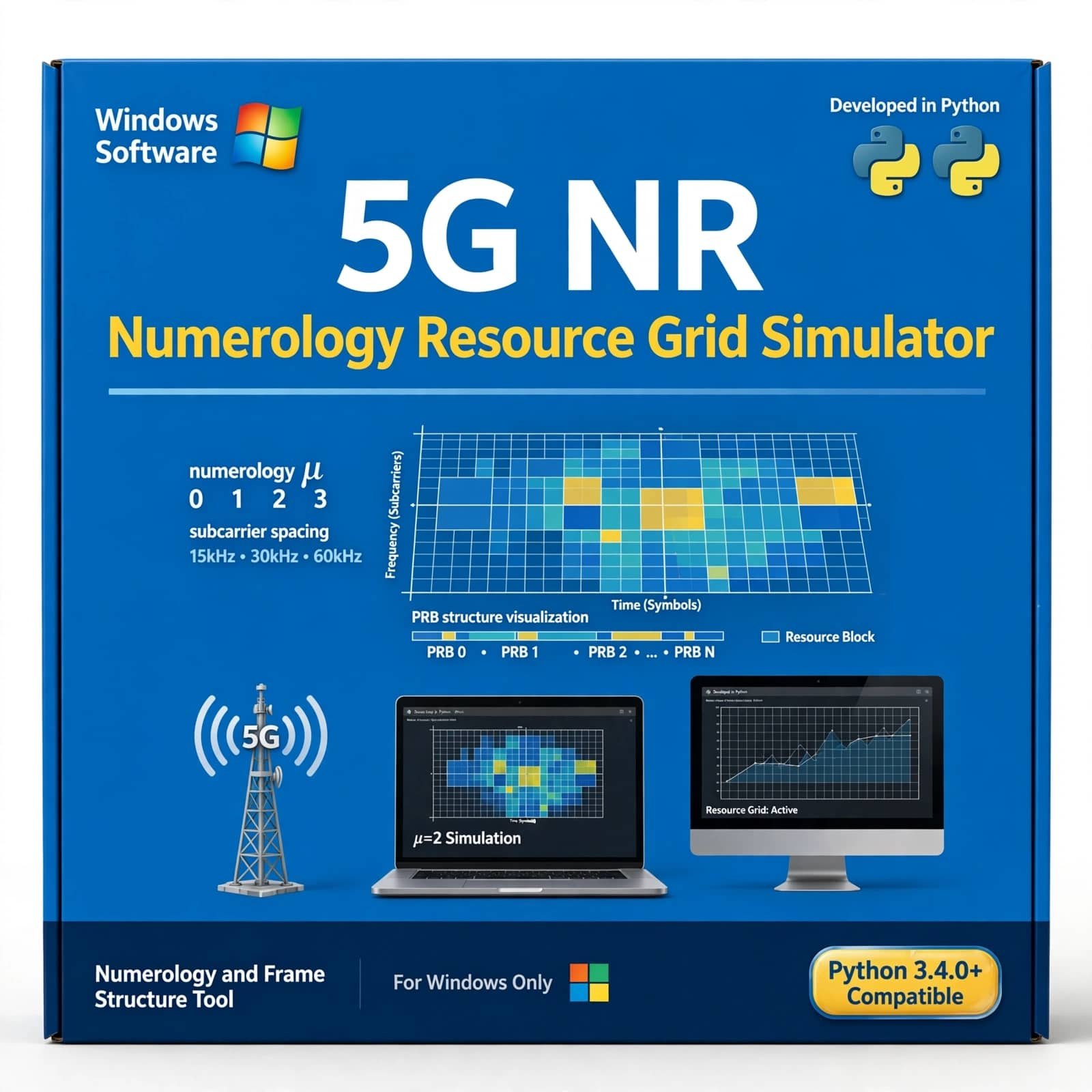
5G NR Numerology Resource Grid Simulator is an advanced simulation solution for modeling and analyzing 5G New Radio numerology and time-frequency resource grid structures. It enables users to study subcarrier spacing, OFDM symbols, slot structure, cyclic prefix, Physical Resource Blocks (PRBs), Resource Elements (REs), bandwidth configurations, and resource mapping. The simulator is ideal for 5G NR physical-layer research, numerology analysis, resource allocation studies, academic projects, waveform development, and 5G/6G wireless communication research.
Original price was: ₹750.00.₹250.00Current price is: ₹250.00.


Reviews
There are no reviews yet.