
New
87% Off

Mobile Station Simulator
Original price was: ₹750.00.₹100.00Current price is: ₹100.00.
In StockGSM Mobile Station Simulator – C++ Educational Software is an interactive educational simulator designed to demonstrate key GSM mobile station concepts, including MS hardware and identity, SIM card status, battery level, authentication, network registration, cell connectivity, signal strength, mobility, and Call/SMS states. Developed in C++, this simulator provides a simple visual environment for learning and demonstrating GSM network and mobile-station behavior.
Description
GSM Mobile Station Simulator
Learn and demonstrate the fundamentals of GSM Mobile Station technology with this interactive Mobile Station Simulator developed using C++. Designed as an educational and training tool, the simulator provides a visual representation of important GSM mobile-station parameters and network-related states in an easy-to-understand interface.
The GSM Mobile Station Simulator is suitable for students, teachers, telecom learners, engineering projects, networking enthusiasts, and developers who want to explore the basic concepts behind GSM mobile communication without requiring physical mobile-network hardware.
The simulator interface presents essential MS hardware, identity, network, mobility, authentication, registration, battery, and communication status information in real time within the application.
Explore GSM Mobile Station Hardware and Identity
The simulator provides a dedicated MS Hardware & Identity section where important mobile-station information can be displayed. Parameters shown in the simulator include:
- IMSI (International Mobile Subscriber Identity)
- IMEI (International Mobile Equipment Identity)
- Power Status
- SIM Card Status
- Battery Level
These parameters help learners understand the difference between subscriber identity and equipment identity while also demonstrating how basic mobile-station conditions can be represented in a GSM environment.
Understand GSM Network and Mobility Parameters
The Network & Mobility section provides a visual representation of the mobile station’s relationship with the simulated GSM network.
The simulator displays information such as:
- Connected Cell ID
- Cell Coordinates
- Signal Strength in dBm
- Authentication Status
- Registration Status
For example, the interface can display a connected cell, simulated coordinates, signal strength such as -81 dBm, authentication status such as AUTHENTICATED (A3/A8), and registration status such as REGISTERED (VLR/HLR).
This makes the application particularly useful for explaining GSM concepts such as mobile registration, authentication, cell connectivity, signal strength, VLR/HLR registration, and mobility between cells.
Interactive Mobile Station Controls
The simulator includes interactive controls that allow users to change different mobile-station conditions and observe the resulting state displayed by the application.

Available controls shown in the interface include:
Power ON/OFF – Simulate switching the mobile station’s power state.
Toggle SIM Card – Change the simulated SIM card presence status.
Run Authentication – Trigger the simulated GSM authentication process.
Move to Next Cell – Simulate mobile movement from one cell to another.
Toggle Call/SMS – Change the simulated Call/SMS communication state.
Drain Battery (-10%) – Simulate battery consumption and reduce the displayed battery level.
These controls make the software more than a static demonstration. They provide an interactive environment for understanding how different mobile-station parameters can change during simulated operation.
Designed for GSM and Telecom Education
Understanding GSM architecture can be challenging when concepts such as IMSI, IMEI, SIM, authentication, VLR, HLR, cells, signal strength, and mobility are presented only through theoretical explanations.
This C++ Mobile Station Simulator provides a visual learning approach. Students can interact with the simulator and connect theoretical GSM concepts with visible application states.
It can be useful for:
- GSM and telecommunications courses
- Computer and electronics engineering education
- Networking and communication-system training
- College and university laboratory demonstrations
- GSM architecture projects
- C++ software demonstration projects
- Academic presentations and practical assignments
- Telecom technology learning
- Demonstrating mobile registration and authentication concepts
Developed Using C++
The Mobile Station Simulator is developed using C++, making it relevant not only for telecommunications education but also for learners interested in seeing how a communication-system concept can be represented through software.
The simulator combines a graphical interface with simulated mobile-station parameters and interactive controls, providing a practical example of applying programming concepts to a telecommunications-related educational application.
A Practical GSM Simulation Learning Tool
Whether you are studying GSM technology, preparing a telecommunications project, teaching mobile communication concepts, or looking for an educational C++ project with a networking theme, the GSM Mobile Station Simulator offers a convenient visual demonstration environment.
Instead of working with a physical GSM network, learners can use the simulator to explore important mobile-station states in a controlled software environment. The interface clearly separates MS hardware and identity information from network and mobility information, making the displayed parameters easier to understand during demonstrations.
The simulator also includes a Current Call/SMS State area, allowing users to observe the simulated communication status as part of the overall mobile-station operation.
Key Features
- Interactive GSM Mobile Station simulator
- Developed using C++
- Educational and demonstration-oriented design
- IMSI and IMEI parameter display
- SIM card presence simulation
- Mobile-station power status
- Battery-level monitoring and simulated battery drain
- Connected Cell ID display
- Simulated cell coordinates
- Signal strength display in dBm
- GSM authentication status
- A3/A8 authentication indication
- VLR/HLR registration status
- Simulated cell-to-cell mobility
- Call/SMS state simulation
- Simple graphical user interface
- Suitable for academic and telecom demonstrations
Who Can Use This GSM Simulator?
The software is especially suitable for telecommunication students, engineering students, C++ learners, educators, trainers, researchers, and developers interested in GSM mobile communication concepts.
If you need an accessible way to demonstrate the basic relationship between a mobile station, subscriber identity, SIM, GSM authentication, network registration, cells, signal strength, and communication states, this simulator provides a compact and interactive solution.
Bring GSM mobile-station concepts to life with a practical C++-based educational simulator.
Related products
-
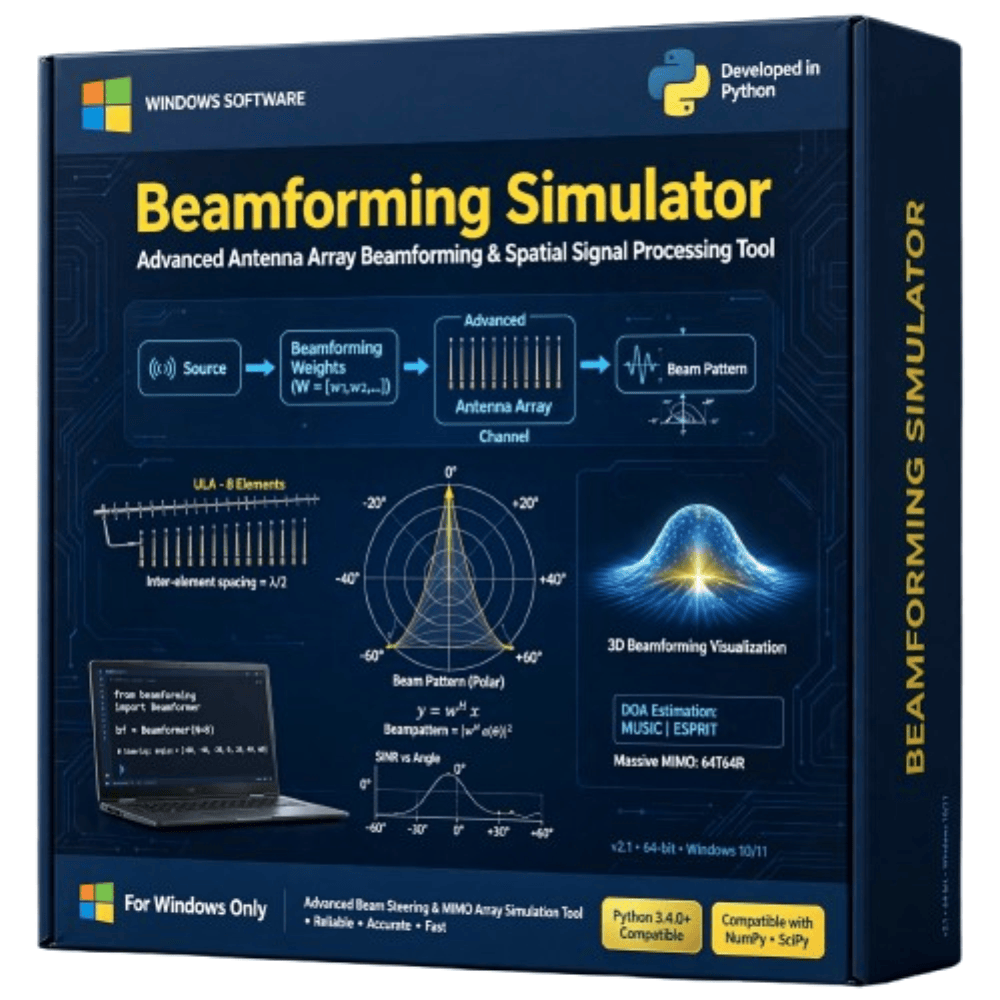
The Beamforming Simulator is a practical wireless communication simulation project designed to demonstrate how antenna arrays can control and direct radio-frequency signals toward desired users or directions. The simulator helps visualize beam patterns, signal direction, antenna-array behavior, and beam steering under different parameters. It is suitable for studying beamforming, antenna arrays, MIMO, 5G communication, wireless networks, and signal processing. This project is ideal for engineering students, researchers, and learners working on wireless communication and advanced antenna technologies.
Original price was: ₹750.00.₹250.00Current price is: ₹250.00. -
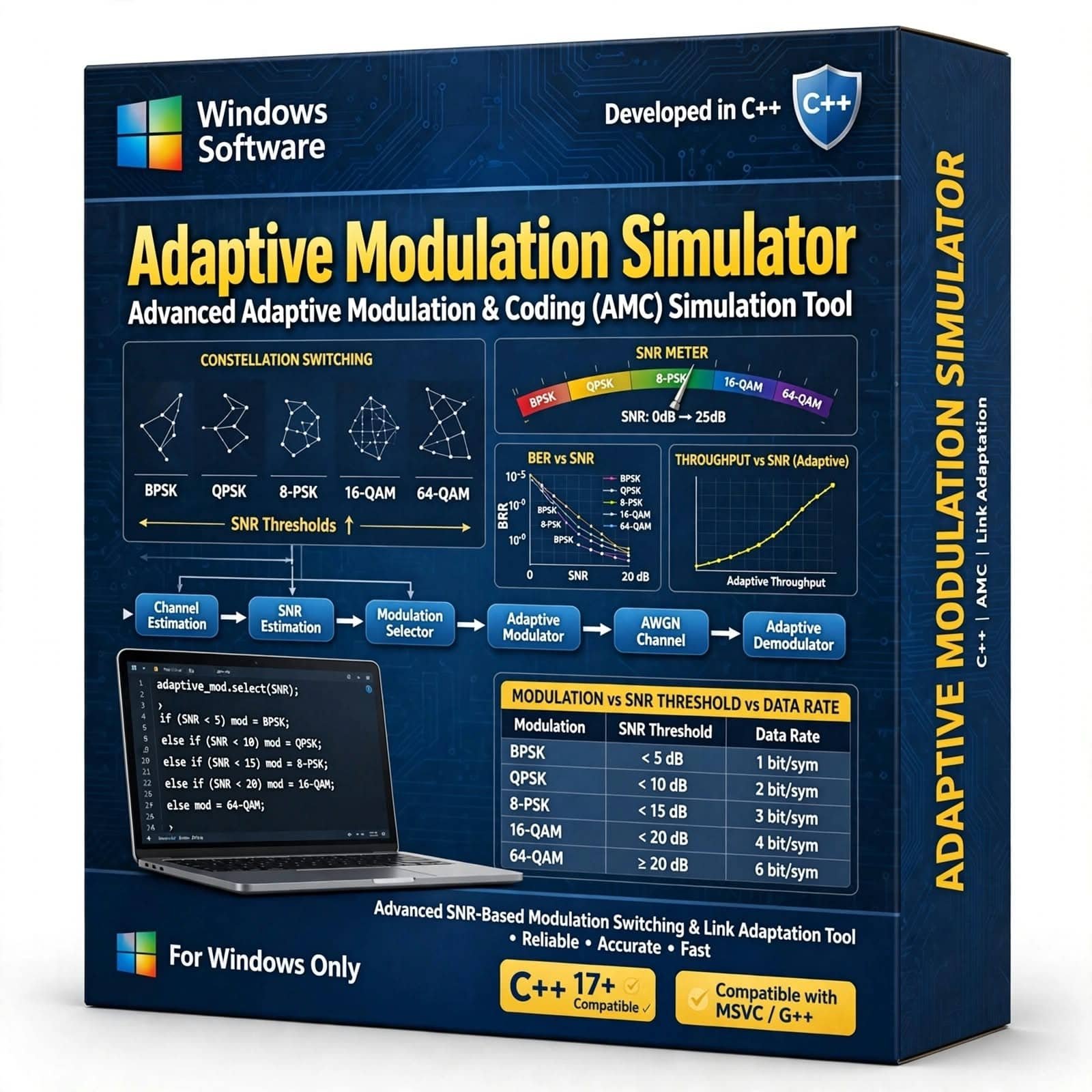
The Adaptive Modulation Simulator is a C++-based software solution designed for students, researchers, engineers, developers, and telecommunications professionals working with digital communication and adaptive modulation techniques. The simulator provides a practical environment for studying how modulation schemes can be selected or adapted according to communication-system conditions.
Developed using C++, the simulator is suitable for academic projects, digital communication research, laboratory demonstrations, signal-processing studies, algorithm development, and educational applications.
Available for sale as a software product. Contact us for pricing, licensing, technical specifications, customization, and purchase information.
Original price was: ₹750.00.₹250.00Current price is: ₹250.00. -
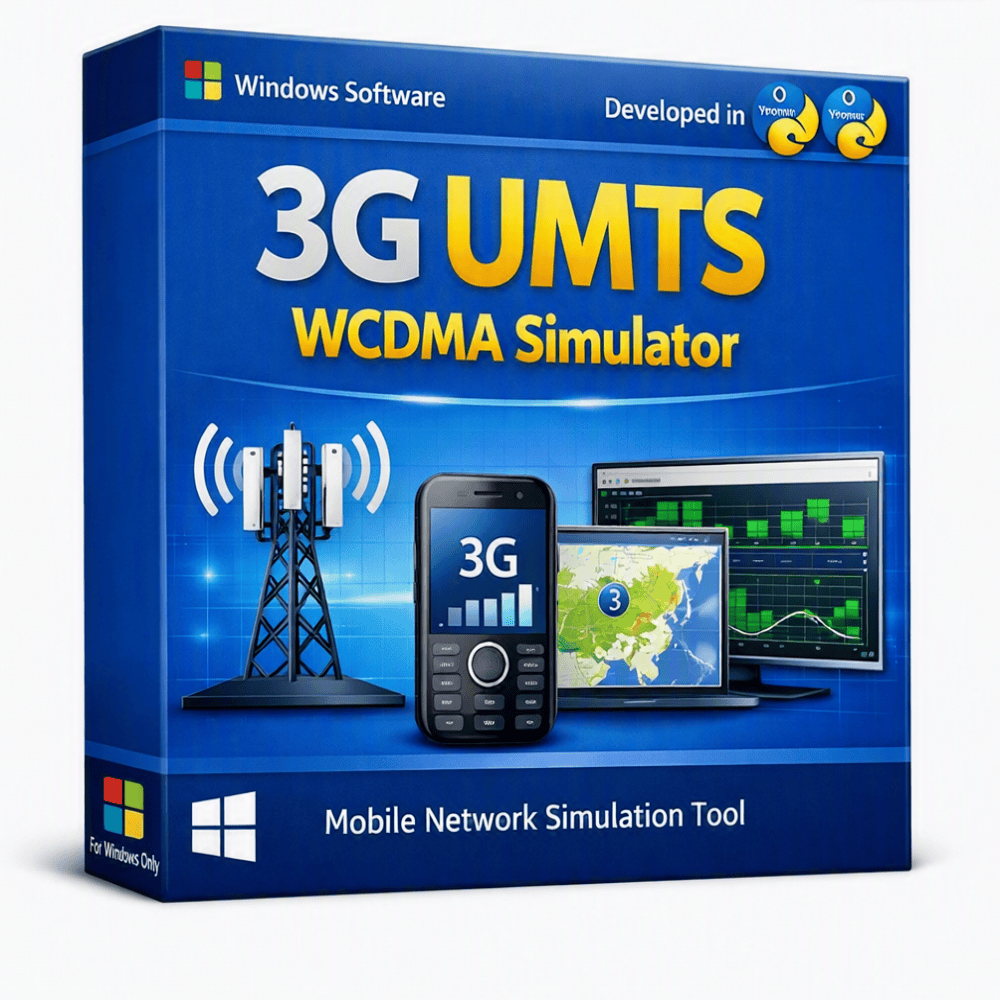
The 3G UMTS – WCDMA Simulator is a software-based simulation project designed to demonstrate the fundamental concepts of 3G Universal Mobile Telecommunications System (UMTS) and Wideband Code Division Multiple Access (WCDMA) technology. It provides a practical environment for studying cellular communication, spreading codes, signal transmission, mobile users, network connectivity, and WCDMA-based communication principles. The simulator is suitable for students, researchers, and developers working on telecommunications and wireless communication projects. It can be used for academic demonstrations, engineering projects, research, experimentation, and learning about 3G mobile communication and WCDMA network technologies.
Original price was: ₹750.00.₹250.00Current price is: ₹250.00. -
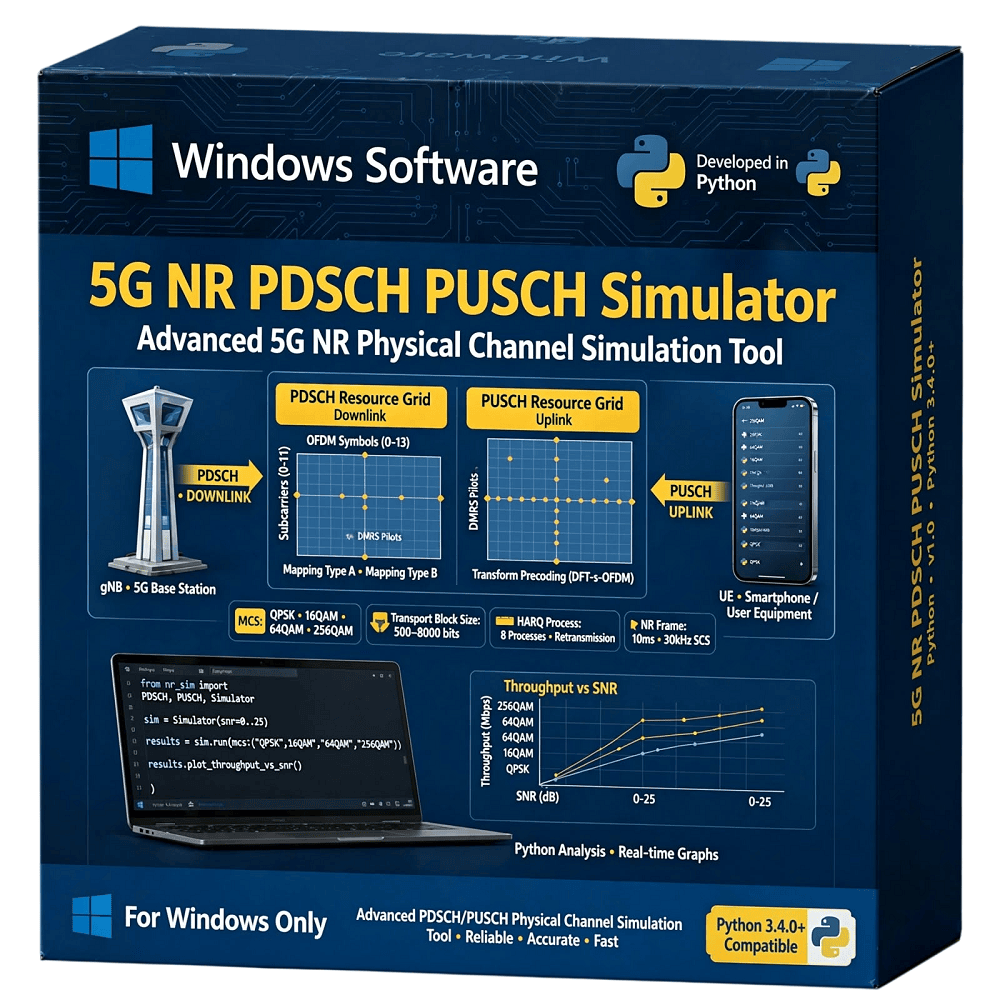
The 5G NR PDSCH PUSCH Simulator is a Python-based simulation software solution designed for researchers, engineers, students, and telecommunications professionals working with 5G New Radio (NR) physical-layer technologies. The simulator provides a practical environment for studying and experimenting with PDSCH (Physical Downlink Shared Channel) and PUSCH (Physical Uplink Shared Channel) transmission concepts.
Developed using Python, the simulator is suitable for academic research, algorithm development, demonstrations, testing, and educational applications related to 5G NR communication systems.
Available for sale as a software product. Contact us for product details, licensing, and purchase information.
Original price was: ₹750.00.₹250.00Current price is: ₹250.00. -
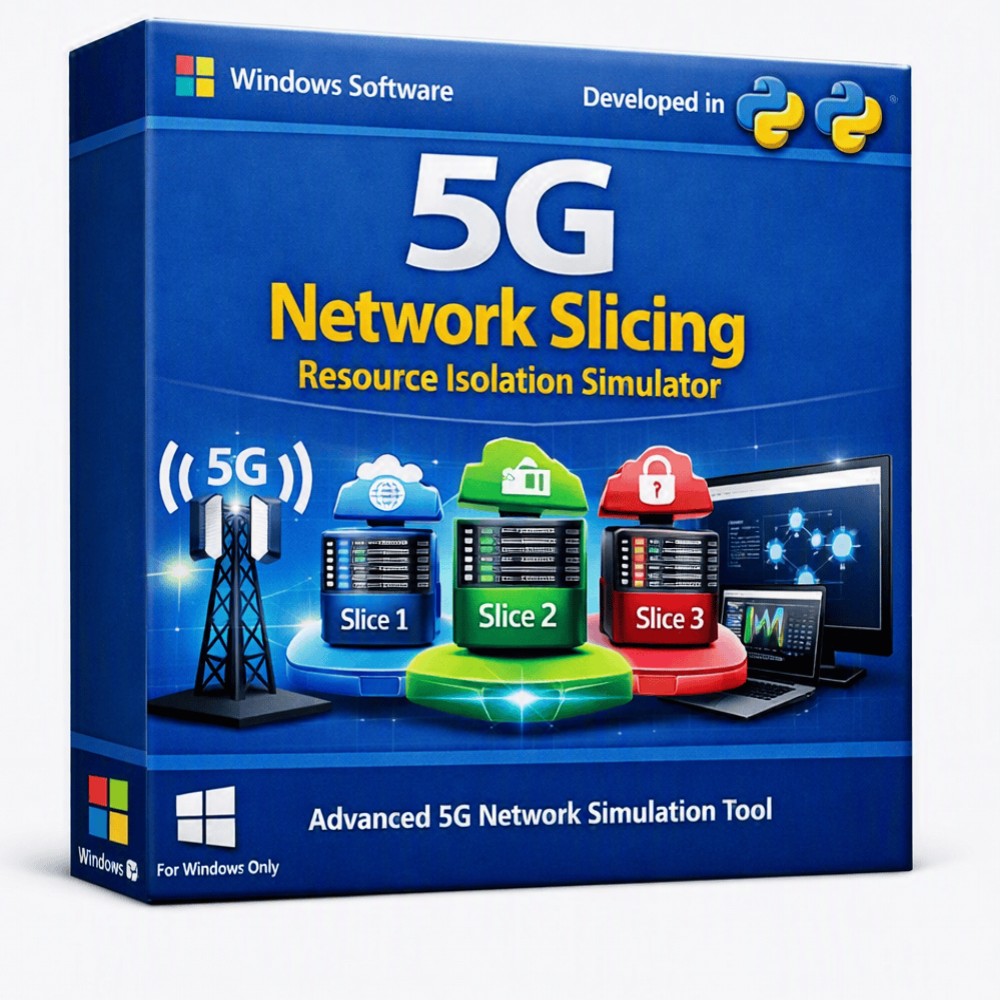
A Python-based 5G Network Slicing and Resource Isolation Simulator designed to model and analyze how multiple logical network slices can share physical 5G infrastructure while maintaining resource isolation. The simulator enables users to study CPU, memory, bandwidth, network capacity, traffic allocation, and resource management across different 5G network slices.
Ideal for 5G research, telecom engineering, academic projects, network optimization, resource allocation studies, and university laboratories.
Original price was: ₹750.00.₹250.00Current price is: ₹250.00. -
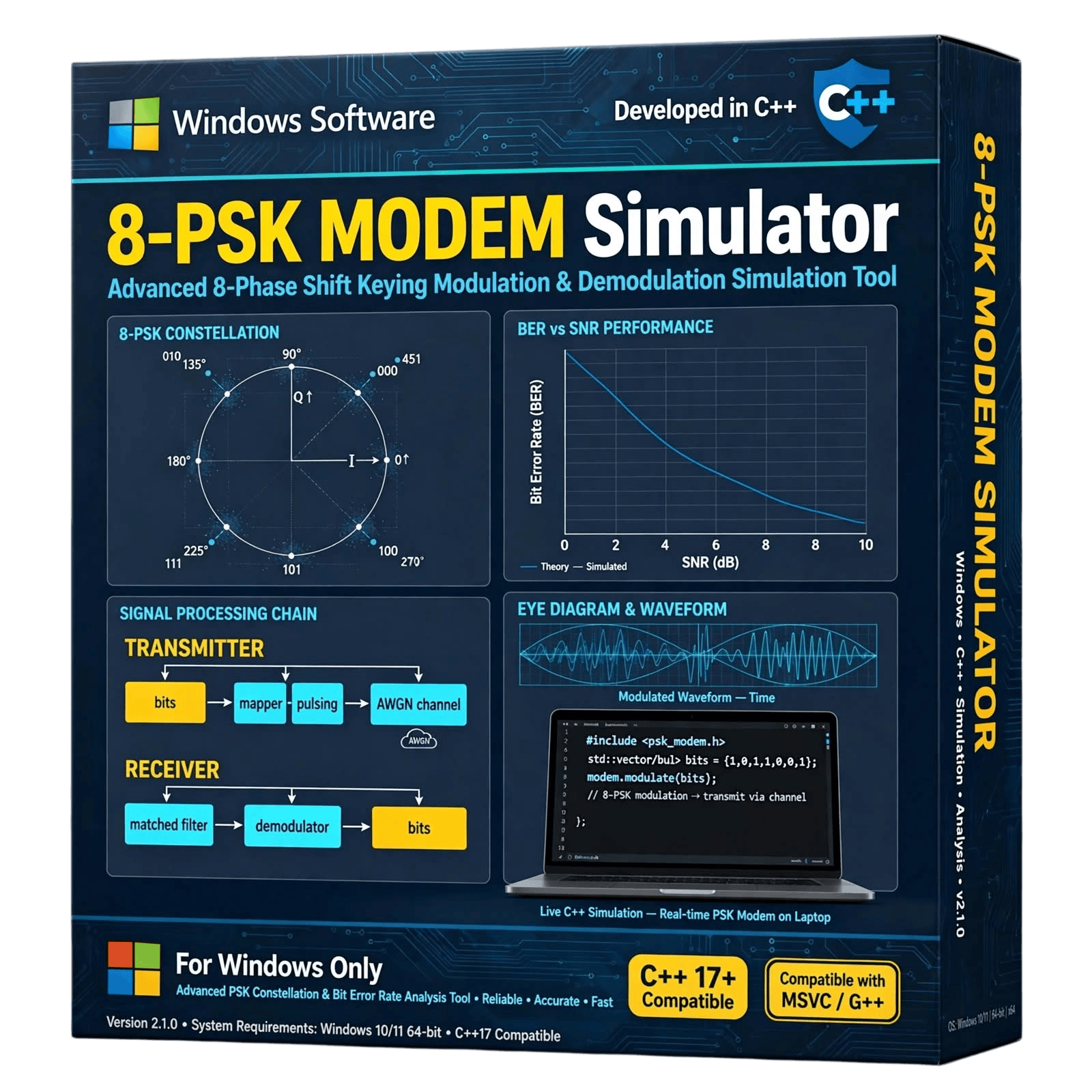
The 8-PSK Modem Simulator is a C++-based software solution designed for students, researchers, communication engineers, developers, and academic institutions working with digital communication and modulation techniques. The simulator provides a practical environment for studying 8-Phase Shift Keying (8-PSK) modulation and demodulation concepts.
Developed using C++, the simulator can be used for digital communication research, academic projects, laboratory demonstrations, signal-processing studies, experimentation, and educational purposes.
Available for sale as a software product. Contact us for pricing, licensing, technical specifications, customization, and purchase information.
Original price was: ₹750.00.₹250.00Current price is: ₹250.00.


Reviews
There are no reviews yet.