
New
80% Off

FPGA vs ASIC Decision Engine


Original price was: ₹750.00.₹150.00Current price is: ₹150.00.
In StockFPGA vs ASIC Decision Engine with Python is a practical decision-support tool for evaluating whether an FPGA or ASIC is the better fit for your hardware design project. Built with Python, this solution helps compare key factors such as development cost, performance, power consumption, flexibility, production volume, time-to-market, and implementation requirements.
Ideal for engineers, embedded systems developers, hardware designers, students, researchers, and technology teams, the FPGA vs ASIC Decision Engine provides a structured approach to hardware platform selection and helps turn complex design trade-offs into a clear, data-driven comparison.
Description
FPGA vs ASIC Decision Engine
Choosing between an FPGA and an ASIC is one of the most important decisions in digital hardware design. The right platform can significantly affect performance, power consumption, development cost, flexibility, scalability, and time-to-market. The FPGA vs ASIC Decision Engine with Python is designed to make this decision process easier by providing a structured and practical way to evaluate the major factors involved in FPGA and ASIC selection.
This Python-based decision engine is a useful resource for FPGA developers, ASIC designers, embedded systems engineers, hardware architects, electronics engineers, researchers, students, and technology teams working on digital hardware projects. Instead of relying only on general assumptions about FPGA or ASIC technology, the tool helps organize project requirements and compare the characteristics of both implementation approaches.
What Is the FPGA vs ASIC Decision Engine?
The FPGA vs ASIC Decision Engine is a Python-based analytical tool that assists with hardware platform selection. It is designed around the common engineering considerations that influence whether a project should be implemented using a Field-Programmable Gate Array (FPGA) or an Application-Specific Integrated Circuit (ASIC).

FPGAs provide significant flexibility because their hardware logic can be configured and updated after manufacturing. This makes them particularly useful for prototyping, development, low-to-medium volume applications, rapidly changing designs, and projects where hardware updates may be required.
ASICs, on the other hand, are custom-designed integrated circuits optimized for a specific application. Once manufactured, an ASIC generally provides limited post-production flexibility, but a successful ASIC implementation can deliver advantages in areas such as performance, power efficiency, and unit cost at sufficiently high production volumes.
The decision is rarely based on a single factor. This tool brings multiple considerations together to create a more structured FPGA vs ASIC comparison.

Key Decision Factors
The decision engine can be used to evaluate important parameters such as:
- Development and implementation cost
- Expected production volume
- Performance requirements
- Power consumption considerations
- Design flexibility
- Time-to-market requirements
- Hardware customization
- Development complexity
- Prototyping requirements
- Long-term scalability
- Product lifecycle considerations
- Recurring and non-recurring engineering costs
By considering these factors together, users can better understand the trade-offs between FPGA and ASIC implementation for a particular project.
Why Use Python for FPGA vs ASIC Analysis?
Python is widely used for engineering analysis, automation, modeling, data processing, and decision-support applications. Building the decision engine with Python makes the tool accessible and customizable for developers and engineering teams.
Users with Python knowledge can modify the logic, introduce additional parameters, adjust weighting criteria, integrate project-specific requirements, or use the engine as a foundation for a larger hardware-selection workflow.

The Python implementation can also be useful for students and researchers who want to explore how engineering requirements can be converted into a structured decision-making model.
FPGA vs ASIC: Understanding the Trade-Off
An FPGA is often attractive when flexibility and rapid development are important. FPGA-based designs can be modified after deployment, making them useful for prototyping and applications where requirements may evolve.
An ASIC is generally associated with application-specific hardware optimization. Designing an ASIC requires a larger upfront investment and a more extensive development and manufacturing process, but the resulting hardware can be highly optimized for its intended workload.
The best choice depends on the specific project. Factors such as production volume, required performance, power constraints, development budget, and product lifetime can substantially change the economics and technical suitability of each option.
The FPGA vs ASIC Decision Engine with Python provides a systematic framework for examining these variables instead of treating the decision as a simple one-size-fits-all comparison.

Who Can Use This Tool?
This product can be valuable for:
- FPGA and digital design engineers
- ASIC and semiconductor design professionals
- Embedded systems developers
- Electronics engineering students
- Hardware architecture teams
- Engineering researchers
- Technology startups
- Academic projects
- Hardware product development teams
- Professionals evaluating FPGA and ASIC implementation strategies
It can also serve as an educational resource for understanding the engineering and economic factors involved in FPGA vs ASIC selection.
Practical Applications
The decision engine can be applied during the early stages of hardware architecture planning. For example, a development team can evaluate whether an FPGA-based prototype should eventually transition to an ASIC, or whether maintaining FPGA flexibility makes more sense for a product with uncertain requirements or lower production volumes.
It can also be incorporated into educational exercises involving digital system design, FPGA development, ASIC design, hardware acceleration, embedded systems, and semiconductor engineering.
Because the engine is Python-based, it can be adapted to different project scenarios and extended with additional decision criteria as requirements become more sophisticated.

Make Hardware Platform Selection More Structured
Selecting between FPGA and ASIC involves balancing technical requirements with development economics and product strategy. A structured decision model can make it easier to identify which factors are driving the selection and where the major trade-offs exist.
The FPGA vs ASIC Decision Engine with Python provides a practical starting point for this analysis. Whether you are developing a hardware prototype, studying digital system architecture, evaluating production strategies, or researching hardware implementation options, this tool can help organize the decision process.
If you are looking for a Python FPGA vs ASIC decision tool, FPGA ASIC comparison tool, or an engineering-focused framework for evaluating hardware implementation choices, this product provides a customizable foundation for systematic analysis.
Key Features
- Python-based FPGA vs ASIC decision engine
- Structured hardware platform comparison
- Evaluation of multiple engineering and project factors
- Useful for FPGA and ASIC feasibility analysis
- Customizable Python implementation
- Suitable for education, research, and engineering projects
- Helps organize hardware architecture trade-offs
- Supports systematic decision-making
- Useful for digital design and embedded systems analysis
Get the FPGA vs ASIC Decision Engine with Python and bring a structured, customizable approach to your hardware architecture evaluation.
Related products
-
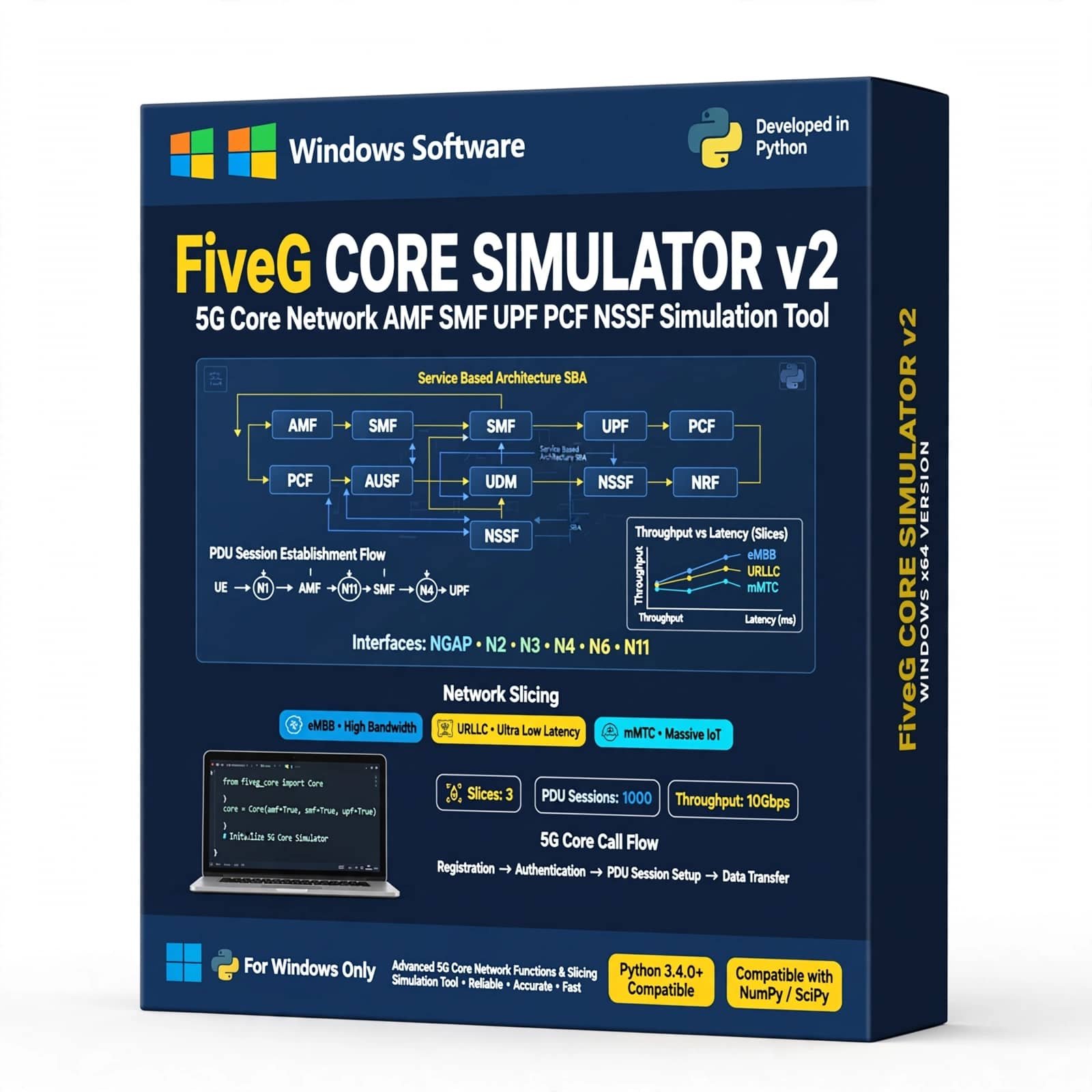
FiveG Core Simulator v2 is an educational 5G Core Network simulation tool designed to help students, educators, researchers, and telecom professionals understand 5G core architecture, network functions, signaling procedures, latency, and protocol interactions through an interactive topology and signaling animation environment.
Original price was: ₹750.00.₹250.00Current price is: ₹250.00. -
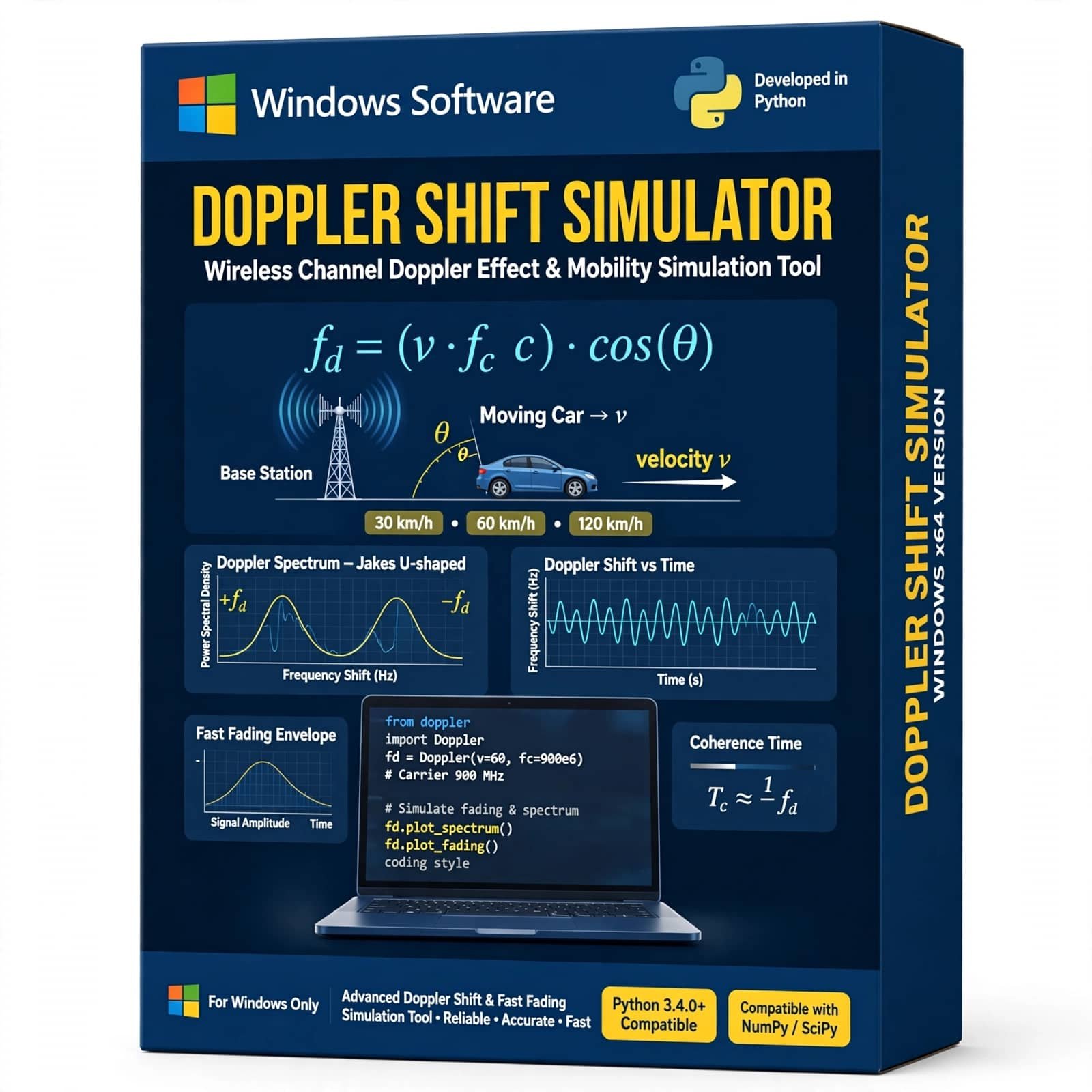
Doppler Shift Simulator Using Python is a practical wireless communication simulation tool for studying the Doppler effect and frequency shift caused by relative motion between a transmitter and receiver. It helps students, researchers, and communication engineers analyze Doppler frequency, carrier frequency, velocity, and mobile channel effects through Python-based simulation.
Original price was: ₹750.00.₹250.00Current price is: ₹250.00. -
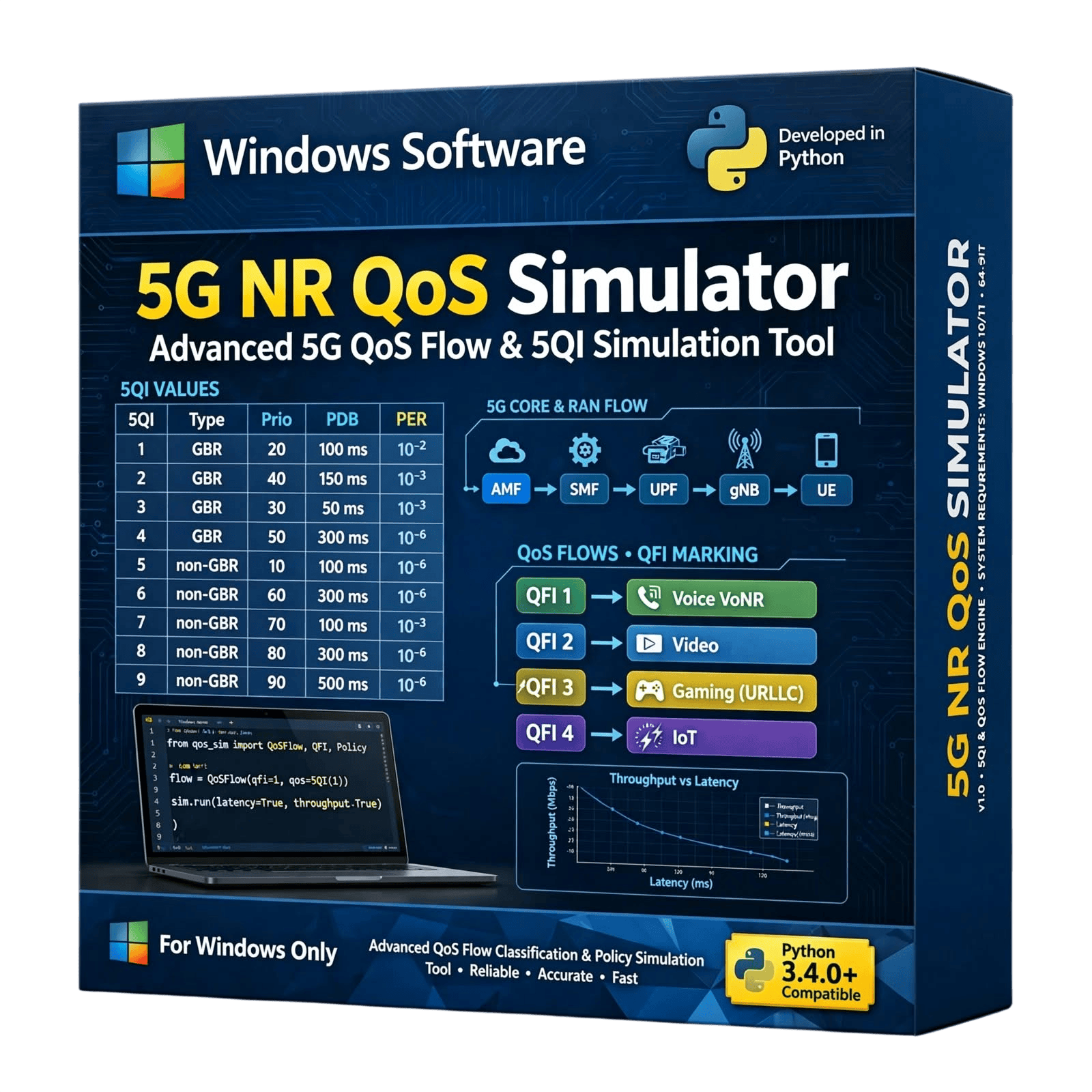
The 5G QoS Simulator is a Python-based software solution designed for researchers, engineers, students, developers, and telecommunications professionals working with 5G Quality of Service (QoS) concepts. The simulator provides a software-based environment for studying and analyzing QoS-related aspects of 5G communication networks, including service performance, traffic behavior, resource management, and network performance evaluation.
Developed using Python, the simulator is suitable for academic research, telecommunications projects, demonstrations, experimentation, algorithm development, and educational applications.
Available for sale as a software product. Contact us for pricing, licensing, features, customization, and purchase information.
Original price was: ₹750.00.₹250.00Current price is: ₹250.00. -
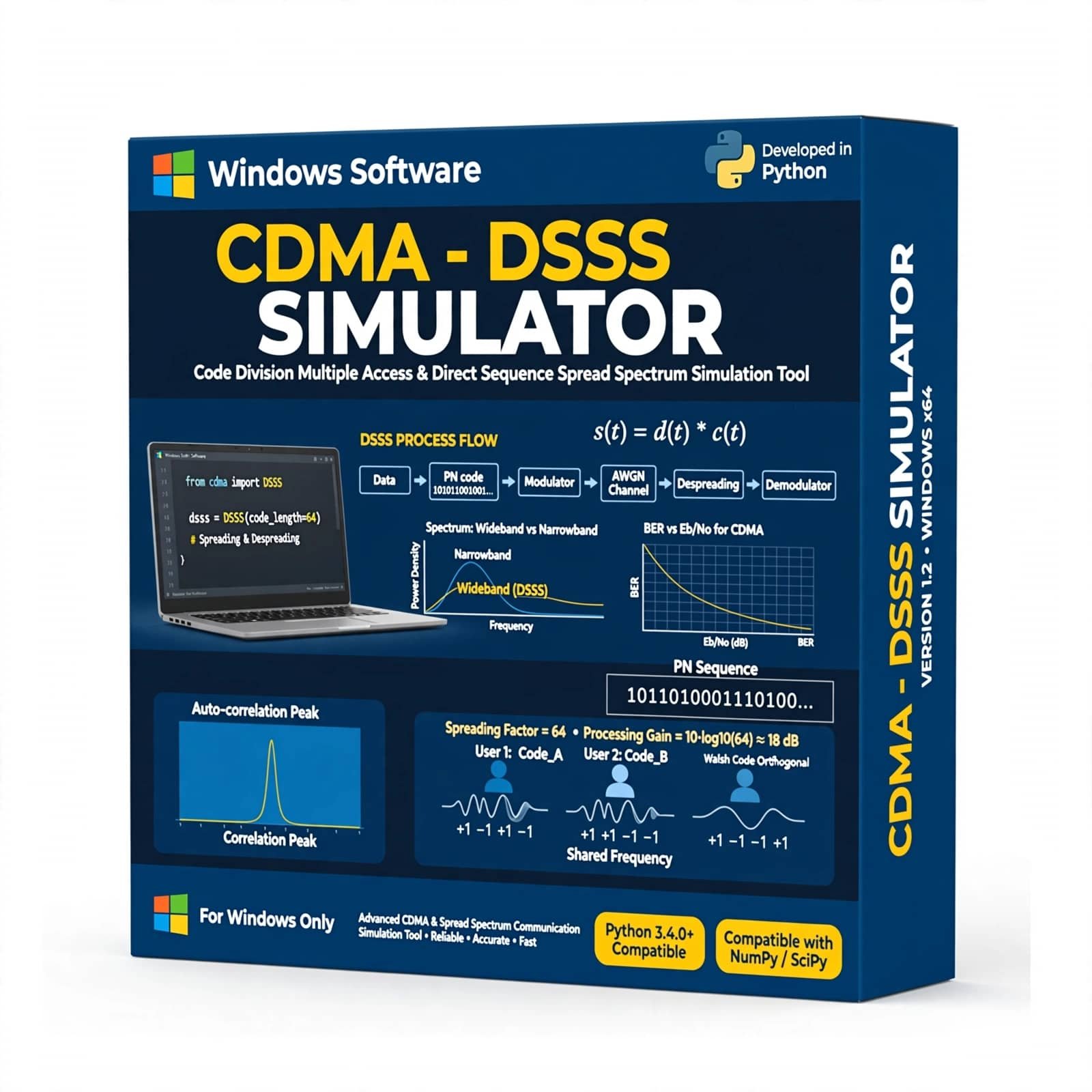
The CDMA – DSSS Simulator with Python is a software-based communication simulation tool designed to demonstrate and analyze Code Division Multiple Access (CDMA) and Direct Sequence Spread Spectrum (DSSS) techniques. Developed using Python, the simulator provides a practical environment for studying spreading codes, signal spreading and despreading, data transmission, multiple-access communication, interference, and signal recovery. It is ideal for digital communication and wireless communication laboratories, engineering education, student projects, technical training, and communication-system research.
Original price was: ₹750.00.₹250.00Current price is: ₹250.00. -
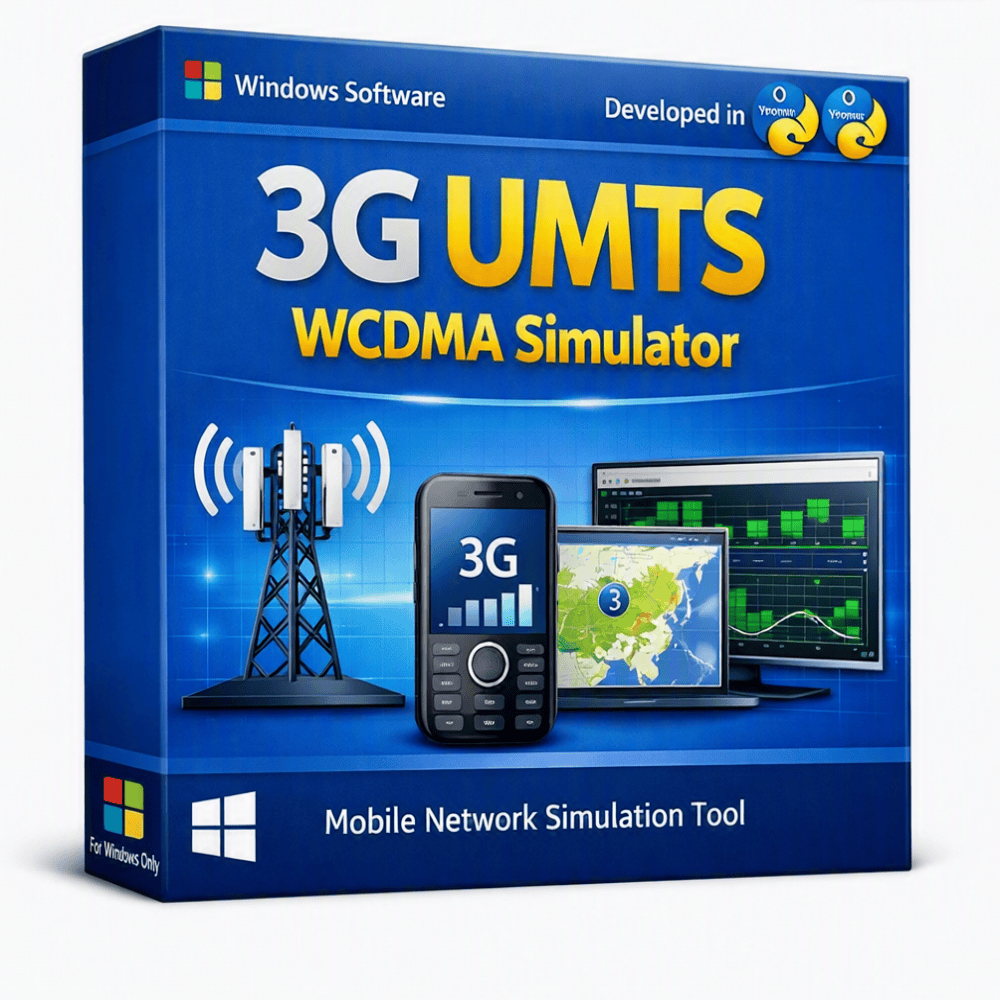
The 3G UMTS – WCDMA Simulator is a software-based simulation project designed to demonstrate the fundamental concepts of 3G Universal Mobile Telecommunications System (UMTS) and Wideband Code Division Multiple Access (WCDMA) technology. It provides a practical environment for studying cellular communication, spreading codes, signal transmission, mobile users, network connectivity, and WCDMA-based communication principles. The simulator is suitable for students, researchers, and developers working on telecommunications and wireless communication projects. It can be used for academic demonstrations, engineering projects, research, experimentation, and learning about 3G mobile communication and WCDMA network technologies.
Original price was: ₹750.00.₹250.00Current price is: ₹250.00. -
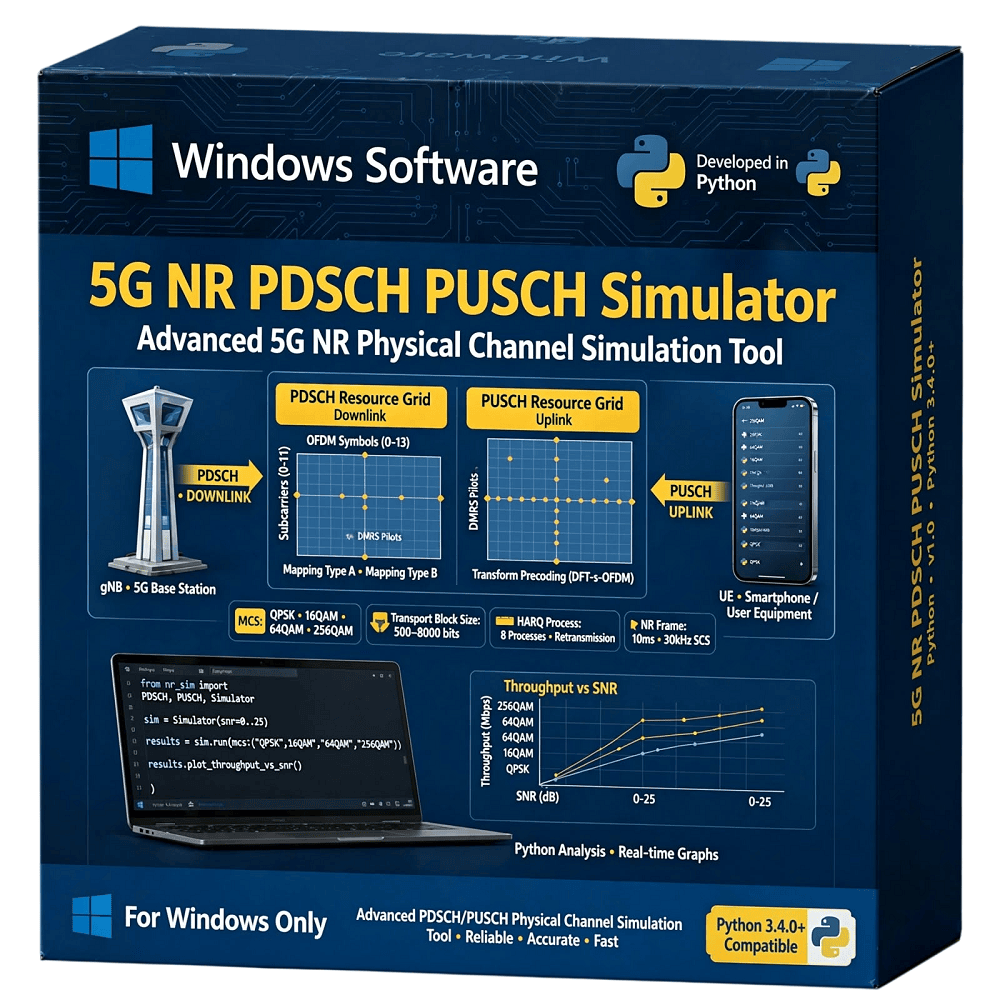
The 5G NR PDSCH PUSCH Simulator is a Python-based simulation software solution designed for researchers, engineers, students, and telecommunications professionals working with 5G New Radio (NR) physical-layer technologies. The simulator provides a practical environment for studying and experimenting with PDSCH (Physical Downlink Shared Channel) and PUSCH (Physical Uplink Shared Channel) transmission concepts.
Developed using Python, the simulator is suitable for academic research, algorithm development, demonstrations, testing, and educational applications related to 5G NR communication systems.
Available for sale as a software product. Contact us for product details, licensing, and purchase information.
Original price was: ₹750.00.₹250.00Current price is: ₹250.00.


Reviews
There are no reviews yet.