

BPSK – QPSK WIRELESS MODEM SIMULATOR

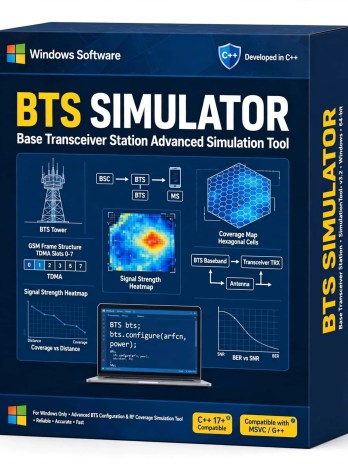
₹1,999.00
In StockThe BPSK – QPSK WIRELESS MODEM SIMULATOR with C++ is a software-based digital communication simulation tool designed for studying, demonstrating, and analyzing BPSK and QPSK modulation and demodulation techniques. Developed using C++, this wireless modem simulator provides a practical environment for understanding how digital information is converted into modulated signals, transmitted through a communication channel, received, and recovered at the receiver.
Designed for electronics and communication engineering laboratories, universities, colleges, research institutions, and technical training environments, the BPSK–QPSK simulator helps students and professionals connect digital communication theory with practical software implementation. It is suitable for learning fundamental concepts related to digital modulation, wireless communication, signal processing, modem technology, and communication system design.
Description
BPSK – QPSK WIRELESS MODEM SIMULATOR
The simulator focuses on two important digital phase modulation techniques: Binary Phase Shift Keying (BPSK) and Quadrature Phase Shift Keying (QPSK).
In BPSK modulation, digital information is represented using two different carrier phases. The simulator enables users to understand how binary data is mapped to phase changes and how the corresponding signal can be demodulated to recover the original information. BPSK is widely studied because of its simple modulation structure and robust digital communication characteristics.
The simulator also demonstrates QPSK modulation, in which four different carrier phases are used to represent digital symbols. QPSK can represent two bits per symbol, making it an important technique for understanding improved spectral efficiency in digital communication systems. Users can study QPSK symbol mapping, phase transitions, signal generation, demodulation, and data recovery.
By supporting both BPSK and QPSK in a single platform, the BPSK QPSK Wireless Modem Simulator allows users to compare the two modulation techniques and understand their differences in terms of bit representation, symbol rate, phase states, signal constellation, and communication performance.
C++ Based Wireless Modem Simulator
The simulator is developed using C++, providing a programming-oriented environment for implementing the processing operations associated with a digital wireless modem. C++ is well suited to simulation and signal-processing applications because of its performance, flexibility, and ability to efficiently handle computational algorithms.
The C++ implementation helps demonstrate how theoretical communication concepts can be translated into software algorithms. Students can gain practical exposure to the programming logic behind digital data generation, modulation, signal processing, demodulation, and data recovery.
This combination of communication engineering and C++ programming makes the simulator useful not only as a digital communication laboratory tool but also as a learning platform for students interested in developing communication-system software.
Digital Communication Signal Flow
The BPSK–QPSK Wireless Modem Simulator can be used to study the different stages of a digital communication system. Users can follow the signal from digital data generation through modulation, simulated transmission, reception, demodulation, and recovery of the transmitted information.
The simulation environment helps users understand the relationship between the transmitted digital data and the resulting modulated waveform. At the receiver side, the demodulation process demonstrates how the received signal can be processed to reconstruct the original digital information.
This practical signal-flow approach makes it easier to understand important communication concepts that can otherwise be difficult to visualize using theoretical equations alone.
Signal and Constellation Analysis
The simulator can be used for studying important signal characteristics associated with BPSK and QPSK. Users can analyze digital data, carrier signals, modulated waveforms, phase changes, and recovered signals as part of their laboratory experiments.
Constellation analysis can also be used to illustrate how digital symbols are represented in signal space. BPSK and QPSK provide different constellation structures, allowing learners to visually understand symbol mapping and the effect of signal variations on the received data.
These capabilities make the simulator suitable for practical study of digital modulation, phase shift keying, symbol mapping, signal analysis, and modem operation.

Applications and Educational Use
The BPSK QPSK Modem Simulator is suitable for a wide range of educational and technical applications. It can be used in:
- Electronics and Communication Engineering laboratories
- Electrical and Electronics Engineering laboratories
- Digital communication courses
- Wireless communication training
- Digital signal processing education
- Modulation and demodulation experiments
- Communication-system design projects
- C++ programming projects related to communication systems
- Student mini-projects and final-year projects
- Academic demonstrations and technical workshops
- Research and experimental communication studies
The simulator can support practical experiments such as BPSK signal generation, BPSK modulation and demodulation, QPSK signal generation, QPSK modulation and demodulation, BPSK versus QPSK comparison, constellation analysis, phase-shift analysis, signal recovery, and communication-channel experimentation.
Key Benefits
The BPSK–QPSK Wireless Modem Simulator with C++ provides a convenient way to explore digital communication concepts through software-based experimentation. Its major benefits include a focus on both BPSK and QPSK modulation, C++-based implementation, practical signal analysis, and suitability for academic and technical training.
By combining digital communication theory with C++ software implementation, the simulator helps learners understand not only how BPSK and QPSK work but also how their underlying processing concepts can be implemented computationally.
The simulator can therefore serve as a valuable educational resource for institutions looking to provide hands-on training in digital communication and wireless modem technology without relying solely on theoretical classroom instruction.
Why Choose the BPSK–QPSK Wireless Modem Simulator?
The BPSK–QPSK Wireless Modem Simulator developed in C++ provides an effective platform for understanding fundamental digital modulation and wireless communication concepts. It combines BPSK and QPSK simulation in one software environment, enabling users to study, compare, and analyze two important phase-shift keying techniques.
Its practical approach makes complex concepts such as modulation, demodulation, symbol mapping, carrier phase, signal processing, and data recovery easier to understand. At the same time, its C++ implementation provides an opportunity to explore the programming and computational aspects of communication-system simulation.
Overall, the BPSK–QPSK Wireless Modem Simulator with C++ is a practical solution for digital communication laboratories, engineering education, technical training, academic projects, and communication-system research. It helps bridge the gap between communication theory and software-based implementation while providing a structured platform for studying BPSK and QPSK wireless modem concepts.
Related products
-
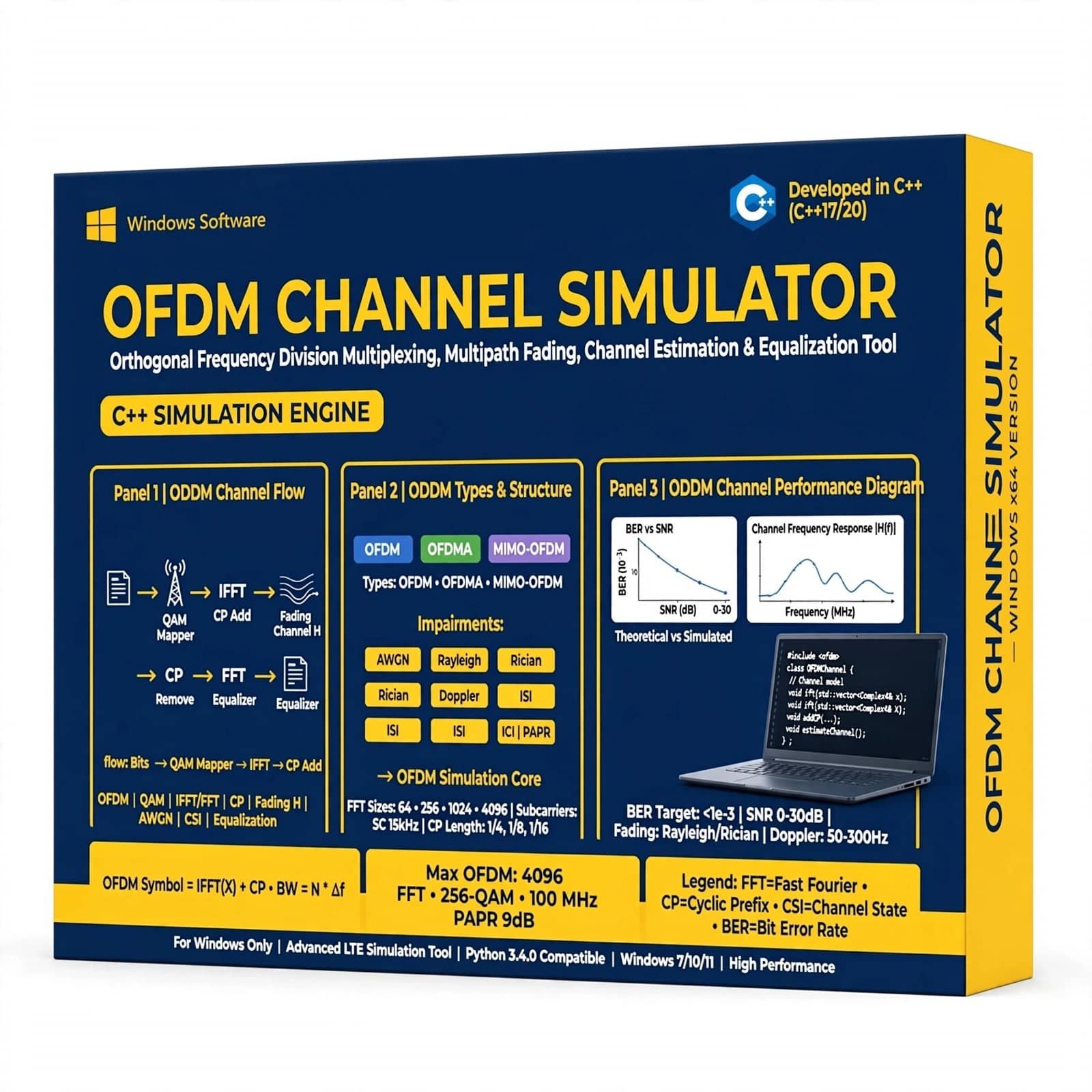
OFDM Channel Simulator – C++ Educational Software is an interactive simulation tool designed to help students, educators, researchers, and communication-engineering learners understand Orthogonal Frequency Division Multiplexing (OFDM) and wireless channel effects. Developed using C++, the simulator demonstrates FFT/IFFT processing, cyclic prefix, QPSK and QAM modulation, multipath channels, delay spread, channel frequency response, equalization, BER, EVM, and constellation diagrams through an intuitive graphical interface.
₹1,999.00 -
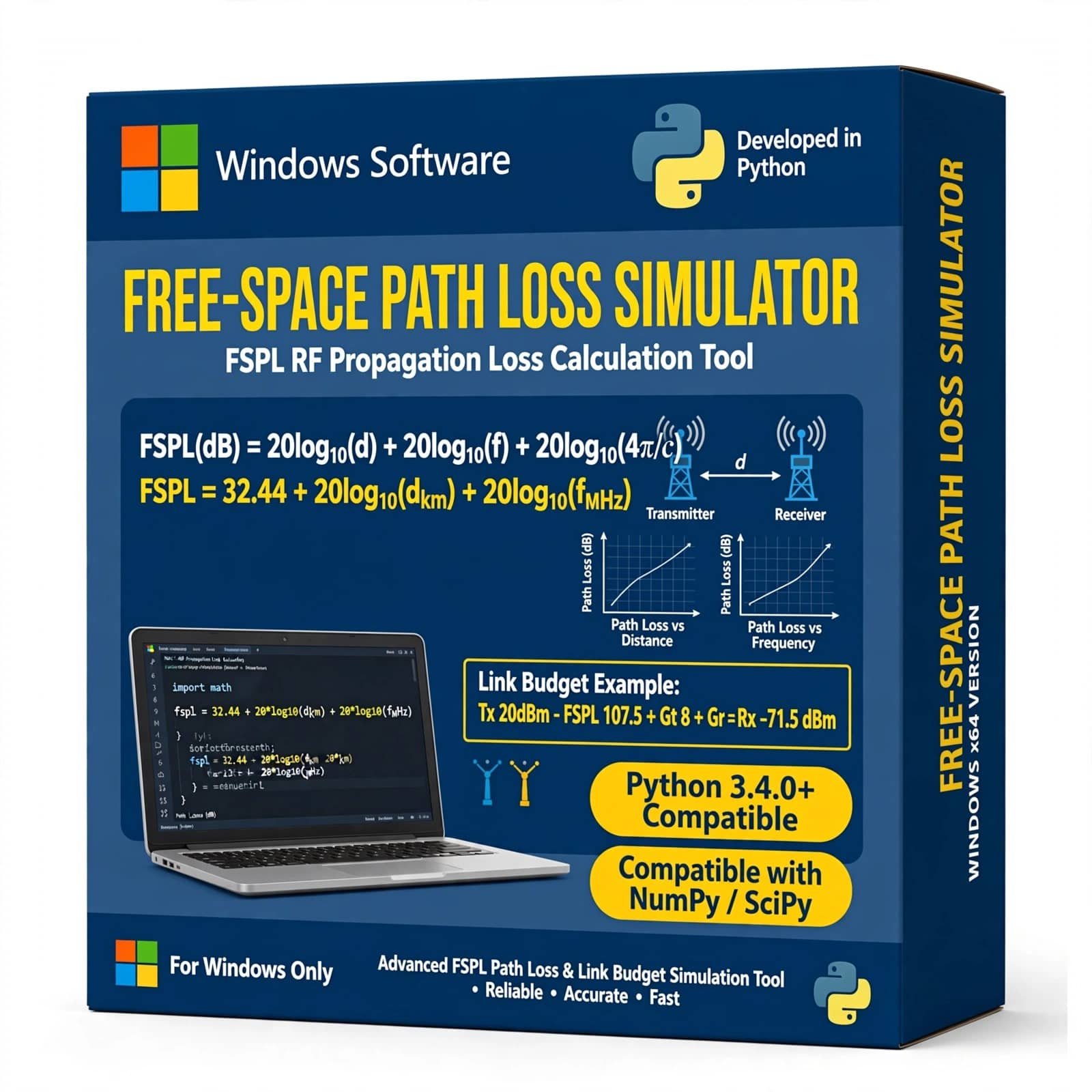
Free Space Path Loss Simulator Using Python is a practical wireless communication simulation project designed to calculate and visualize signal power loss as a radio wave travels through free space. Developed using Python, this simulator helps students, researchers, and communication engineers understand Free Space Path Loss (FSPL), transmission distance, frequency, received signal power, and wireless link performance.
The project provides an easy-to-understand simulation environment for analyzing how distance and operating frequency affect signal propagation. It is suitable for B.Tech, M.Tech, engineering students, academic projects, wireless communication studies, RF analysis, and Python-based simulation projects.
₹1,999.00 -

Cell Coverage Simulator is a wireless communication simulation tool designed to model and analyze cellular network coverage using Python. It helps students, researchers, and telecom professionals visualize cell coverage, signal propagation, coverage areas, and network planning concepts through practical simulation and analysis.
₹6,999.00 -
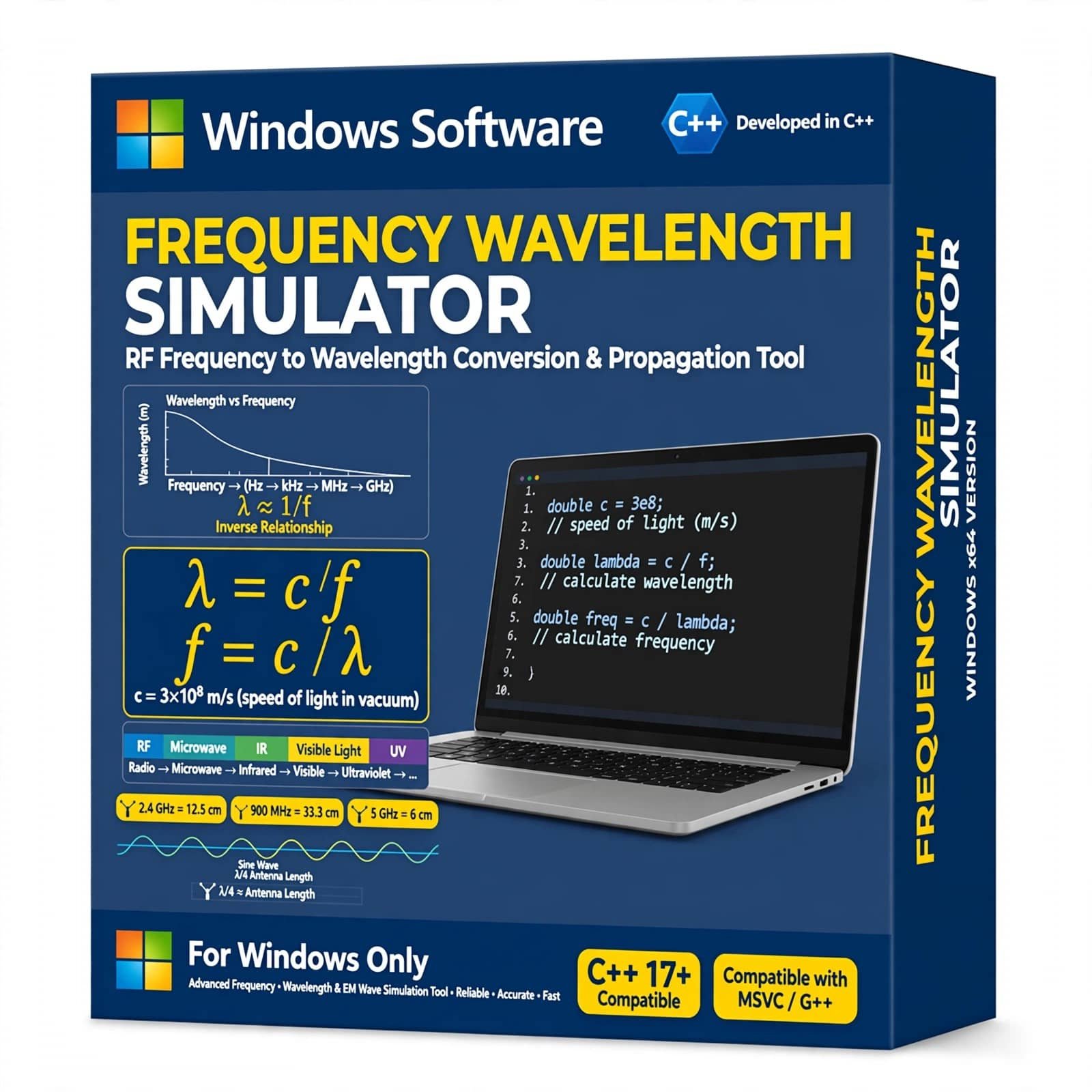
Frequency Wavelength Simulator with C++ is a practical simulation project designed to calculate and analyze the relationship between frequency, wavelength, and wave velocity. Developed using C++, this project provides an easy way to understand fundamental concepts of electromagnetic and communication waves through computer-based calculations.
It is ideal for B.Tech, M.Tech, ECE, electronics, telecommunication, physics, and engineering students looking for a useful C++ academic project. The simulator can be used to calculate wavelength from frequency, explore different frequency values, and understand how frequency and wavelength are related in wireless communication and electromagnetic wave propagation.
₹1,999.00 -
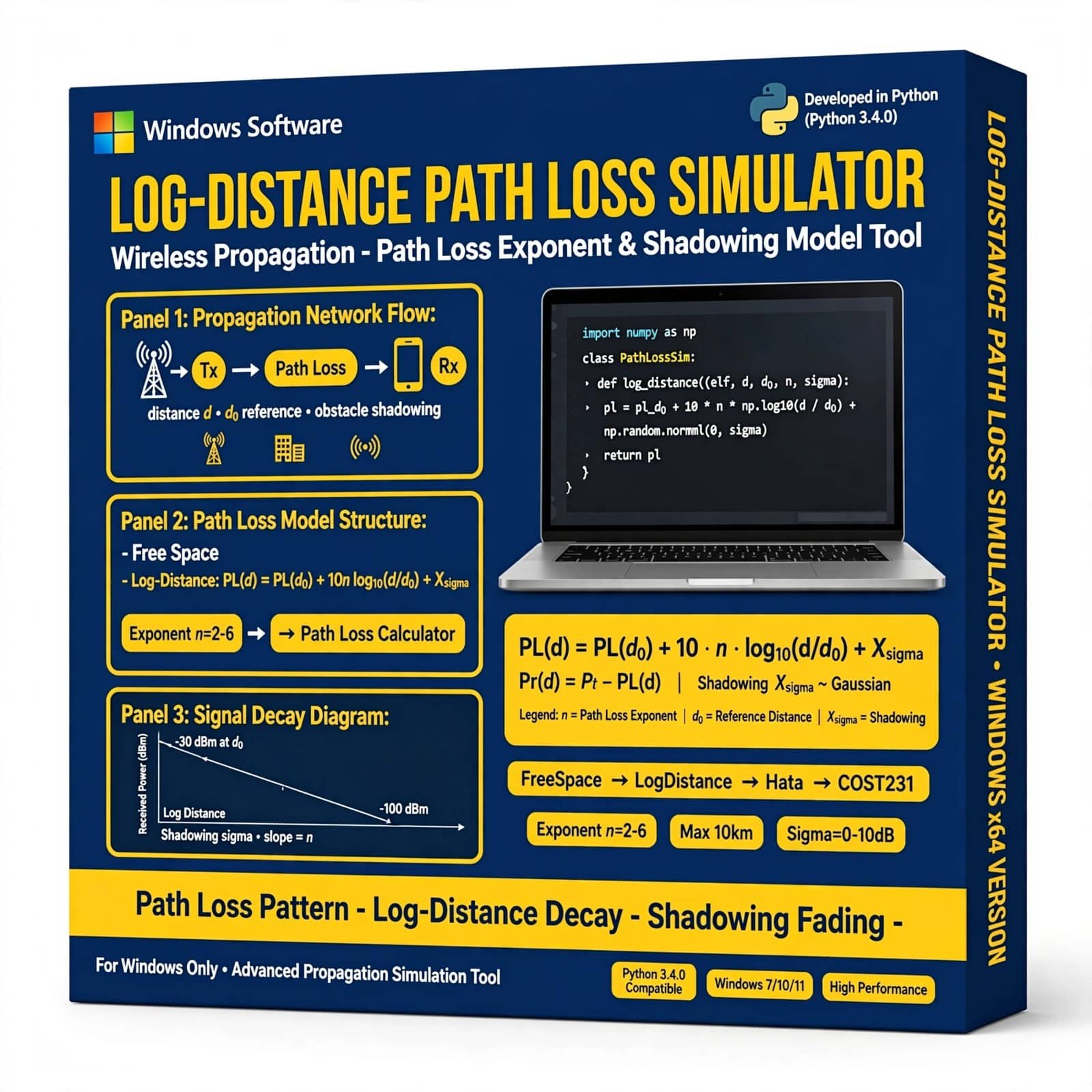
The Log-Distance Path Loss Simulator is a powerful wireless communication simulation tool designed to analyze and visualize signal attenuation over distance. It helps students, researchers, engineers, and RF professionals understand path loss, received signal strength, wireless propagation, and network performance using the log-distance path loss model. Ideal for academic projects, RF research, wireless network analysis, and communication system simulations.
₹6,999.00 -
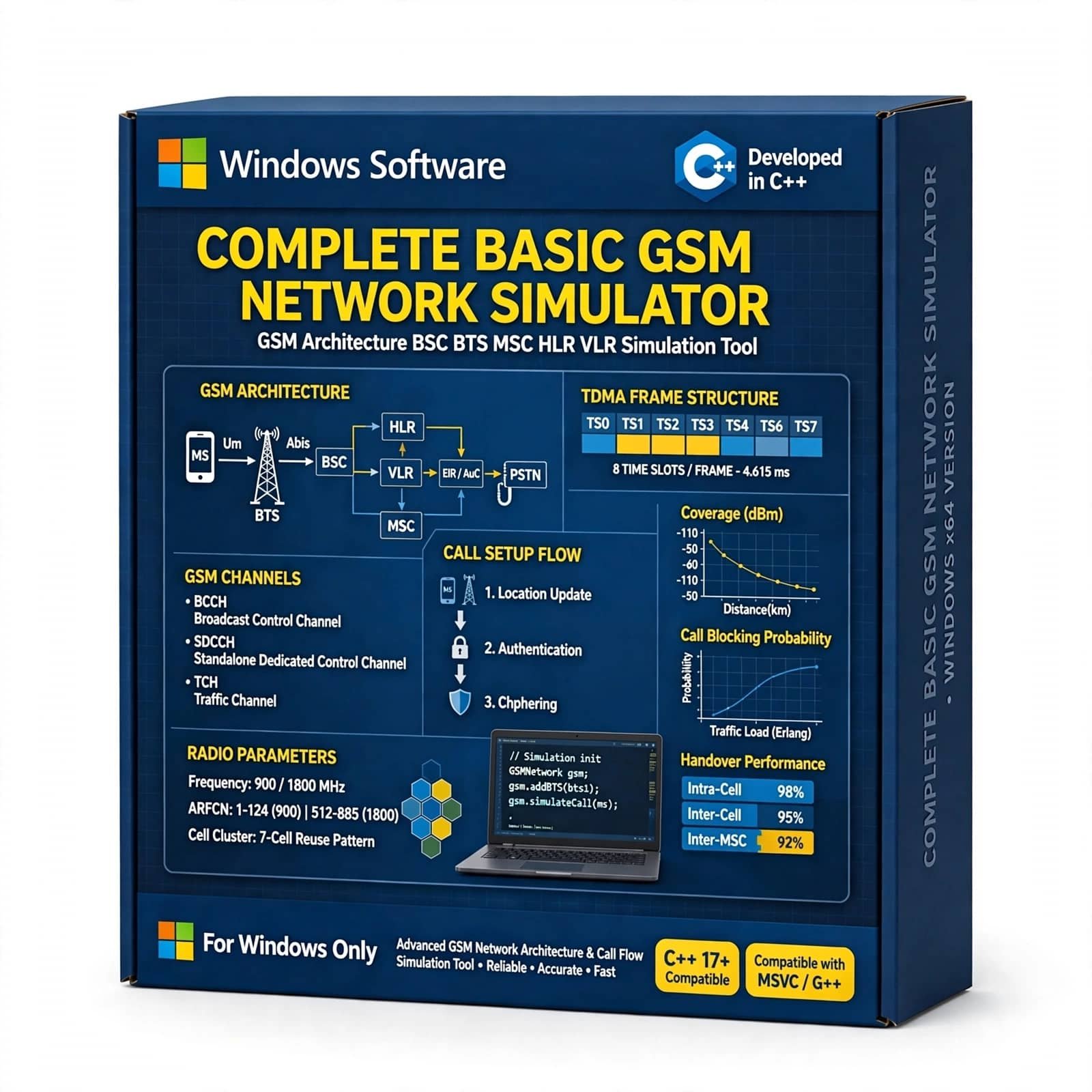
Complete Basic GSM Network with C++ is an educational and simulation-based project that demonstrates the fundamental architecture and operation of a GSM network using C++. It helps students and researchers understand GSM components, mobile communication, call and message handling, network signaling, and basic cellular network operations through a practical C++ implementation.
Original price was: ₹3,999.00.₹2,399.00Current price is: ₹2,399.00.


Reviews
There are no reviews yet.