New
87% Off

DVB-RCS RCS2 Simulator

Original price was: ₹750.00.₹100.00Current price is: ₹100.00.
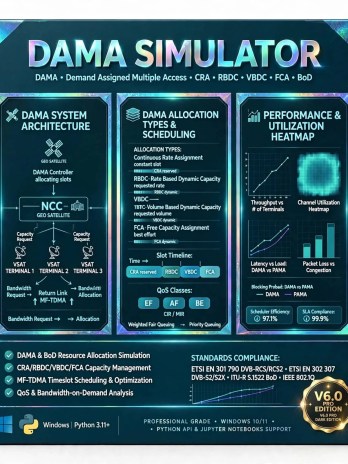
In StockDVB-RCS RCS2 Simulator with Python is a practical simulation project for studying DVB-RCS and DVB-RCS2 satellite communication systems using Python. The project helps students, researchers, and developers explore return-channel communication, resource allocation, multiple access, bandwidth management, and satellite network simulation through a Python-based implementation. It is suitable for academic projects, communication engineering studies, networking research, and simulation-based learning.
Description
DVB-RCS RCS2 Simulator
The DVB-RCS RCS2 Simulator with Python is a practical simulation project designed to help students, researchers, and developers understand the concepts of DVB-RCS and DVB-RCS2 satellite communication systems through Python-based simulation. The project provides a useful platform for exploring return-channel communication, multiple access techniques, resource allocation, bandwidth management, and satellite network behavior in a programmable simulation environment.
DVB-RCS, or Digital Video Broadcasting – Return Channel via Satellite, is a standard associated with interactive satellite communication systems. DVB-RCS2 represents a later evolution of the technology, providing additional capabilities for modern satellite communication scenarios. Studying these concepts through simulation can help learners connect communication theory with practical programming and network modeling.
This DVB-RCS2 Simulator in Python is suitable for academic projects, communication engineering assignments, networking simulations, research experiments, and Python-based final-year projects.

Learn DVB-RCS and DVB-RCS2 Simulation Using Python
Satellite communication systems involve multiple users sharing communication resources. Efficient management of these resources is an important aspect of interactive satellite networks. A simulator provides a controlled environment in which students and researchers can study these concepts without requiring a physical satellite communication infrastructure.
Using Python, the DVB-RCS RCS2 simulation project can represent different aspects of a satellite return-channel environment. Learners can investigate concepts such as user demand, resource allocation, channel access, bandwidth requirements, and communication traffic.
Python is particularly useful for simulation projects because of its readable programming syntax and extensive ecosystem. A Python-based DVB-RCS simulator can also be modified and extended for different academic or research requirements.

Key Features of DVB-RCS RCS2 Simulator
The DVB-RCS RCS2 Simulator with Python is intended as a practical learning and experimentation resource. Depending on the implementation and project configuration, the simulator can be used to study areas such as:
- DVB-RCS satellite communication concepts
- DVB-RCS2 system simulation
- Return-channel communication
- Satellite network modeling
- Multiple-user communication
- Dynamic resource allocation
- Bandwidth allocation concepts
- Demand-based communication resources
- Python-based network simulation
- Communication traffic simulation
- Simulation parameter customization
- Academic research and experimentation
These capabilities make the project useful for learners who want to explore satellite networking and communication concepts through software-based simulation.

What Is DVB-RCS?
DVB-RCS is a satellite communication technology designed to support interactive communication using a return channel through satellite infrastructure. It enables communication between user terminals and a satellite network and involves mechanisms for managing shared communication resources.
For students studying satellite communication, DVB-RCS provides an interesting example of how communication resources can be shared among multiple terminals. Simulation makes it possible to represent these concepts programmatically and experiment with different system conditions.
A DVB-RCS simulator can therefore be useful for understanding the relationship between user requirements, communication resources, channel access, and network performance.

What Is DVB-RCS2?
DVB-RCS2 is an evolution of the DVB-RCS technology and is associated with modern interactive satellite communication systems. Studying DVB-RCS2 provides learners with an opportunity to explore more advanced concepts related to return-channel satellite networks.
A Python-based DVB-RCS2 simulator can provide a software environment for investigating these concepts, modeling communication scenarios, and experimenting with different parameters.
The simulator can serve as a foundation for students who want to understand how satellite communication systems can be represented using programming and simulation techniques.

Python-Based Satellite Communication Simulation
One of the primary benefits of this project is its focus on Python satellite communication simulation. Instead of working only with theoretical diagrams and equations, students can use a software simulation to understand how different components and communication processes interact.
Python can be used to implement simulation logic, generate communication scenarios, manage users and resources, and analyze simulation results. This makes the project particularly suitable for students who want to combine Python programming with satellite communication engineering.
The project can also be customized to investigate different network conditions. For example, users may experiment with different numbers of terminals, traffic demands, resource requirements, allocation strategies, or simulation parameters according to their project objectives.

Applications of DVB-RCS RCS2 Simulation
The DVB-RCS RCS2 Python simulator can be useful in several academic and technical areas, including:
- Satellite communication
- Wireless communication
- Computer networking
- Telecommunication engineering
- Network simulation
- Resource allocation research
- Communication protocol studies
- Python programming
- Engineering final-year projects
- Academic research
- Satellite network experimentation
The project can be particularly valuable for students working on simulation-based communication projects where a practical implementation is required.
Who Can Use This DVB-RCS2 Python Project?
This project can be useful for:
- Electronics and Communication Engineering students
- Telecommunication students
- Computer Science students
- Networking students
- Python developers
- Satellite communication researchers
- Engineering project students
- Academic researchers
- Students working on simulation projects
It can be used as a learning resource, project foundation, simulation reference, or starting point for further experimentation.

Benefits of a DVB-RCS Simulator
A software-based simulator allows users to investigate communication-system behavior in a controlled environment. This can reduce the need for expensive physical equipment while still providing opportunities to explore important networking and satellite communication concepts.
With a DVB-RCS RCS2 simulator, students can study how multiple users interact with shared communication resources and how resource-management mechanisms can affect a simulated network.
The Python implementation also provides flexibility for experimentation. Students can examine the existing simulation and potentially extend it with additional parameters, traffic models, resource-management methods, performance measurements, or visualization features.
Suitable for Academic and Final-Year Projects
The DVB-RCS RCS2 Simulator with Python can be used as a foundation for academic projects involving satellite communication, networking, Python programming, and simulation.
Students can use the project to demonstrate concepts during academic presentations, laboratory work, project demonstrations, or research activities. It may also provide a starting point for developing a customized simulation based on specific project requirements.
For researchers and advanced learners, the simulator can be further explored to investigate different communication scenarios and resource-management approaches.
Explore DVB-RCS and RCS2 with Python
The DVB-RCS RCS2 Simulator with Python combines satellite communication concepts with practical software simulation. It provides an opportunity to study return-channel communication, network resources, multiple-user scenarios, and satellite communication modeling through Python.
If you are looking for a DVB-RCS simulator in Python, DVB-RCS2 simulation project, or a practical satellite communication project using Python, this resource can provide a useful foundation for learning, experimentation, academic development, and further research.
Get the DVB-RCS RCS2 Simulator with Python and explore satellite communication and return-channel simulation through a practical Python-based project.
Related products
-
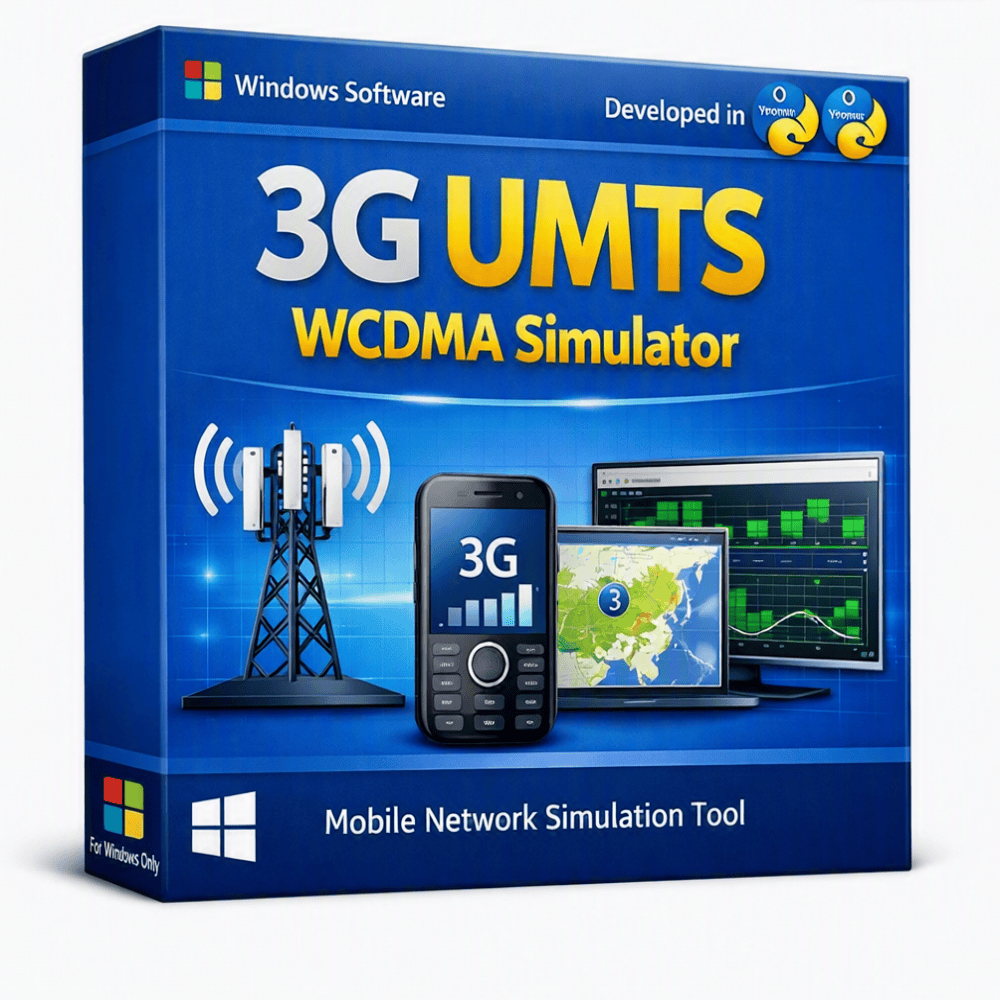
The 3G UMTS – WCDMA Simulator is a software-based simulation project designed to demonstrate the fundamental concepts of 3G Universal Mobile Telecommunications System (UMTS) and Wideband Code Division Multiple Access (WCDMA) technology. It provides a practical environment for studying cellular communication, spreading codes, signal transmission, mobile users, network connectivity, and WCDMA-based communication principles. The simulator is suitable for students, researchers, and developers working on telecommunications and wireless communication projects. It can be used for academic demonstrations, engineering projects, research, experimentation, and learning about 3G mobile communication and WCDMA network technologies.
Original price was: ₹750.00.₹250.00Current price is: ₹250.00. -
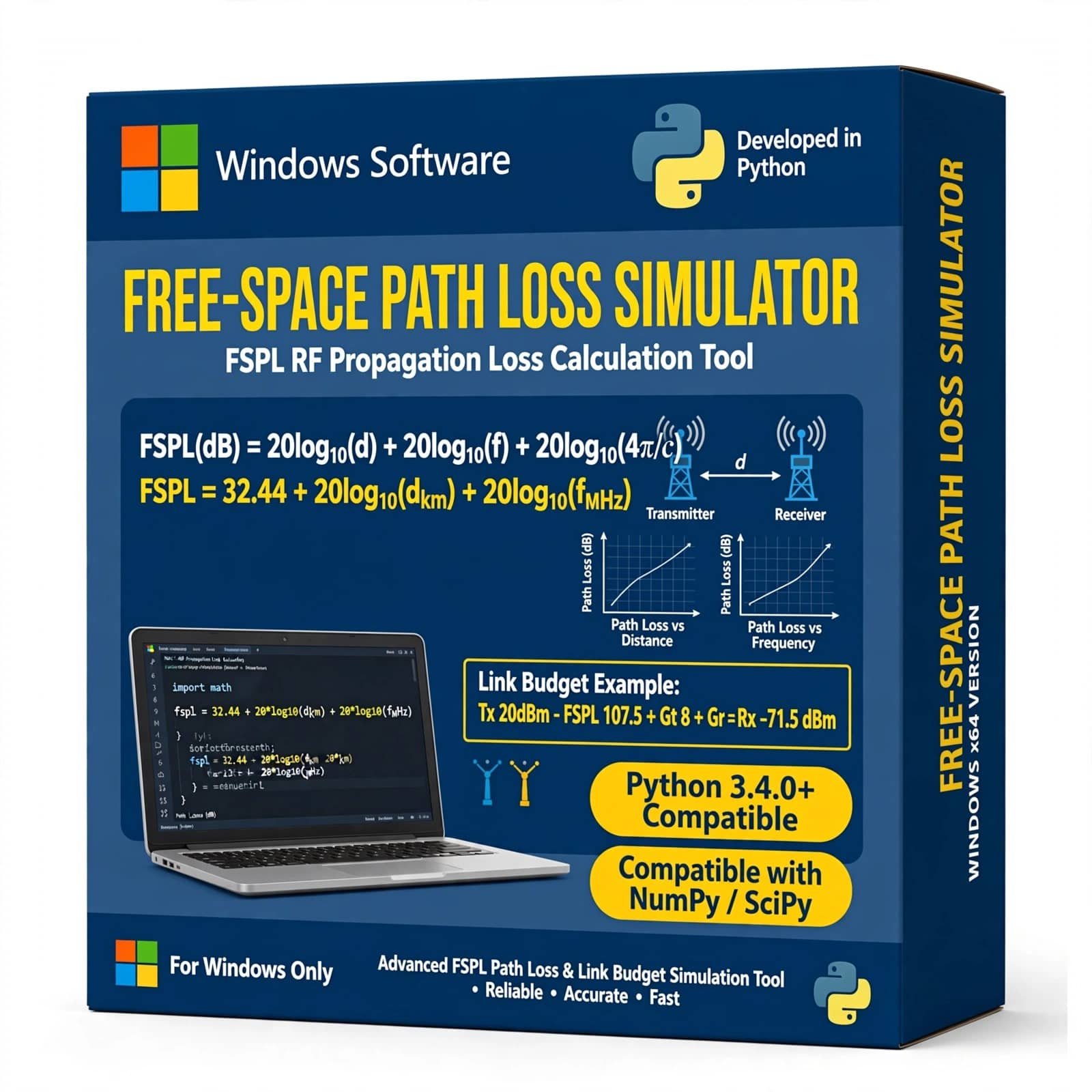
Free Space Path Loss Simulator Using Python is a practical wireless communication simulation project designed to calculate and visualize signal power loss as a radio wave travels through free space. Developed using Python, this simulator helps students, researchers, and communication engineers understand Free Space Path Loss (FSPL), transmission distance, frequency, received signal power, and wireless link performance.
The project provides an easy-to-understand simulation environment for analyzing how distance and operating frequency affect signal propagation. It is suitable for B.Tech, M.Tech, engineering students, academic projects, wireless communication studies, RF analysis, and Python-based simulation projects.
Original price was: ₹750.00.₹250.00Current price is: ₹250.00. -
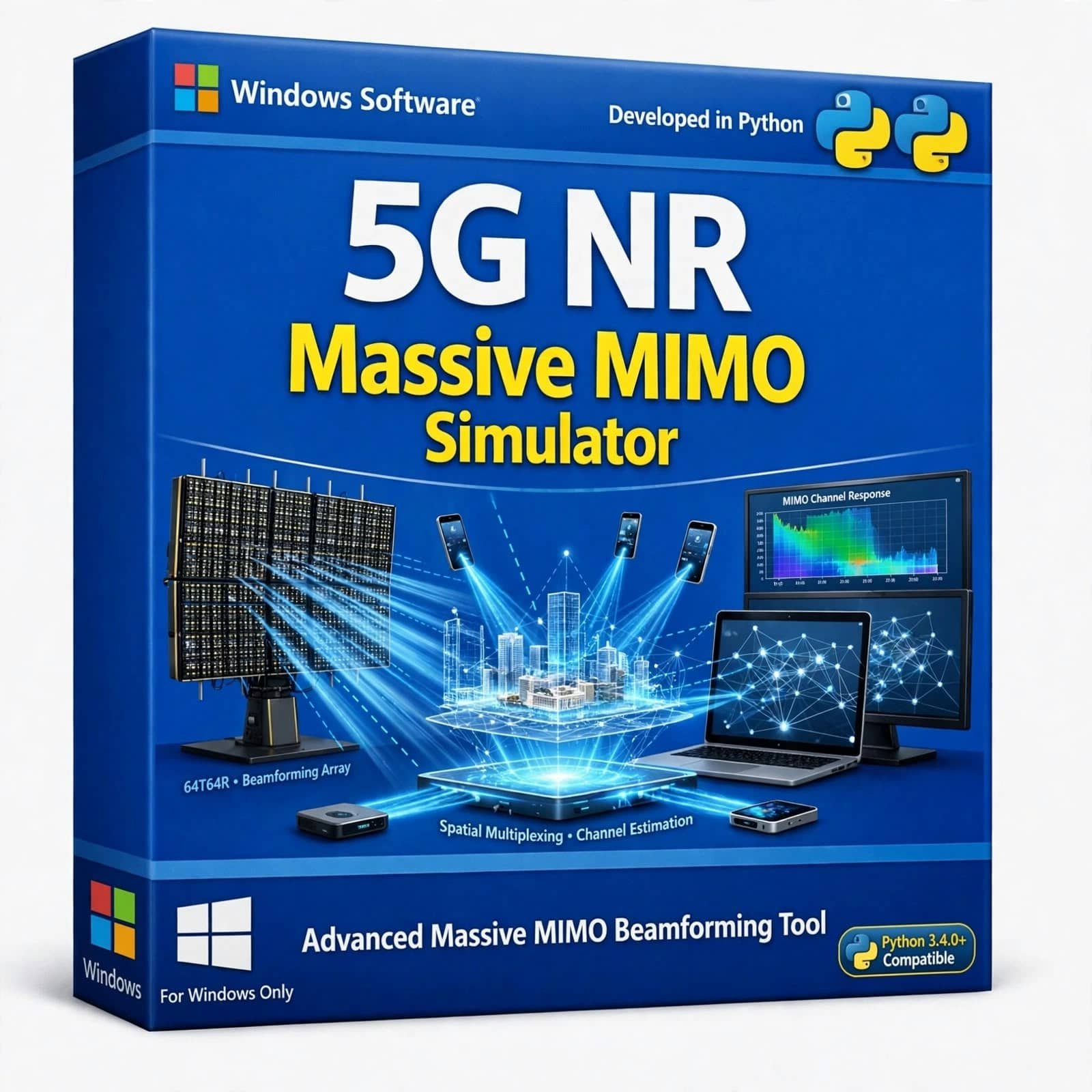
5G NR Massive MIMO Simulator is an advanced simulation solution for modeling and analyzing Massive Multiple-Input Multiple-Output (MIMO) technologies in 5G New Radio networks. It enables users to study large-scale antenna arrays, beamforming, precoding, spatial multiplexing, multi-user MIMO, channel estimation, and interference under configurable channel conditions. The simulator supports analysis of throughput, spectral efficiency, SINR, BER, BLER, MIMO capacity, beamforming gain, and multi-user performance, making it ideal for 5G NR research, algorithm development, academic projects, and 5G/6G wireless system optimization.
Original price was: ₹750.00.₹250.00Current price is: ₹250.00. -
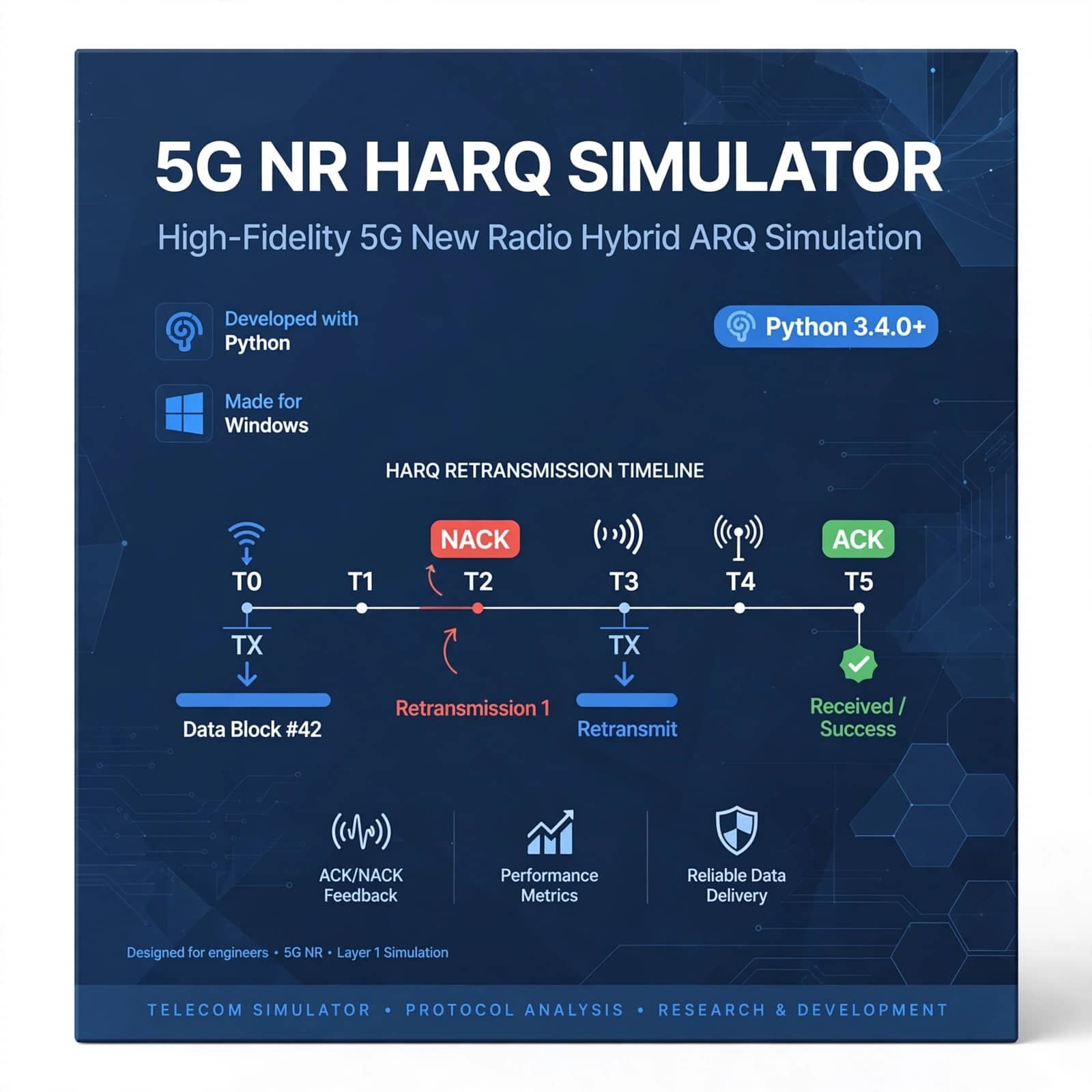
5G NR HARQ Simulator is an advanced simulation solution for modeling and analyzing Hybrid Automatic Repeat Request (HARQ) mechanisms in 5G New Radio networks. It enables users to study HARQ processes, ACK/NACK feedback, retransmissions, link adaptation, channel errors, and communication reliability under configurable network conditions. The simulator supports analysis of throughput, BLER, latency, retransmission rate, packet errors, spectral efficiency, and other key performance metrics, making it suitable for 5G NR research, algorithm development, academic projects, and wireless communication system optimization.
Original price was: ₹750.00.₹250.00Current price is: ₹250.00. -
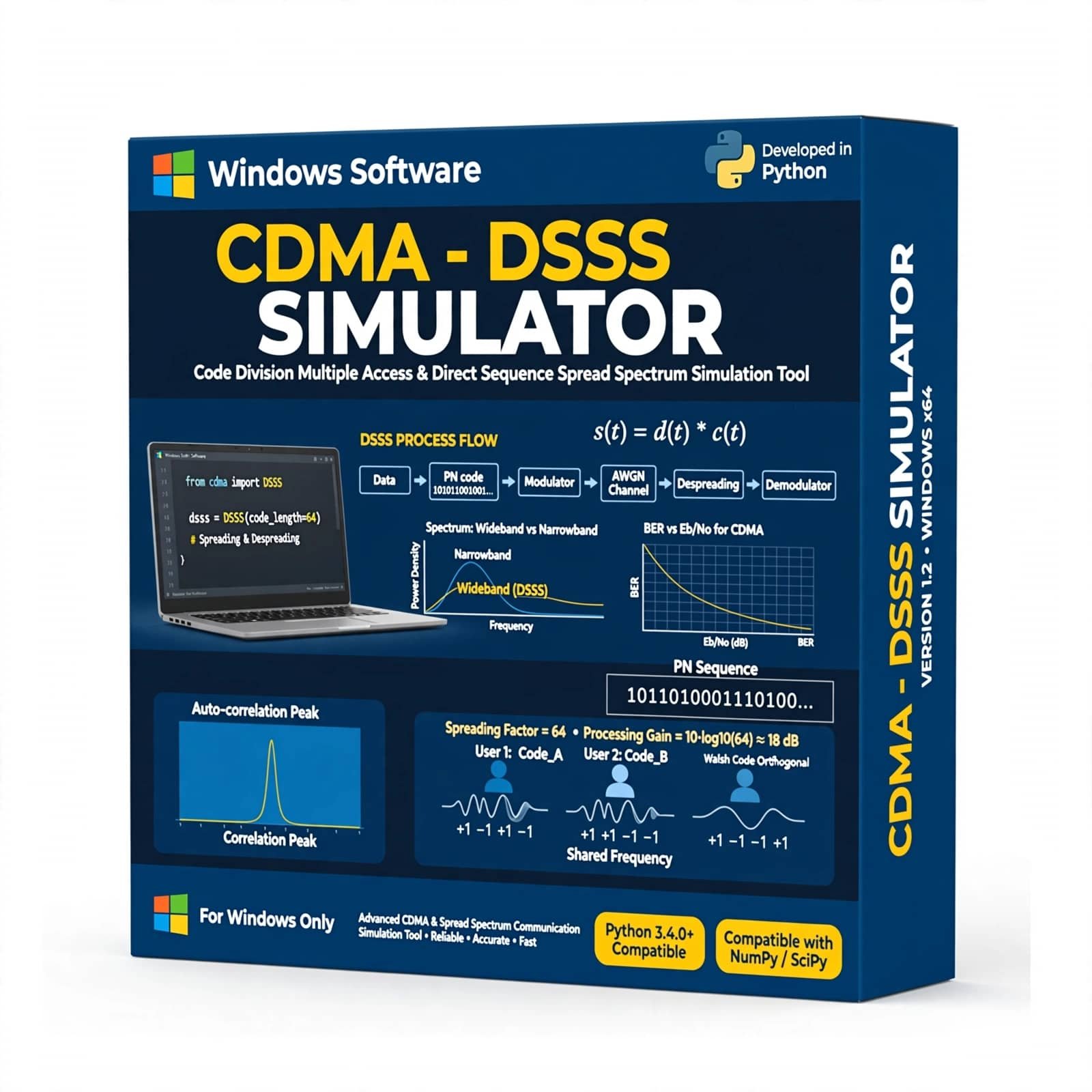
The CDMA – DSSS Simulator with Python is a software-based communication simulation tool designed to demonstrate and analyze Code Division Multiple Access (CDMA) and Direct Sequence Spread Spectrum (DSSS) techniques. Developed using Python, the simulator provides a practical environment for studying spreading codes, signal spreading and despreading, data transmission, multiple-access communication, interference, and signal recovery. It is ideal for digital communication and wireless communication laboratories, engineering education, student projects, technical training, and communication-system research.
Original price was: ₹750.00.₹250.00Current price is: ₹250.00. -
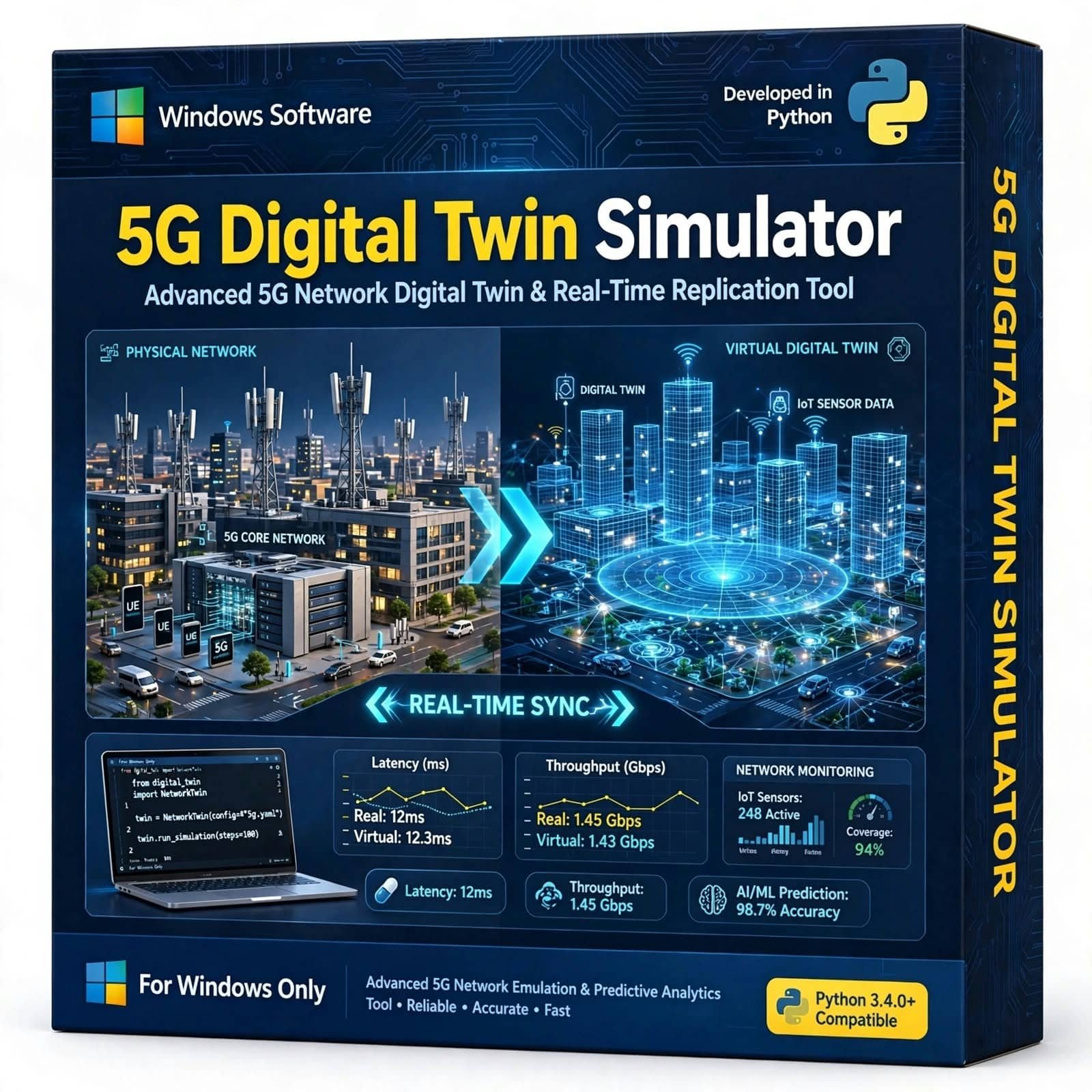
The 5G Digital Twin is a Python-based software solution designed for researchers, engineers, developers, students, and telecommunications professionals interested in modeling, simulating, and analyzing 5G communication networks and their real-world behavior in a virtual environment.
A digital twin provides a virtual representation of a physical or network system, enabling users to study system behavior, evaluate scenarios, analyze performance, and experiment with different configurations. Developed using Python, this 5G Digital Twin can support research, education, network analysis, experimentation, and proof-of-concept development.
Available for sale as a software product. Contact us for pricing, licensing, technical specifications, customization, and purchase information.
Original price was: ₹750.00.₹250.00Current price is: ₹250.00.


Reviews
There are no reviews yet.