-

LTE Uplink SC-FDMA Simulator developed with Python is a software-based simulation solution designed to study and analyze the SC-FDMA transmission technique used in the LTE uplink. It provides a practical environment for understanding DFT-spread OFDM, subcarrier mapping, signal generation, modulation, transmission, and receiver processing. Ideal for 4G LTE physical-layer research, wireless communication studies, academic projects, signal-processing experiments, and Python-based telecom simulation.
₹6,999.00 -

LTE VoLTE Simulator developed with Python is a software-based simulation solution designed to study and demonstrate Voice over LTE (VoLTE) communication concepts over 4G LTE networks. It provides a practical environment for exploring LTE voice communication, call setup and release procedures, IP-based voice services, signaling, QoS, and VoLTE service workflows. Ideal for telecom research, academic projects, engineering studies, IMS and VoLTE learning, network simulation, and Python-based communication projects.
₹6,999.00 -
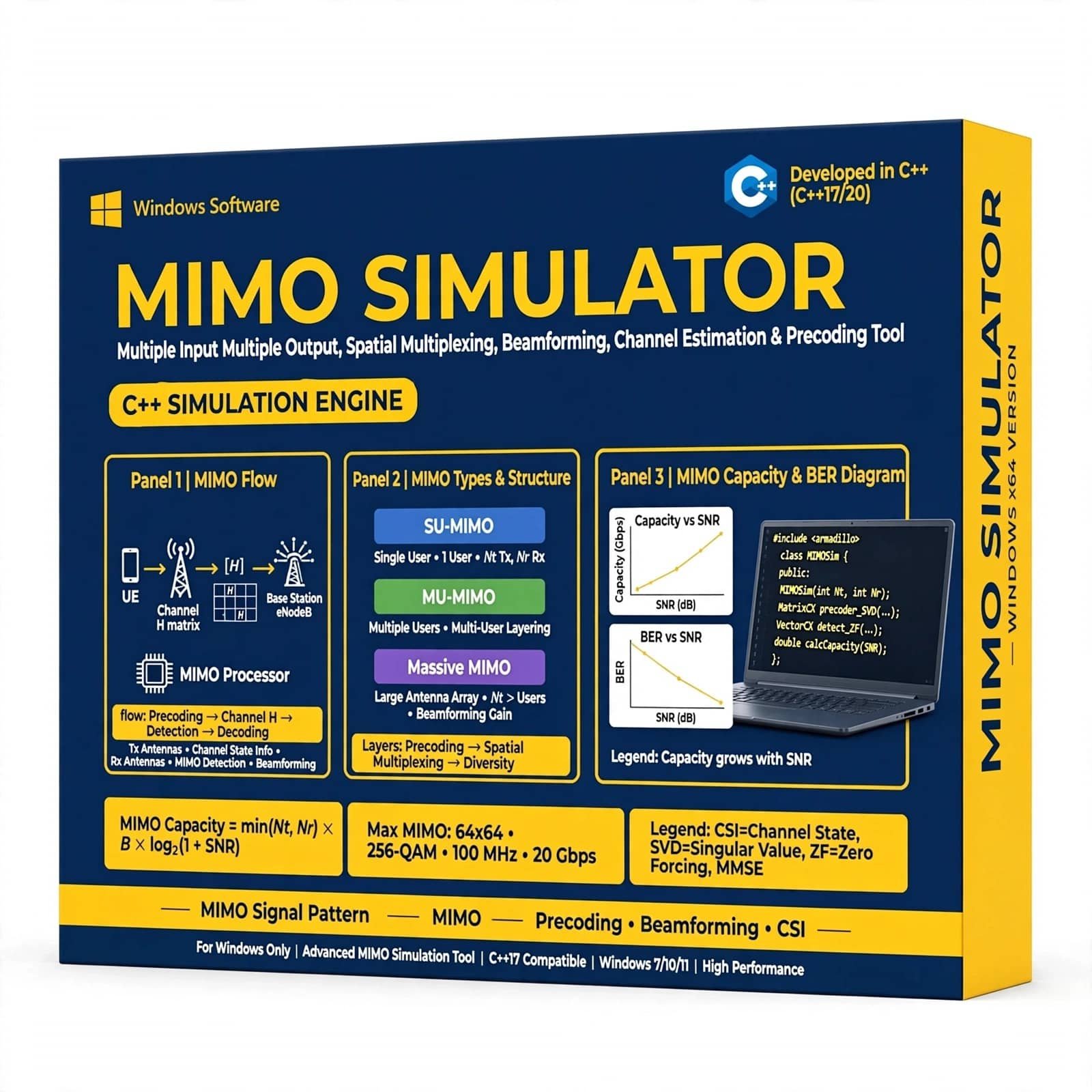
MIMO Simulator with C++ is a powerful wireless communication simulation solution designed for students, researchers, engineers, and communication professionals. Simulate Multiple-Input Multiple-Output (MIMO) systems, analyze channel performance, evaluate BER and SNR, and study different modulation, detection, and fading techniques using efficient C++ implementation.
₹3,999.00 -
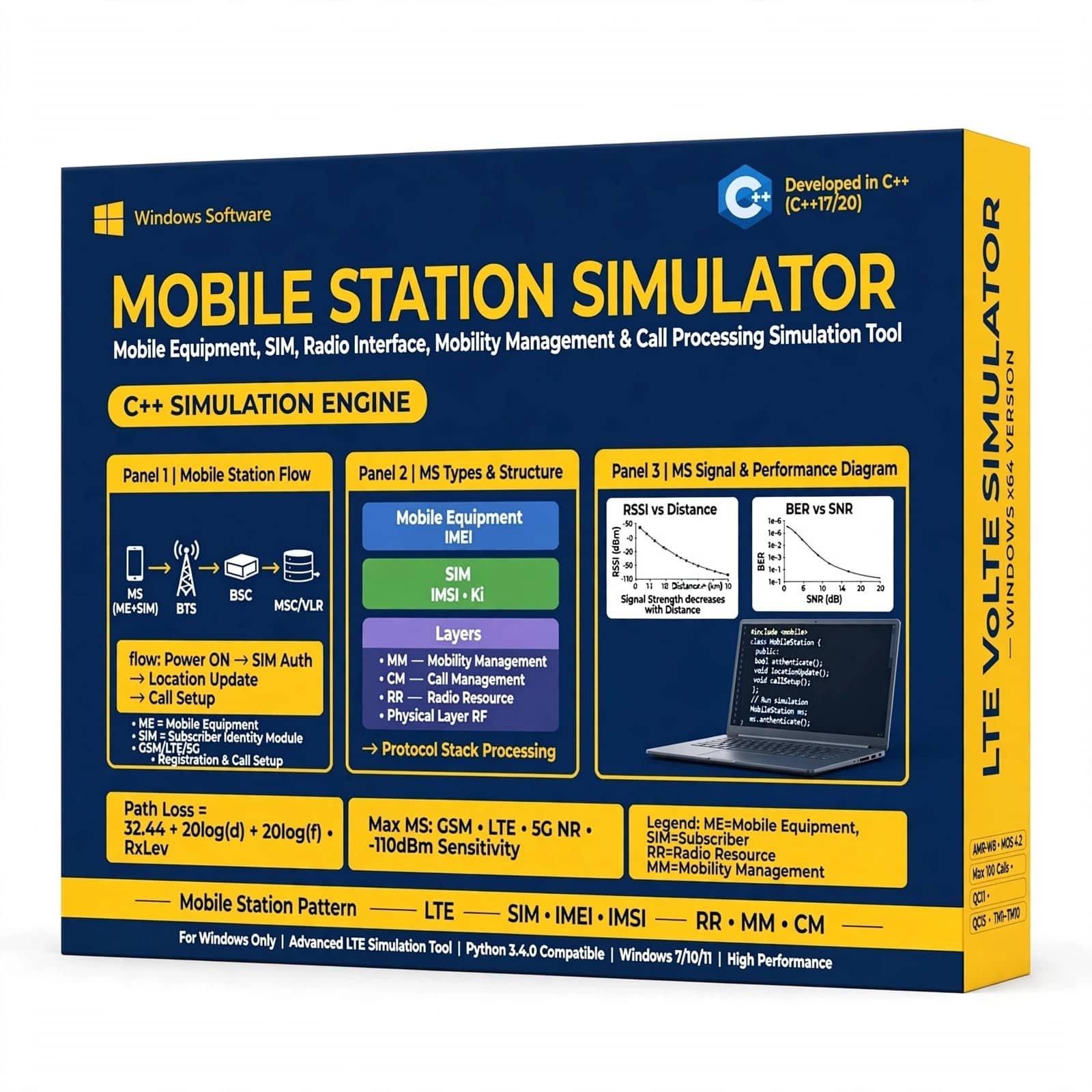
GSM Mobile Station Simulator – C++ Educational Software is an interactive educational simulator designed to demonstrate key GSM mobile station concepts, including MS hardware and identity, SIM card status, battery level, authentication, network registration, cell connectivity, signal strength, mobility, and Call/SMS states. Developed in C++, this simulator provides a simple visual environment for learning and demonstrating GSM network and mobile-station behavior.
Original price was: ₹3,999.00.₹749.00Current price is: ₹749.00. -
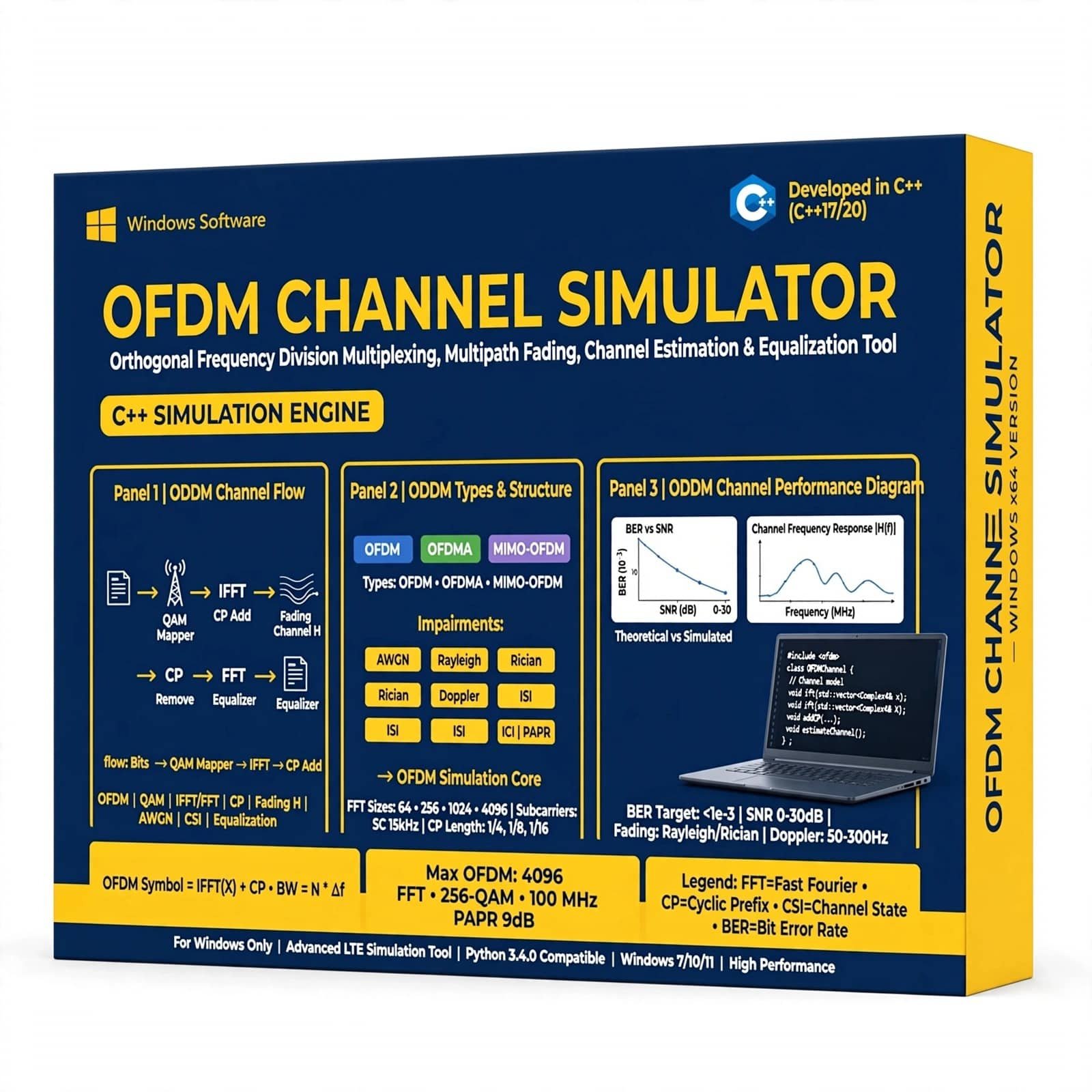
OFDM Channel Simulator – C++ Educational Software is an interactive simulation tool designed to help students, educators, researchers, and communication-engineering learners understand Orthogonal Frequency Division Multiplexing (OFDM) and wireless channel effects. Developed using C++, the simulator demonstrates FFT/IFFT processing, cyclic prefix, QPSK and QAM modulation, multipath channels, delay spread, channel frequency response, equalization, BER, EVM, and constellation diagrams through an intuitive graphical interface.
₹1,999.00 -
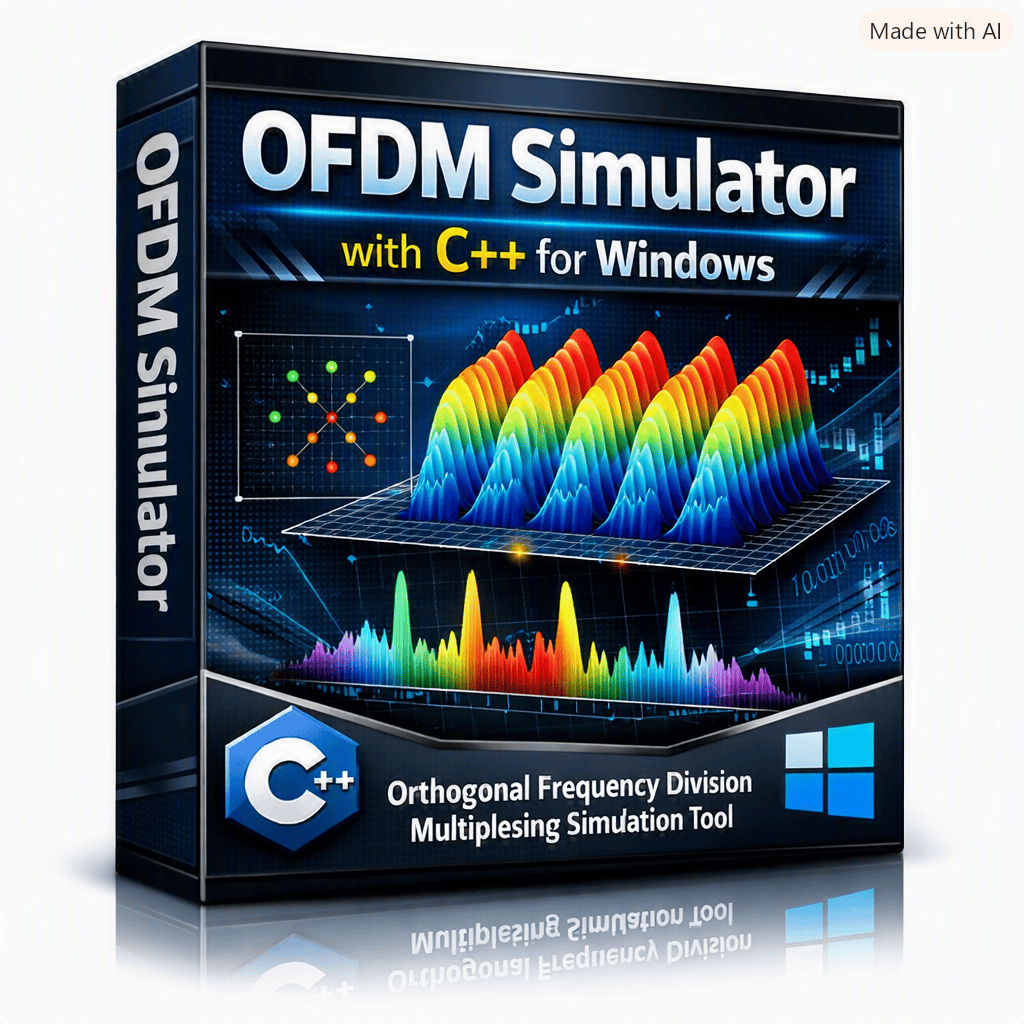
OFDM Simulator – C++ Educational Software is an interactive learning and simulation tool for understanding Orthogonal Frequency Division Multiplexing (OFDM) and digital communication concepts. Developed using C++, it allows users to configure FFT/IFFT size, active subcarriers, cyclic prefix length, modulation, SNR, and number of OFDM symbols while visualizing the resulting time-domain waveform, spectrum, and constellation. The simulator also provides measurable results such as PAPR, BER, Eb/N0, simulated bits, and cyclic-prefix overhead.
₹1,999.00 -
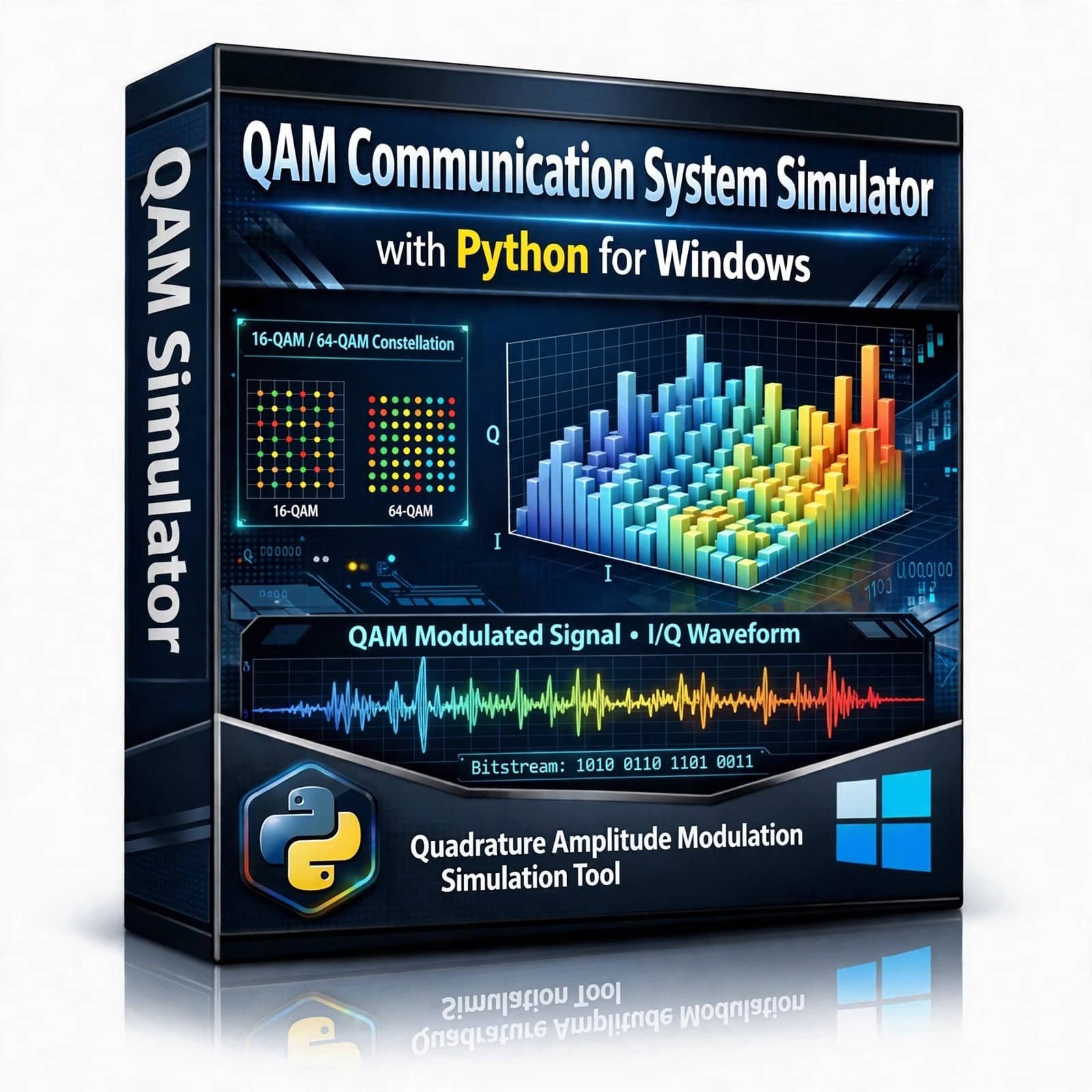
QAM Communication System Simulator – Explore and simulate Quadrature Amplitude Modulation (QAM) with this Python-based Communication System Simulator. Designed for students, researchers, and communication engineering enthusiasts, this project provides an interactive way to understand QAM modulation, signal transmission, noise effects, constellation diagrams, demodulation, and communication system performance using Python.
₹1,999.00 -
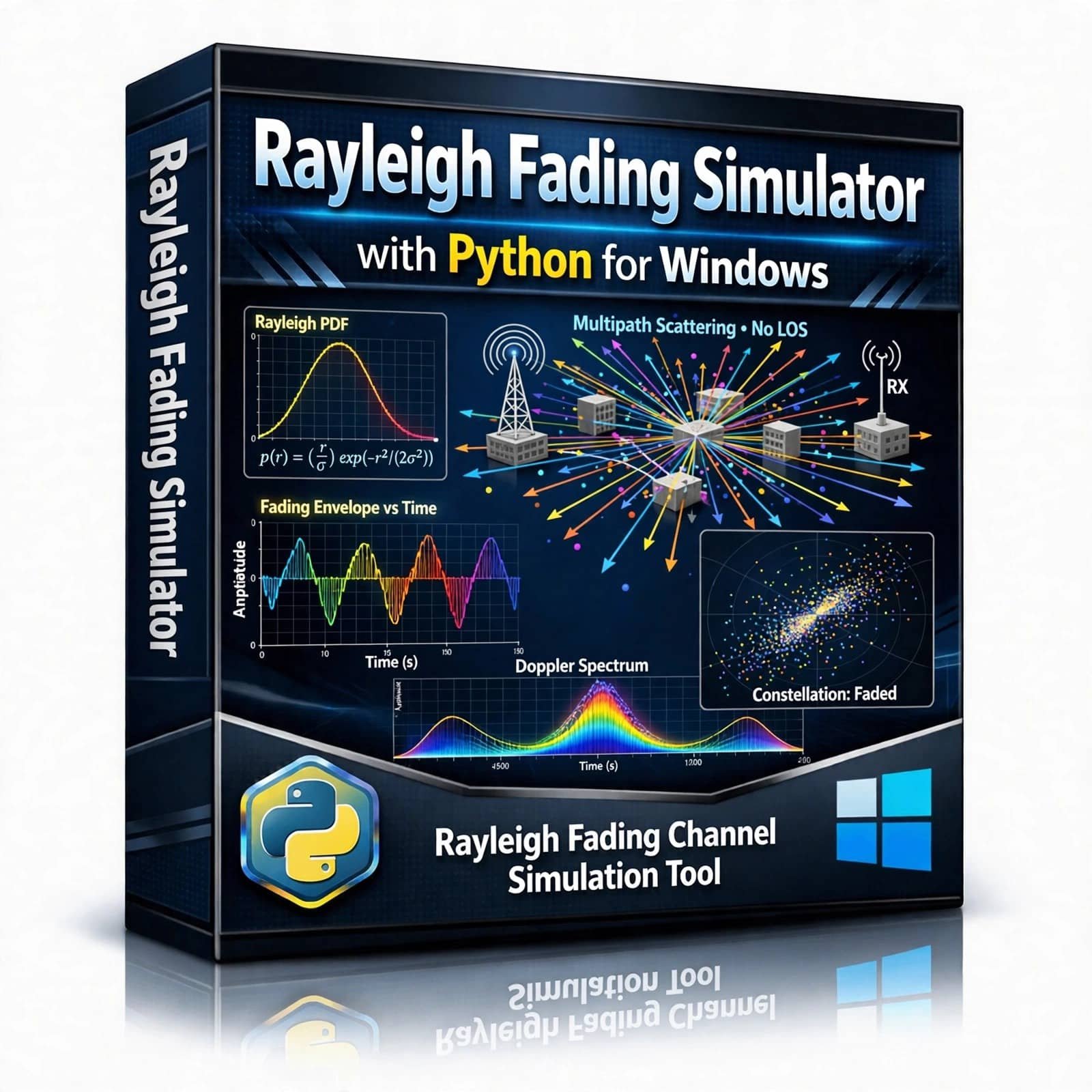
Rayleigh Fading Simulator – Study and simulate the effects of Rayleigh fading in wireless communication systems using this Python-based Rayleigh Fading Simulator. Designed for students, researchers, and communication engineering professionals, the project provides a practical environment for generating Rayleigh fading channels, analyzing signal variations, visualizing fading characteristics, and understanding the impact of multipath propagation on wireless signals.
₹5,499.00 -
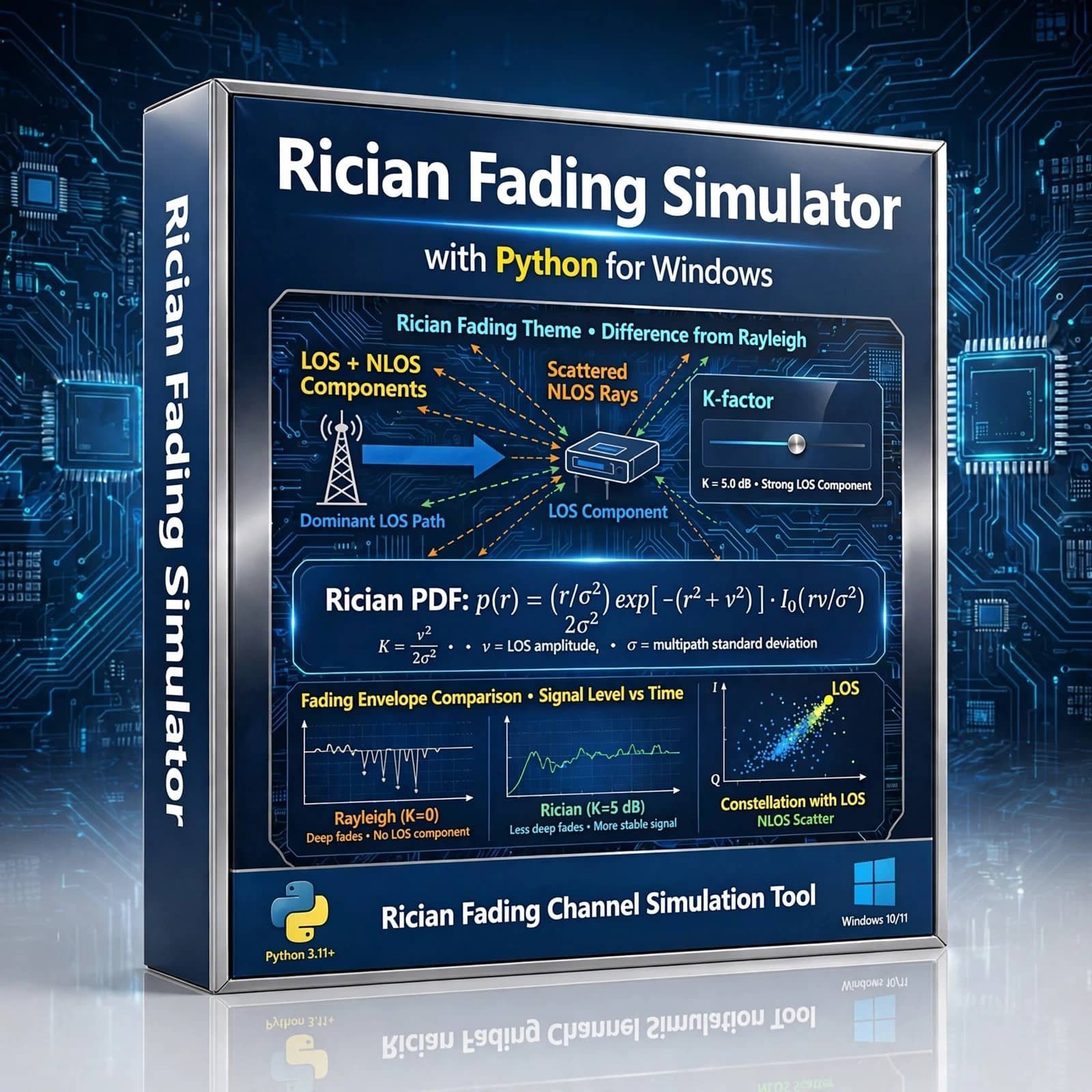
Rician Fading Simulator with Python is a wireless communication simulation tool designed for analyzing Rician fading channels, line-of-sight propagation, scattered signal components, and wireless channel behavior. Ideal for students, researchers, engineers, and Python developers, it can be used for Rician K-factor analysis, signal-processing research, communication algorithm testing, wireless channel modeling, and academic projects. The simulator provides a flexible Python-based environment for studying the impact of Rician fading on wireless communication systems.
Original price was: ₹750.00.₹250.00Current price is: ₹250.00. -
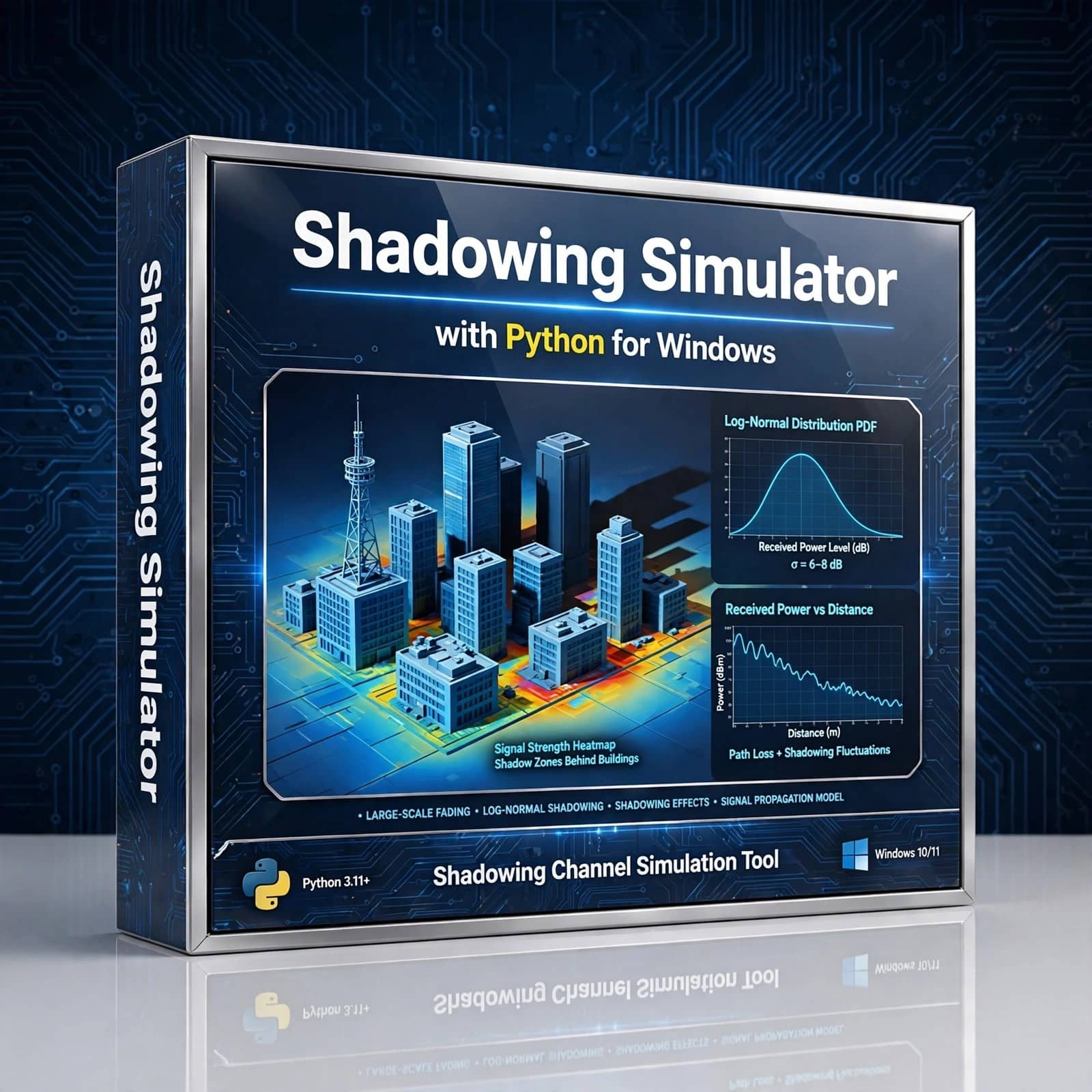
Shadowing Simulator with Python is a wireless communication simulation tool for analyzing shadowing effects, path loss, wireless signal propagation, and channel behavior. It is suitable for studying log-normal shadowing, received signal variations, RF propagation, and wireless channel models. Designed for students, researchers, engineers, and Python developers, the simulator can support wireless communication research, network modeling, signal-processing studies, and academic projects.
Original price was: ₹750.00.₹250.00Current price is: ₹250.00. -
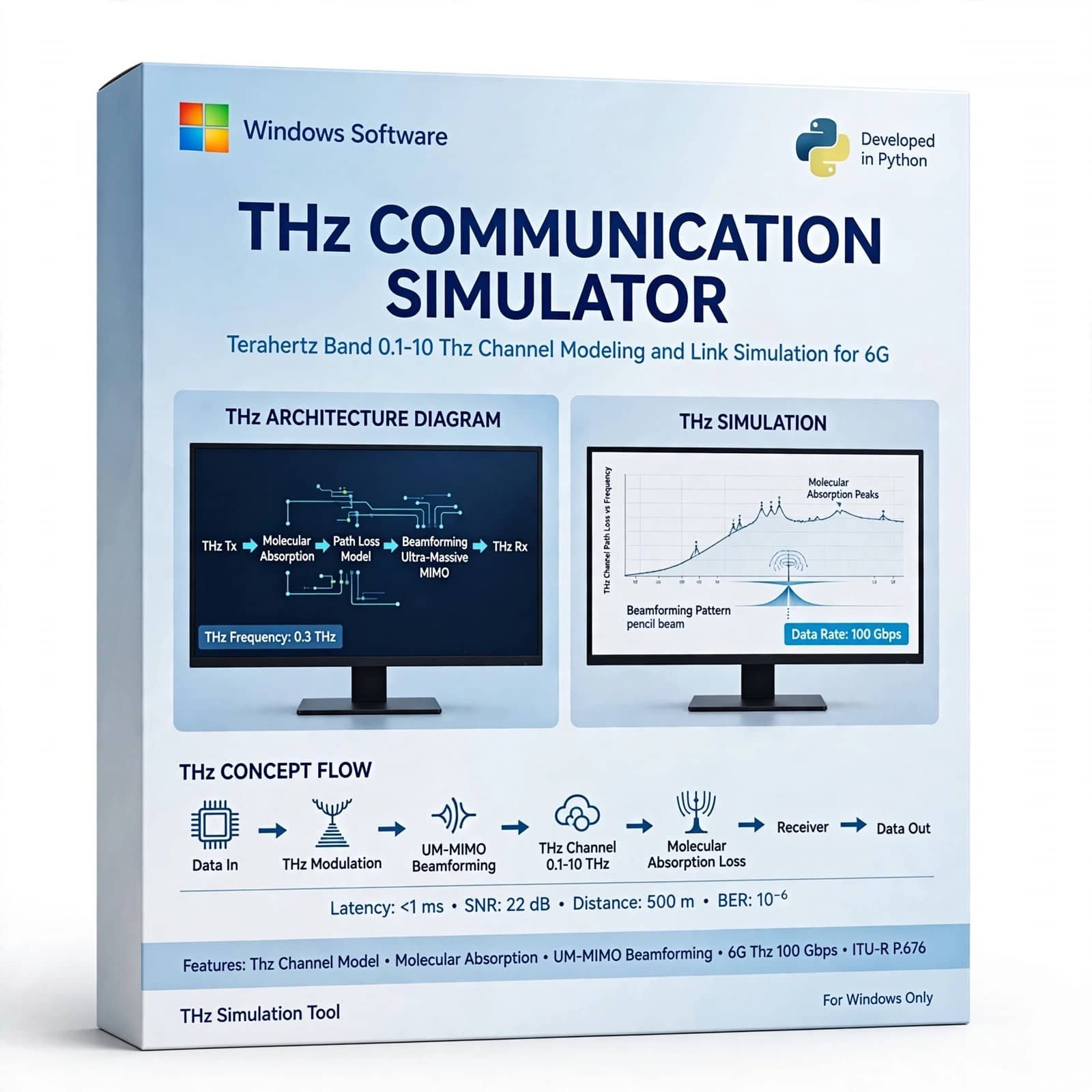
THz Communication Simulator of 6G with Python is a practical Python-based simulation project for exploring Terahertz communication, 6G wireless networks, high-frequency communication, and wireless channel concepts. Ideal for students, researchers, and developers working on 6G, telecommunications, Python, signal processing, and next-generation wireless communication projects.
Original price was: ₹249,999.00.₹24,999.00Current price is: ₹24,999.00. -

VLR Model Simulator with Python is a telecommunications simulation tool designed to model Visitor Location Register (VLR) concepts in GSM and cellular networks. It can be used to study subscriber mobility, location management, location updates, roaming, and VLR–HLR interactions. Built for Python-based simulation, the tool is suitable for students, researchers, telecom engineers, and developers working on mobile communication, GSM architecture, wireless networks, and telecommunications research.
₹3,999.00