
New
67% Off

Hexagonal Cellular Network Simulator


Original price was: ₹750.00.₹250.00Current price is: ₹250.00.
In StockHexagonal Cellular Network Simulator with Python is a wireless communication simulation tool designed to model cellular networks using hexagonal cell structures. It helps students, researchers, and telecom engineers study cell planning, frequency reuse, co-channel interference, coverage, channel allocation, and cellular network performance using Python.
Description
Hexagonal Cellular Network Simulator
The Hexagonal Cellular Network Simulator with Python is a practical wireless communication simulation solution designed for studying the fundamentals of cellular network planning, hexagonal cell architecture, frequency reuse, co-channel interference, coverage, and radio resource allocation. Developed using Python, the simulator provides a controlled environment for students, researchers, telecom engineers, and academic institutions to model and analyze cellular network concepts.
Hexagonal cellular models are widely used in telecommunications education because they provide a simplified representation of how geographical areas can be divided into cells for wireless communication. By representing coverage areas as hexagonal cells, users can study important cellular network planning concepts such as frequency reuse, neighboring cells, cluster formation, interference, and capacity.
The simulator provides a practical way to understand these concepts through software-based modeling rather than relying only on theoretical diagrams.
Understand Hexagonal Cellular Networks
A cellular network divides a large geographical service area into smaller coverage regions known as cells. In theoretical cellular network models, hexagons are commonly used to represent these cells because they provide an efficient visual approximation of coverage areas while allowing adjacent cells to be represented without gaps or overlaps.
The Hexagonal Cellular Network Simulator allows users to explore how cells can be arranged into a cellular network and how different network parameters affect wireless communication planning.
Depending on the implementation and supported features, users can study concepts such as:
- Hexagonal cell structure
- Cellular network topology
- Cell layout and planning
- Frequency reuse
- Reuse distance
- Co-channel interference
- Adjacent cell relationships
- Channel allocation
- Cellular coverage
- Network capacity concepts
- Cellular frequency planning
- Wireless network optimization
These concepts form an important foundation for understanding modern cellular and wireless communication systems.
Python-Based Cellular Network Simulation
The simulator is developed using Python, making it suitable for students and researchers who want to combine wireless communication theory with programming and simulation.
Python provides a flexible environment for creating network models, performing calculations, generating cell layouts, analyzing network parameters, and visualizing simulation results. A Python-based cellular simulator can therefore be useful for both educational demonstrations and research-oriented experiments.
Students can use the simulator to understand how cellular network concepts can be translated into software models, while researchers can use it as a controlled environment for exploring selected network planning and performance scenarios.
The combination of Python programming and cellular network simulation makes the product suitable for engineering projects, university laboratories, telecom research, and wireless communication studies.
Study Cellular Frequency Reuse
One of the most important concepts in cellular network design is frequency reuse. Because available radio spectrum is limited, cellular networks can reuse the same frequency resources in different cells while maintaining sufficient separation to manage interference.
A hexagonal cellular model provides a convenient way to visualize frequency reuse patterns and study the relationship between cells using the same frequencies.
The simulator can help users understand concepts such as:
- Frequency reuse patterns
- Reuse clusters
- Co-channel cells
- Reuse distance
- Frequency allocation
- Interference relationships
- Cellular capacity
This makes it useful for practical exercises involving cellular frequency planning and wireless network design.
Analyze Co-Channel Interference
Co-channel interference is an important consideration when designing cellular networks that reuse the same frequency resources.
Using a hexagonal cell model, users can examine the spatial relationship between co-channel cells and understand why appropriate reuse distances and cellular planning strategies are important.
The simulator can be used to demonstrate how network configuration and cell arrangement can influence interference conditions. This provides a useful foundation for understanding cellular network optimization and radio planning.
For students, these simulations can make interference concepts easier to understand by connecting mathematical and theoretical principles with graphical cellular network models.
Cellular Network Planning and Coverage
The Hexagonal Cellular Network Simulator can also be used to study basic cell planning and coverage concepts.
Users can model a collection of cells and examine how individual coverage areas combine to form a larger cellular network. This provides an effective way to understand the relationship between cell size, network layout, frequency assignment, and service coverage.
These concepts are relevant to both traditional cellular networks and the broader field of wireless network planning.
Hexagonal Cellular Network Simulator for Education
The simulator is particularly suitable for engineering colleges, universities, wireless communication laboratories, telecom training institutes, and academic research centers.
It can support practical learning for subjects such as:
- Mobile Communication
- Wireless Communication
- Cellular Networks
- Telecommunication Engineering
- Radio Frequency Engineering
- Digital Communication
- Network Planning
- Frequency Reuse
- Communication Systems
- Python Programming
- Wireless Network Simulation
Teachers can use the simulator to demonstrate cellular layouts, frequency reuse patterns, interference concepts, and network planning principles.
Students can use it for laboratory experiments, assignments, presentations, and final-year engineering projects.
Python Cellular Simulator for Research
The Hexagonal Cellular Network Simulator can also be useful for academic research and wireless network simulation projects.
Researchers can use simulation to study selected cellular network scenarios without requiring access to physical telecom infrastructure. A software-based model allows experiments to be repeated under controlled conditions and makes it easier to compare different network configurations.
The Python implementation can also be useful for projects involving:
- Cellular network modeling
- Frequency planning
- Interference analysis
- Cell layout optimization
- Channel allocation
- Network capacity studies
- Wireless network performance
- Cellular coverage analysis
- Algorithm development
The exact analytical and visualization capabilities depend on the features implemented in the simulator.

Key Benefits
Hexagonal cellular modeling: Create and study cellular network layouts using hexagonal cell structures.
Python based: Combine Python programming with practical wireless communication simulation.
Frequency reuse studies: Explore how frequency resources can be reused across cellular networks.
Interference analysis: Study the concept of co-channel interference and spatial frequency reuse.
Cell planning: Understand fundamental principles of cellular network layout and coverage.
Practical learning: Convert theoretical cellular network concepts into simulation-based experiments.
Academic project support: Suitable for engineering projects, laboratory exercises, demonstrations, and research.
Controlled environment: Experiment with cellular network configurations without requiring physical network infrastructure.
Applications
The Hexagonal Cellular Network Simulator with Python can be used for:
- Cellular network simulation
- Hexagonal cell modeling
- GSM network planning studies
- Frequency reuse simulation
- Co-channel interference analysis
- Cellular coverage modeling
- Channel allocation studies
- Wireless network planning
- Telecom engineering projects
- Mobile communication laboratory experiments
- Python wireless communication projects
- Cellular network research
- Frequency planning demonstrations
- Academic teaching and training
The simulator can also be used to create visual demonstrations of cellular layouts and explain how neighboring and co-channel cells interact within a planned network.
Who Can Use the Hexagonal Cellular Network Simulator?
This product is suitable for:
- Telecom engineering students
- Electronics and communication engineering students
- Wireless communication students
- RF engineering students
- Telecom researchers
- Cellular network researchers
- Network planning professionals
- Python developers working on communication projects
- Engineering colleges and universities
- Telecom training institutes
- Academic laboratories
- Final-year project teams
It is particularly useful for learners who want to develop practical knowledge of cellular network planning while gaining experience with Python-based simulation.
Why Choose a Hexagonal Cellular Network Simulator?
Cellular network planning involves several concepts that can be difficult to visualize using equations and static diagrams alone. A simulator allows learners to experiment with cell layouts, frequency assignments, reuse patterns, and interference scenarios in a controlled software environment.
The Hexagonal Cellular Network Simulator with Python combines cellular network theory, frequency planning, interference concepts, and programming into a practical simulation platform.
By working with simulated cellular layouts, users can gain a stronger understanding of how cells are organized and how frequency resources can be reused to improve network capacity while managing interference.
For educational institutions, the simulator can complement mobile communication and wireless networking courses. For students, it can support academic projects and practical laboratory exercises. For researchers, it can provide a flexible environment for selected cellular network modeling and planning studies.
Conclusion
The Hexagonal Cellular Network Simulator with Python is a practical solution for studying cellular network topology, hexagonal cell structures, frequency reuse, co-channel interference, coverage, channel allocation, and wireless network planning.
Its Python-based approach makes it suitable for students, researchers, educators, telecom engineers, and academic institutions looking to combine programming with wireless communication simulation.
Whether you are working on a cellular network project, GSM network planning project, Python wireless communication project, frequency reuse study, interference analysis project, or mobile communication laboratory experiment, this simulator provides a controlled environment for exploring fundamental cellular network concepts.
For users searching for a Hexagonal Cellular Network Simulator, cellular network simulator with Python, GSM cellular network simulator, frequency reuse simulator, cellular network planning simulator, co-channel interference simulator, Python wireless network simulator, or cellular communication simulation software, this product provides a useful platform for education, experimentation, research, and telecom training.
Related products
-
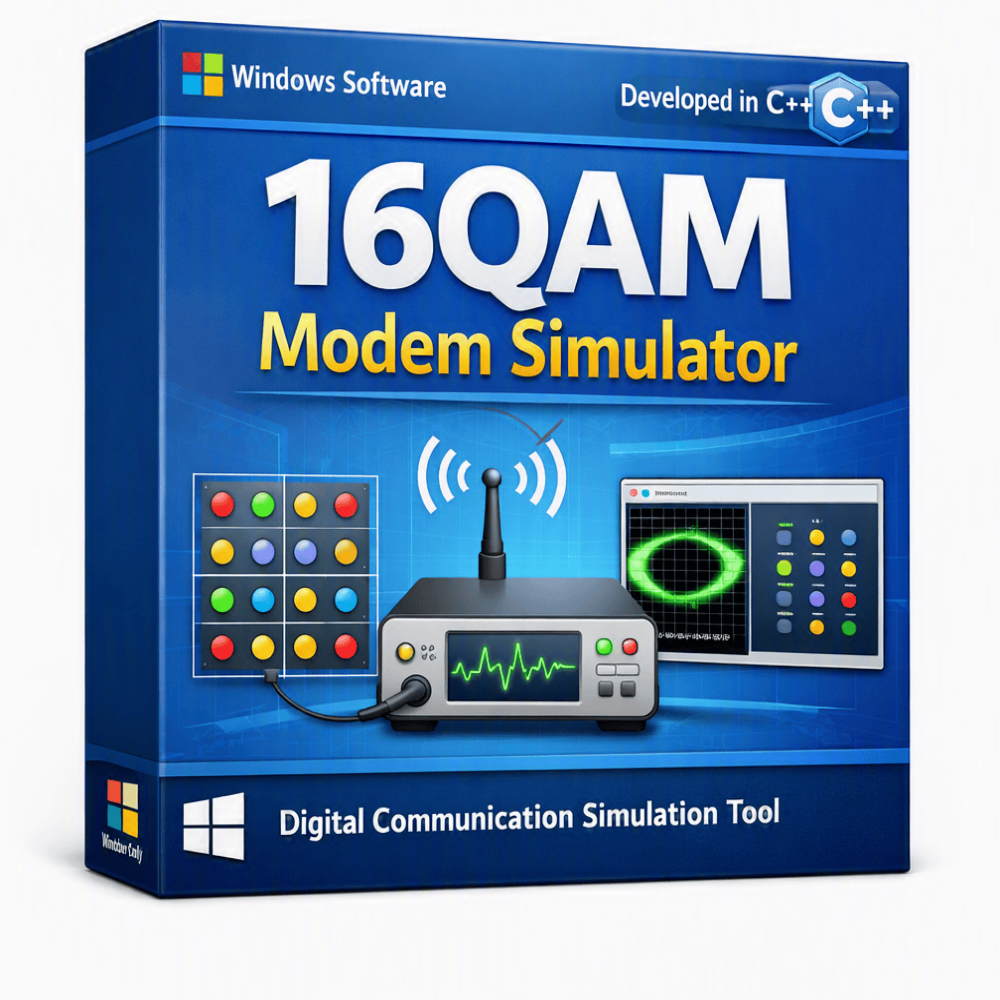
The 16QAM Modem Simulator is a C++-based software application designed to simulate and analyze a 16-QAM digital communication system. It demonstrates the complete modulation and demodulation process, including symbol mapping, signal generation, transmission, and data recovery. The simulator helps users understand key concepts of digital communication and evaluate system performance under different channel conditions.
Original price was: ₹750.00.₹250.00Current price is: ₹250.00. -
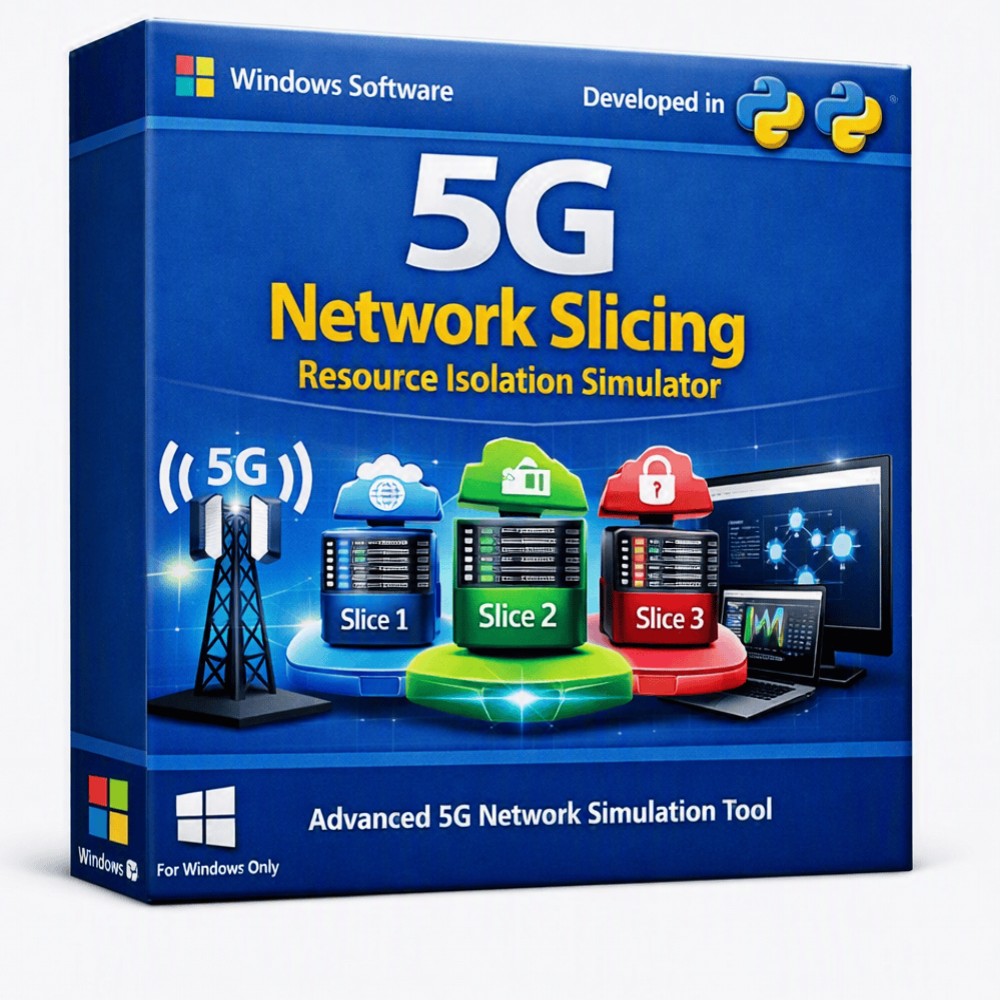
A Python-based 5G Network Slicing and Resource Isolation Simulator designed to model and analyze how multiple logical network slices can share physical 5G infrastructure while maintaining resource isolation. The simulator enables users to study CPU, memory, bandwidth, network capacity, traffic allocation, and resource management across different 5G network slices.
Ideal for 5G research, telecom engineering, academic projects, network optimization, resource allocation studies, and university laboratories.
Original price was: ₹750.00.₹250.00Current price is: ₹250.00. -
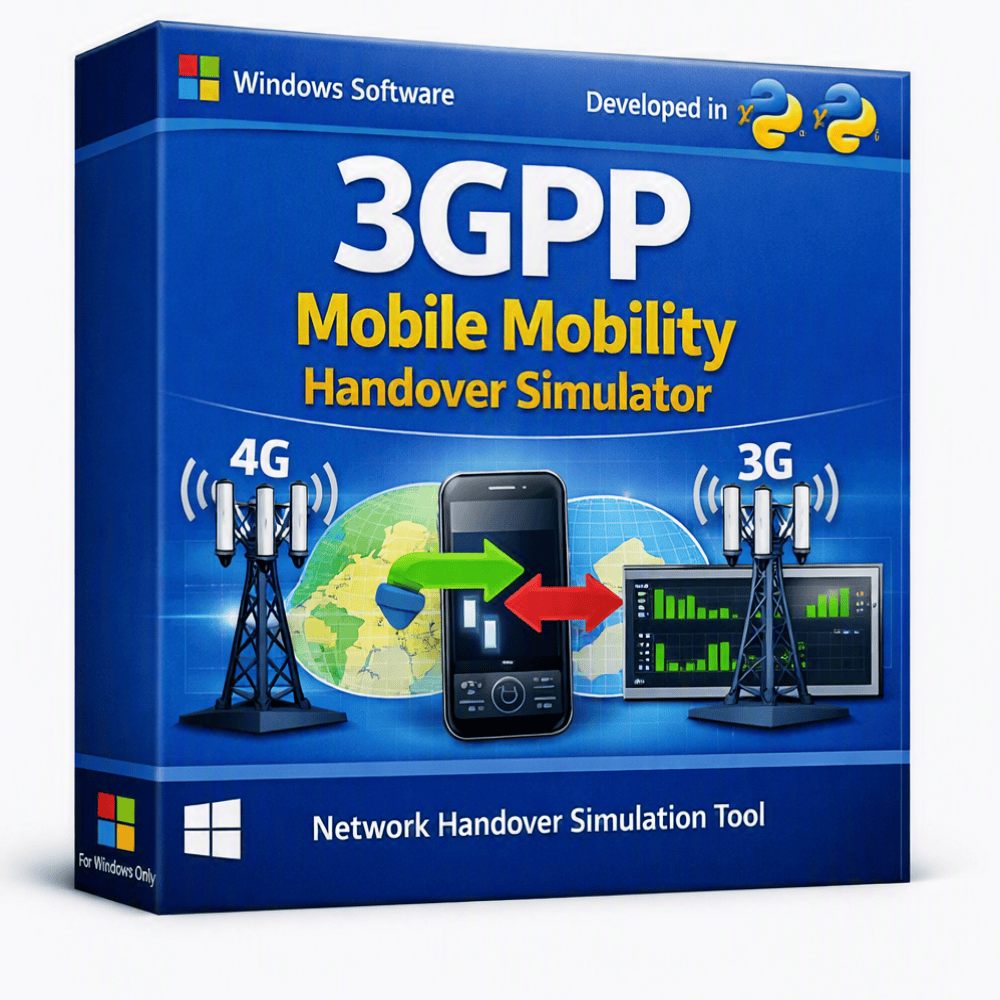
A powerful simulation tool for analyzing and validating 3GPP mobile mobility and handover procedures. The simulator enables users to model mobile network scenarios, study handover behavior, and evaluate mobility performance under different network conditions.
Key Features:
- 3GPP-compliant mobility and handover simulation
- Configurable network and mobility scenarios
- Analysis of handover performance and behavior
- Supports research, testing, and network optimization
- Useful for telecom engineers, researchers, and academic projects
Ideal for 5G/4G/3G mobility research, protocol testing, network planning, and academic simulation studies.
Original price was: ₹750.00.₹250.00Current price is: ₹250.00. -
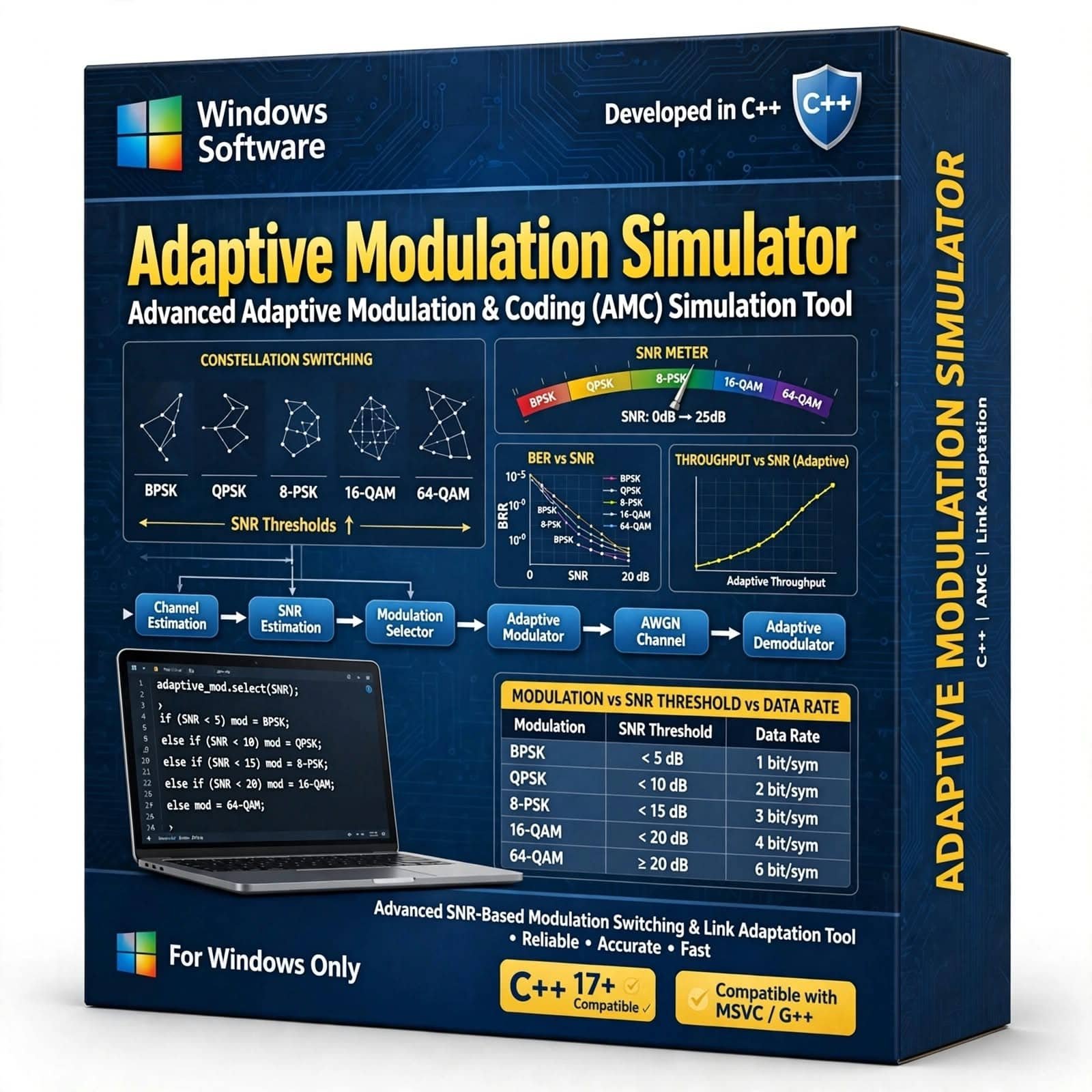
The Adaptive Modulation Simulator is a C++-based software solution designed for students, researchers, engineers, developers, and telecommunications professionals working with digital communication and adaptive modulation techniques. The simulator provides a practical environment for studying how modulation schemes can be selected or adapted according to communication-system conditions.
Developed using C++, the simulator is suitable for academic projects, digital communication research, laboratory demonstrations, signal-processing studies, algorithm development, and educational applications.
Available for sale as a software product. Contact us for pricing, licensing, technical specifications, customization, and purchase information.
Original price was: ₹750.00.₹250.00Current price is: ₹250.00. -
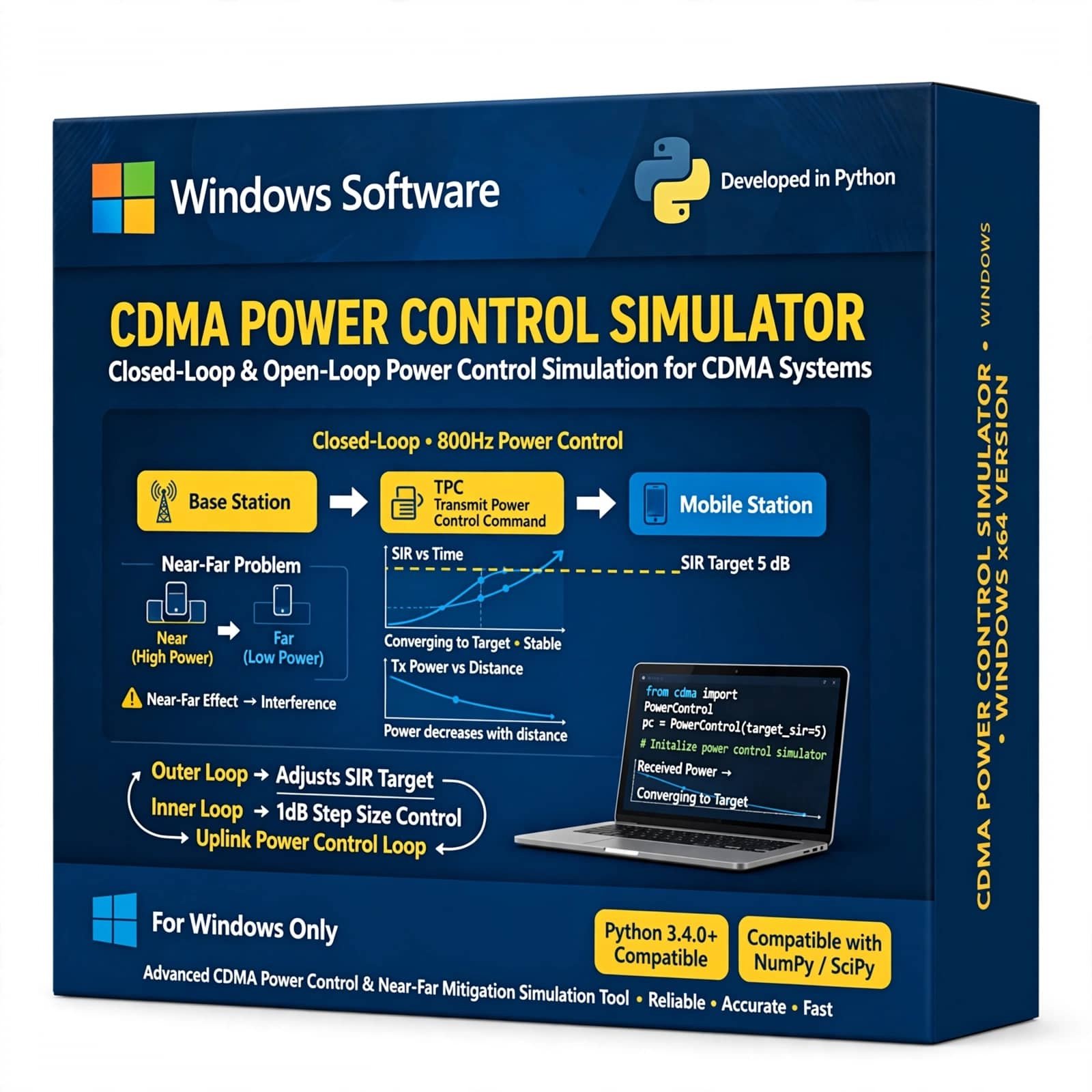
CDMA Power Control Simulator is an advanced communication engineering simulation tool designed to help students, researchers, and professionals understand and analyze power control techniques in Code Division Multiple Access (CDMA) wireless communication systems. It enables practical study of uplink and downlink power control, signal interference, power levels, and system performance.
Original price was: ₹750.00.₹250.00Current price is: ₹250.00. -
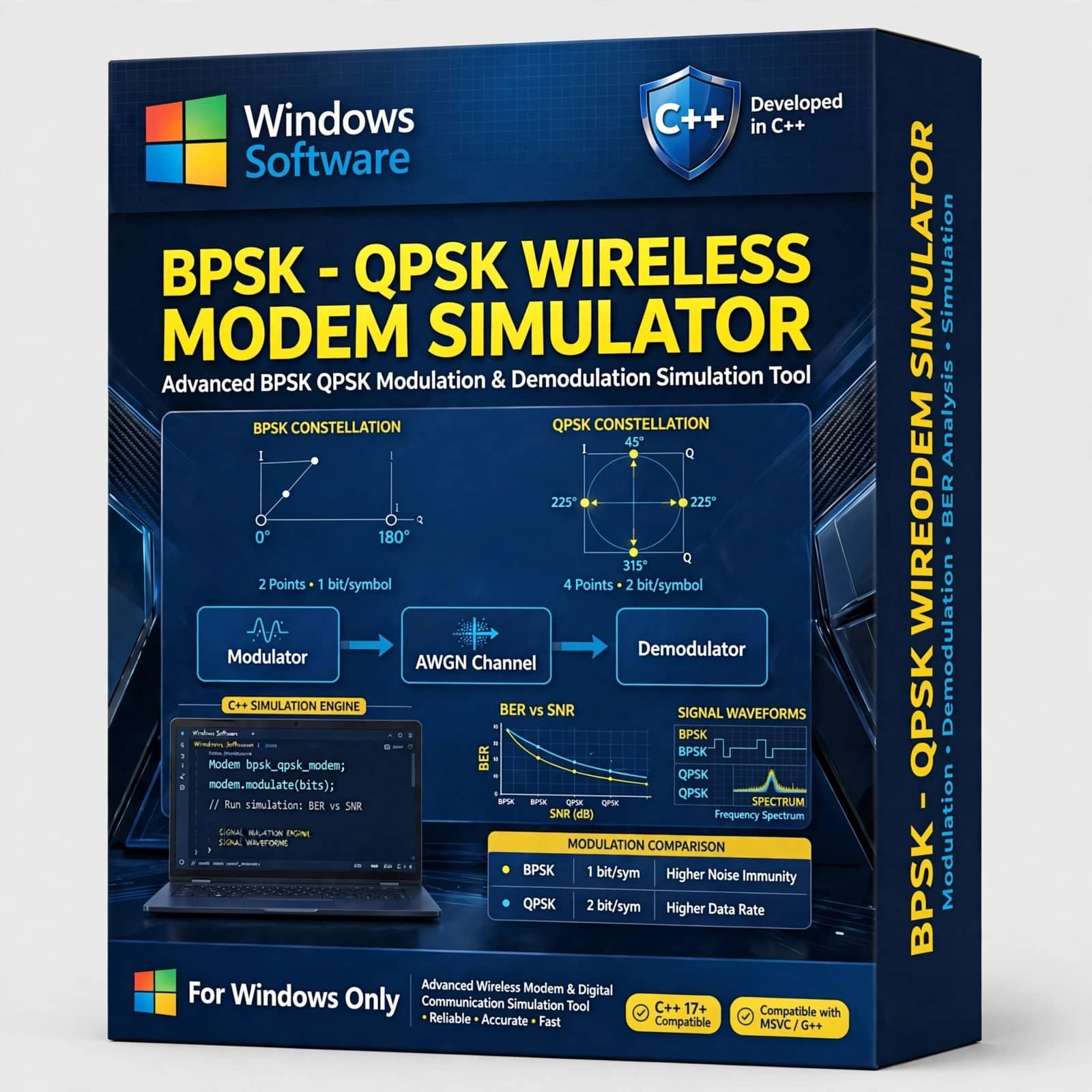
The BPSK – QPSK WIRELESS MODEM SIMULATOR with C++ is a software-based digital communication simulation tool designed for studying, demonstrating, and analyzing BPSK and QPSK modulation and demodulation techniques. Developed using C++, this wireless modem simulator provides a practical environment for understanding how digital information is converted into modulated signals, transmitted through a communication channel, received, and recovered at the receiver.
Designed for electronics and communication engineering laboratories, universities, colleges, research institutions, and technical training environments, the BPSK–QPSK simulator helps students and professionals connect digital communication theory with practical software implementation. It is suitable for learning fundamental concepts related to digital modulation, wireless communication, signal processing, modem technology, and communication system design.
Original price was: ₹750.00.₹250.00Current price is: ₹250.00.

Reviews
There are no reviews yet.