
New
67% Off


Original price was: ₹750.00.₹250.00Current price is: ₹250.00.
In StockLUT Configurator with Python is an educational tool for configuring Look-Up Tables used in PGA/FPGA programmable logic systems. Configure binary inputs, truth tables, LUT values, and logic functions while learning how programmable hardware can implement combinational logic. Ideal for FPGA learners, digital electronics students, Python projects, and engineering demonstrations.
Description
LUT Configurator
The LUT Configurator with Python is an educational and practical software project designed to demonstrate the configuration of Look-Up Tables (LUTs) used in programmable logic and FPGA-based digital systems. Built with Python, this project provides an interactive way to understand how LUT inputs, truth tables, stored values, and logic functions can be configured and tested.
This project is specifically focused on digital logic LUTs used in Programmable Gate Arrays (PGAs) and Field-Programmable Gate Arrays (FPGAs). It is not an image-processing LUT or colour-grading tool. Instead, the LUT Configurator focuses on configuring logical input-output relationships and understanding how programmable hardware can implement combinational logic.
Whether you are a student learning digital electronics, an FPGA enthusiast, an engineering student, or a Python programmer interested in hardware-oriented applications, the LUT Configurator with Python provides a practical environment for exploring programmable logic concepts.
Configure LUTs Using Python
A Look-Up Table is a fundamental concept in programmable digital logic. A LUT can store predefined output values corresponding to different combinations of binary inputs. By configuring these values, different Boolean and combinational logic functions can be represented.
The LUT Configurator with Python makes this concept easier to explore by providing a software-based configuration environment. Instead of manually working with physical FPGA hardware, users can experiment with LUT configurations directly through Python.
This approach allows learners to understand the relationship between binary input combinations, LUT addresses, stored output values, and resulting logic functions.

Understand FPGA LUT Configuration
LUTs are an important component of many FPGA architectures. They allow programmable hardware to implement a wide range of combinational logic functions using configurable stored values.
Learning how a LUT is configured can help students develop a better understanding of FPGA logic resources and programmable digital systems.
The LUT Configurator can be used to explore concepts such as:
- LUT input configuration
- Binary input combinations
- Truth table configuration
- LUT address selection
- Stored output values
- Boolean logic functions
- Combinational logic
- Programmable logic
- FPGA architecture
- Digital circuit design
By experimenting with these concepts in Python, learners can develop an intuitive understanding of how LUT configuration relates to digital logic implementation.
Python-Based Digital Logic Configuration
Python is widely used for educational software, simulations, automation, and engineering tools. Its simple syntax makes it particularly suitable for developing projects that demonstrate technical concepts.
With the LUT Configurator with Python, users can combine programming skills with digital electronics concepts. The project provides an opportunity to work with binary data, logical states, tables, configuration values, and programmatic processing.
This makes the project suitable for students who want to build a Python project with a strong connection to electronics and computer engineering.
Explore Truth Tables and Boolean Functions
One of the most important concepts behind LUT configuration is the truth table. A truth table describes the output of a digital logic function for every possible combination of its inputs.
A LUT can use these combinations as addresses and store the corresponding output values. By configuring the contents of a LUT, users can effectively represent different logic functions.
The LUT Configurator with Python provides a practical environment for experimenting with this process. Users can configure different values, examine input-output relationships, and understand how changing LUT contents can change the behaviour of a logic function.
This makes the project particularly useful for learning Boolean algebra, digital logic, truth tables, and combinational circuit design.
Ideal for FPGA and Digital Electronics Students
The LUT Configurator is suitable for students and learners studying subjects related to:
- Digital electronics
- FPGA architecture
- Programmable logic
- Computer engineering
- Electrical engineering
- Embedded systems
- Digital circuit design
- Computer science
- Python programming
It can be used as a Python mini project, engineering project, digital electronics assignment, FPGA learning project, or educational demonstration.
Students can use the project to strengthen their understanding of programmable logic while also gaining experience working with Python.
Useful for Academic Projects
Finding a project that combines software programming and digital hardware concepts can be challenging. The LUT Configurator with Python offers a practical way to demonstrate both areas.
The project can be adapted for academic demonstrations involving LUT configuration, truth tables, programmable logic, and digital circuit behaviour. It can also be used as a foundation for a more advanced FPGA-related software project.
For students preparing project presentations, the configurator provides a clear concept to demonstrate: how changing LUT configuration values can affect the resulting digital logic function.

Customise and Extend the Configurator
The Python-based nature of the project provides opportunities for further development. Beginners can start by understanding the basic configuration process, while advanced users can expand the application with additional functionality.
Potential enhancements may include support for different LUT sizes, multiple LUTs, multiple outputs, truth-table generation, Boolean function analysis, configuration validation, logic-function testing, and visual representations of LUT structures.
Users could also develop the project further to demonstrate how multiple configurable logic resources can be combined to represent more complex digital systems.
Why Choose the LUT Configurator with Python?
The LUT Configurator with Python provides a practical bridge between software programming and programmable digital hardware. It helps learners understand LUT configuration without requiring immediate access to a physical FPGA development board.
By working with configurable inputs and outputs, users can explore the principles behind programmable logic while strengthening their Python programming skills.
It is an excellent choice for anyone searching for a LUT configurator, FPGA LUT project, Python FPGA project, programmable logic project, digital electronics project, or Python digital logic project.
Key Features and Benefits
- Python-based LUT configuration project
- Designed for programmable digital logic
- Focuses on PGA/FPGA-style LUT concepts
- Configure LUT input-output relationships
- Explore truth tables and Boolean functions
- Demonstrates combinational logic concepts
- Useful for FPGA architecture learning
- Suitable for digital electronics students
- Useful for Python and engineering projects
- Can be customised and extended
- Suitable for academic demonstrations and portfolios
Start exploring programmable logic with the LUT Configurator with Python and gain practical insight into how configurable Look-Up Tables can be used to represent digital logic functions in FPGA and programmable hardware environments.
Related products
-
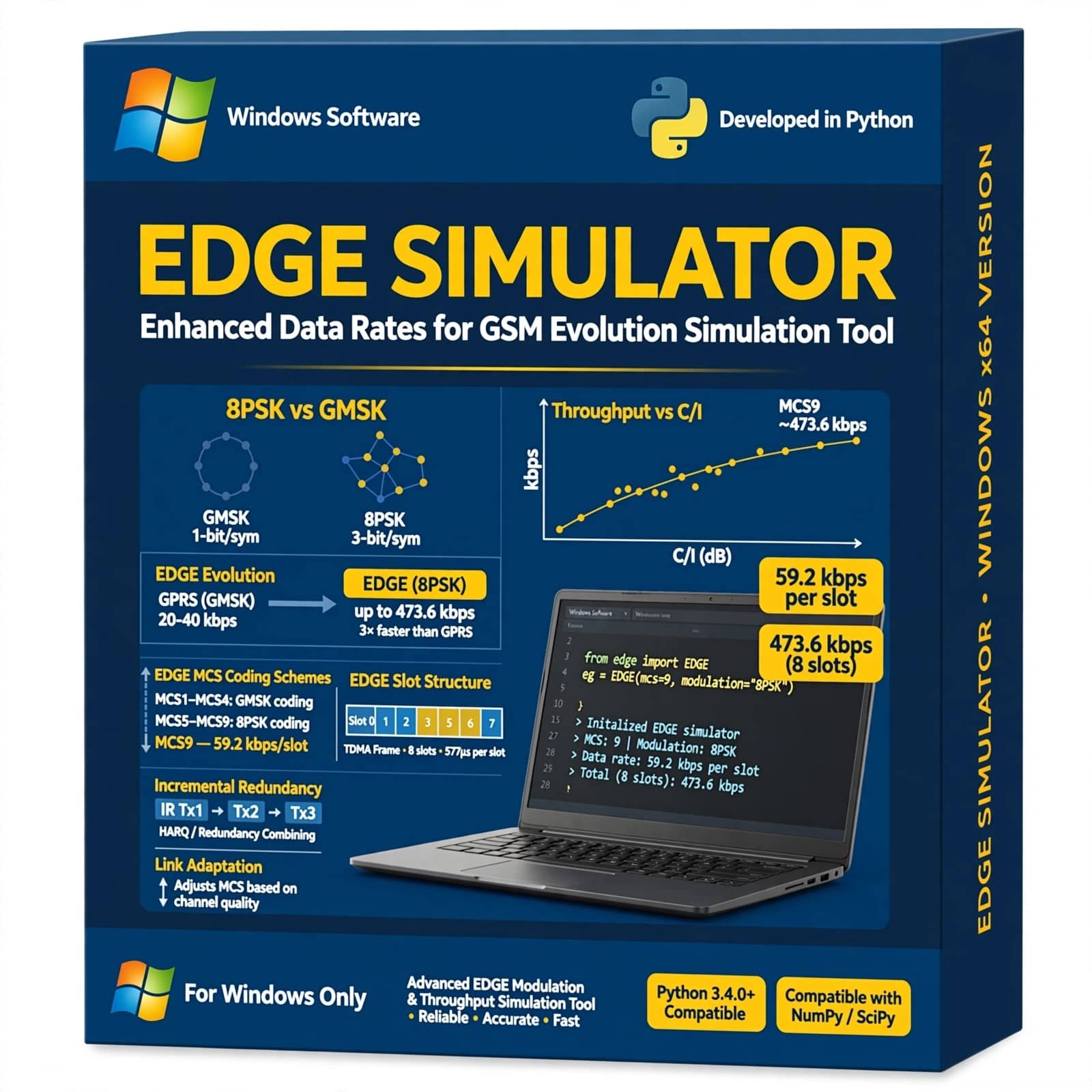
EDGE Simulator Using Python is a practical mobile communication simulation tool designed to demonstrate and analyze Enhanced Data rates for GSM Evolution (EDGE) technology. It helps students, researchers, and communication engineers study GSM/EDGE data transmission, modulation, channel conditions, bit error rate, data rates, and wireless communication performance using Python-based simulation.
Original price was: ₹750.00.₹250.00Current price is: ₹250.00. -
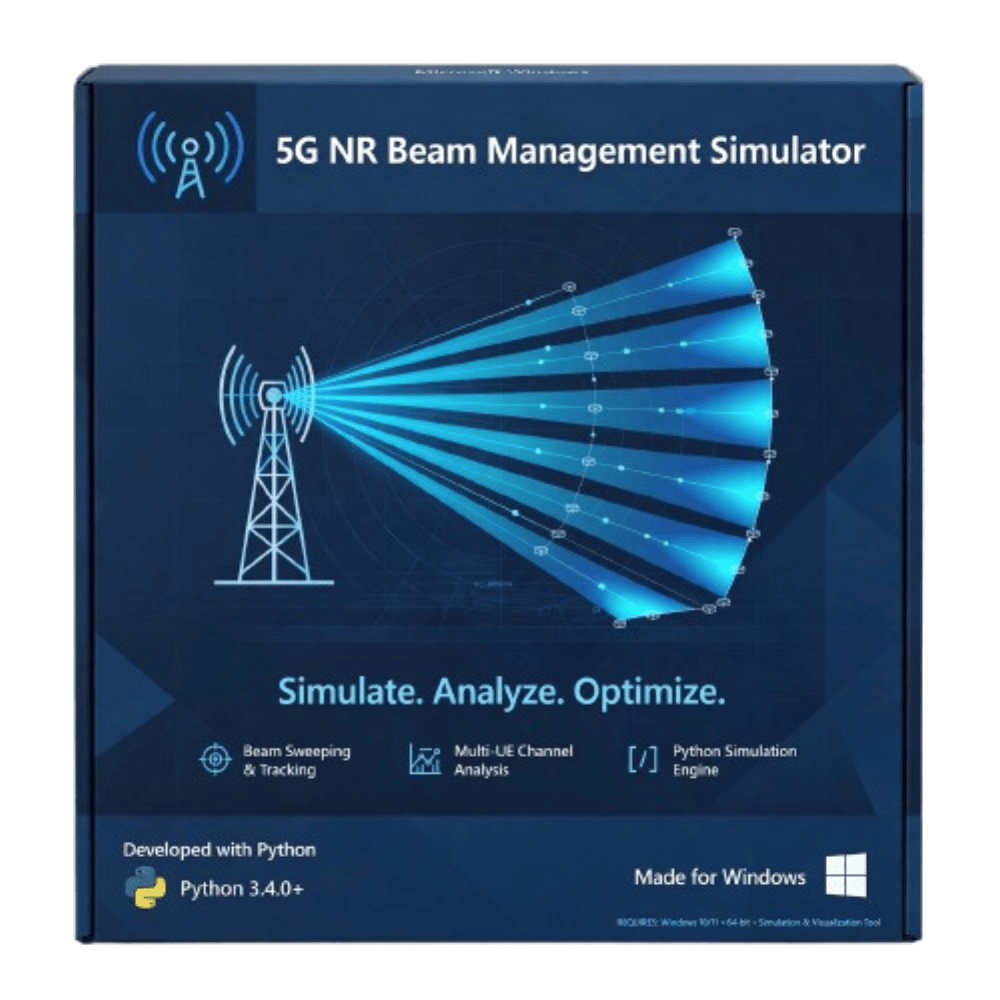
5G NR Beam Management Simulator is an advanced simulation solution designed to model, analyze, and optimize beam management procedures in 5G New Radio (NR) networks. It enables engineers and researchers to evaluate beam sweeping, beam measurement, beam selection, beam reporting, and beam recovery under diverse network and channel conditions. The simulator supports performance analysis of directional communication, helping users assess beamforming strategies, mobility scenarios, link reliability, and system-level performance before real-world deployment.
Original price was: ₹750.00.₹250.00Current price is: ₹250.00. -
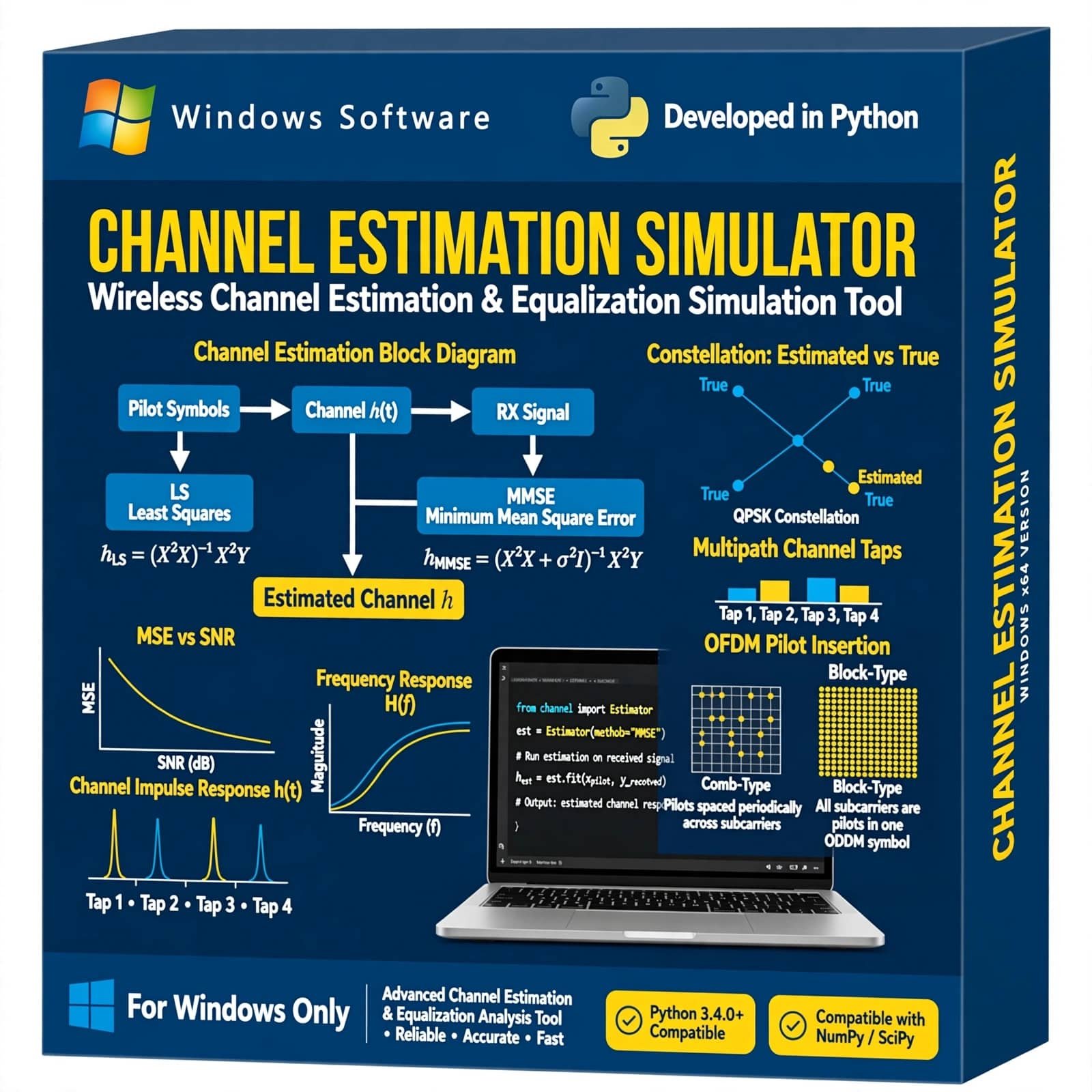
Channel Estimation Simulator is a wireless communication simulation tool designed to demonstrate and analyze channel estimation techniques in digital communication systems. It helps students, researchers, and communication engineers study channel effects, pilot-based estimation, signal distortion, and estimation performance through practical simulation.
Original price was: ₹750.00.₹250.00Current price is: ₹250.00. -
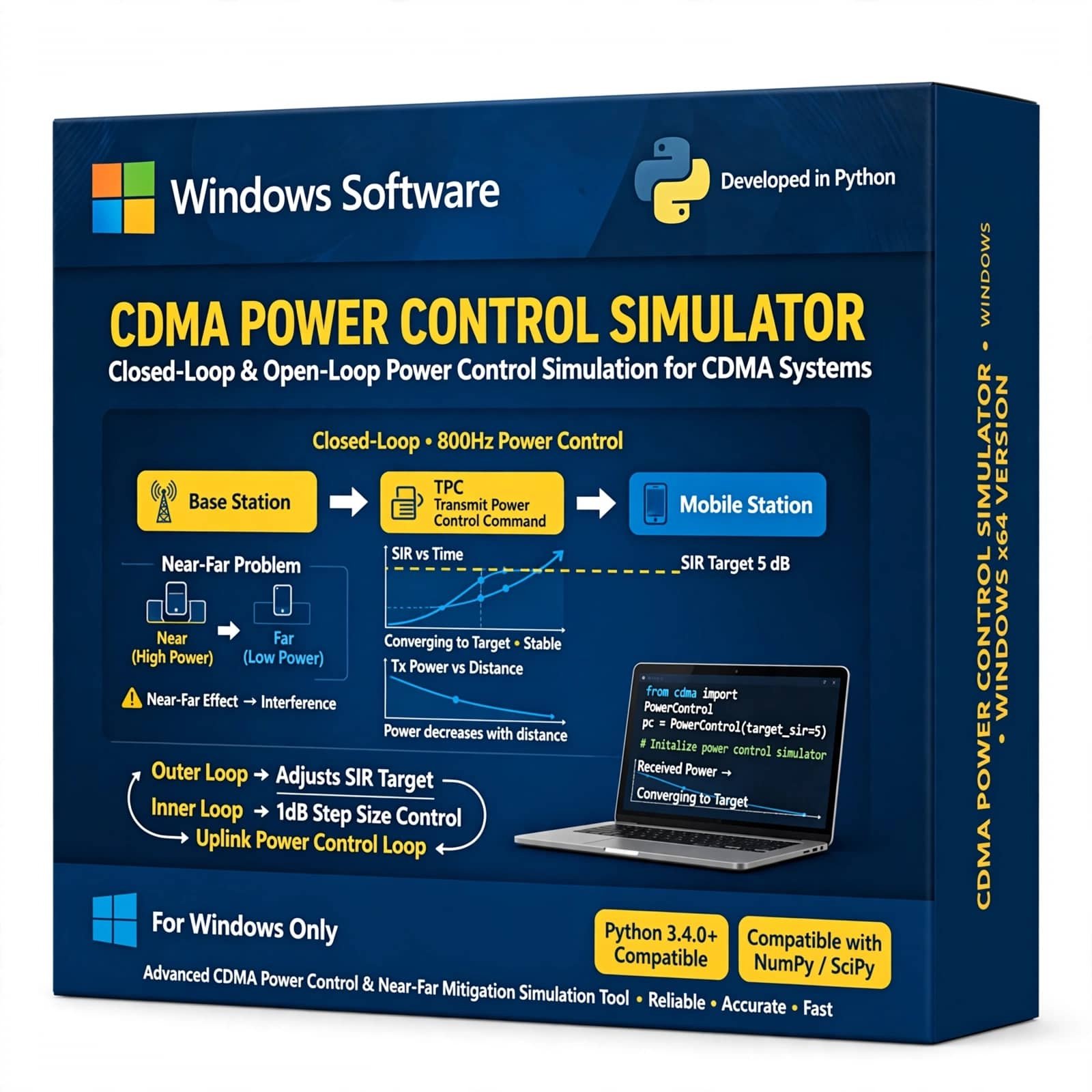
CDMA Power Control Simulator is an advanced communication engineering simulation tool designed to help students, researchers, and professionals understand and analyze power control techniques in Code Division Multiple Access (CDMA) wireless communication systems. It enables practical study of uplink and downlink power control, signal interference, power levels, and system performance.
Original price was: ₹750.00.₹250.00Current price is: ₹250.00. -
A Python-based 5G Core Network Simulator designed for studying, analyzing, and demonstrating 5G Core network architecture and procedures. Explore key 5G Network Functions such as AMF, SMF, UPF, AUSF, UDM, PCF, NRF, and NSSF, along with UE registration, authentication, session management, mobility, and signaling procedures.
Ideal for 5G research, telecom engineering, academic projects, university laboratories, protocol development, and network simulation. Provides a flexible software environment for experimenting with 5G Core concepts without requiring a complete commercial 5G network infrastructure.
Original price was: ₹750.00.₹250.00Current price is: ₹250.00. -
The 3G UMTS – WCDMA Simulator is a software-based simulation project designed to demonstrate the fundamental concepts of 3G Universal Mobile Telecommunications System (UMTS) and Wideband Code Division Multiple Access (WCDMA) technology. It provides a practical environment for studying cellular communication, spreading codes, signal transmission, mobile users, network connectivity, and WCDMA-based communication principles. The simulator is suitable for students, researchers, and developers working on telecommunications and wireless communication projects. It can be used for academic demonstrations, engineering projects, research, experimentation, and learning about 3G mobile communication and WCDMA network technologies.
Original price was: ₹750.00.₹250.00Current price is: ₹250.00.




Reviews
There are no reviews yet.