

3G UMTS – WCDMA Simulator


₹3,999.00
In StockThe 3G UMTS – WCDMA Simulator is a software-based simulation project designed to demonstrate the fundamental concepts of 3G Universal Mobile Telecommunications System (UMTS) and Wideband Code Division Multiple Access (WCDMA) technology. It provides a practical environment for studying cellular communication, spreading codes, signal transmission, mobile users, network connectivity, and WCDMA-based communication principles. The simulator is suitable for students, researchers, and developers working on telecommunications and wireless communication projects. It can be used for academic demonstrations, engineering projects, research, experimentation, and learning about 3G mobile communication and WCDMA network technologies.
Description
3G UMTS – WCDMA Simulator – Python-Based 3G Mobile Communication Project
The 3G UMTS – WCDMA Simulator is a Python-based software simulation project designed to demonstrate and explore the fundamental concepts of Third-Generation (3G) mobile communication, Universal Mobile Telecommunications System (UMTS), and Wideband Code Division Multiple Access (WCDMA) technology. The simulator provides a practical software environment for understanding how 3G cellular communication systems operate and how information is transmitted between mobile users and the cellular network.
UMTS and WCDMA introduced significant improvements over earlier 2G cellular technologies by supporting higher data rates, improved network capacity, multimedia services, and more efficient utilization of the radio interface. This simulator provides an accessible way to study these concepts through software without requiring specialized telecommunications hardware or access to a live 3G network.
Developed entirely in Python, the simulator is suitable for students, researchers, developers, and telecommunications enthusiasts who want to explore 3G mobile communication concepts through simulation and programming.
Key Features
The 3G UMTS–WCDMA Simulator provides a foundation for studying important concepts associated with WCDMA-based cellular networks. Users can experiment with different simulation parameters and scenarios to better understand the behavior of a 3G communication system.
Key features include:
- 3G UMTS network simulation
- WCDMA-based communication simulation
- Python-based implementation
- Simulation of mobile users and cellular communication
- WCDMA spreading-code concepts
- Signal transmission and reception modeling
- Cellular coverage and network environment simulation
- Representation of mobile stations and network elements
- Communication-channel simulation
- Configurable simulation parameters
- Analysis-oriented simulation environment
- Python source code for learning and customization
- Suitable for academic projects and demonstrations
Explore WCDMA Technology Through Simulation
WCDMA is one of the core technologies associated with 3G UMTS networks. Unlike traditional time- or frequency-based access techniques, WCDMA allows multiple users to share the available radio spectrum by using different spreading codes.
The simulator provides an opportunity to explore these principles in a software environment. Users can study how information is represented, spread using codes, transmitted through a simulated communication environment, and subsequently processed at the receiver.
By experimenting with different users, codes, signal conditions, and network parameters, students can develop a better understanding of concepts such as spreading, coding, multiple access, signal transmission, interference, and cellular communication.
Python-Based Source Code
The 3G UMTS – WCDMA Simulator is developed in Python, making the project accessible for students and developers familiar with Python programming.
The source code can be examined to understand how different communication concepts are translated into software models. Users can modify the implementation, adjust simulation parameters, add algorithms, or develop additional analysis and visualization capabilities.
Python also provides a large ecosystem of scientific and engineering libraries, making it possible to extend the simulator with numerical processing, plotting, statistical analysis, and signal-processing functionality.
The project can therefore be used not only as a ready-to-study simulation but also as a foundation for further development and experimentation.
Educational Applications
The simulator is particularly useful for academic and educational purposes, including:
- Wireless communication projects
- 3G and UMTS laboratory demonstrations
- WCDMA technology studies
- Telecommunications engineering projects
- Digital communication projects
- Python programming projects
- Final-year engineering projects
- Communication-system simulations
- Research and experimentation
- Classroom demonstrations
- Self-learning and technical training
Students can use the simulator to complement theoretical studies and gain practical experience with the concepts behind 3G mobile communication systems.
Who Can Benefit From This Product?
The 3G UMTS – WCDMA Simulator is suitable for:
- Electronics and Communication Engineering students
- Electronics and Telecommunication Engineering students
- Electrical and Electronics Engineering students
- Telecommunications students and researchers
- Wireless communication learners
- Computer Science and Computer Engineering students
- Python developers interested in communication systems
- Academic project developers
- Final-year engineering students
- Researchers exploring cellular network simulations
Product Contents
The downloadable package includes the Python source code for the 3G UMTS – WCDMA Simulator along with the associated project files required for studying and working with the simulation.
The source code can be used as an educational resource and can be customized according to individual project or research requirements. Users can explore the implementation, modify parameters, and develop additional functionality based on their specific objectives.
Please review the included documentation and system requirements before purchasing to ensure compatibility with your Python environment.
Extend and Customize the Simulation
The Python-based architecture provides opportunities for further development. Advanced users can extend the simulator with additional functionality such as multiple-user scenarios, spreading-code analysis, interference modeling, channel conditions, signal-to-noise ratio analysis, bit-error-rate calculations, user mobility, cellular coverage analysis, performance measurements, and graphical visualization.
Additional Python libraries can also be integrated to create graphs, analyze simulation results, and provide a more interactive simulation environment.

Start Exploring 3G UMTS and WCDMA
The 3G UMTS – WCDMA Simulator provides a practical approach to understanding important concepts in third-generation mobile communication. By combining telecommunications concepts with Python programming, the project allows users to explore WCDMA-based communication through simulation rather than relying solely on theoretical study.
Whether you are an engineering student working on a telecommunications project, a Python developer interested in wireless communication, a researcher studying cellular-network concepts, or a learner exploring the evolution of mobile communication technologies, this Python-based 3G UMTS–WCDMA Simulator provides a useful foundation for studying and experimenting with 3G cellular communication and WCDMA principles.
Related products
-
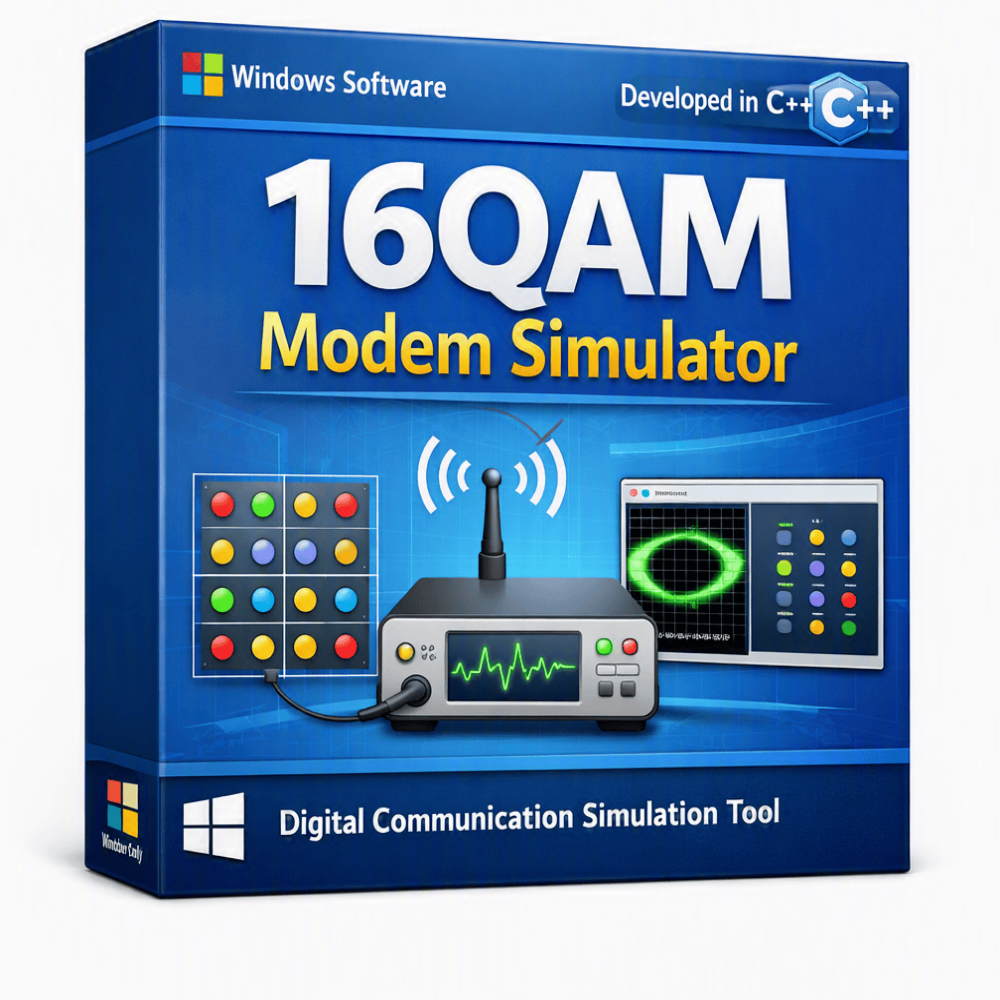
The 16QAM Modem Simulator is a C++-based software application designed to simulate and analyze a 16-QAM digital communication system. It demonstrates the complete modulation and demodulation process, including symbol mapping, signal generation, transmission, and data recovery. The simulator helps users understand key concepts of digital communication and evaluate system performance under different channel conditions.
₹1,999.00 -
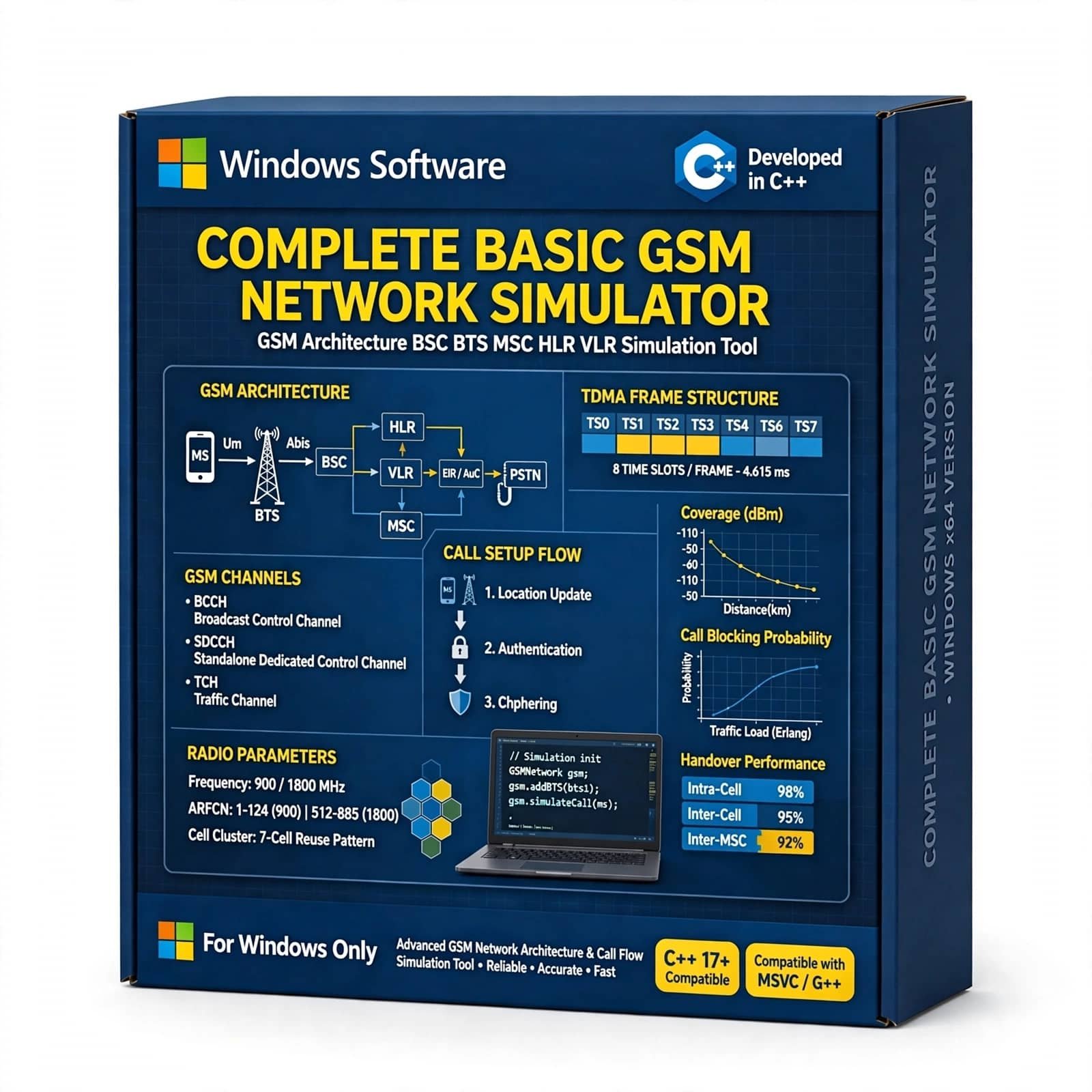
Complete Basic GSM Network with C++ is an educational and simulation-based project that demonstrates the fundamental architecture and operation of a GSM network using C++. It helps students and researchers understand GSM components, mobile communication, call and message handling, network signaling, and basic cellular network operations through a practical C++ implementation.
Original price was: ₹3,999.00.₹2,399.00Current price is: ₹2,399.00. -
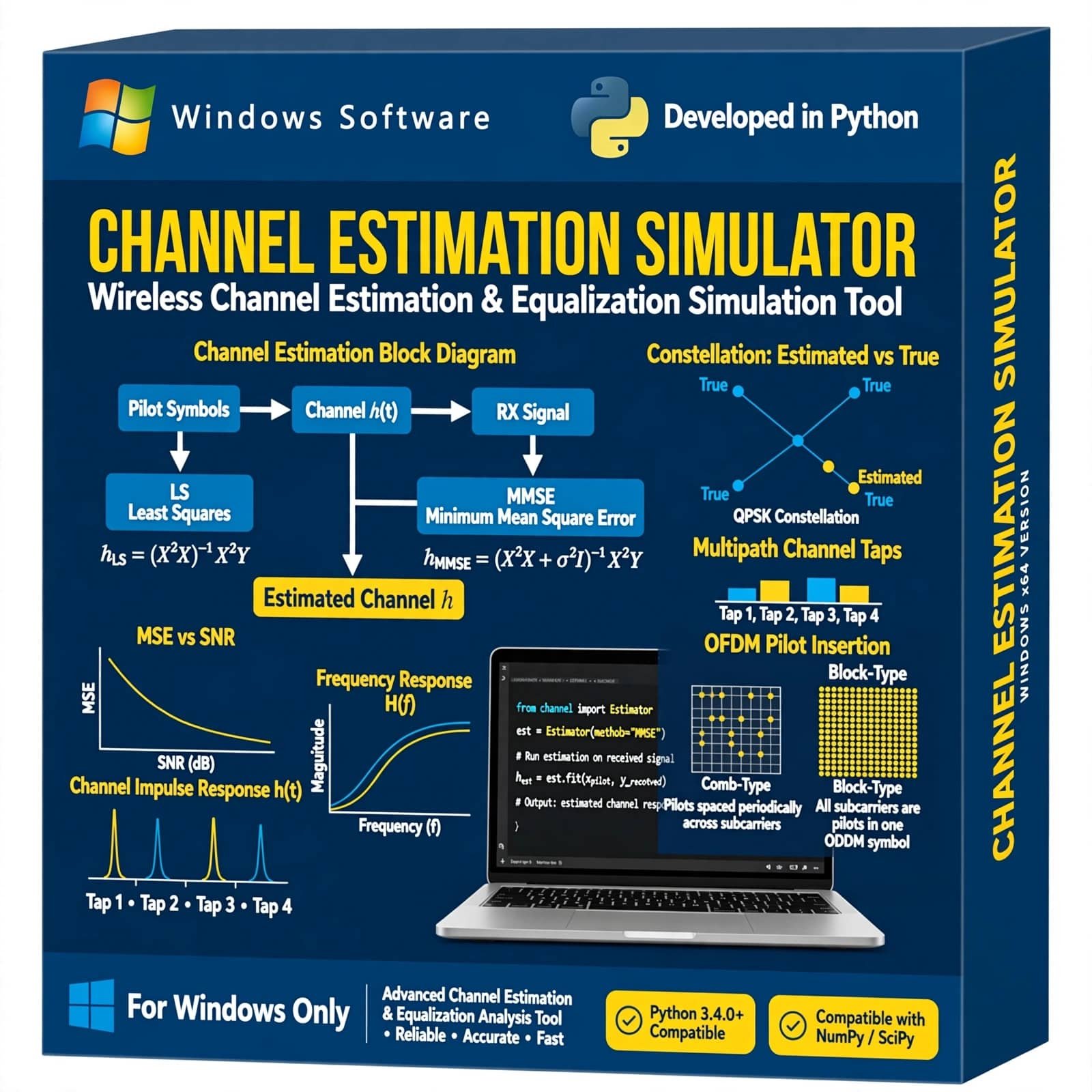
Channel Estimation Simulator is a wireless communication simulation tool designed to demonstrate and analyze channel estimation techniques in digital communication systems. It helps students, researchers, and communication engineers study channel effects, pilot-based estimation, signal distortion, and estimation performance through practical simulation.
Original price was: ₹750.00.₹250.00Current price is: ₹250.00. -
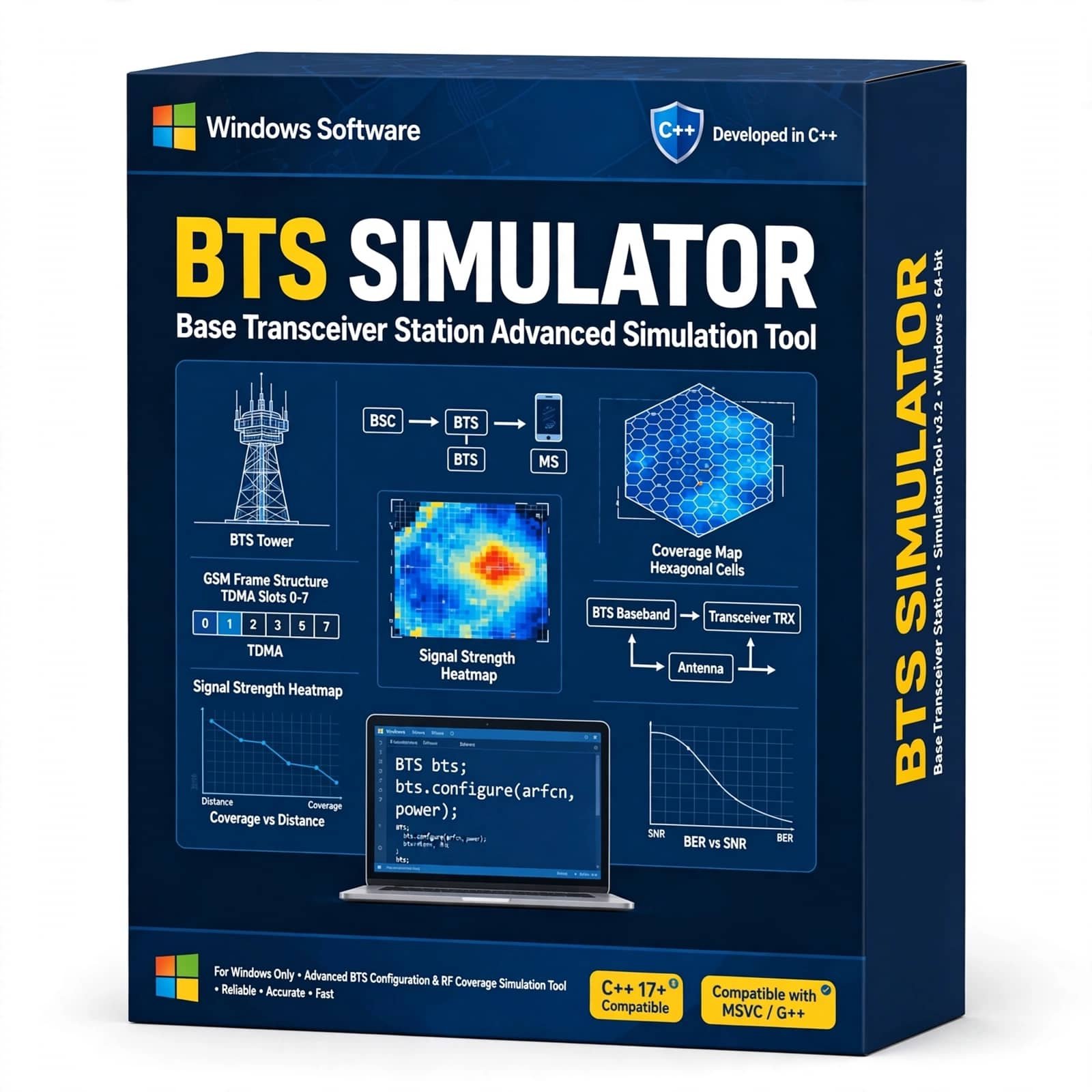
The BTS Simulator with C++ is a software-based Base Transceiver Station simulation tool designed for studying mobile communication, wireless networks, and telecommunications concepts. Developed using C++, it provides a practical environment for understanding BTS operation, communication processes, signal transmission and reception, and cellular network fundamentals. The simulator is ideal for telecommunication laboratories, engineering education, student projects, technical training, and communication-system research.
Original price was: ₹750.00.₹250.00Current price is: ₹250.00. -
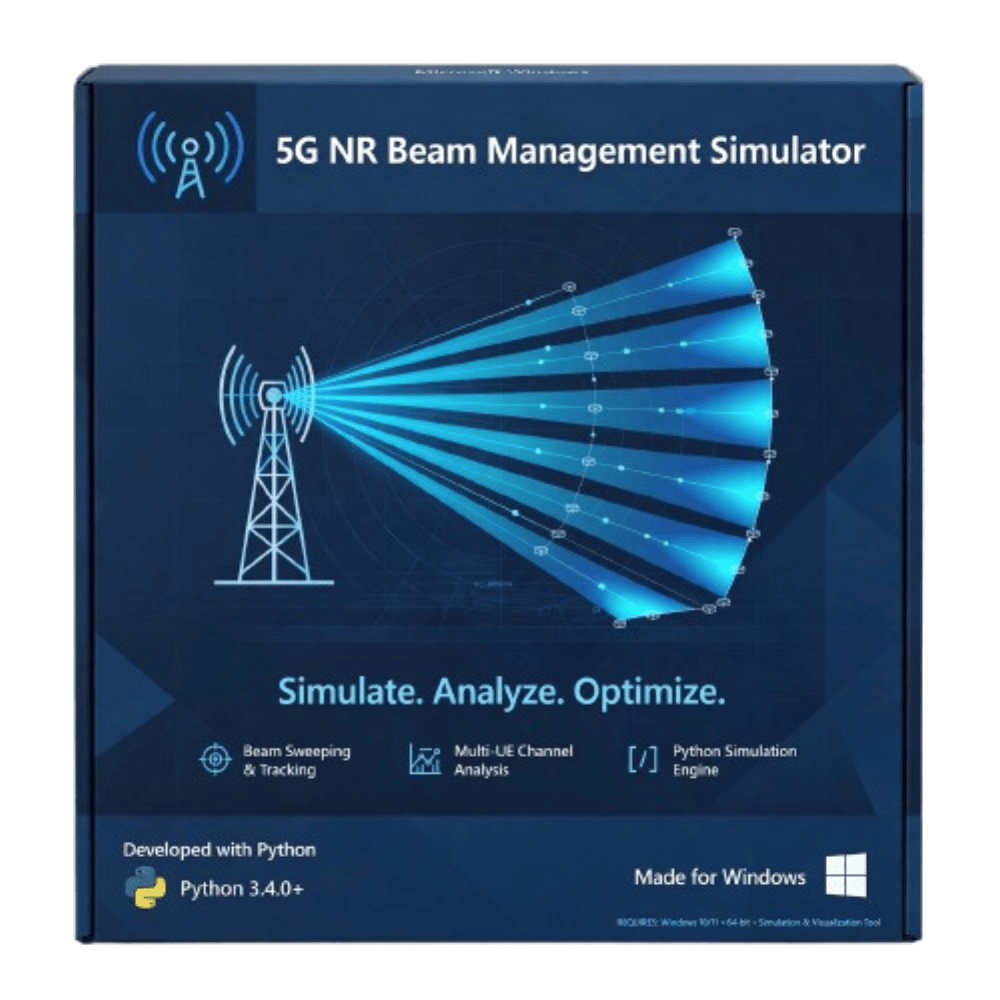
5G NR Beam Management Simulator is an advanced simulation solution designed to model, analyze, and optimize beam management procedures in 5G New Radio (NR) networks. It enables engineers and researchers to evaluate beam sweeping, beam measurement, beam selection, beam reporting, and beam recovery under diverse network and channel conditions. The simulator supports performance analysis of directional communication, helping users assess beamforming strategies, mobility scenarios, link reliability, and system-level performance before real-world deployment.
Original price was: ₹74,999.00.₹12,999.00Current price is: ₹12,999.00. -
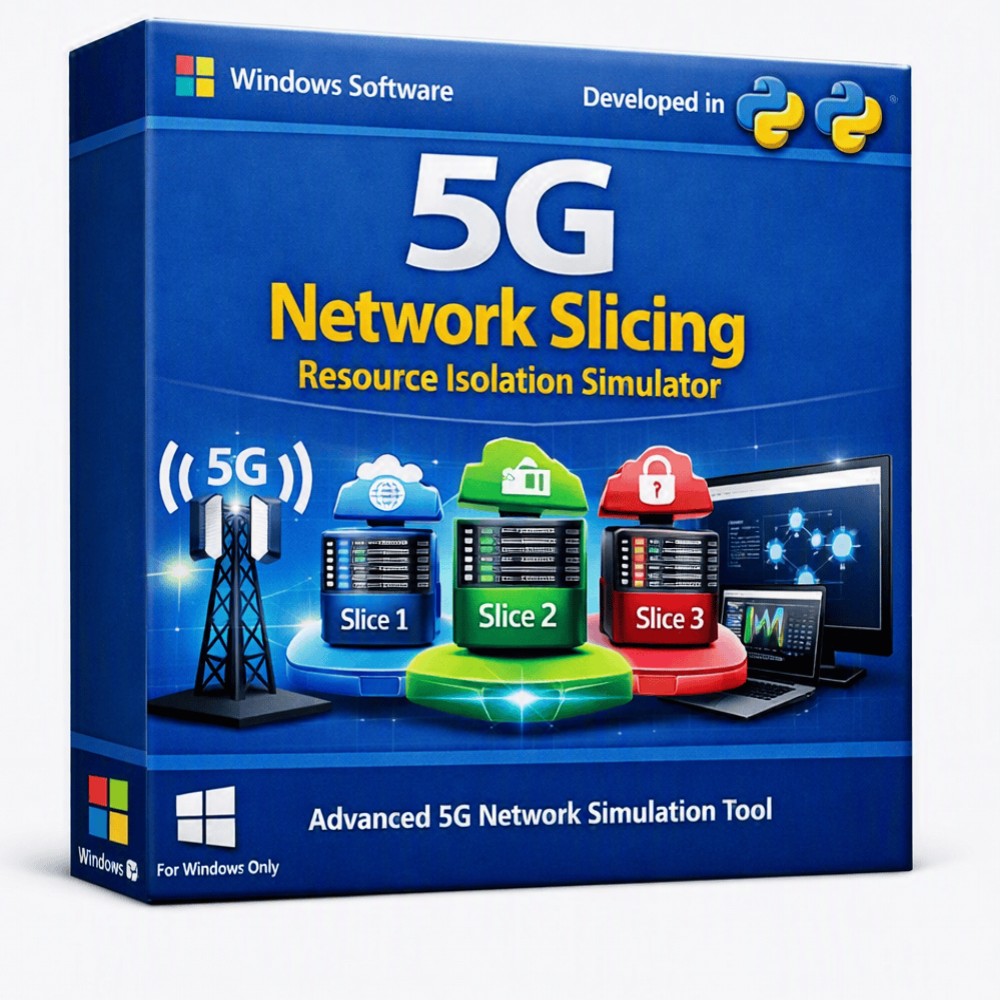
A Python-based 5G Network Slicing and Resource Isolation Simulator designed to model and analyze how multiple logical network slices can share physical 5G infrastructure while maintaining resource isolation. The simulator enables users to study CPU, memory, bandwidth, network capacity, traffic allocation, and resource management across different 5G network slices.
Ideal for 5G research, telecom engineering, academic projects, network optimization, resource allocation studies, and university laboratories.
Original price was: ₹199,999.00.₹19,999.00Current price is: ₹19,999.00.


Reviews
There are no reviews yet.