
New
67% Off

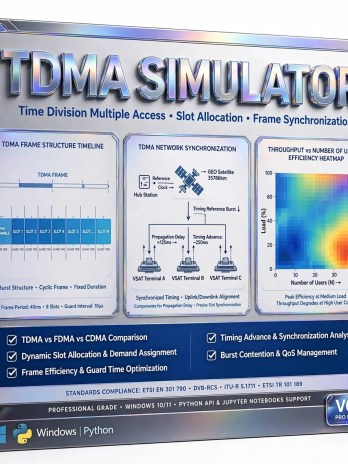
VSAT MF-TDMA Simulator

Original price was: ₹750.00.₹250.00Current price is: ₹250.00.
In StockVSAT MF-TDMA Simulator with Python is a software-based simulation solution for modeling and analyzing VSAT satellite communication networks using MF-TDMA technology. It supports experimentation with multiple terminals, time-slot allocation, frequency resources, traffic generation, scheduling, bandwidth utilization, and network performance. Ideal for B.Tech, M.Tech, MSc, PhD, engineering projects, academic research, and satellite communication studies.
Description
VSAT MF-TDMA Simulator
The VSAT MF-TDMA Simulator with Python is a practical simulation solution designed for studying, modeling, and analyzing Very Small Aperture Terminal (VSAT) communication systems using MF-TDMA (Multi-Frequency Time Division Multiple Access) technology. Developed with Python, this simulator provides an accessible environment for researchers, students, communication engineers, and developers to explore satellite communication concepts, multiple-access techniques, traffic behavior, resource allocation, and network performance.
VSAT networks are widely used to provide reliable communication connectivity in locations where terrestrial infrastructure may be limited or unavailable. In an MF-TDMA-based satellite network, multiple users share available satellite resources by transmitting over assigned frequency channels and time slots. Understanding how these resources are allocated and how network parameters affect performance is essential for satellite communication research and system development. The VSAT MF-TDMA Simulator with Python provides a software-based environment for experimenting with these concepts without requiring a physical satellite communication testbed.

Python-Based VSAT Simulation
The simulator uses Python for VSAT network simulation, making it suitable for academic projects, research work, laboratory demonstrations, algorithm development, and communication-system analysis. Python’s flexibility makes it possible to modify simulation parameters, implement custom algorithms, collect results, and extend the simulator for different experimental scenarios.
Users can investigate important MF-TDMA parameters such as the number of terminals, available carriers, time slots, traffic generation, transmission scheduling, bandwidth utilization, and resource allocation. By changing these parameters, researchers can evaluate different network configurations and observe their impact on system behavior.
MF-TDMA Satellite Communication Simulation
MF-TDMA is an important multiple-access technique used in satellite communication systems where multiple terminals share communication resources. A simulator makes it possible to study how terminals access shared satellite resources and how scheduling decisions influence network performance.

The MF-TDMA simulator can be used to examine concepts including:
- MF-TDMA frame and time-slot allocation
- Multiple VSAT terminal communication
- Frequency and bandwidth resource allocation
- Traffic generation and transmission scheduling
- Satellite network resource utilization
- Channel access behavior
- Throughput and network performance analysis
- Delay and transmission characteristics
- User demand and capacity management
- Simulation-based algorithm evaluation
Useful for Research and Academic Projects
The VSAT MF-TDMA Simulator with Python can support a wide range of academic and research applications. Students can use the simulator to understand satellite communication and multiple-access concepts through practical experimentation, while researchers can use it as a foundation for developing and testing new scheduling or resource-allocation approaches.

It can be particularly useful for B.Tech, M.Tech, MSc, PhD, and engineering research projects involving satellite communication, wireless networks, communication systems, network simulation, resource optimization, and Python programming.
Instead of relying entirely on theoretical calculations, users can create simulation scenarios and analyze how changes in network parameters influence the resulting performance. This makes the simulator useful for demonstrations, project development, technical experimentation, and proof-of-concept studies.
Flexible Simulation Environment
One of the key advantages of a Python-based simulator is its flexibility. Simulation parameters can be adjusted according to the requirements of a particular experiment. Researchers can create different traffic conditions, modify the number of terminals, change resource availability, and evaluate alternative allocation strategies.
The simulation framework can also serve as a starting point for further customization. Python developers and communication researchers can integrate additional models, performance metrics, scheduling algorithms, visualization components, or experimental scenarios depending on their project requirements.

Applications of VSAT MF-TDMA Simulator
The simulator can be applied to several areas of satellite and wireless communication research, including VSAT network modeling, MF-TDMA resource allocation, satellite bandwidth management, traffic analysis, scheduling algorithm research, network performance evaluation, and communication-system education.
It can also be used to demonstrate how multiple users compete for limited communication resources and how appropriate scheduling mechanisms can organize transmissions within a shared satellite communication environment.
Why Use a VSAT MF-TDMA Simulator?
Building or testing a real satellite communication network can require specialized hardware, infrastructure, spectrum resources, and significant investment. A software simulator provides a convenient alternative for preliminary research and experimentation. It enables users to investigate communication scenarios in a controlled environment before considering real-world implementation.

The VSAT MF-TDMA Simulator with Python therefore provides a practical foundation for understanding and experimenting with satellite network concepts. It combines the accessibility of Python with the technical requirements of MF-TDMA and VSAT network simulation.
Whether you are working on a satellite communication project, Python simulation project, academic thesis, research paper, or network modeling experiment, this simulator can help you develop a better understanding of MF-TDMA-based VSAT communication systems and evaluate different network scenarios through software-based experimentation.
Key Features
- Python-based VSAT network simulation
- MF-TDMA communication modeling
- Multiple-terminal simulation
- Time-slot and frequency resource concepts
- Traffic and transmission analysis
- Configurable simulation parameters
- Suitable for research and academic projects
- Extendable Python simulation environment
- Useful for scheduling and resource-allocation studies
- Supports satellite communication experimentation
- Suitable for engineering demonstrations and project development

Related products
-
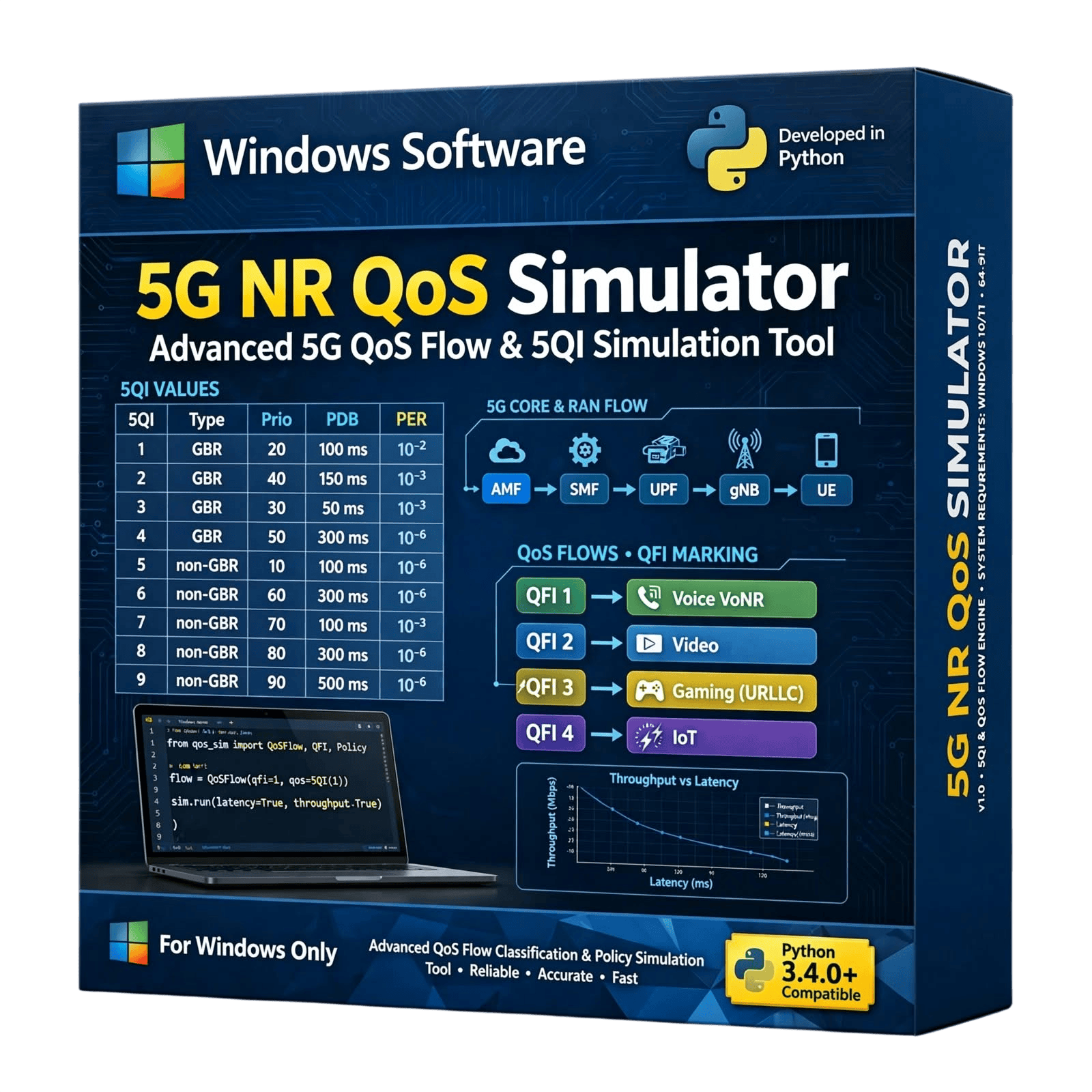
The 5G QoS Simulator is a Python-based software solution designed for researchers, engineers, students, developers, and telecommunications professionals working with 5G Quality of Service (QoS) concepts. The simulator provides a software-based environment for studying and analyzing QoS-related aspects of 5G communication networks, including service performance, traffic behavior, resource management, and network performance evaluation.
Developed using Python, the simulator is suitable for academic research, telecommunications projects, demonstrations, experimentation, algorithm development, and educational applications.
Available for sale as a software product. Contact us for pricing, licensing, features, customization, and purchase information.
Original price was: ₹750.00.₹250.00Current price is: ₹250.00. -
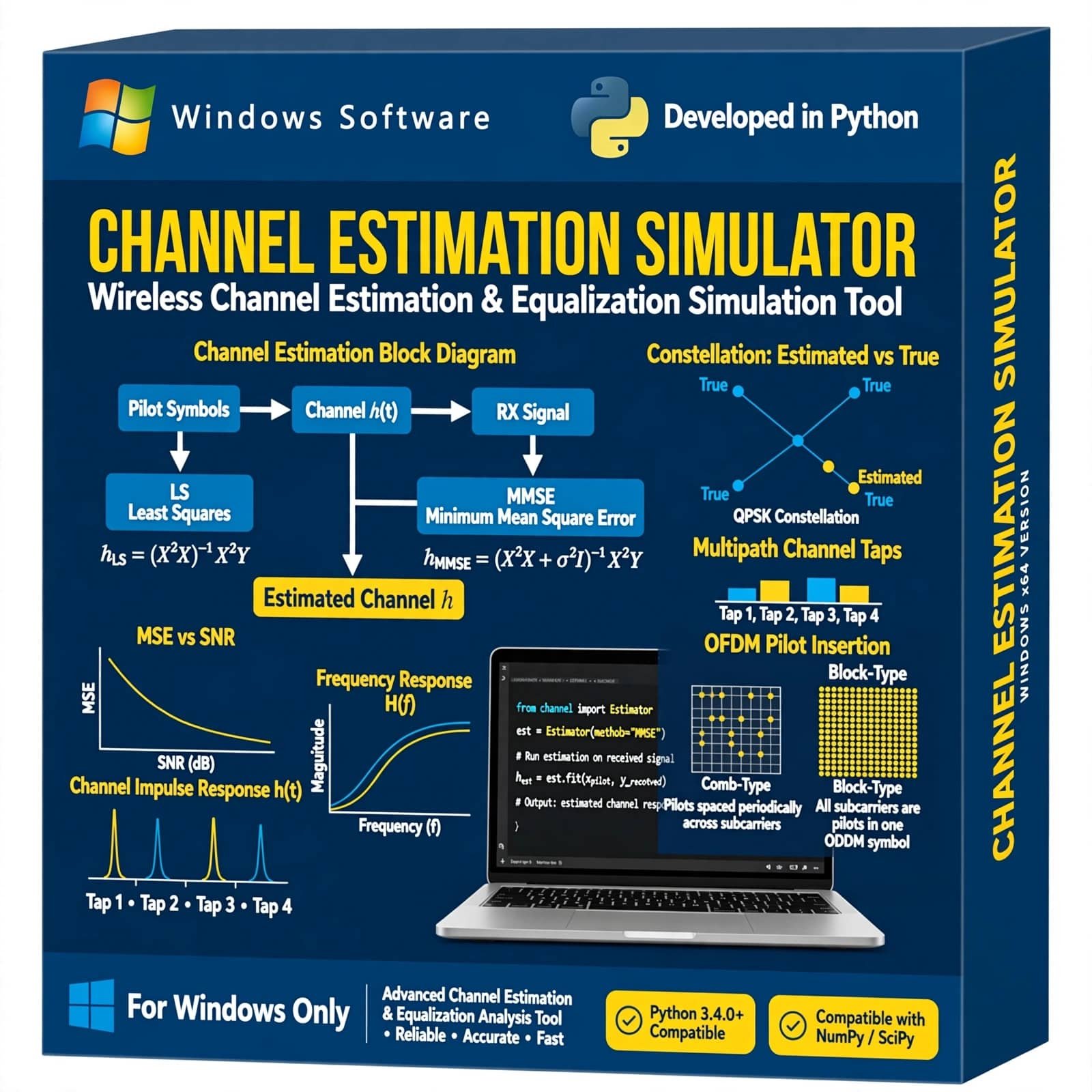
Channel Estimation Simulator is a wireless communication simulation tool designed to demonstrate and analyze channel estimation techniques in digital communication systems. It helps students, researchers, and communication engineers study channel effects, pilot-based estimation, signal distortion, and estimation performance through practical simulation.
Original price was: ₹750.00.₹250.00Current price is: ₹250.00. -
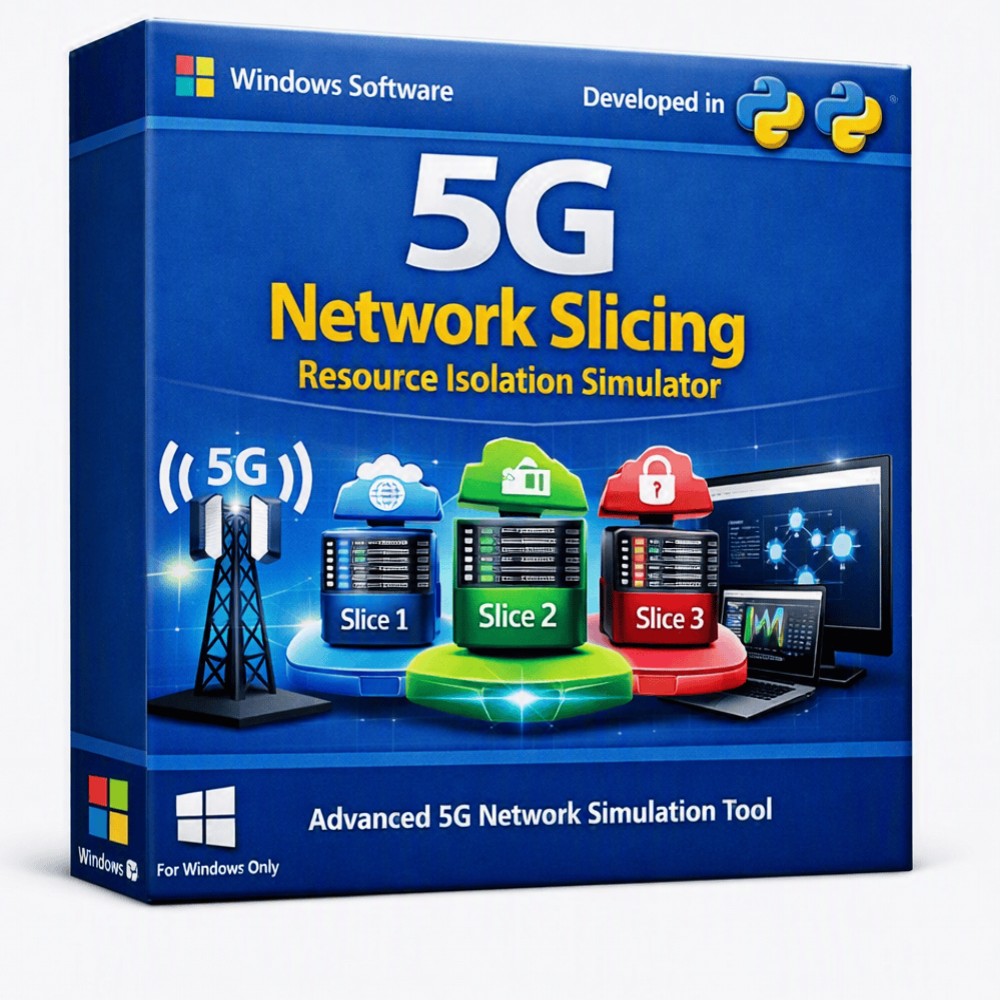
A Python-based 5G Network Slicing and Resource Isolation Simulator designed to model and analyze how multiple logical network slices can share physical 5G infrastructure while maintaining resource isolation. The simulator enables users to study CPU, memory, bandwidth, network capacity, traffic allocation, and resource management across different 5G network slices.
Ideal for 5G research, telecom engineering, academic projects, network optimization, resource allocation studies, and university laboratories.
Original price was: ₹750.00.₹250.00Current price is: ₹250.00. -
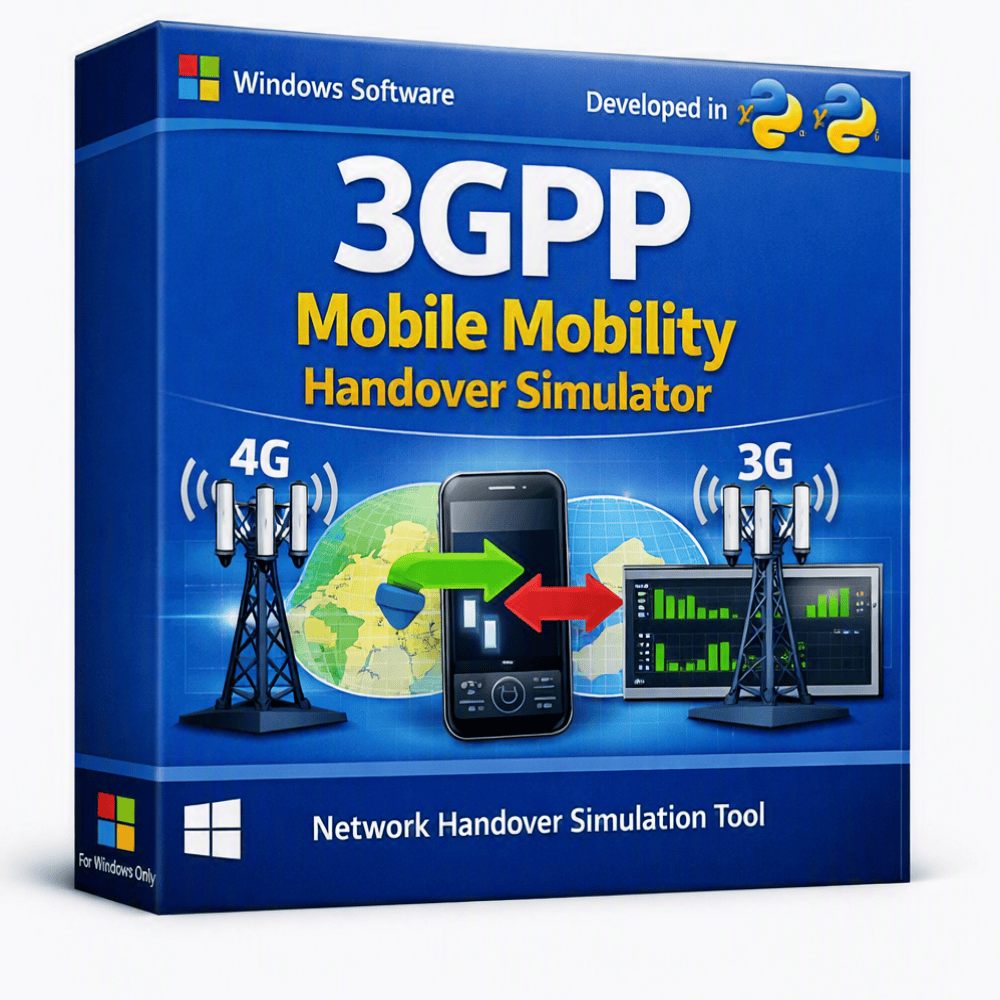
A powerful simulation tool for analyzing and validating 3GPP mobile mobility and handover procedures. The simulator enables users to model mobile network scenarios, study handover behavior, and evaluate mobility performance under different network conditions.
Key Features:
- 3GPP-compliant mobility and handover simulation
- Configurable network and mobility scenarios
- Analysis of handover performance and behavior
- Supports research, testing, and network optimization
- Useful for telecom engineers, researchers, and academic projects
Ideal for 5G/4G/3G mobility research, protocol testing, network planning, and academic simulation studies.
Original price was: ₹750.00.₹250.00Current price is: ₹250.00. -
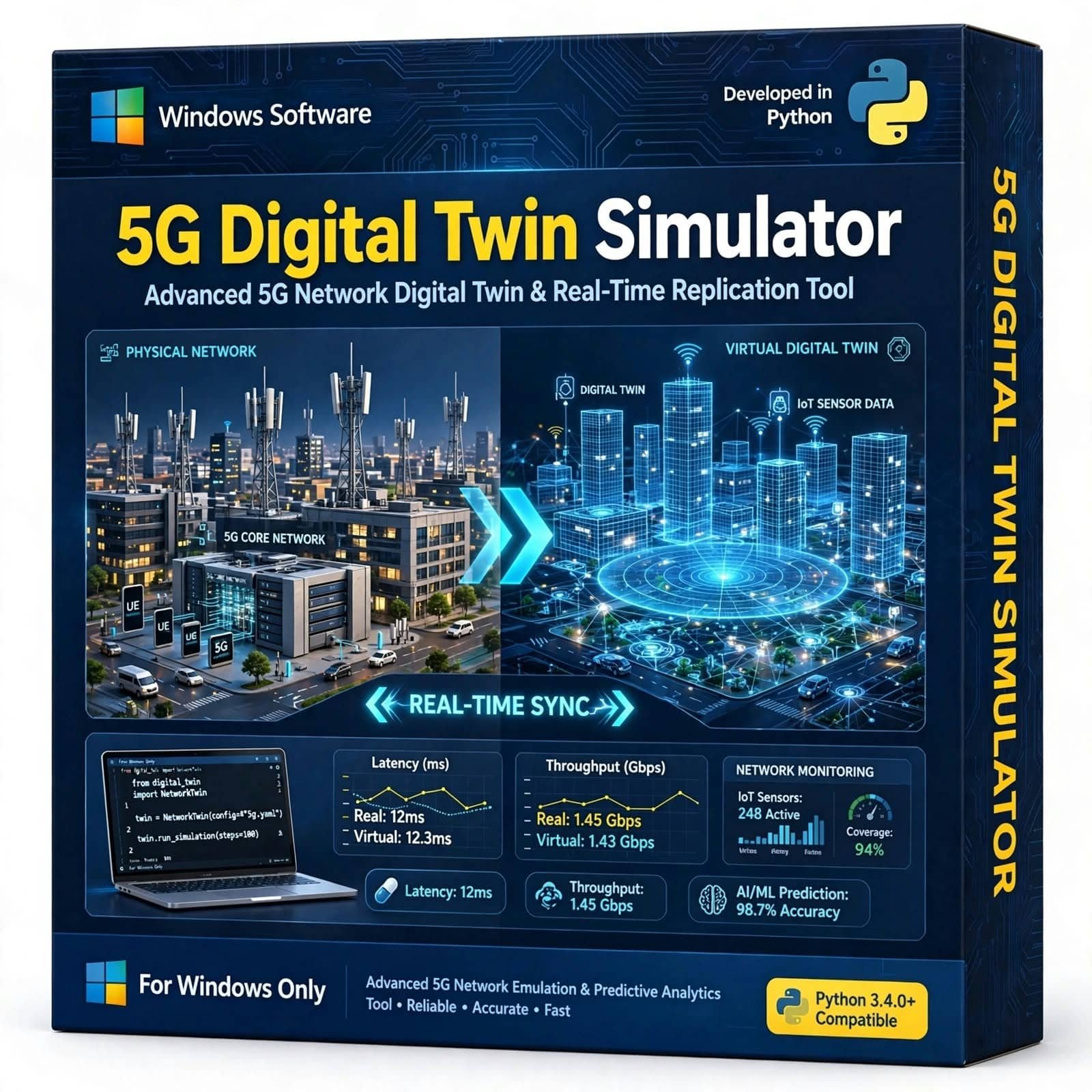
The 5G Digital Twin is a Python-based software solution designed for researchers, engineers, developers, students, and telecommunications professionals interested in modeling, simulating, and analyzing 5G communication networks and their real-world behavior in a virtual environment.
A digital twin provides a virtual representation of a physical or network system, enabling users to study system behavior, evaluate scenarios, analyze performance, and experiment with different configurations. Developed using Python, this 5G Digital Twin can support research, education, network analysis, experimentation, and proof-of-concept development.
Available for sale as a software product. Contact us for pricing, licensing, technical specifications, customization, and purchase information.
Original price was: ₹750.00.₹250.00Current price is: ₹250.00. -
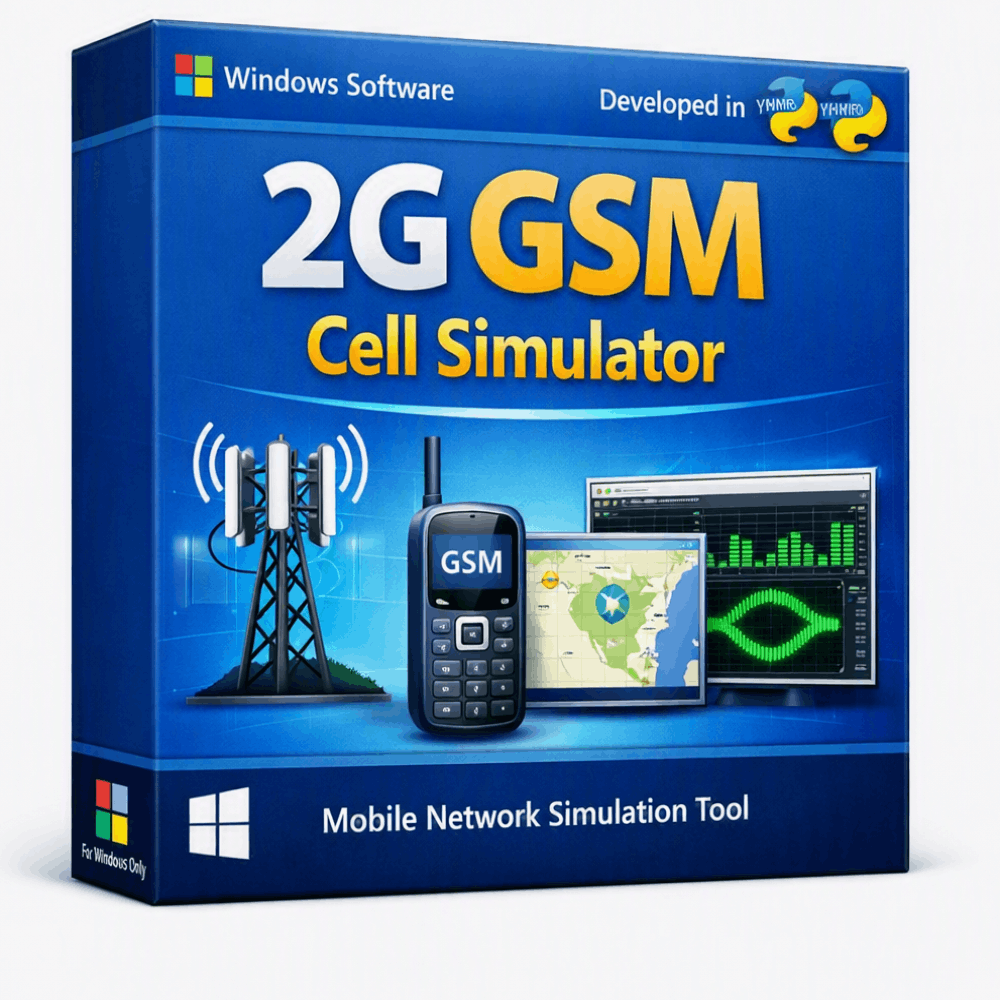
The 2G GSM Cell Simulator is a Python-based software project designed to simulate fundamental GSM cellular-network concepts. It provides a practical environment for understanding mobile stations, GSM cells, base stations, cellular coverage, mobility, communication channels, and basic network behavior. The project includes Python source code that can be studied, customized, and extended for academic projects, demonstrations, research, and learning. It is ideal for Electronics & Communication Engineering, Telecommunications, Computer Science, and related students looking to explore 2G GSM technology and cellular network simulation through a software-based implementation.
Original price was: ₹750.00.₹250.00Current price is: ₹250.00.


Reviews
There are no reviews yet.