
67% Off

GSM TDMA Framework Simulator


Original price was: ₹750.00.₹250.00Current price is: ₹250.00.
In StockGSM TDMA Framework Simulator with Python is a telecom simulation solution for studying GSM Time Division Multiple Access (TDMA), frame structures, time-slot allocation, channel access, and wireless communication concepts using Python. It is suitable for students, researchers, telecom engineers, universities, and laboratories for GSM training, communication-system simulation, protocol studies, and academic projects.
Description
GSM TDMA Framework Simulator
The GSM TDMA Framework Simulator with Python is a specialized wireless communication simulation solution designed to help students, researchers, engineers, and telecom professionals understand the principles of Time Division Multiple Access (TDMA) as used in GSM cellular communication systems. Developed using Python, the simulator provides a practical environment for studying GSM TDMA frame structures, time-slot allocation, channel access, transmission scheduling, and radio resource concepts.
TDMA is one of the fundamental technologies used in GSM to allow multiple users to share the same radio carrier by transmitting during different time slots. Understanding how time is divided and managed is essential for learning GSM radio communication, digital cellular networks, wireless access techniques, and communication system design.
The GSM TDMA Framework Simulator provides a controlled software environment where these concepts can be explored through simulation rather than only through theoretical diagrams and equations.
Understand GSM TDMA Technology
In GSM, multiple users can share a radio frequency by using different time slots within a structured transmission framework. This time-based access mechanism enables multiple communication channels to operate over shared radio resources.
The GSM TDMA Framework Simulator helps users explore the fundamental principles behind this approach and understand how data and communication events can be organized within TDMA-based systems.
Depending on the supported implementation, users can study concepts related to:
- GSM TDMA architecture
- TDMA time slots
- GSM frame structure
- Radio channel allocation
- Time-slot assignment
- Transmission scheduling
- Digital cellular communication
- Multiple-access techniques
- GSM radio resources
- Wireless channel sharing
- TDMA-based communication
- GSM physical layer concepts
This makes the simulator useful for both introductory wireless communication education and more advanced academic research.
Python Based GSM TDMA Simulator
The use of Python makes the simulator especially suitable for students and researchers who want to combine wireless communication theory with programming and simulation.
Python provides an accessible and flexible environment for modeling communication systems, generating simulation scenarios, analyzing transmission behavior, and representing time-slot-based communication. Students can use the simulator to understand how TDMA concepts can be translated into software models.
A Python-based simulation approach can also make it easier to experiment with different parameters and visualize the behavior of a simulated communication framework, depending on the features implemented in the product.
This combination of GSM TDMA simulation and Python programming makes the product suitable for academic projects, laboratory exercises, research studies, and communication-system demonstrations.
Study GSM Frame and Time-Slot Concepts
One of the key concepts in GSM is its structured use of time for radio transmission. Understanding the relationship between carriers, frames, and time slots helps learners understand how GSM manages shared radio resources.
The simulator can be used to demonstrate concepts associated with:
TDMA time-slot allocation: Explore how communication opportunities can be assigned to different users or logical channels within a time-based framework.
GSM frame structure: Study the organization of transmission into structured time intervals.
Channel access: Understand how multiple communication sessions can share a radio carrier through time-based access.
Transmission scheduling: Examine the relationship between communication events and available time slots.
Radio resource concepts: Learn how limited radio resources can be organized and utilized in a GSM environment.
These concepts provide an important foundation for understanding GSM and other digital wireless communication technologies.
GSM TDMA Simulation for Academic Education
The GSM TDMA Framework Simulator is suitable for engineering colleges, universities, telecom laboratories, wireless communication training centers, and research institutions.
It can complement courses and laboratory activities related to:
- GSM and Mobile Communication
- Wireless Communication
- Digital Communication
- Cellular Networks
- TDMA Technology
- Multiple Access Techniques
- Digital Signal Processing
- Communication Systems
- Network Simulation
- Python Programming
- Telecommunication Engineering
Simulation-based learning allows students to experiment with communication concepts in a controlled environment and develop a more practical understanding of how TDMA systems operate.
Python TDMA Simulator for Research
Researchers and postgraduate students can use the simulator as a platform for exploring selected TDMA and GSM communication scenarios. Simulation makes it possible to model communication behavior, test different configurations, and analyze time-based resource allocation without requiring access to a physical cellular network.
The Python implementation can also support academic research involving wireless communication modeling, TDMA resource allocation, GSM simulation, channel access, communication scheduling, and network performance studies, depending on the capabilities of the implementation.
For research and development, a software simulation environment provides the advantage of repeatable experiments and controlled test conditions.

Key Benefits
GSM TDMA simulation: Study fundamental GSM TDMA concepts through a software-based simulation environment.
Python based: Combine Python programming with practical wireless communication modeling.
Time-slot learning: Understand how time slots can be organized and allocated in a TDMA framework.
GSM frame studies: Explore the structure and organization of GSM transmission frames.
Practical education: Provides a useful complement to theoretical GSM and wireless communication courses.
Research support: Suitable for academic research and simulation projects involving TDMA and cellular communication.
Controlled environment: Experiment with simulated communication scenarios without requiring a live GSM network.
Programming skills: Helps students apply Python programming to communication-system simulation.
Applications
The GSM TDMA Framework Simulator with Python can be used for:
- GSM TDMA simulation
- TDMA time-slot demonstrations
- GSM frame structure studies
- Wireless communication laboratory experiments
- Multiple-access technique demonstrations
- Radio resource simulation
- GSM network education
- Python telecom programming projects
- Cellular communication research
- TDMA resource allocation studies
- Communication system modeling
- GSM academic projects
- Telecom training
- Wireless network simulation
It can also be used by instructors to demonstrate TDMA concepts visually and practically during GSM and mobile communication laboratory sessions.
Who Can Use the GSM TDMA Framework Simulator?
The simulator is suitable for:
- Telecom engineering students
- Electronics and communication engineering students
- Wireless communication students
- Python programming students
- Telecom researchers
- Wireless network researchers
- GSM engineers
- Engineering colleges and universities
- Telecom training institutes
- Academic laboratories
- Final-year engineering project teams
- Communication system research groups
It is particularly useful for learners who want to develop an understanding of TDMA technology while gaining practical experience with Python-based simulation.
Why Choose a GSM TDMA Framework Simulator?
TDMA concepts can be difficult to understand when presented only through theoretical explanations. A simulator provides a practical way to examine how communication resources are divided into time intervals and how transmission events can be organized within a TDMA framework.
The GSM TDMA Framework Simulator with Python combines wireless communication theory, GSM technology, TDMA concepts, and programming in a single simulation-oriented solution.
By experimenting with simulated time slots, frames, channels, and communication scenarios, users can build a stronger understanding of the principles behind GSM radio access and time-based multiple access.
Conclusion
The GSM TDMA Framework Simulator with Python is a practical solution for learning and researching GSM TDMA, time-slot allocation, GSM frame structures, radio resource concepts, and digital wireless communication.
Its Python foundation makes it suitable for students, researchers, engineers, and academic institutions looking to combine programming with telecommunications and wireless communication simulation.
Whether you are working on a GSM academic project, TDMA simulation project, Python telecom project, wireless communication laboratory experiment, or cellular network research study, this simulator provides a controlled environment for exploring the fundamental concepts of time-based multiple access.
For users searching for a GSM TDMA simulator, TDMA simulator with Python, GSM framework simulator, GSM time-slot simulator, GSM network simulator, Python wireless communication simulator, TDMA simulation software, or GSM telecom training simulator, this product can serve as a useful platform for education, experimentation, training, and research.
Related products
-
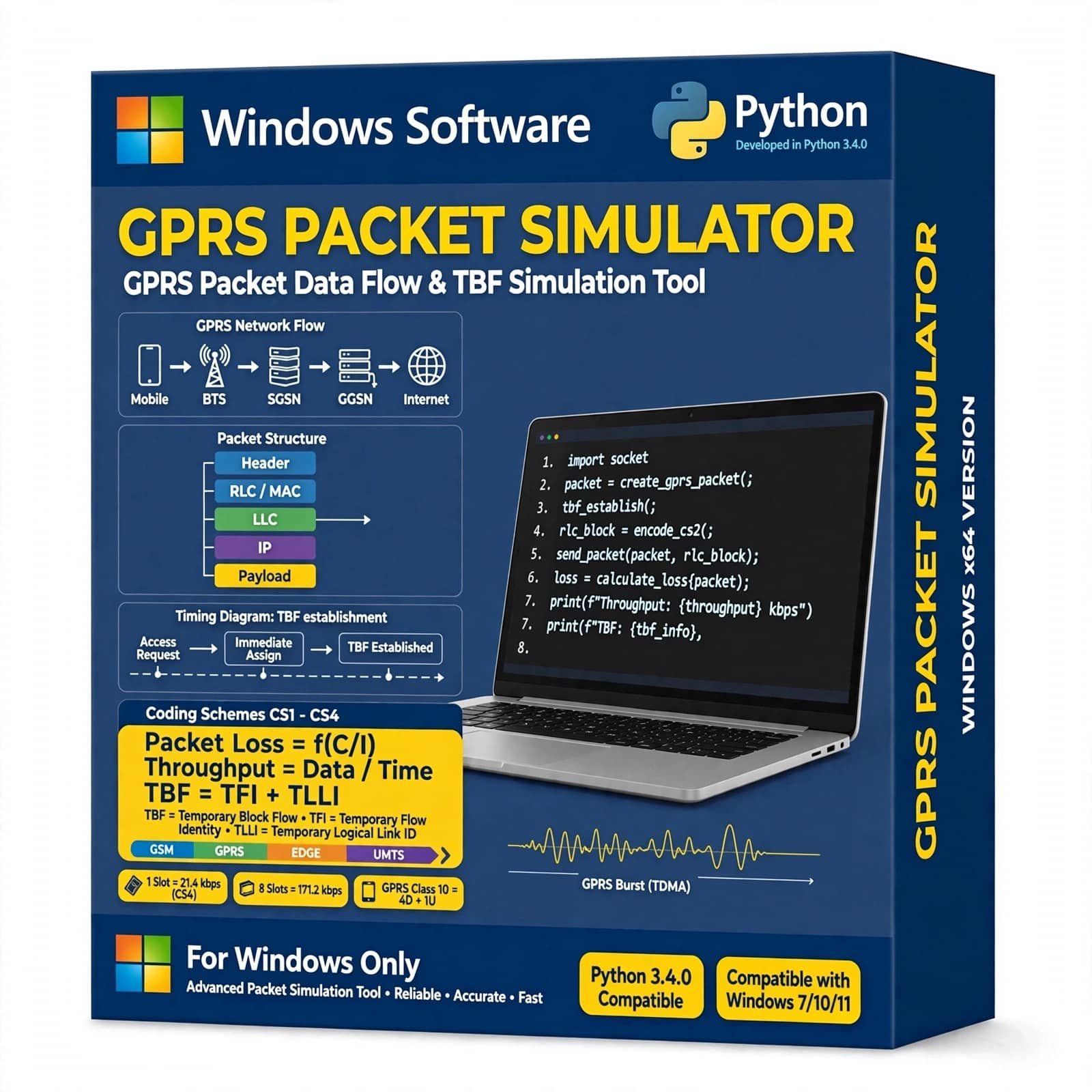
GPRS Packet Simulator is a powerful software solution for simulating GPRS data packets and testing GSM/GPRS communication systems. It helps developers, engineers, and testing teams generate, analyze, and validate packet-based communication in a controlled environment without requiring extensive physical network infrastructure. Ideal for GPRS testing, protocol development, IoT applications, and telecom system validation.
₹3,999.00 -
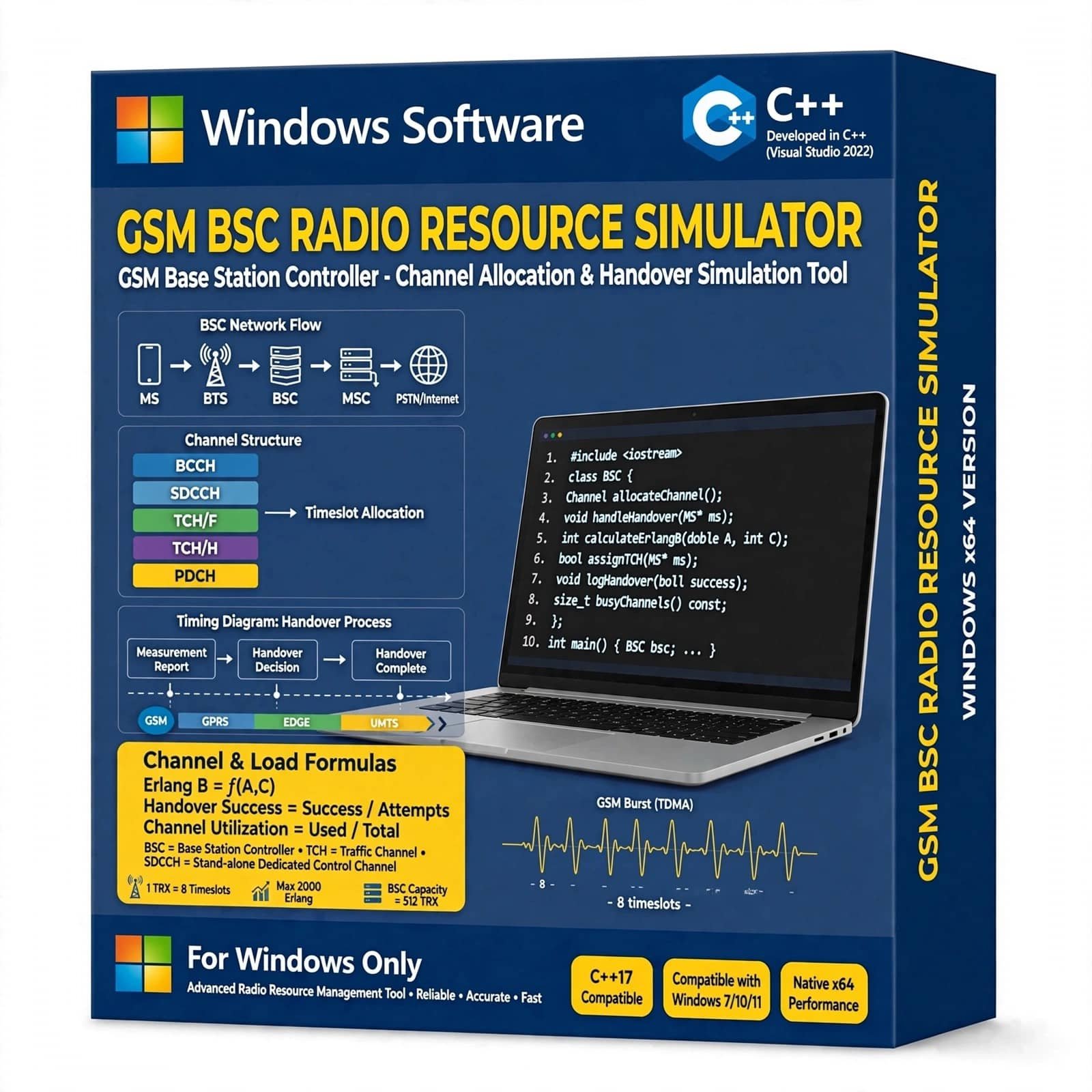
GSM BSC Radio Resource Simulator is a professional telecom training and development solution designed to simulate GSM Base Station Controller (BSC) radio resource management functions. It helps students, telecom engineers, researchers, and network professionals understand GSM radio resource allocation, channel management, call handling, handover concepts, and BSC-related network procedures in a controlled simulation environment.
Original price was: ₹750.00.₹100.00Current price is: ₹100.00. -
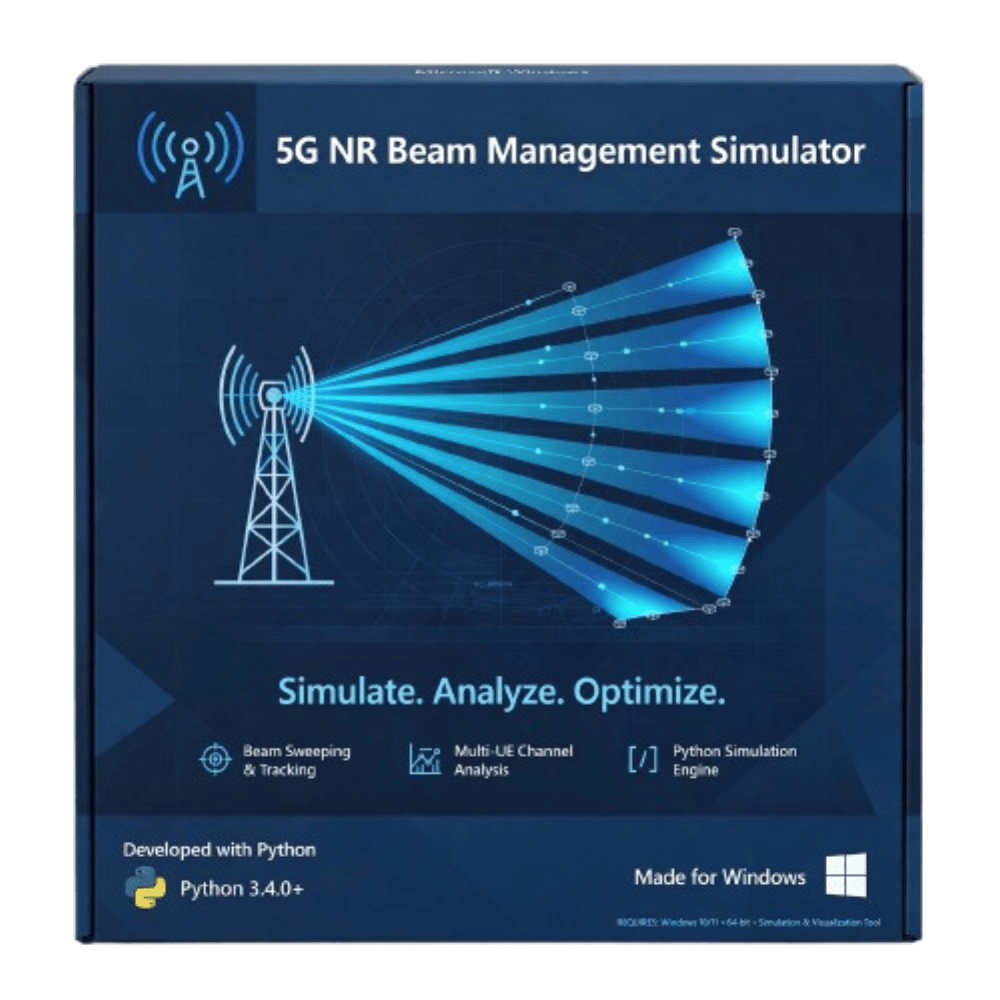
5G NR Beam Management Simulator is an advanced simulation solution designed to model, analyze, and optimize beam management procedures in 5G New Radio (NR) networks. It enables engineers and researchers to evaluate beam sweeping, beam measurement, beam selection, beam reporting, and beam recovery under diverse network and channel conditions. The simulator supports performance analysis of directional communication, helping users assess beamforming strategies, mobility scenarios, link reliability, and system-level performance before real-world deployment.
Original price was: ₹74,999.00.₹12,999.00Current price is: ₹12,999.00. -
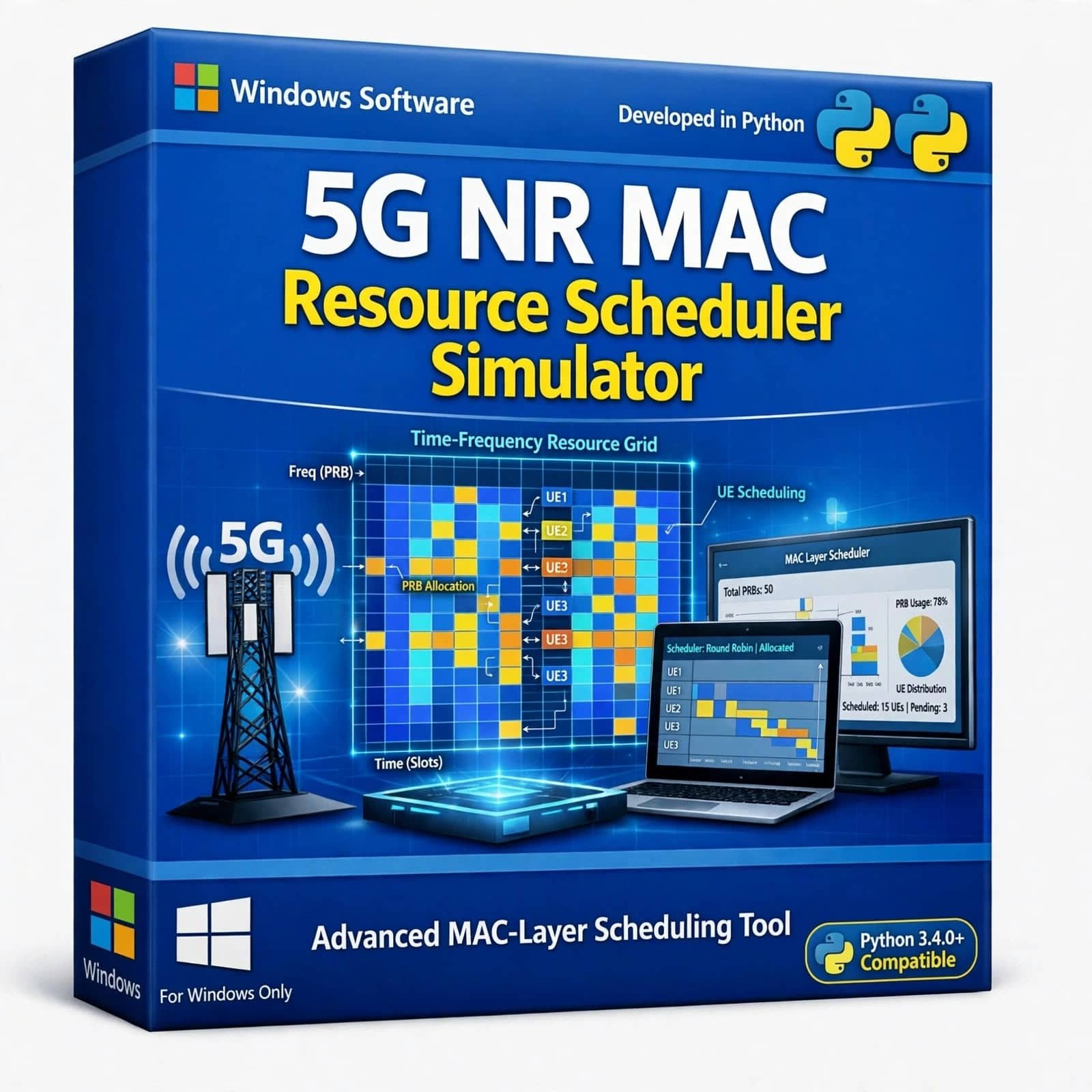
5G NR MAC Resource Scheduler Simulator is an advanced simulation solution for modeling and analyzing Medium Access Control (MAC) layer resource scheduling in 5G New Radio networks. It enables users to evaluate dynamic resource allocation, multi-UE scheduling, uplink and downlink resource management, QoS-aware scheduling, traffic conditions, and scheduling algorithms. The simulator supports analysis of throughput, latency, fairness, spectral efficiency, resource utilization, packet loss, and QoS performance, making it ideal for 5G NR research, scheduler algorithm development, academic projects, and wireless network optimization.
Original price was: ₹129,999.00.₹12,999.00Current price is: ₹12,999.00. -
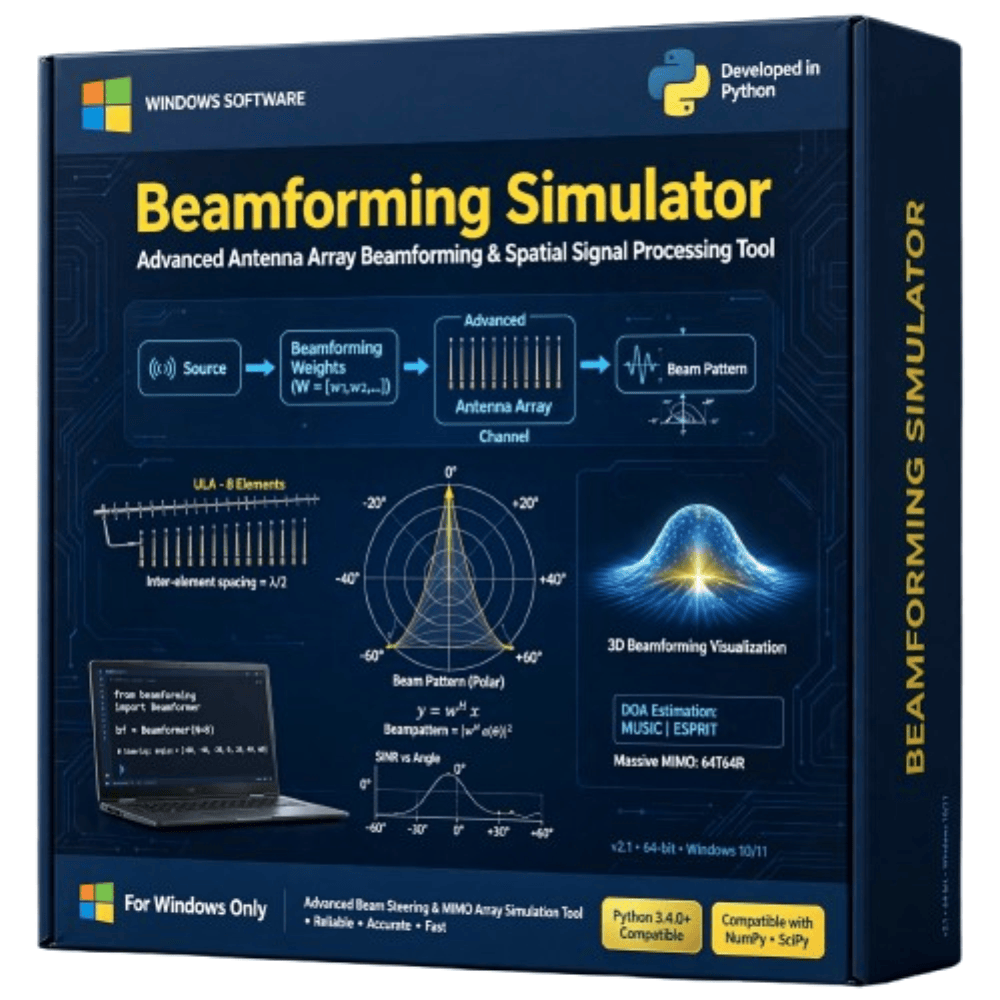
The Beamforming Simulator is a practical wireless communication simulation project designed to demonstrate how antenna arrays can control and direct radio-frequency signals toward desired users or directions. The simulator helps visualize beam patterns, signal direction, antenna-array behavior, and beam steering under different parameters. It is suitable for studying beamforming, antenna arrays, MIMO, 5G communication, wireless networks, and signal processing. This project is ideal for engineering students, researchers, and learners working on wireless communication and advanced antenna technologies.
₹1,999.00 -
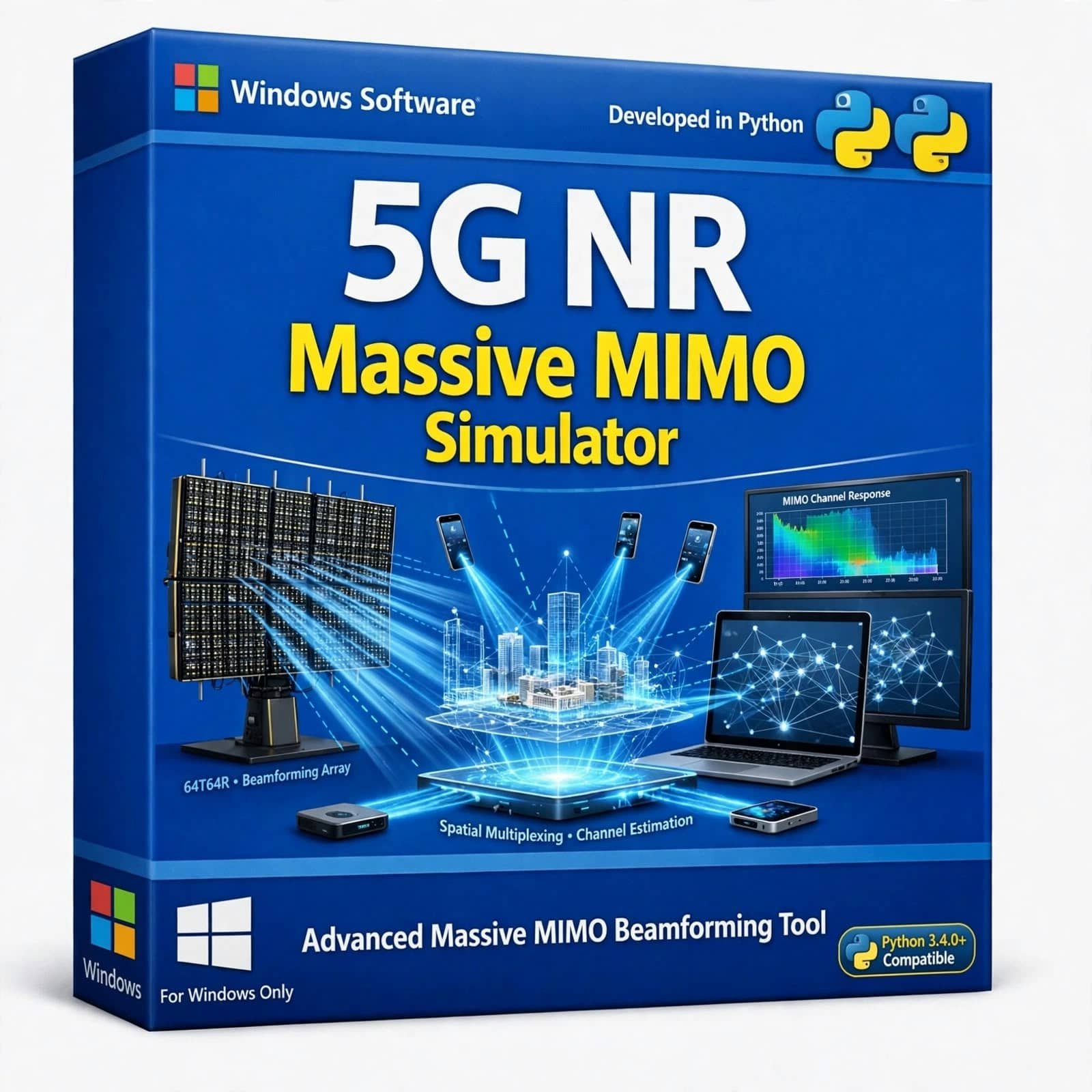
5G NR Massive MIMO Simulator is an advanced simulation solution for modeling and analyzing Massive Multiple-Input Multiple-Output (MIMO) technologies in 5G New Radio networks. It enables users to study large-scale antenna arrays, beamforming, precoding, spatial multiplexing, multi-user MIMO, channel estimation, and interference under configurable channel conditions. The simulator supports analysis of throughput, spectral efficiency, SINR, BER, BLER, MIMO capacity, beamforming gain, and multi-user performance, making it ideal for 5G NR research, algorithm development, academic projects, and 5G/6G wireless system optimization.
Original price was: ₹149,999.00.₹14,999.00Current price is: ₹14,999.00.


Reviews
There are no reviews yet.