
87% Off

GSM BSC Radio Resource simulator
Original price was: ₹750.00.₹100.00Current price is: ₹100.00.
In StockGSM BSC Radio Resource Simulator is a professional telecom training and development solution designed to simulate GSM Base Station Controller (BSC) radio resource management functions. It helps students, telecom engineers, researchers, and network professionals understand GSM radio resource allocation, channel management, call handling, handover concepts, and BSC-related network procedures in a controlled simulation environment.
Description
GSM BSC Radio Resource Simulator
The GSM BSC Radio Resource Simulator is a specialized telecom simulation solution designed to help students, researchers, communication engineers, and network professionals understand the principles of GSM Base Station Controller (BSC) operation and radio resource management. It provides a controlled environment for studying how radio resources are managed within a GSM network, making it useful for GSM training, telecom education, academic research, network simulation, and practical laboratory applications.
In a traditional GSM network, the Base Station Controller (BSC) plays an important role in managing radio resources associated with multiple Base Transceiver Stations (BTS). Understanding BSC functions is essential for anyone studying GSM architecture, mobile communication, wireless networking, and cellular network optimization. The GSM BSC Radio Resource Simulator helps users explore these concepts without requiring access to a live cellular network.
Learn GSM BSC and Radio Resource Management
The simulator provides an effective way to study GSM radio resource management concepts in a simulated environment. Users can investigate how radio channels and network resources are coordinated for mobile communication services and understand the relationship between mobile stations, BTS elements, and the BSC.
It can be particularly useful for demonstrating concepts such as radio channel allocation, call establishment, call release, resource management, mobility management concepts, and handover procedures, depending on the simulator configuration and supported scenarios.
By working with simulated network conditions, learners can gain practical insight into the processes that take place inside a GSM radio access network.
Ideal for GSM Training and Telecom Education
The GSM BSC Radio Resource Simulator is suitable for engineering colleges, universities, telecom training centers, research laboratories, and communication technology institutes. It can be incorporated into practical sessions and laboratory exercises related to:
- GSM architecture and network components
- Base Station Controller (BSC) operation
- Base Transceiver Station (BTS) concepts
- GSM radio resource management
- Mobile communication systems
- Cellular network simulation
- Radio channel allocation
- GSM call management
- Handover concepts
- Wireless communication research
- Telecom network performance studies
Instead of relying only on theoretical diagrams and textbook explanations, students can use simulation-based learning to understand how different GSM network functions interact.
GSM BSC Simulation for Research and Development
Researchers and telecom professionals can use a GSM BSC simulator as a controlled platform for studying network behavior and evaluating different radio resource management scenarios. Simulation makes it possible to examine network procedures under different conditions without affecting a production cellular network.
A simulator can also support academic projects involving GSM network modeling, cellular communication, radio resource allocation, network optimization, and mobile communication protocols. It provides an environment where different scenarios can be created, observed, and analyzed as part of a research or development workflow.
Understand BSC Radio Resource Management
The BSC is an important component of the GSM radio access network because it coordinates radio-related functions for connected BTS resources. Learning how these resources are managed provides valuable insight into the operation of legacy and foundational cellular networks.
With the GSM BSC Radio Resource Simulator, users can explore the logic behind radio resource management and better understand how network resources are utilized during mobile communication sessions. This makes the solution valuable for telecom students, GSM engineers, wireless communication researchers, and network technology professionals.
Key Benefits
Practical GSM learning: Understand GSM BSC concepts through simulation rather than theory alone.
Radio resource management: Study fundamental concepts related to allocation and management of GSM radio resources.
Controlled environment: Experiment with GSM network scenarios without requiring access to a live mobile network.
Academic and research applications: Suitable for university projects, laboratory work, demonstrations, and telecom research.
Telecom engineering training: Helps learners develop a stronger understanding of GSM network architecture and BSC functionality.
Simulation-based analysis: Provides a platform for observing GSM network behavior and evaluating selected scenarios in a repeatable environment.

Who Can Use the GSM BSC Radio Resource Simulator?
This product is suitable for:
- Telecom engineering students
- Electronics and communication engineering students
- Wireless communication researchers
- GSM and cellular network professionals
- Telecom training institutes
- Universities and engineering colleges
- Academic research laboratories
- Mobile communication project developers
- Network simulation and protocol research teams
Whether the goal is classroom teaching, laboratory experimentation, academic research, or professional training, the simulator can help make complex GSM concepts easier to understand through practical simulation.
Why Choose a GSM BSC Radio Resource Simulator?
Understanding cellular networks requires more than knowing individual network components. It is also important to understand how those components interact and how radio resources are managed during communication. A GSM BSC Radio Resource Simulator provides a practical way to study these interactions in a structured and controlled environment.
For educational institutions, it can complement theoretical GSM and mobile communication courses. For researchers, it can provide a useful simulation platform for investigating selected radio resource management and GSM network scenarios. For telecom professionals, it can support training and conceptual understanding of BSC-related functions.
The simulator is therefore a useful addition to GSM laboratories, telecom training programs, wireless communication research environments, and academic network simulation projects.
Applications
The GSM BSC Radio Resource Simulator can be used for:
- GSM network architecture demonstrations
- BSC and BTS relationship studies
- Radio resource management experiments
- GSM call flow studies
- Channel allocation demonstrations
- Handover concept demonstrations
- Mobile communication laboratory exercises
- Telecom engineering training
- GSM research projects
- Cellular network simulation
- Academic demonstrations and presentations
Conclusion
The GSM BSC Radio Resource Simulator offers a practical approach to learning and exploring GSM Base Station Controller and radio resource management concepts. By providing a simulated environment for studying GSM network behavior, it can support education, training, research, and development activities in the field of mobile and wireless communication.
If you are looking for a GSM BSC simulator, GSM radio resource management simulator, GSM network simulator, BSC simulation tool, or telecom training simulator, this solution can provide a valuable platform for understanding the underlying concepts of GSM radio access networks.
Related products
-
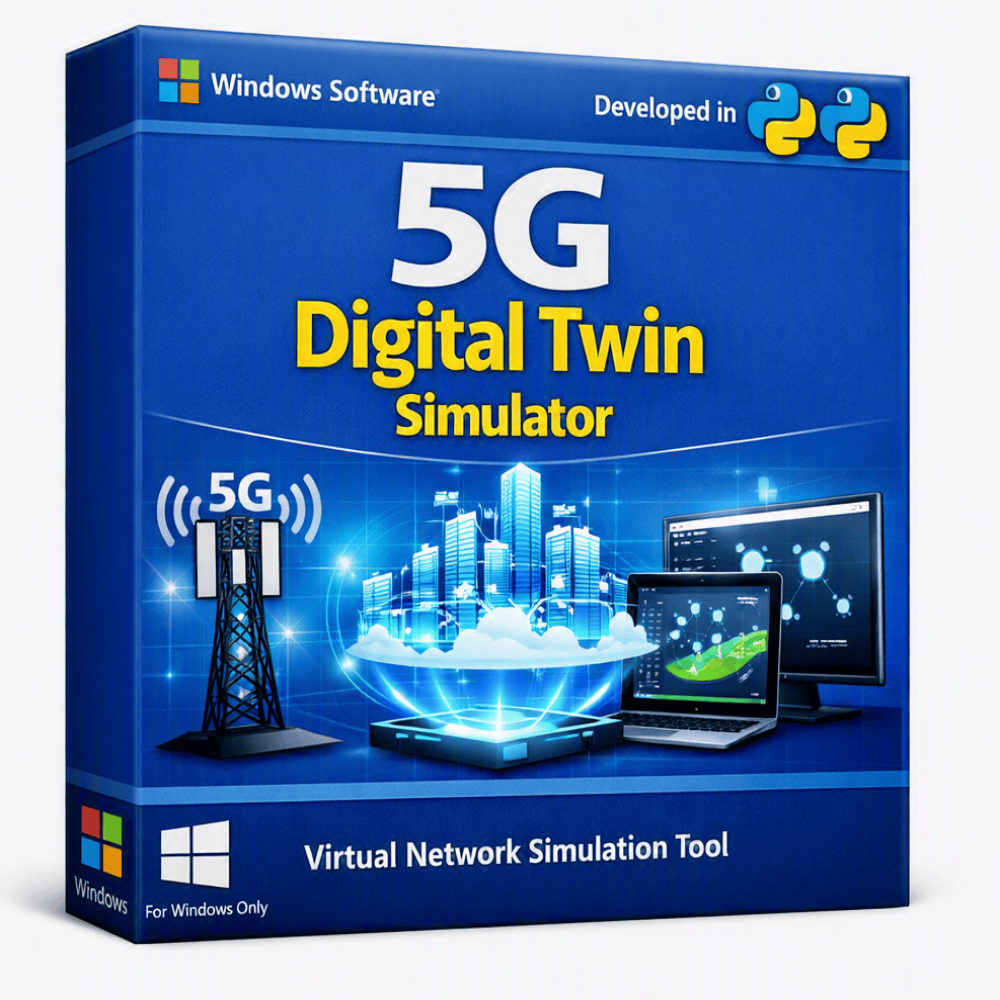
A Python-based 5G Digital Twin solution for creating a virtual representation of 5G network environments, components, and operational behavior. Designed for 5G research, network analysis, simulation, optimization, and academic projects, it enables users to model network scenarios, monitor virtualized network behavior, and experiment with different configurations in a controlled software environment.
Ideal for telecom engineers, researchers, developers, students, and academic institutions working on 5G network planning, performance analysis, intelligent network management, and digital twin research.
Original price was: ₹249,999.00.₹24,999.00Current price is: ₹24,999.00. -
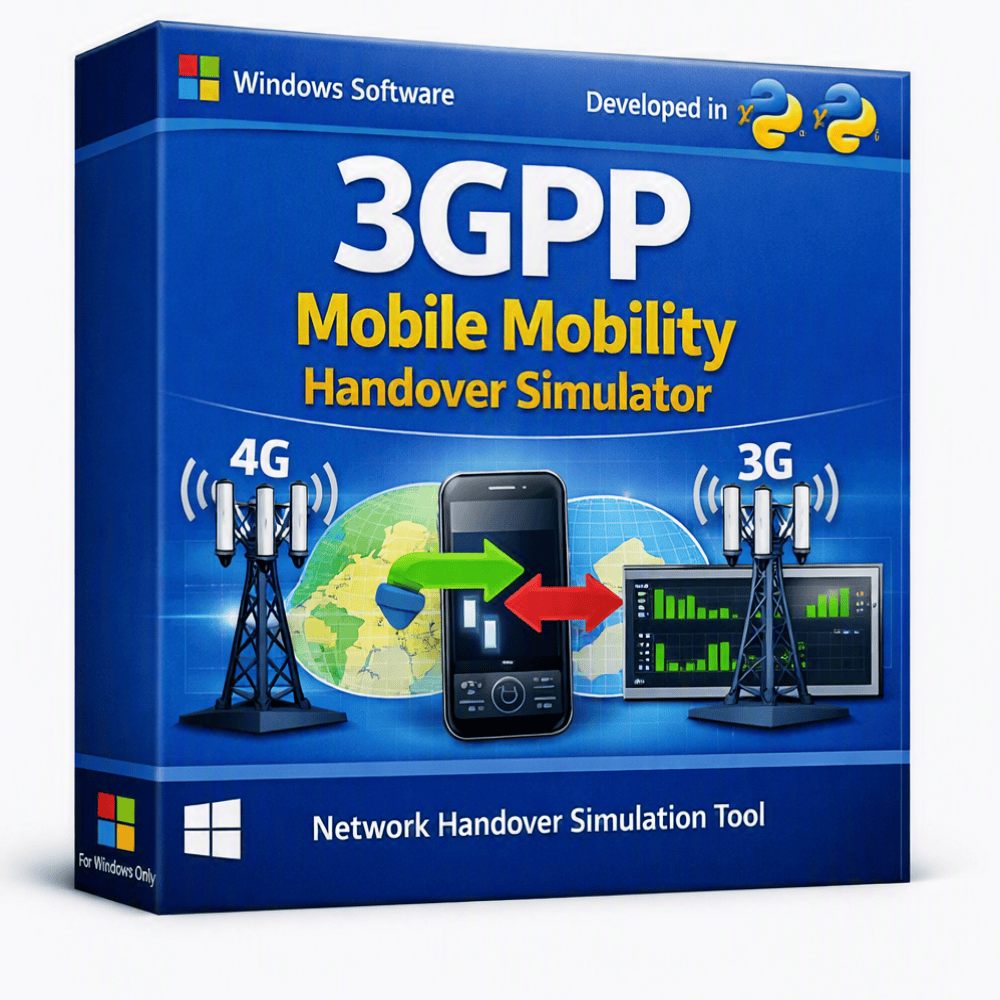
A powerful simulation tool for analyzing and validating 3GPP mobile mobility and handover procedures. The simulator enables users to model mobile network scenarios, study handover behavior, and evaluate mobility performance under different network conditions.
Key Features:
- 3GPP-compliant mobility and handover simulation
- Configurable network and mobility scenarios
- Analysis of handover performance and behavior
- Supports research, testing, and network optimization
- Useful for telecom engineers, researchers, and academic projects
Ideal for 5G/4G/3G mobility research, protocol testing, network planning, and academic simulation studies.
₹3,999.00 -
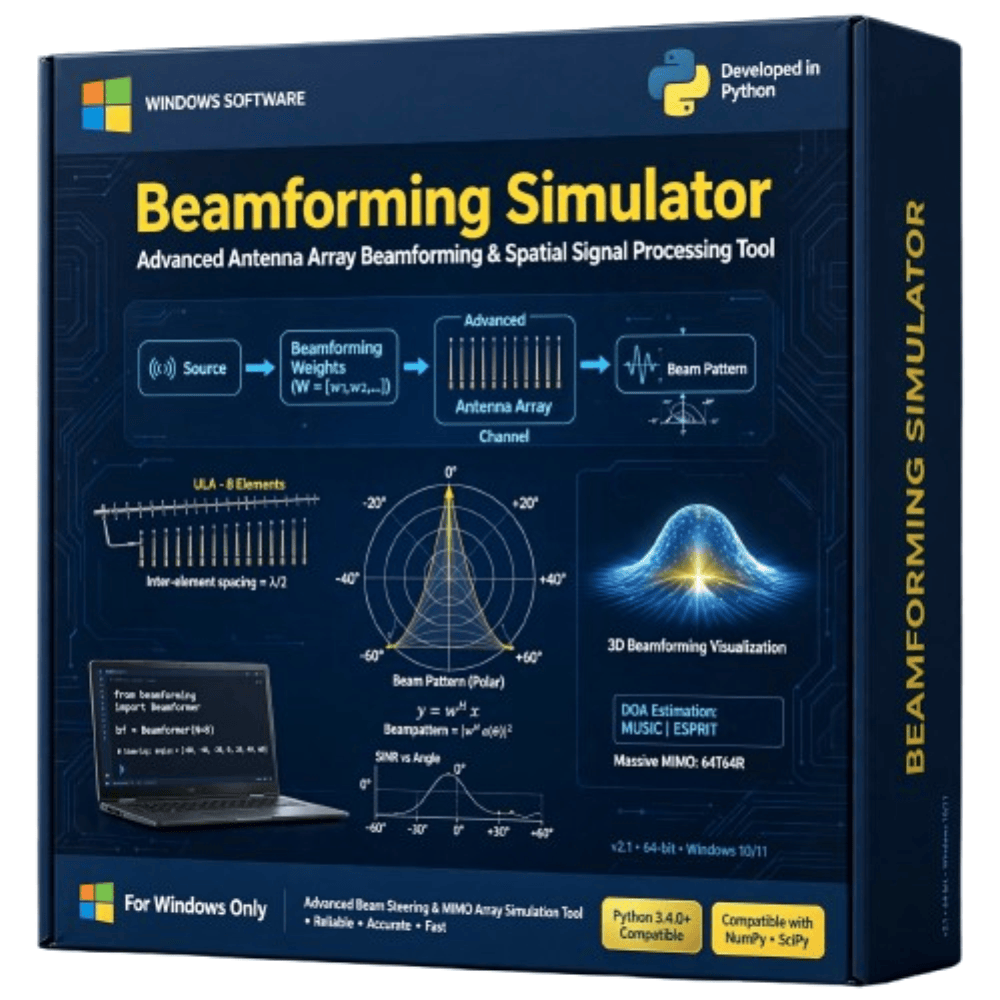
The Beamforming Simulator is a practical wireless communication simulation project designed to demonstrate how antenna arrays can control and direct radio-frequency signals toward desired users or directions. The simulator helps visualize beam patterns, signal direction, antenna-array behavior, and beam steering under different parameters. It is suitable for studying beamforming, antenna arrays, MIMO, 5G communication, wireless networks, and signal processing. This project is ideal for engineering students, researchers, and learners working on wireless communication and advanced antenna technologies.
₹1,999.00 -
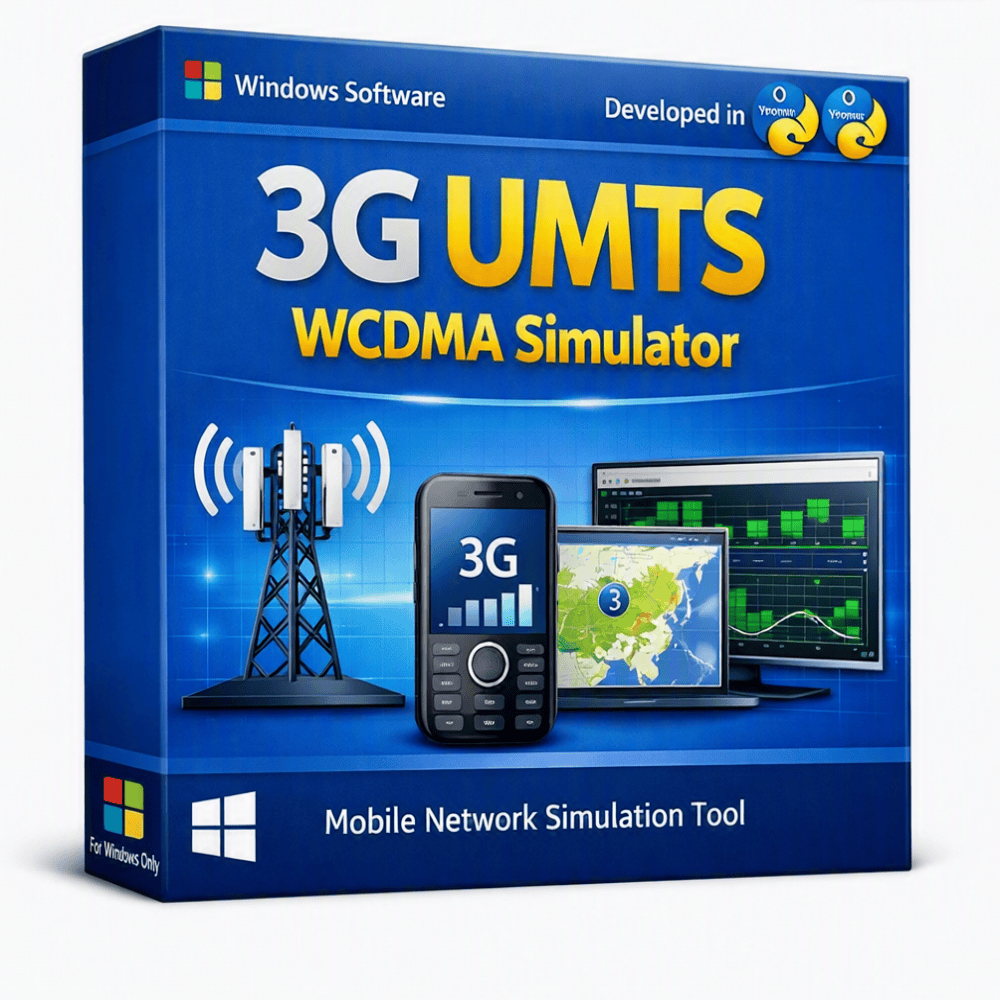
The 3G UMTS – WCDMA Simulator is a software-based simulation project designed to demonstrate the fundamental concepts of 3G Universal Mobile Telecommunications System (UMTS) and Wideband Code Division Multiple Access (WCDMA) technology. It provides a practical environment for studying cellular communication, spreading codes, signal transmission, mobile users, network connectivity, and WCDMA-based communication principles. The simulator is suitable for students, researchers, and developers working on telecommunications and wireless communication projects. It can be used for academic demonstrations, engineering projects, research, experimentation, and learning about 3G mobile communication and WCDMA network technologies.
₹3,999.00 -
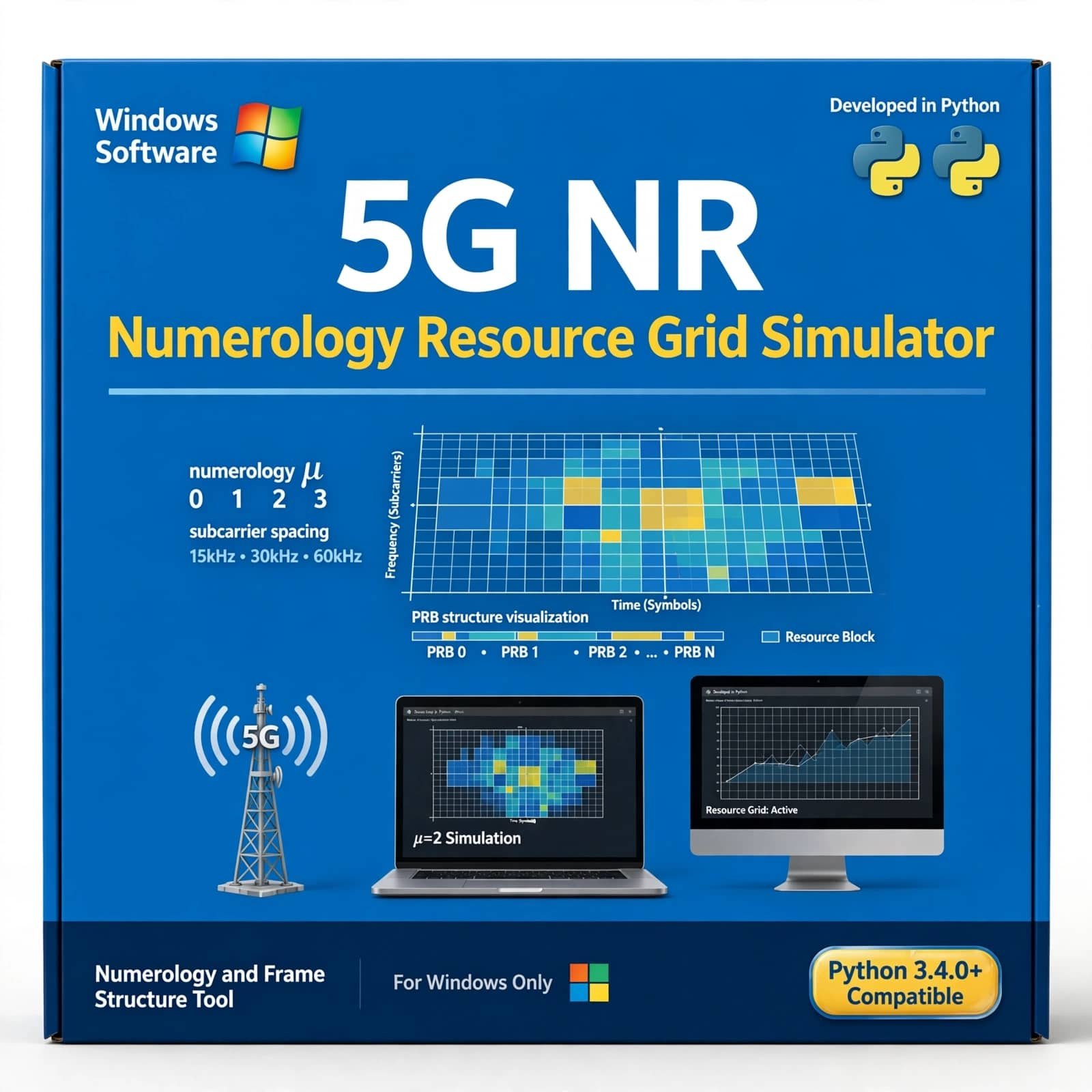
5G NR Numerology Resource Grid Simulator is an advanced simulation solution for modeling and analyzing 5G New Radio numerology and time-frequency resource grid structures. It enables users to study subcarrier spacing, OFDM symbols, slot structure, cyclic prefix, Physical Resource Blocks (PRBs), Resource Elements (REs), bandwidth configurations, and resource mapping. The simulator is ideal for 5G NR physical-layer research, numerology analysis, resource allocation studies, academic projects, waveform development, and 5G/6G wireless communication research.
Original price was: ₹99,999.00.₹9,999.00Current price is: ₹9,999.00. -
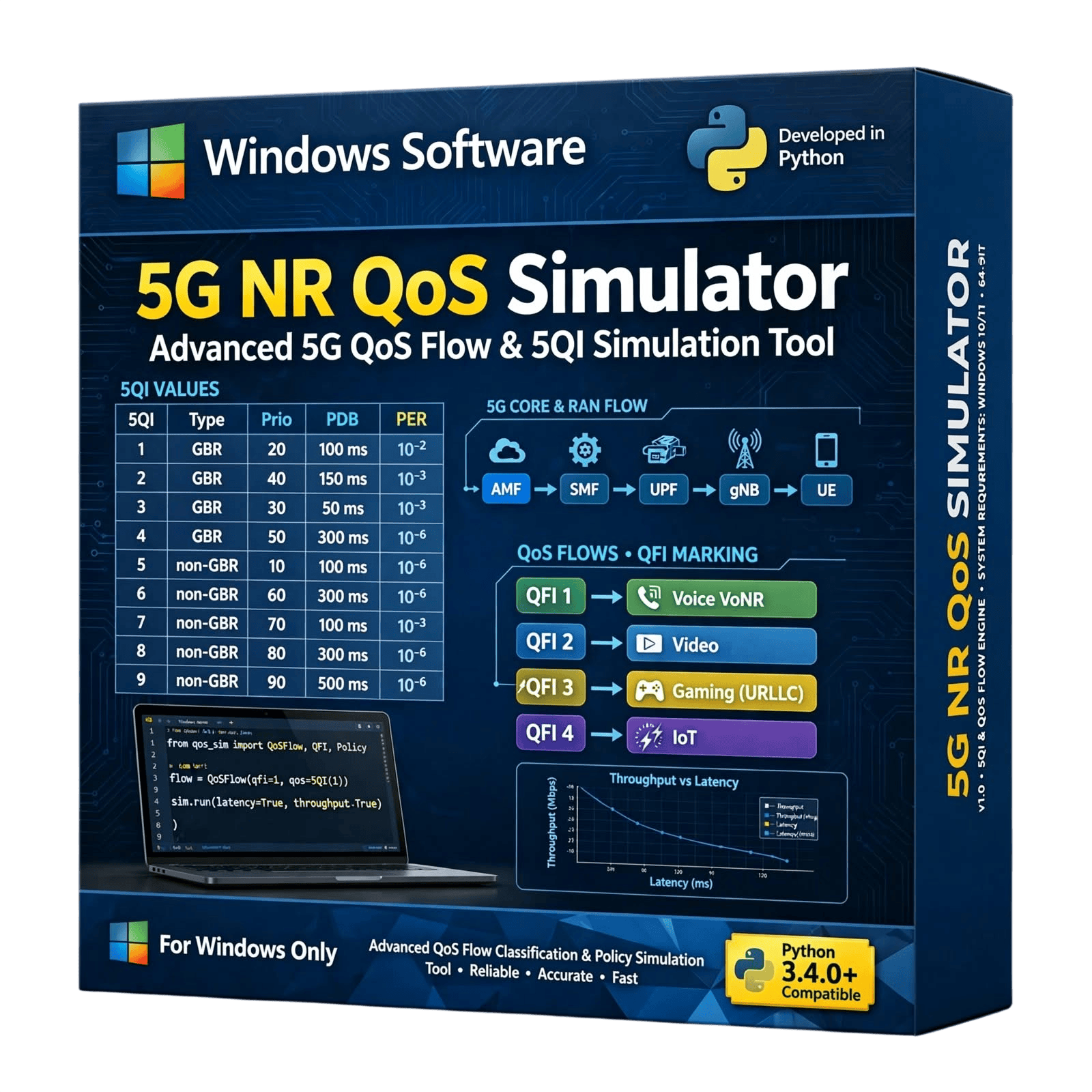
The 5G QoS Simulator is a Python-based software solution designed for researchers, engineers, students, developers, and telecommunications professionals working with 5G Quality of Service (QoS) concepts. The simulator provides a software-based environment for studying and analyzing QoS-related aspects of 5G communication networks, including service performance, traffic behavior, resource management, and network performance evaluation.
Developed using Python, the simulator is suitable for academic research, telecommunications projects, demonstrations, experimentation, algorithm development, and educational applications.
Available for sale as a software product. Contact us for pricing, licensing, features, customization, and purchase information.
Original price was: ₹74,999.00.₹9,999.00Current price is: ₹9,999.00.


Reviews
There are no reviews yet.