
New
67% Off

Stack-Machine CPU Simulator

Original price was: ₹750.00.₹250.00Current price is: ₹250.00.
In StockMaster zero-address computer architecture with the Stack-Machine CPU Simulator—an interactive visual environment built to demonstrate evaluation stack mechanics, Reverse Polish Notation (RPN), and low-level memory operations. Engineered for computer science students, compiler developers, and embedded system designers, this lightweight tool turns implicit CPU execution into a clear, visual learning experience.
Watch data flow through Push, Pop, ALU operations, and function call frames without the overhead of explicit register files. Step through bytecode step-by-step, inspect Top-of-Stack (TOS) and Next-on-Stack (NOS) states in real time, and gain immediate insight into how virtual machines like Java JVM, Forth, and WebAssembly process instructions. Whether you are building custom compilers, studying computer organization, or teaching microarchitecture, this software bridges abstract expression evaluation and physical execution.
Description
Stack-Machine CPU Simulator: Interactive Architecture & Compiler Software
Stack-Machine CPU Simulator – Understanding how stack-based computers process expressions without explicit register operands is a crucial foundation in low-level engineering. The Stack-Machine CPU Simulator offers an intuitive visual software environment designed to model zero-address computer architectures in real time.
Unlike classic register-based CPUs (such as MIPS or RISC-V), stack machines operate implicitly on data stored in LIFO (Last-In, First-Out) data structures. This simulator brings those implicit operations to life, allowing users to write stack bytecode, observe memory mutations, and track evaluation paths down to individual clock cycles.
Fundamental Architecture & Execution Model
The Stack-Machine CPU Simulator models a clean, 32-bit zero-address architecture where arithmetic, logic, and control operations derive their operands directly from the stack pointer.

- Push Phase: Data moves from instruction memory or RAM directly onto the Top of Stack (TOS).
- Implicit Decoding: The ALU pulls operands from TOS and Next-on-Stack (NOS) without needing register index addresses.
- Execution & Shrink: The operation runs, pops the inputs, and writes the resulting evaluation directly back onto the stack.
By abstracting away register management, this software provides a pure view into expression trees, postfix evaluation, and virtual machine execution engines.
Key Features & Capabilities
- Dynamic Evaluation Stack Visualizer: View live mutations of the stack array, including highlighted TOS, NOS, and stack pointer (SP) registers on every instruction cycle.
- Zero-Address Instruction Set (ISA): Run essential stack commands including PUSH, POP, ADD, SUB, MUL, DIV, AND, OR, XOR, alongside stack manipulation primitives (DUP, SWAP, DROP, ROT).
- Subroutine & Call-Stack Inspection: Dedicated call-stack window models return addresses, frame pointers, and local variable slots for nested function execution.
- RPN & Postfix Expression Compiler: Convert standard infix expressions (e.g., (A + B) * C) into Reverse Polish Notation and execute the output machine code automatically.
- Flexible Memory Management: Dedicated data memory region allows for direct memory load and store operations (LOAD, STORE) using stack-derived addresses.
- Single-Step & Variable Clock Controls: Advance cycles manually to inspect control signal states or run automated scripts at adjustable execution frequencies.
- Integrated Code Editor & Disassembler: Write clean stack assembly, compile directly into machine hex codes, or inspect raw binary dumps with built-in syntax highlighting.
Detailed Technical Specifications
| Component / Feature | System Specification |
| Architecture Type | Zero-Address Stack Machine |
| Data Bus Width | 32-bit Integer Execution Pipeline |
| Primary Data Structure | Fixed-depth hardware evaluation stack (configurable 64 to 1024 slots) |
| Core Instructions | Arithmetic (ADD, SUB, MUL, DIV), Logic (AND, OR, XOR, NOT) |
| Stack Primitives | DUP (Duplicate), SWAP (Exchange TOS/NOS), DROP (Discard), ROT (Rotate) |
| Control Flow | Unconditional Jumps (JMP), Conditional Branching (JZ, JNZ), CALL, RET |
| File Formats Supported | Assembly (.stack, .asm), Bytecode (.bin), Hex Dumps (.hex) |

Target Audience & Core Use Cases
Computer Science Students & Educators
Visualize how compilers compile high-level programming logic down to execution trees. Learn how evaluation stacks evaluate complex algebraic expressions without requiring dynamic register allocation algorithms.
Virtual Machine & Language Engineers
Analyze how stack-based bytecodes operate under the hood. Perfect for developers building language runtimes, domain-specific languages (DSLs), or custom interpreters modeled after the Java Virtual Machine (JVM), WebAssembly (Wasm), or Forth runtime systems.
Embedded Systems & Reverse Engineers
Study how lightweight hardware implementations reduce silicon footprint by omitting multi-port register files, making stack architectures ideal for minimal-gate microcontroller designs.
Frequently Asked Questions
How does a stack machine differ from a register-based processor like MIPS or RISC-V? Register-based processors require explicit source and destination registers for every operation (e.g., ADD $t0, $t1, $t2). Stack processors retrieve operands implicitly from the top of the stack (e.g., ADD), making instruction encodings smaller and simplifying compiler backend design.
Can I simulate call stacks and recursive functions? Yes. The software features a dual-stack configuration: an Evaluation Stack for immediate operand manipulation and a separate Return Stack (Call Stack) to handle stack frames, function arguments, and return addresses during nested or recursive calls.
Is this simulator compatible with WebAssembly (Wasm) concept testing? Absolutely. Because WebAssembly operates as a stack-based virtual machine, this simulator serves as an ideal introductory tool for learning how Wasm instructions manipulate data types, locals, and control blocks.
Related products
-
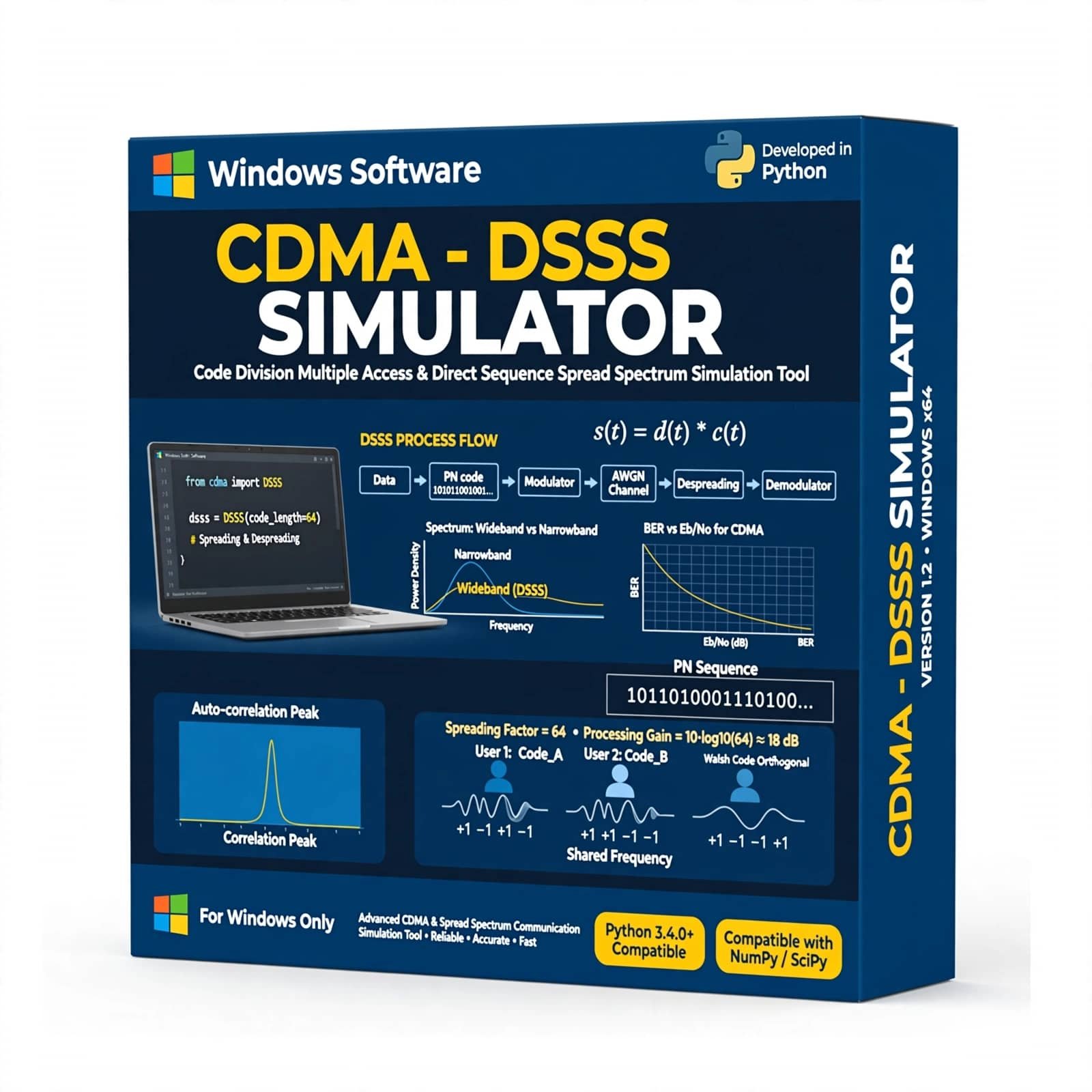
The CDMA – DSSS Simulator with Python is a software-based communication simulation tool designed to demonstrate and analyze Code Division Multiple Access (CDMA) and Direct Sequence Spread Spectrum (DSSS) techniques. Developed using Python, the simulator provides a practical environment for studying spreading codes, signal spreading and despreading, data transmission, multiple-access communication, interference, and signal recovery. It is ideal for digital communication and wireless communication laboratories, engineering education, student projects, technical training, and communication-system research.
Original price was: ₹750.00.₹250.00Current price is: ₹250.00. -
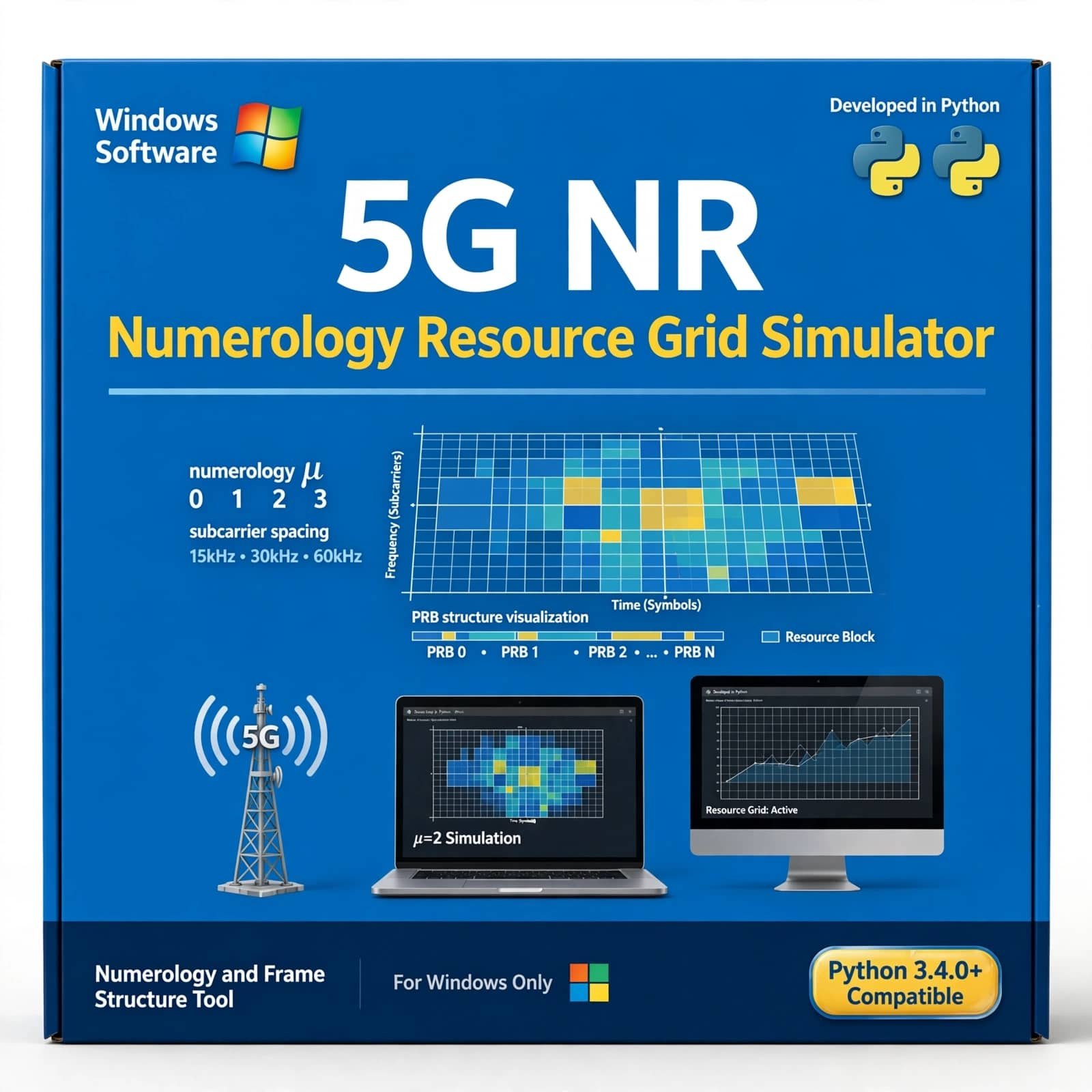
5G NR Numerology Resource Grid Simulator is an advanced simulation solution for modeling and analyzing 5G New Radio numerology and time-frequency resource grid structures. It enables users to study subcarrier spacing, OFDM symbols, slot structure, cyclic prefix, Physical Resource Blocks (PRBs), Resource Elements (REs), bandwidth configurations, and resource mapping. The simulator is ideal for 5G NR physical-layer research, numerology analysis, resource allocation studies, academic projects, waveform development, and 5G/6G wireless communication research.
Original price was: ₹750.00.₹250.00Current price is: ₹250.00. -
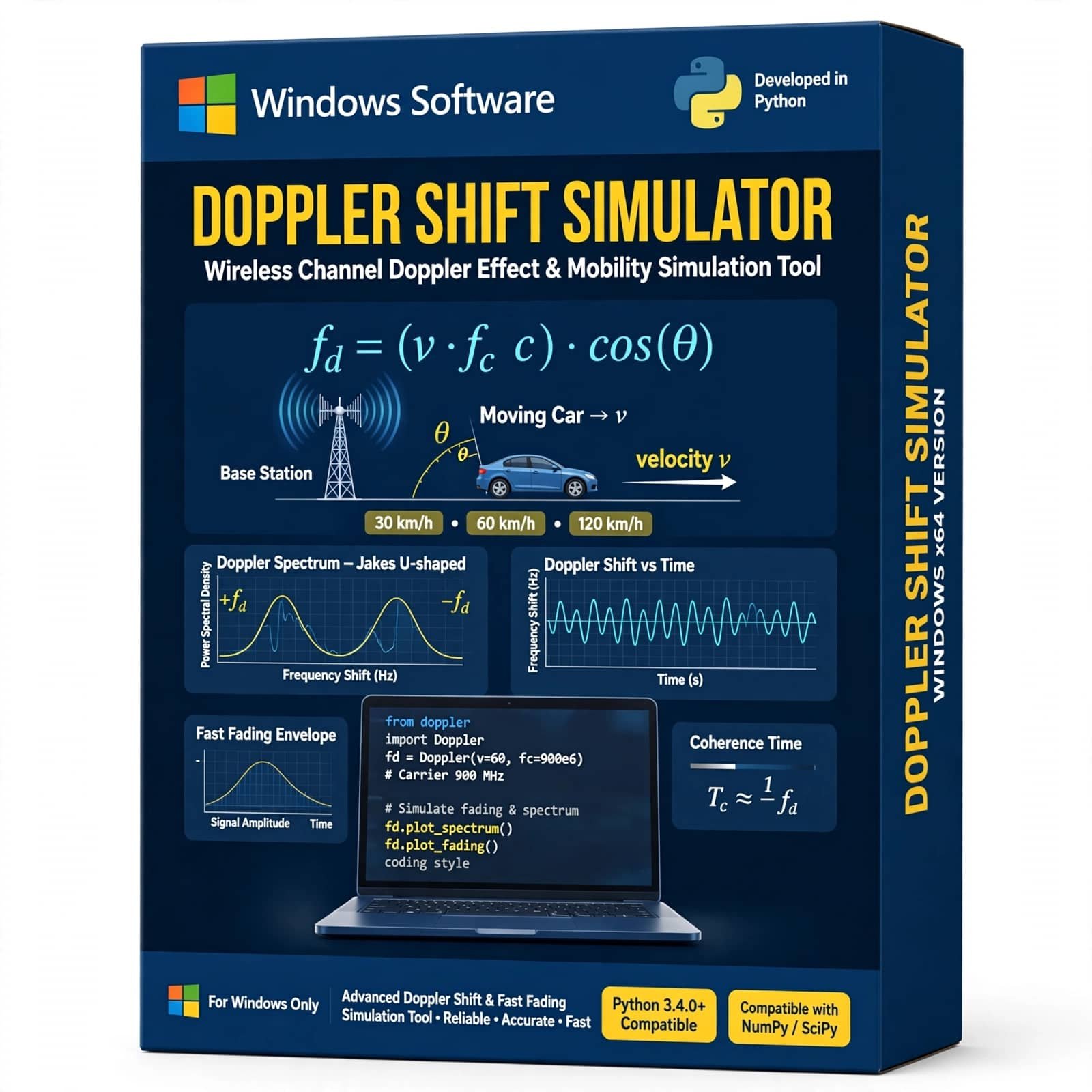
Doppler Shift Simulator Using Python is a practical wireless communication simulation tool for studying the Doppler effect and frequency shift caused by relative motion between a transmitter and receiver. It helps students, researchers, and communication engineers analyze Doppler frequency, carrier frequency, velocity, and mobile channel effects through Python-based simulation.
Original price was: ₹750.00.₹250.00Current price is: ₹250.00. -
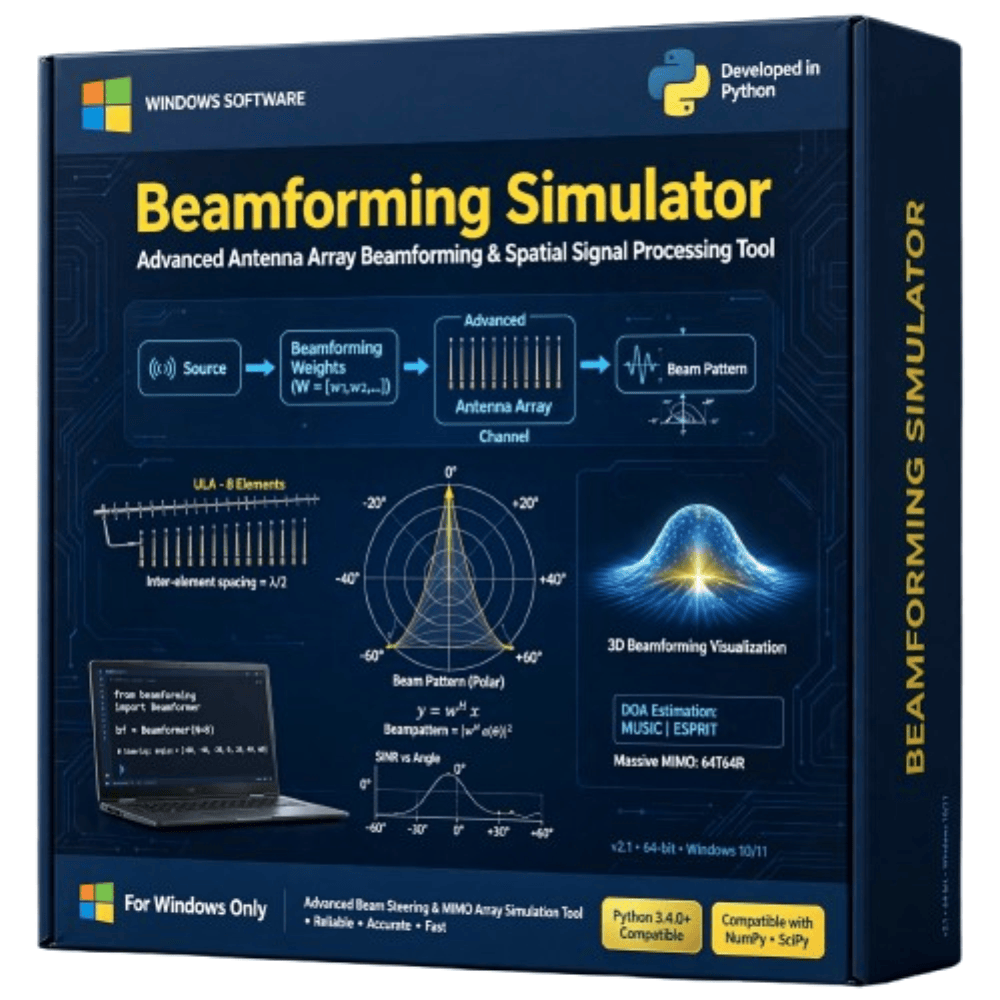
The Beamforming Simulator is a practical wireless communication simulation project designed to demonstrate how antenna arrays can control and direct radio-frequency signals toward desired users or directions. The simulator helps visualize beam patterns, signal direction, antenna-array behavior, and beam steering under different parameters. It is suitable for studying beamforming, antenna arrays, MIMO, 5G communication, wireless networks, and signal processing. This project is ideal for engineering students, researchers, and learners working on wireless communication and advanced antenna technologies.
Original price was: ₹750.00.₹250.00Current price is: ₹250.00. -
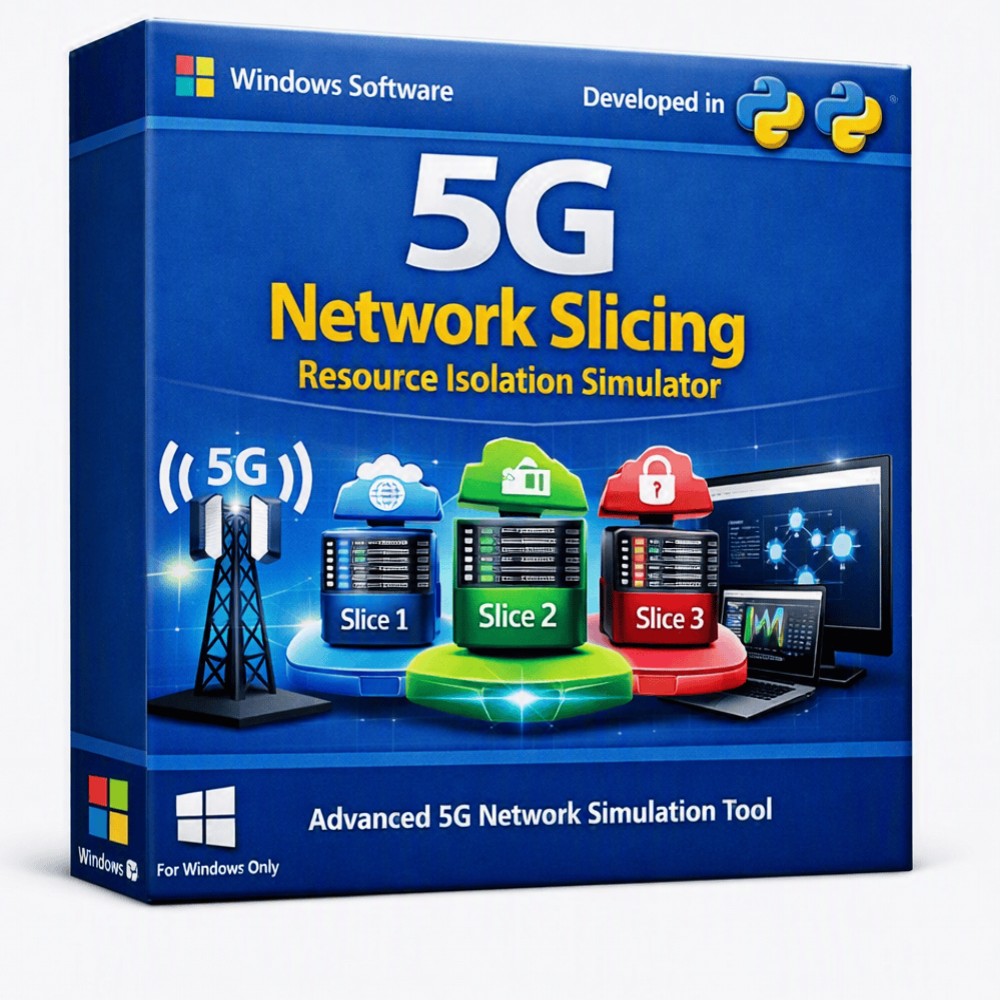
A Python-based 5G Network Slicing and Resource Isolation Simulator designed to model and analyze how multiple logical network slices can share physical 5G infrastructure while maintaining resource isolation. The simulator enables users to study CPU, memory, bandwidth, network capacity, traffic allocation, and resource management across different 5G network slices.
Ideal for 5G research, telecom engineering, academic projects, network optimization, resource allocation studies, and university laboratories.
Original price was: ₹750.00.₹250.00Current price is: ₹250.00. -
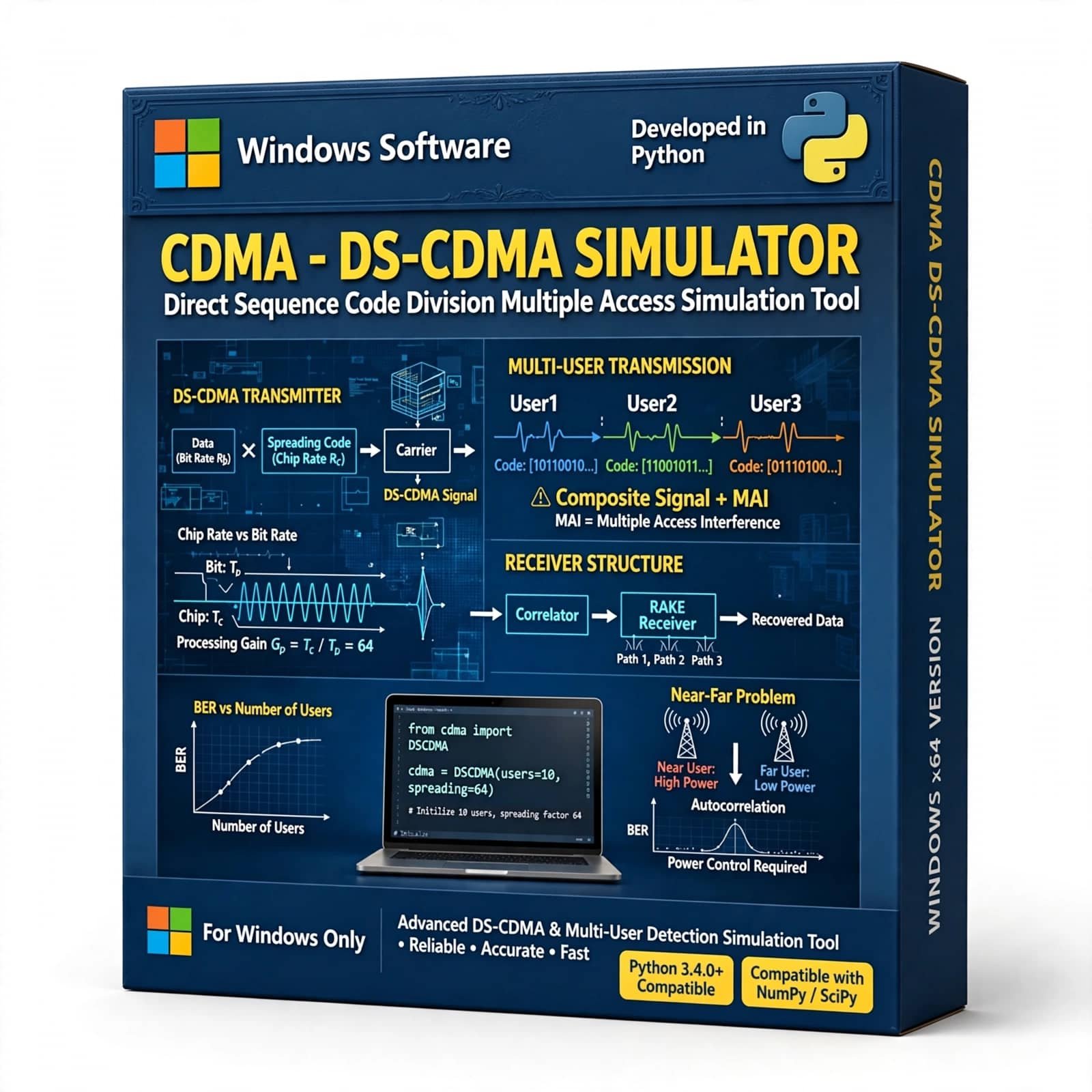
The CDMA DS-CDMA Simulator with Python is a software-based communication simulation tool designed to demonstrate and analyze Direct Sequence Code Division Multiple Access (DS-CDMA) technology. Developed using Python, the simulator provides a practical environment for studying spreading codes, chip sequences, multiple-user communication, signal spreading and despreading, interference, correlation, and transmitted-data recovery. It is suitable for digital communication laboratories, wireless communication education, telecommunications training, student projects, and communication-system research.
Original price was: ₹750.00.₹250.00Current price is: ₹250.00.

Reviews
There are no reviews yet.