
New
87% Off

Wireless Modem

Original price was: ₹750.00.₹100.00Current price is: ₹100.00.
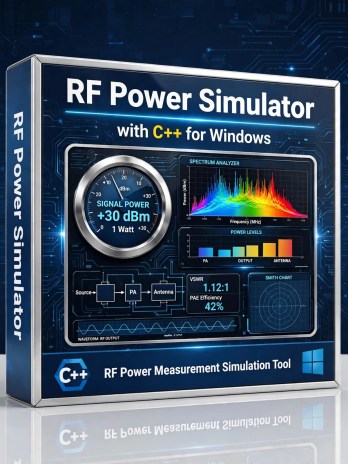
In StockWireless Modem with C++ is a digital communication solution supporting BPSK and QPSK modulation with configurable bits, Eb/No, bit rate, carrier frequency, amplitude, noise, and random seed. It provides graphical results including I/Q constellation, received symbols, and BER vs Eb/No, along with result parameters for detailed communication performance analysis. Ideal for C++ development, wireless communication research, digital modem testing, signal analysis, academic projects, and embedded communication applications.
Description
Wireless Modem
The Wireless Modem with C++ is an advanced digital communication and wireless modem solution designed for developers, engineers, students, researchers, and communication-system professionals working with BPSK and QPSK modulation, bit error rate (BER) analysis, Eb/No evaluation, constellation diagrams, and received signal analysis. Developed for flexible C++-based implementation, this solution provides an intuitive way to configure communication parameters, process digital signals, and visualize important wireless communication results.
The modem allows users to configure key simulation and communication parameters, including modulation type, input bits, Eb/No, bit rate, carrier frequency, signal amplitude, noise, and random seed. These configurable inputs make it suitable for testing different communication conditions and studying how wireless signals behave when transmission parameters or noise levels change.
BPSK and QPSK Modulation Support
The Wireless Modem supports two widely used digital modulation techniques: Binary Phase Shift Keying (BPSK) and Quadrature Phase Shift Keying (QPSK). Users can select the required modulation scheme and analyze the resulting transmitted and received signal behavior.
BPSK is commonly used for studying basic digital communication concepts and provides a straightforward method for analyzing the relationship between signal quality and bit errors. QPSK extends the modulation concept by transmitting more bits per symbol, making it useful for evaluating higher spectral-efficiency communication scenarios.
With selectable BPSK and QPSK modulation, the system can be used to compare modulation performance under different Eb/No and noise conditions.
Flexible Communication Input Parameters
The Wireless Modem provides multiple configurable input parameters to give users greater control over their communication experiments and simulations. These include:
- Modulation: BPSK or QPSK
- Bits: Input binary data used for transmission
- Eb/No: Energy-per-bit to noise-density ratio
- Bit Rate: Configurable transmission data rate
- Carrier Frequency: Carrier signal frequency in Hz
- Amplitude: Signal amplitude used for transmission
- Noise: Noise parameter for evaluating communication performance
- Random Seed: Provides controlled randomization for repeatable simulation results
These parameters allow users to create different test conditions and evaluate the impact of signal and noise characteristics on wireless communication performance.
I/Q Constellation Visualization
One of the important graphical outputs of the Wireless Modem is the I/Q constellation diagram. The constellation provides a visual representation of signal symbols on the in-phase (I) and quadrature (Q) axes.
The I/Q constellation can help users understand how transmitted symbols are affected by noise and other communication conditions. Under better signal conditions, symbols are generally concentrated around their expected constellation locations, while increased noise can cause greater symbol dispersion.
This graphical result is especially useful for students and engineers learning or analyzing digital modulation techniques such as BPSK and QPSK.
Received Symbols Analysis
The Wireless Modem also provides received symbols as a graphical result. This allows users to examine the symbols after they have passed through the simulated communication channel and noise conditions.
Analyzing received symbols helps demonstrate the difference between the original transmitted data and the received signal. It can be particularly useful when evaluating how changes in Eb/No, noise, amplitude, and modulation type affect communication reliability.
BER vs Eb/No Graph
The BER vs Eb/No graph is another key graphical output of the Wireless Modem. Bit Error Rate (BER) is an important measurement used to evaluate the reliability of a digital communication system.
By observing BER against Eb/No, users can study how communication performance changes as the energy per bit relative to noise increases or decreases. This makes the tool valuable for understanding wireless communication performance and comparing BPSK and QPSK behavior under different simulated conditions.
The BER analysis can support educational demonstrations, communication-system research, algorithm testing, and embedded development projects.
Results Parameters
In addition to graphical results, the Wireless Modem provides result parameters that summarize important outcomes from the communication process. These parameters can be used to evaluate signal transmission, received data, and communication performance.
Having both numerical results and graphical representations gives users a more complete understanding of the wireless modem simulation. Developers can use these results when validating communication algorithms or integrating the modem functionality into larger C++ applications.

C++ Based Wireless Communication Development
C++ provides an efficient programming environment for developing communication and embedded-system applications. The Wireless Modem is therefore suitable for projects where developers require a combination of wireless modem functionality, digital modulation, signal processing, and BER analysis within a C++ environment.
The solution can be useful for developing prototypes, testing communication algorithms, studying modulation techniques, and creating educational demonstrations. Its configurable inputs and graphical outputs make it easier to experiment with different communication scenarios without relying on a fixed set of parameters.
Applications
The Wireless Modem with C++ can be used for:
- Digital communication simulation
- BPSK and QPSK modulation analysis
- BER performance analysis
- Eb/No testing
- Wireless communication research
- Signal and noise analysis
- I/Q constellation visualization
- Embedded C++ development
- Communication algorithm testing
- Engineering and academic projects
- Digital modem development
- IoT and wireless communication research
- Student learning and laboratory applications
Key Features
- Supports BPSK and QPSK modulation
- Configurable input bits
- Adjustable Eb/No
- Configurable bit rate
- Carrier frequency input in Hz
- Adjustable signal amplitude
- Configurable noise
- Random seed input for controlled testing
- I/Q constellation graphical output
- Received symbols graphical analysis
- BER vs Eb/No graphical analysis
- Numerical result parameters
- Suitable for C++ development
- Useful for digital communication research, testing, and education
The Wireless Modem with C++ provides a flexible environment for analyzing digital wireless communication using configurable modulation, signal, and noise parameters. With support for BPSK and QPSK, along with I/Q constellation, received-symbol, and BER vs Eb/No graphical results, it is a practical solution for understanding, developing, and evaluating digital communication systems.
Related products
-
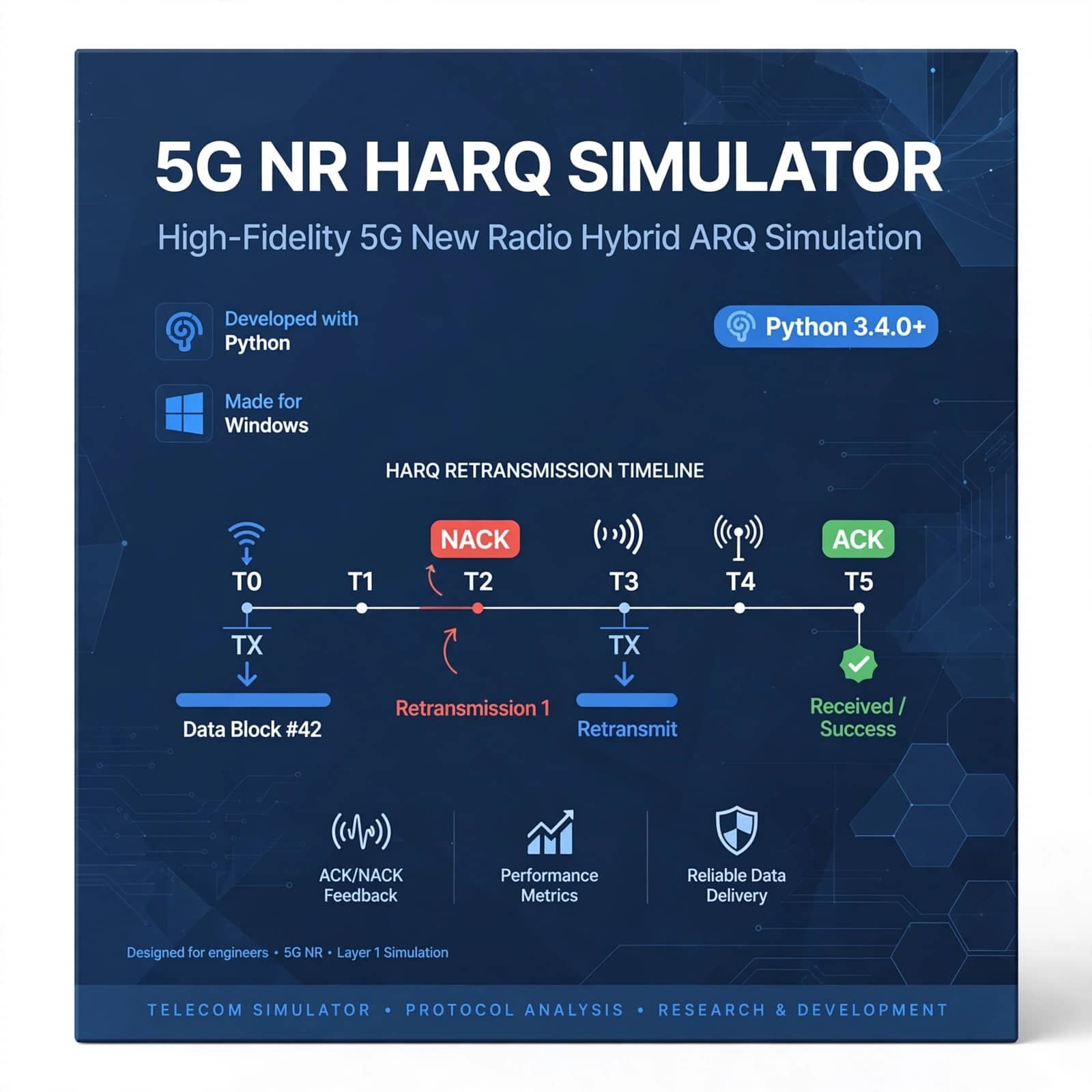
5G NR HARQ Simulator is an advanced simulation solution for modeling and analyzing Hybrid Automatic Repeat Request (HARQ) mechanisms in 5G New Radio networks. It enables users to study HARQ processes, ACK/NACK feedback, retransmissions, link adaptation, channel errors, and communication reliability under configurable network conditions. The simulator supports analysis of throughput, BLER, latency, retransmission rate, packet errors, spectral efficiency, and other key performance metrics, making it suitable for 5G NR research, algorithm development, academic projects, and wireless communication system optimization.
Original price was: ₹750.00.₹250.00Current price is: ₹250.00. -
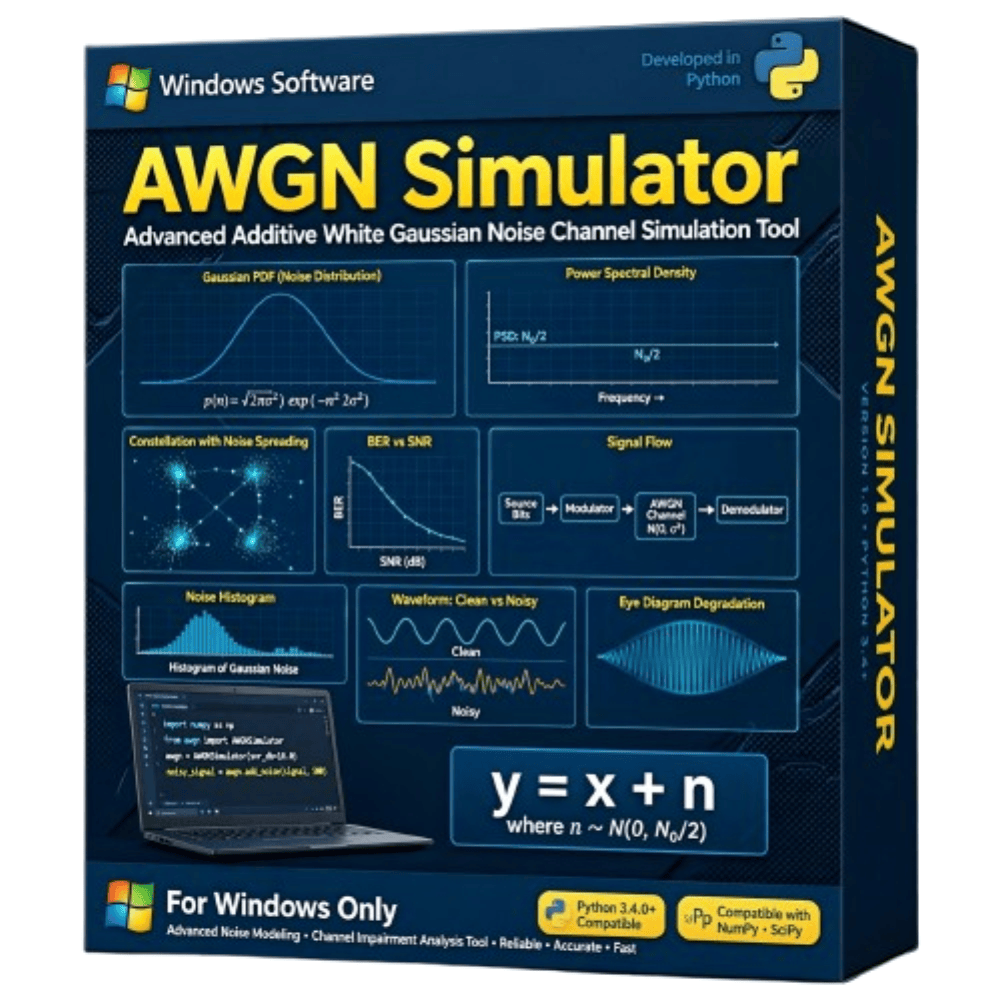
An AWGN Simulator i.e. Additive White Gaussian Noise Simulator developed using Python is a software-based tool designed to demonstrate and analyze the effect of Gaussian noise on digital communication signals. The simulator generates a clean input signal, adds controlled amounts of AWGN, and displays both the original and noisy signals for comparison. Users can vary parameters such as noise power, signal-to-noise ratio (SNR), and signal characteristics to observe how communication quality changes under different noise conditions. Python libraries such as NumPy, SciPy, and Matplotlib can be used for signal generation, noise modeling, numerical processing, and graphical visualization but this is purely from tkinter only. The simulator is useful for understanding fundamental concepts of wireless and digital communication systems.
Original price was: ₹750.00.₹250.00Current price is: ₹250.00. -
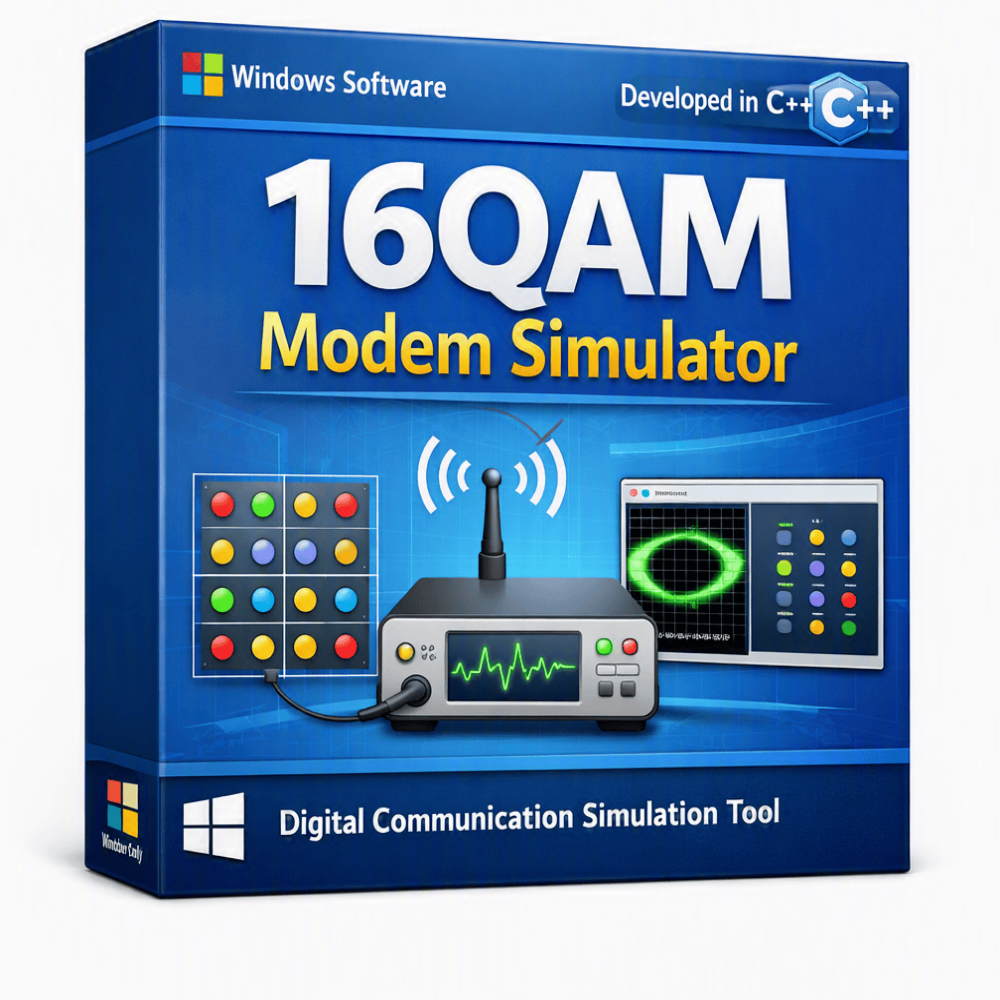
The 16QAM Modem Simulator is a C++-based software application designed to simulate and analyze a 16-QAM digital communication system. It demonstrates the complete modulation and demodulation process, including symbol mapping, signal generation, transmission, and data recovery. The simulator helps users understand key concepts of digital communication and evaluate system performance under different channel conditions.
Original price was: ₹750.00.₹250.00Current price is: ₹250.00. -
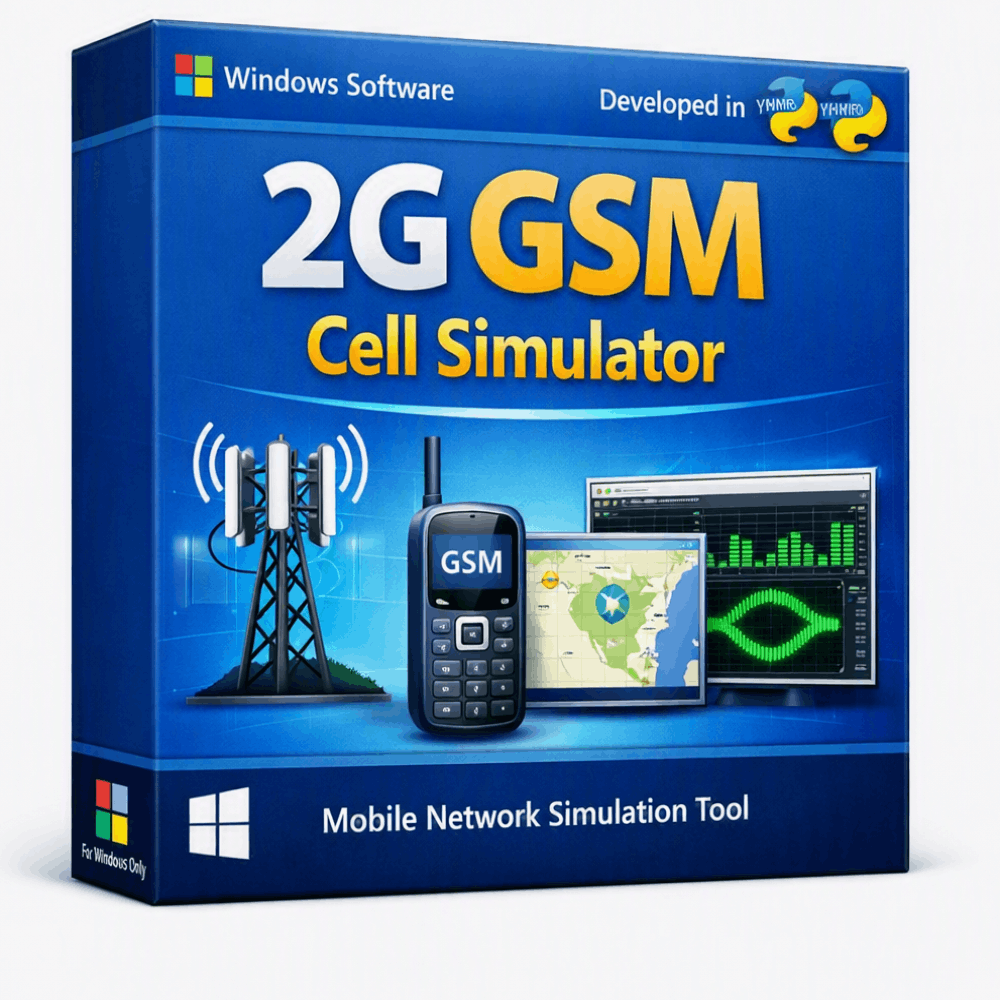
The 2G GSM Cell Simulator is a Python-based software project designed to simulate fundamental GSM cellular-network concepts. It provides a practical environment for understanding mobile stations, GSM cells, base stations, cellular coverage, mobility, communication channels, and basic network behavior. The project includes Python source code that can be studied, customized, and extended for academic projects, demonstrations, research, and learning. It is ideal for Electronics & Communication Engineering, Telecommunications, Computer Science, and related students looking to explore 2G GSM technology and cellular network simulation through a software-based implementation.
Original price was: ₹750.00.₹250.00Current price is: ₹250.00. -
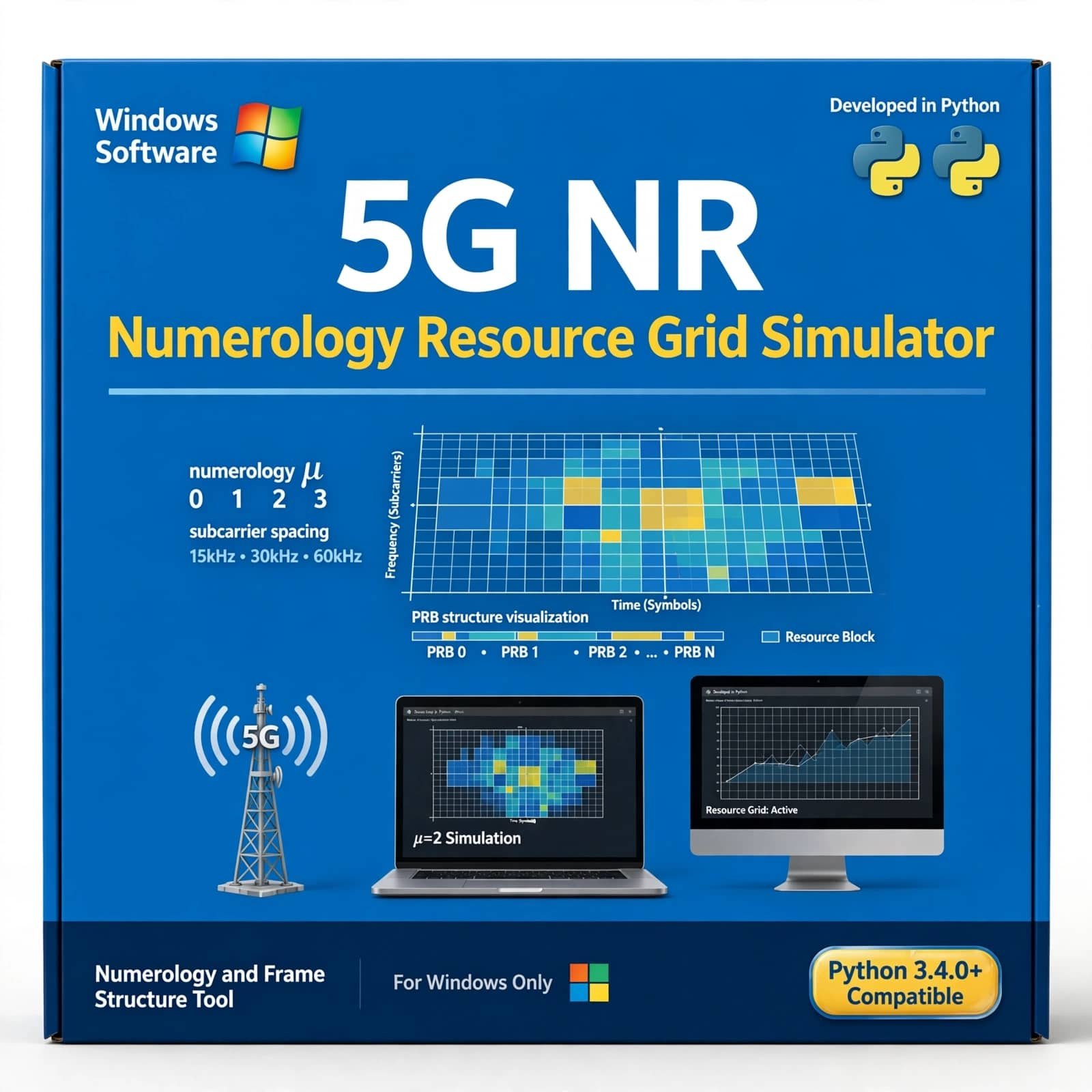
5G NR Numerology Resource Grid Simulator is an advanced simulation solution for modeling and analyzing 5G New Radio numerology and time-frequency resource grid structures. It enables users to study subcarrier spacing, OFDM symbols, slot structure, cyclic prefix, Physical Resource Blocks (PRBs), Resource Elements (REs), bandwidth configurations, and resource mapping. The simulator is ideal for 5G NR physical-layer research, numerology analysis, resource allocation studies, academic projects, waveform development, and 5G/6G wireless communication research.
Original price was: ₹750.00.₹250.00Current price is: ₹250.00. -
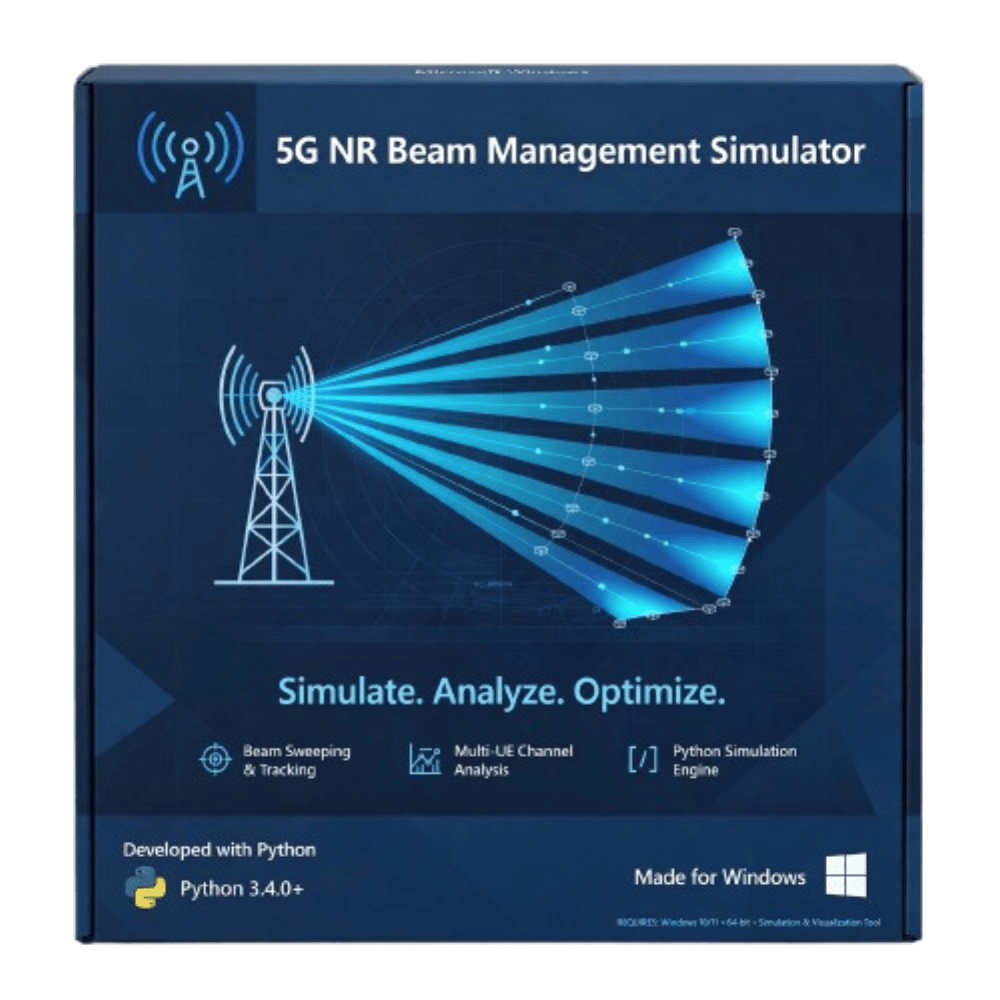
5G NR Beam Management Simulator is an advanced simulation solution designed to model, analyze, and optimize beam management procedures in 5G New Radio (NR) networks. It enables engineers and researchers to evaluate beam sweeping, beam measurement, beam selection, beam reporting, and beam recovery under diverse network and channel conditions. The simulator supports performance analysis of directional communication, helping users assess beamforming strategies, mobility scenarios, link reliability, and system-level performance before real-world deployment.
Original price was: ₹750.00.₹250.00Current price is: ₹250.00.


Reviews
There are no reviews yet.