
87% Off

dBm Calculator
Original price was: ₹750.00.₹100.00Current price is: ₹100.00.
In StockdBm Calculator Using C++ is a practical software tool for calculating and converting radio frequency and electrical power values in dBm. It helps students, researchers, and communication engineers understand power measurements, signal strength, dBm-to-watt conversions, and RF calculations through a simple C++ implementation.
Description
dBm Calculator
The dBm Calculator Using C++ is a practical and educational software project designed to calculate and convert power levels expressed in dBm (decibels relative to one milliwatt). It provides students, researchers, electronics engineers, communication engineers, and C++ developers with a simple way to understand and perform common power-level calculations used in RF, wireless communication, electronics, and telecommunications.
dBm is one of the most widely used units for representing power levels in radio frequency and communication systems. It provides a convenient logarithmic representation of power relative to 1 milliwatt, making it particularly useful when working with signals that can vary across a very large range of power levels.
The dBm Calculator C++ project provides a software-based environment for learning how these calculations work and for applying dBm conversion formulas through a C++ program.
Understand dBm Power Measurement
In wireless communication and RF engineering, signal power is frequently represented in dBm. Unlike linear power units such as watts or milliwatts, dBm uses a logarithmic scale. This makes it easier to represent both very weak and very strong signals using manageable numerical values.
The basic relationship between power in milliwatts and dBm can be represented as:
dBm = 10 × log₁₀(Power in mW)
Similarly, power in milliwatts can be calculated from a dBm value using:
Power in mW = 10^(dBm/10)
The dBm Calculator Using C++ can implement these mathematical relationships to provide quick and convenient power conversions.
C++ Based dBm Calculator
The project is developed using C++, making it suitable for students who want to combine programming knowledge with electronics and communication engineering concepts.
By implementing dBm calculations in C++, users can learn how mathematical formulas can be translated into functional software. The project can also demonstrate the use of numerical calculations, input handling, mathematical functions, conditional logic, and output formatting in a practical engineering application.
This makes the project useful for both C++ programming education and RF power measurement studies.
Key Features and Calculations
Depending on the implementation, the dBm Calculator can support several common power-related calculations, including:
- dBm power calculation
- Milliwatt to dBm conversion
- dBm to milliwatt conversion
- Watt to dBm conversion
- dBm to watt conversion
- RF signal power calculations
- Numerical power-level analysis
- C++ based mathematical calculations
- Input and output of RF power values
- Logarithmic power calculations
These functions can help users understand the relationship between linear power measurements and logarithmic dBm values.
Learn RF and Wireless Communication Concepts
dBm calculations are widely used in wireless communication systems, RF engineering, antenna systems, cellular networks, Wi-Fi systems, satellite communication, radio systems, and electronic test equipment.
For example, wireless engineers may use dBm to describe received signal strength, transmitter output power, receiver sensitivity, or signal levels at different points within a communication system.
By working with a dBm calculator, students can develop a better understanding of how power levels are represented and interpreted in practical communication systems.
Understand Signal Strength
Signal strength is an important parameter in wireless communication. Received signal levels are often expressed in dBm, with different negative and positive values representing different power levels.
The dBm Calculator Using C++ can be used to convert numerical power values into dBm and vice versa. This helps learners understand how linear power measurements correspond to logarithmic signal levels.

For students studying wireless communication, mobile communication, RF systems, antenna engineering, or digital communication, this provides a useful practical exercise.
Applications in Electronics and Communication Engineering
The dBm Calculator Using C++ can be used in engineering education and technical training environments. It is suitable for colleges, universities, communication laboratories, electronics laboratories, and academic project development.
The project can support learning activities involving:
- RF engineering
- Wireless communication
- Mobile communication
- Digital communication
- Electronics
- Telecommunications
- Antenna systems
- Signal measurement
- Communication system analysis
- C++ programming
Students can use the project as a laboratory exercise or as a starting point for developing more advanced RF calculation tools.
Benefits of the dBm Calculator Project
A software-based calculator provides a simple and repeatable way to perform power conversions while helping learners understand the underlying mathematical relationships.
The dBm Calculator Using C++ can help users:
- Understand the concept of dBm.
- Learn logarithmic power calculations.
- Convert between dBm and milliwatts.
- Convert between dBm and watts.
- Analyze RF signal power levels.
- Apply mathematical formulas through C++.
- Develop practical C++ programming skills.
- Understand power measurements used in wireless systems.
- Support electronics and communication laboratory experiments.
- Develop academic and final-year engineering projects.
Useful for Academic Projects
The project is particularly suitable for students working on C++ programming projects, RF engineering projects, wireless communication projects, electronics projects, and telecommunications projects.
Learners can further enhance the basic calculator by adding additional RF engineering calculations such as dBi, dBd, dBW, voltage-to-power conversion, impedance-based calculations, antenna gain calculations, free-space path loss, link budget calculations, or received power estimation.
These extensions can turn the basic dBm calculator into a more comprehensive RF power and wireless communication calculation tool.
Simple Approach to RF Power Calculations
Understanding dBm does not require access to expensive RF measurement equipment. A software-based calculator allows learners to experiment with different values and immediately observe the corresponding power levels.
This makes the dBm Calculator Using C++ an effective educational tool for introducing students to the numerical techniques used in practical RF and communication engineering.
By combining programming with engineering calculations, the project encourages students to develop both computational and technical skills.
Conclusion
The dBm Calculator Using C++ provides a practical and educational solution for performing RF power conversions and understanding dBm-based measurements. It helps users explore the relationship between linear power units and logarithmic dBm values while gaining practical experience with C++ programming.
Whether used for a C++ programming laboratory, RF engineering experiment, wireless communication project, electronics project, telecommunications assignment, or final-year engineering project, the dBm Calculator Using C++ provides a useful foundation for learning power measurement and calculation concepts used throughout modern communication and electronic systems.
Related products
-
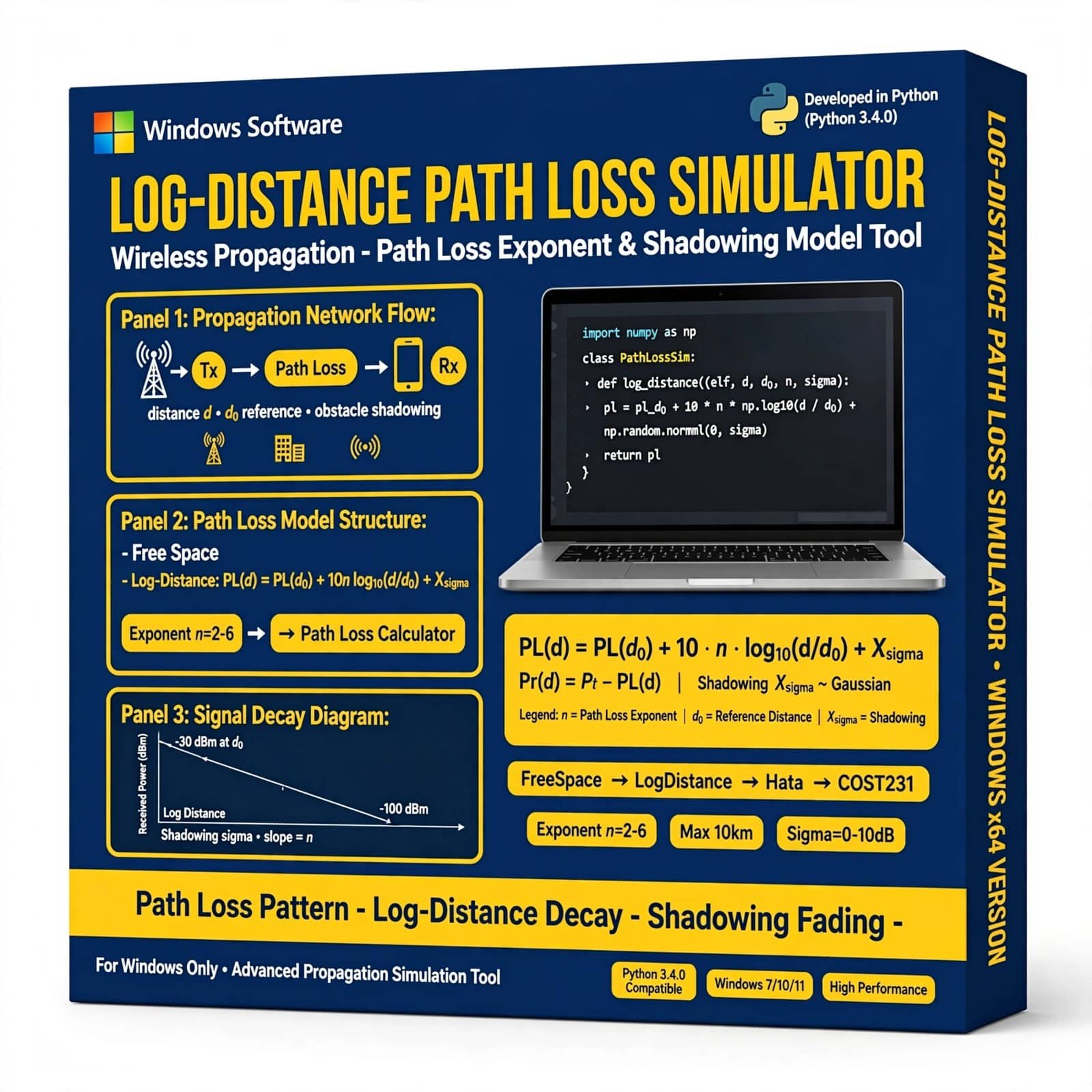
The Log-Distance Path Loss Simulator is a powerful wireless communication simulation tool designed to analyze and visualize signal attenuation over distance. It helps students, researchers, engineers, and RF professionals understand path loss, received signal strength, wireless propagation, and network performance using the log-distance path loss model. Ideal for academic projects, RF research, wireless network analysis, and communication system simulations.
₹6,999.00 -
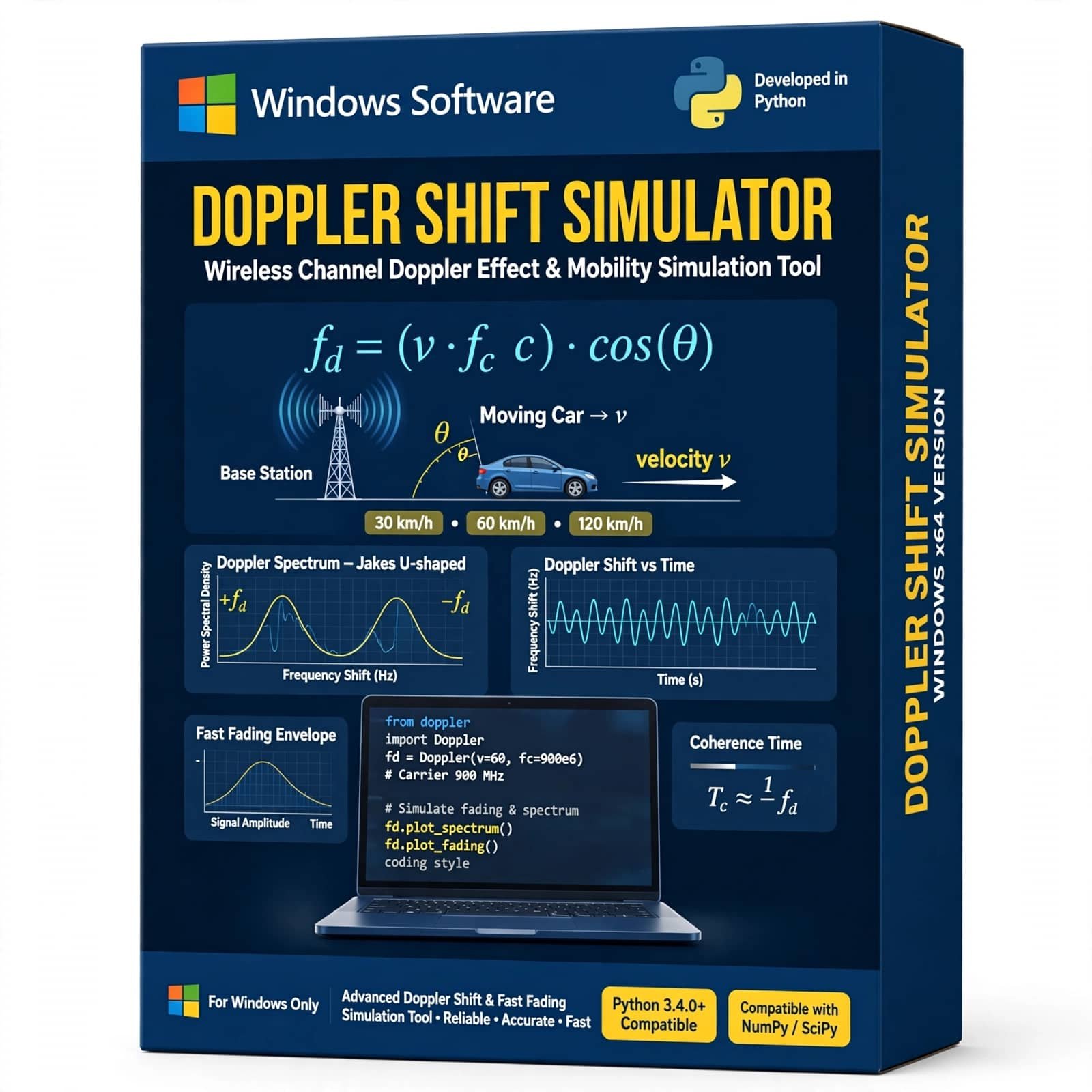
Doppler Shift Simulator Using Python is a practical wireless communication simulation tool for studying the Doppler effect and frequency shift caused by relative motion between a transmitter and receiver. It helps students, researchers, and communication engineers analyze Doppler frequency, carrier frequency, velocity, and mobile channel effects through Python-based simulation.
Original price was: ₹6,999.00.₹2,499.00Current price is: ₹2,499.00. -
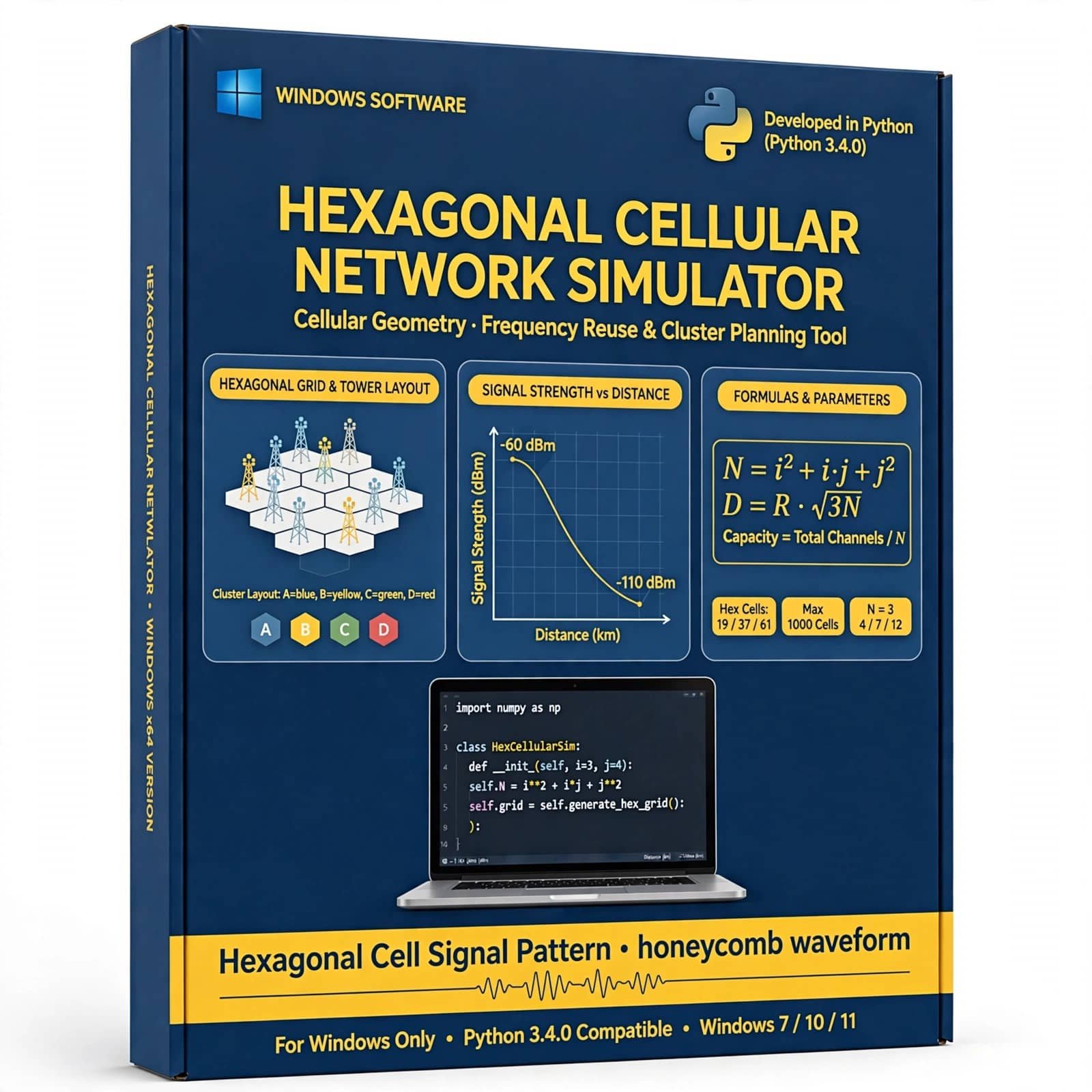
Hexagonal Cellular Network Simulator with Python is a wireless communication simulation tool designed to model cellular networks using hexagonal cell structures. It helps students, researchers, and telecom engineers study cell planning, frequency reuse, co-channel interference, coverage, channel allocation, and cellular network performance using Python.
₹6,999.00 -
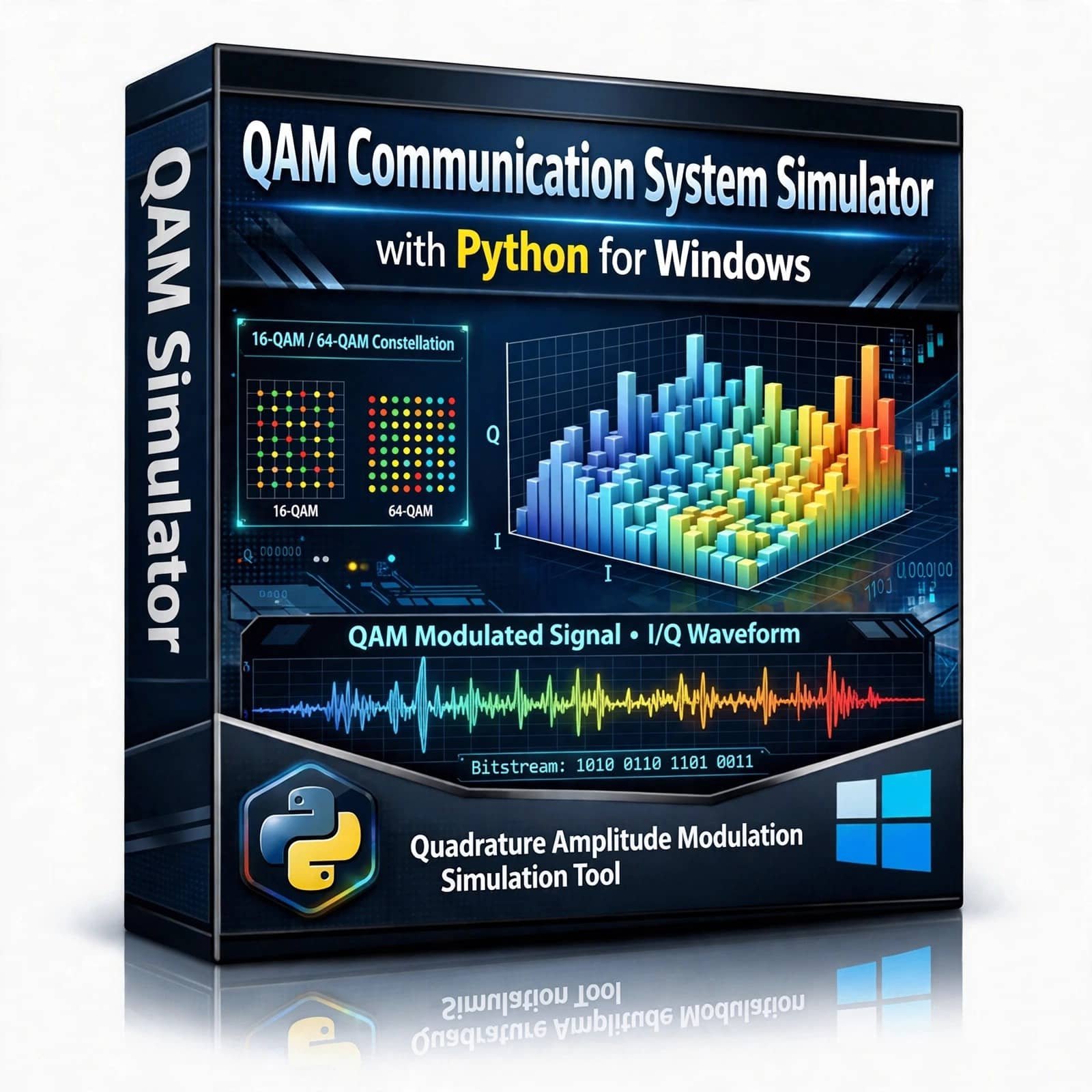
QAM Communication System Simulator – Explore and simulate Quadrature Amplitude Modulation (QAM) with this Python-based Communication System Simulator. Designed for students, researchers, and communication engineering enthusiasts, this project provides an interactive way to understand QAM modulation, signal transmission, noise effects, constellation diagrams, demodulation, and communication system performance using Python.
₹1,999.00 -
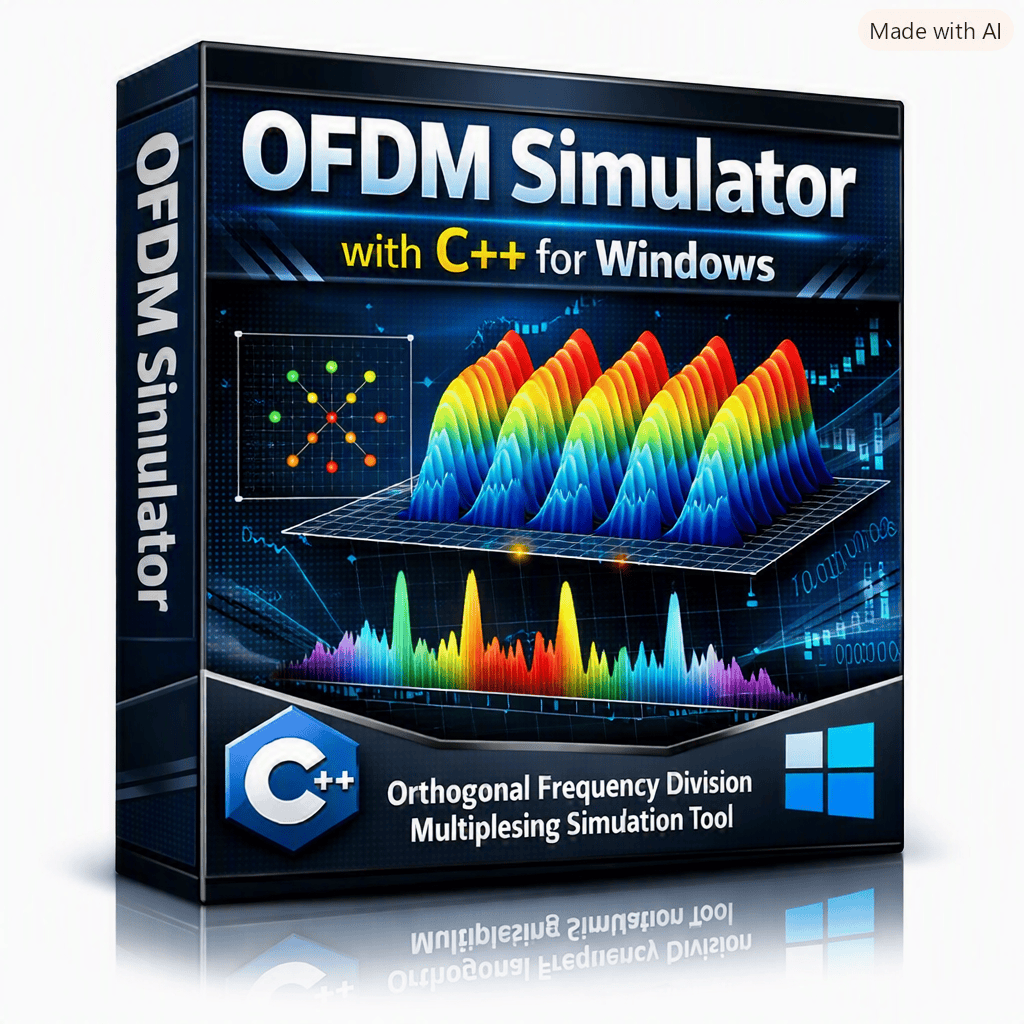
OFDM Simulator – C++ Educational Software is an interactive learning and simulation tool for understanding Orthogonal Frequency Division Multiplexing (OFDM) and digital communication concepts. Developed using C++, it allows users to configure FFT/IFFT size, active subcarriers, cyclic prefix length, modulation, SNR, and number of OFDM symbols while visualizing the resulting time-domain waveform, spectrum, and constellation. The simulator also provides measurable results such as PAPR, BER, Eb/N0, simulated bits, and cyclic-prefix overhead.
₹1,999.00 -
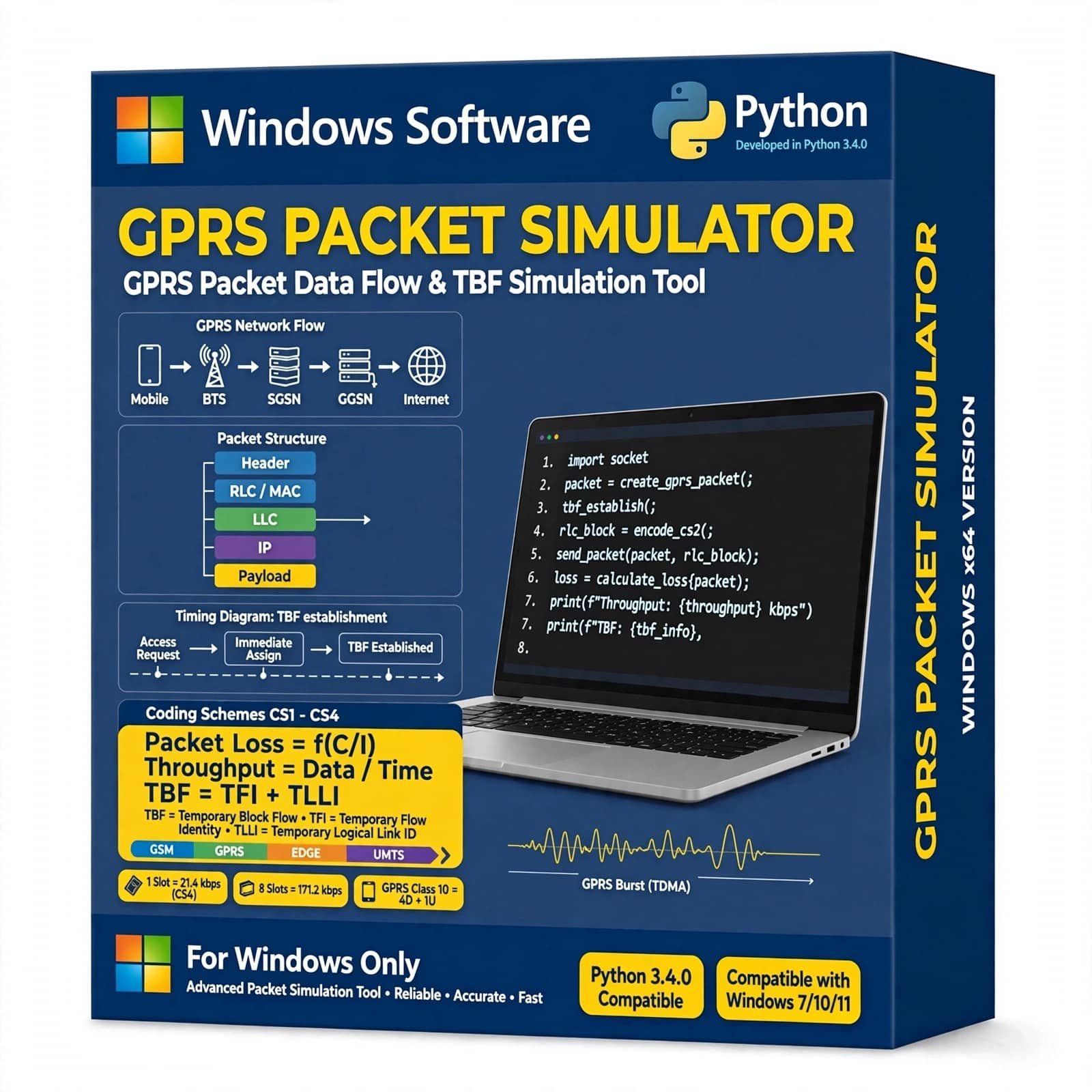
GPRS Packet Simulator is a powerful software solution for simulating GPRS data packets and testing GSM/GPRS communication systems. It helps developers, engineers, and testing teams generate, analyze, and validate packet-based communication in a controlled environment without requiring extensive physical network infrastructure. Ideal for GPRS testing, protocol development, IoT applications, and telecom system validation.
₹3,999.00


Reviews
There are no reviews yet.