

AWGN Simulator


₹1,999.00
In StockAn AWGN Simulator i.e. Additive White Gaussian Noise Simulator developed using Python is a software-based tool designed to demonstrate and analyze the effect of Gaussian noise on digital communication signals. The simulator generates a clean input signal, adds controlled amounts of AWGN, and displays both the original and noisy signals for comparison. Users can vary parameters such as noise power, signal-to-noise ratio (SNR), and signal characteristics to observe how communication quality changes under different noise conditions. Python libraries such as NumPy, SciPy, and Matplotlib can be used for signal generation, noise modeling, numerical processing, and graphical visualization but this is purely from tkinter only. The simulator is useful for understanding fundamental concepts of wireless and digital communication systems.
Description
AWGN Simulator
The AWGN Simulator Using Python is a practical digital communication and signal processing project designed to simulate the effects of Additive White Gaussian Noise (AWGN) on communication signals. Developed using Python, this project helps students, researchers, and communication enthusiasts understand how noise affects transmitted signals and how communication system performance changes under different Signal-to-Noise Ratio (SNR) conditions.
This AWGN simulation project in Python provides an easy way to generate a clean signal, add controlled Gaussian noise, visualize the noisy signal, and analyze the impact of different noise levels. It is suitable for academic projects, engineering demonstrations, communication-system experiments, and Python-based signal processing applications.
Key Features
- AWGN channel simulation using Python
- Generation of input and communication signals
- Gaussian noise generation and noise addition
- Adjustable Signal-to-Noise Ratio (SNR)
- Visualization of original and noisy signals
- Comparison of signal quality at different noise levels
- Python-based signal processing implementation
- Easy-to-understand and customizable source code
- Suitable for digital communication and signal processing studies
- Can be extended for BER and modulation analysis

How the AWGN Simulator Works
The simulator generates a desired input signal and passes it through a simulated AWGN channel. Random Gaussian noise is generated according to the selected noise level and added to the original signal. The resulting noisy signal represents the signal received through a communication channel affected by additive white Gaussian noise.
By changing the SNR value, users can observe how increasing or decreasing noise affects signal quality. At a higher SNR, the received signal remains closer to the original signal. At a lower SNR, the effect of noise becomes more prominent, making the original signal increasingly difficult to identify.
The project does not uses Python libraries such as NumPy for numerical calculations and signal generation and Matplotlib for graphical visualization. The implementation of tkinter can also be extended with additional signal-processing libraries and communication algorithms.
Applications
The Python AWGN Simulator can be used for:
- Digital communication system experiments
- Wireless communication simulations
- Signal processing projects
- Engineering college projects
- B.Tech, BE, M.Tech, and diploma projects
- Communication-system research
- Python programming demonstrations
- SNR and noise analysis
- Modulation and demodulation experiments
- BER performance analysis
Educational Benefits
This project provides a practical understanding of important communication concepts such as AWGN, noise power, signal power, SNR, signal degradation, and communication-channel modeling. Instead of learning these concepts only through mathematical theory, users can modify simulation parameters and visually observe how noise influences the transmitted signal.
The project can also be used as a starting point for developing more advanced communication simulations involving BPSK, QPSK, ASK, FSK, BER analysis, fading channels, modulation, demodulation, and error-control techniques.
Why Choose This AWGN Simulator?
The AWGN Simulator is designed to be simple, understandable, and customizable. Its Python implementation makes it suitable for users who want to learn communication-system simulation while also gaining practical experience with Python-based signal processing.
Whether you are looking for a Python communication project, AWGN simulation project, Gaussian noise simulator, or digital communication project, this project provides a useful foundation for studying the behavior and performance of signals in noisy communication environments.
Conclusion
The AWGN Simulator Using Python is an educational and practical simulation project for analyzing the effect of Additive White Gaussian Noise on communication signals. With signal generation, adjustable SNR, noise modeling, visualization, and scope for BER and modulation analysis, it can be used for academic demonstrations, engineering projects, and further communication-system development.
Related products
-

EDGE Simulator Using Python is a practical mobile communication simulation tool designed to demonstrate and analyze Enhanced Data rates for GSM Evolution (EDGE) technology. It helps students, researchers, and communication engineers study GSM/EDGE data transmission, modulation, channel conditions, bit error rate, data rates, and wireless communication performance using Python-based simulation.
₹3,499.00 -
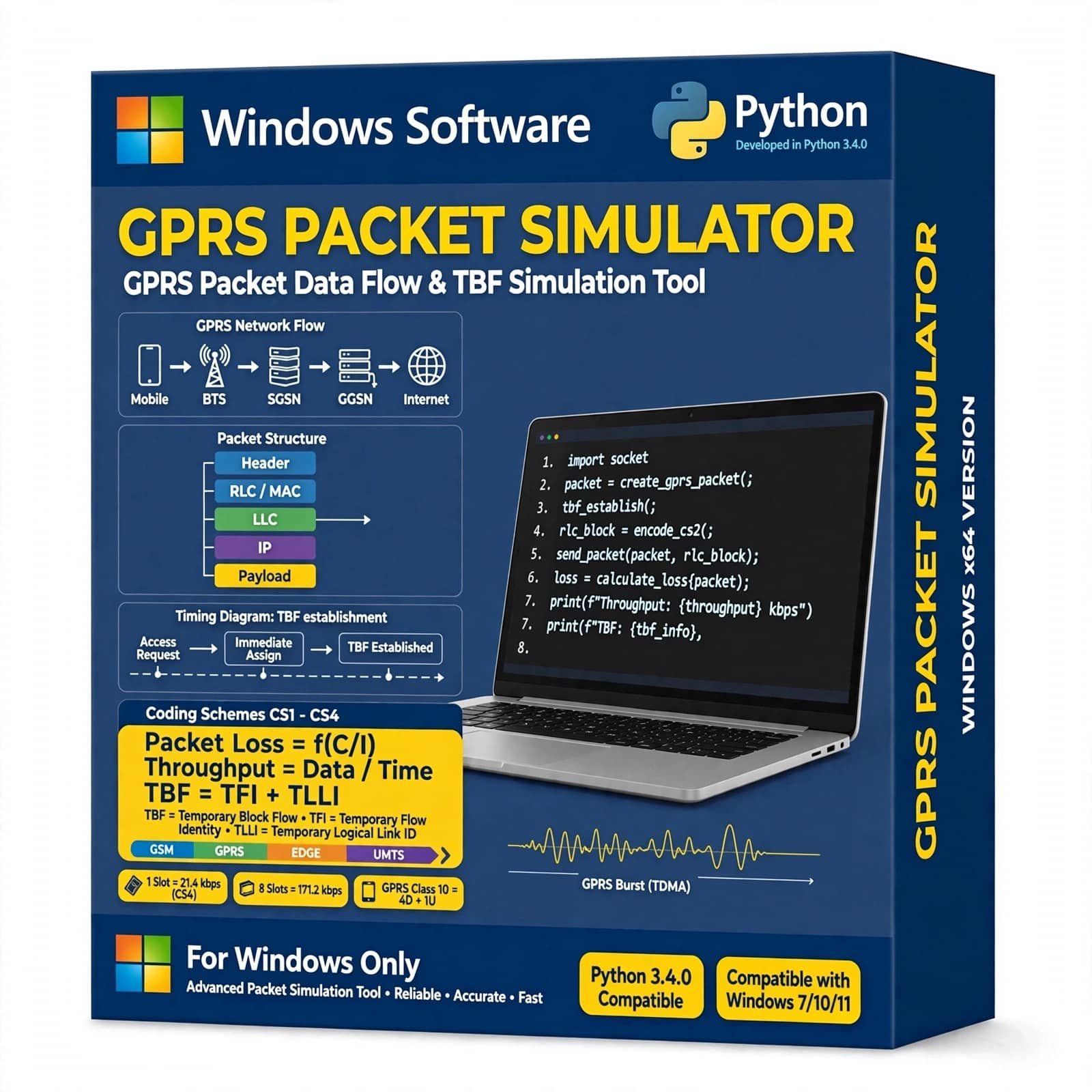
GPRS Packet Simulator is a powerful software solution for simulating GPRS data packets and testing GSM/GPRS communication systems. It helps developers, engineers, and testing teams generate, analyze, and validate packet-based communication in a controlled environment without requiring extensive physical network infrastructure. Ideal for GPRS testing, protocol development, IoT applications, and telecom system validation.
₹3,999.00 -
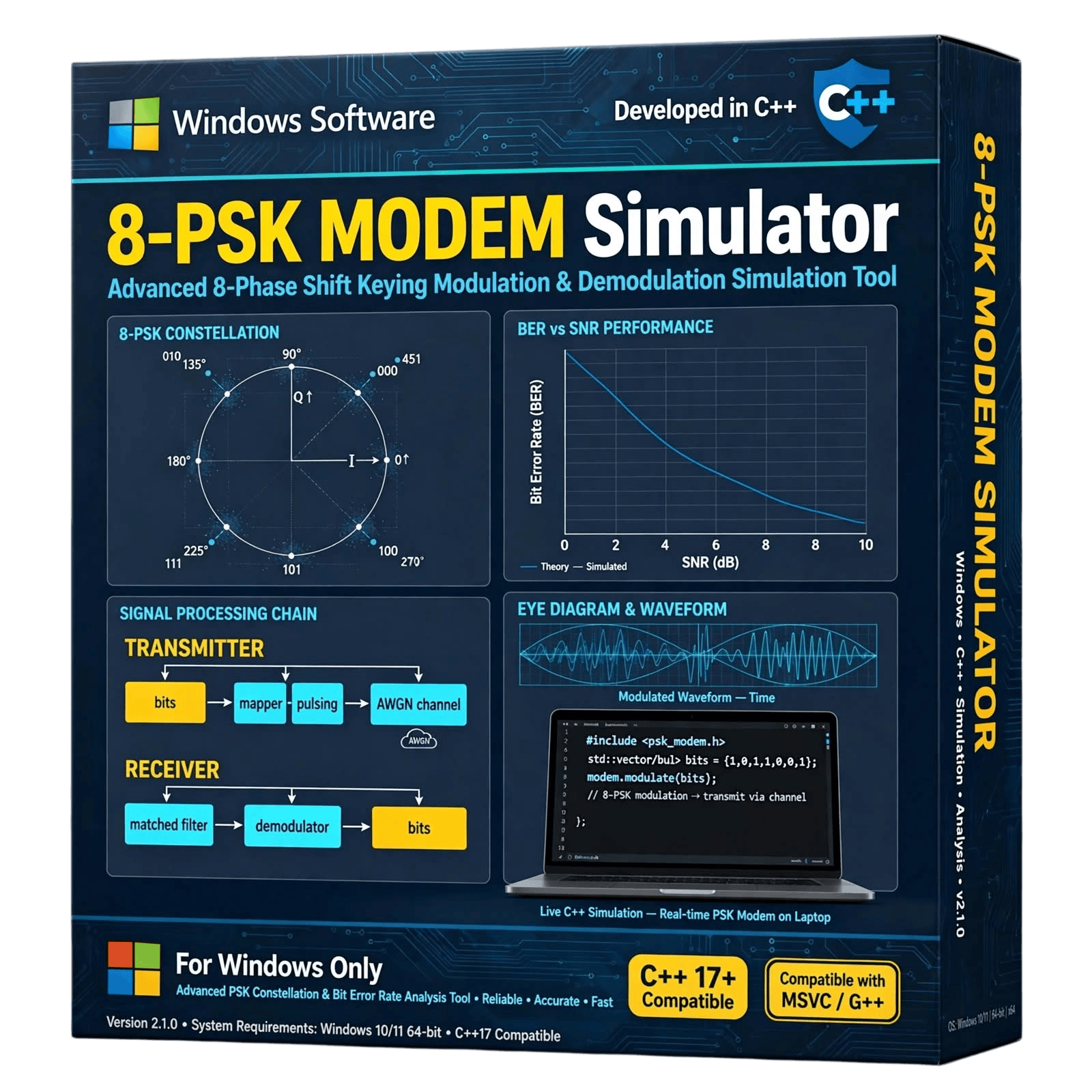
The 8-PSK Modem Simulator is a C++-based software solution designed for students, researchers, communication engineers, developers, and academic institutions working with digital communication and modulation techniques. The simulator provides a practical environment for studying 8-Phase Shift Keying (8-PSK) modulation and demodulation concepts.
Developed using C++, the simulator can be used for digital communication research, academic projects, laboratory demonstrations, signal-processing studies, experimentation, and educational purposes.
Available for sale as a software product. Contact us for pricing, licensing, technical specifications, customization, and purchase information.
₹1,999.00 -
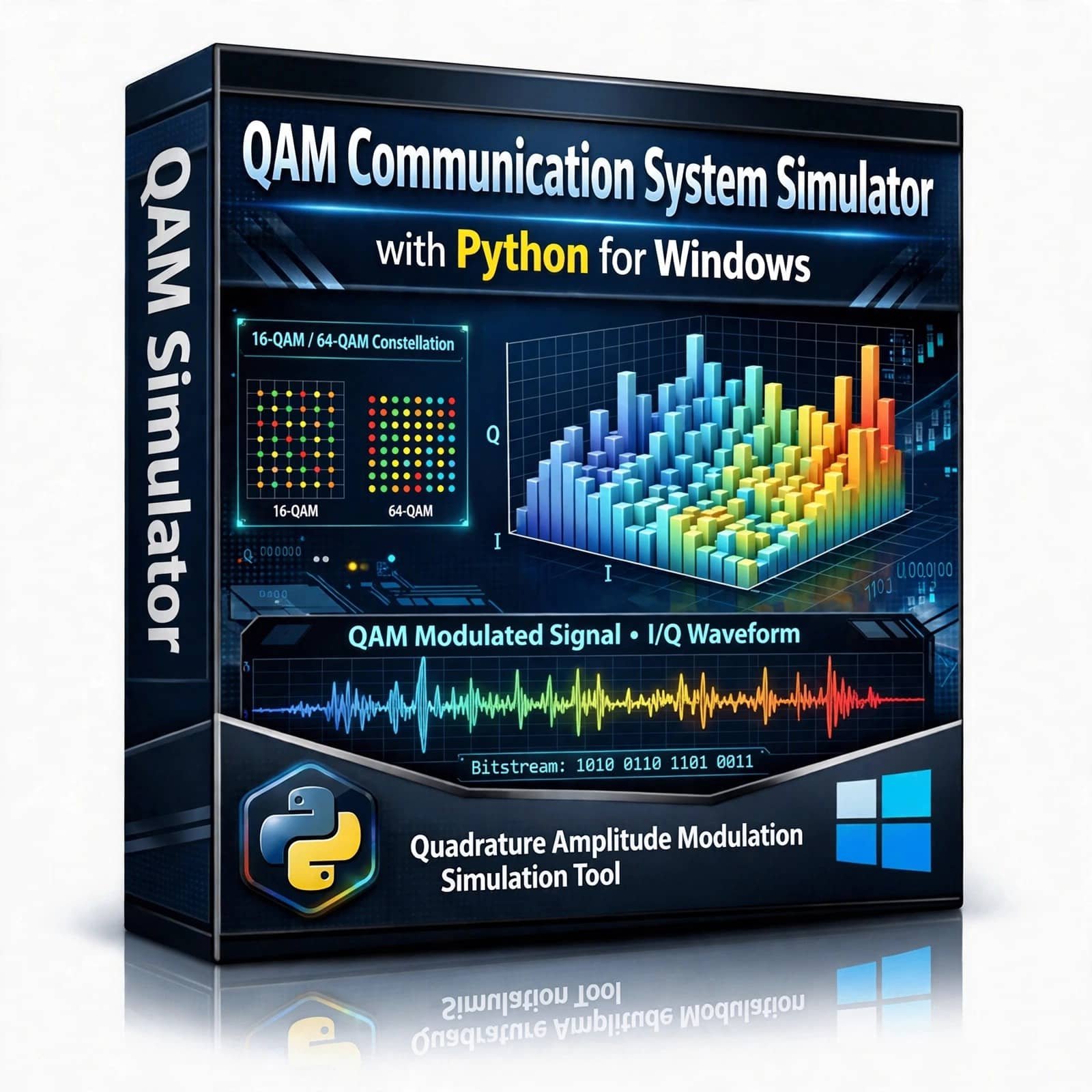
QAM Communication System Simulator – Explore and simulate Quadrature Amplitude Modulation (QAM) with this Python-based Communication System Simulator. Designed for students, researchers, and communication engineering enthusiasts, this project provides an interactive way to understand QAM modulation, signal transmission, noise effects, constellation diagrams, demodulation, and communication system performance using Python.
₹1,999.00 -
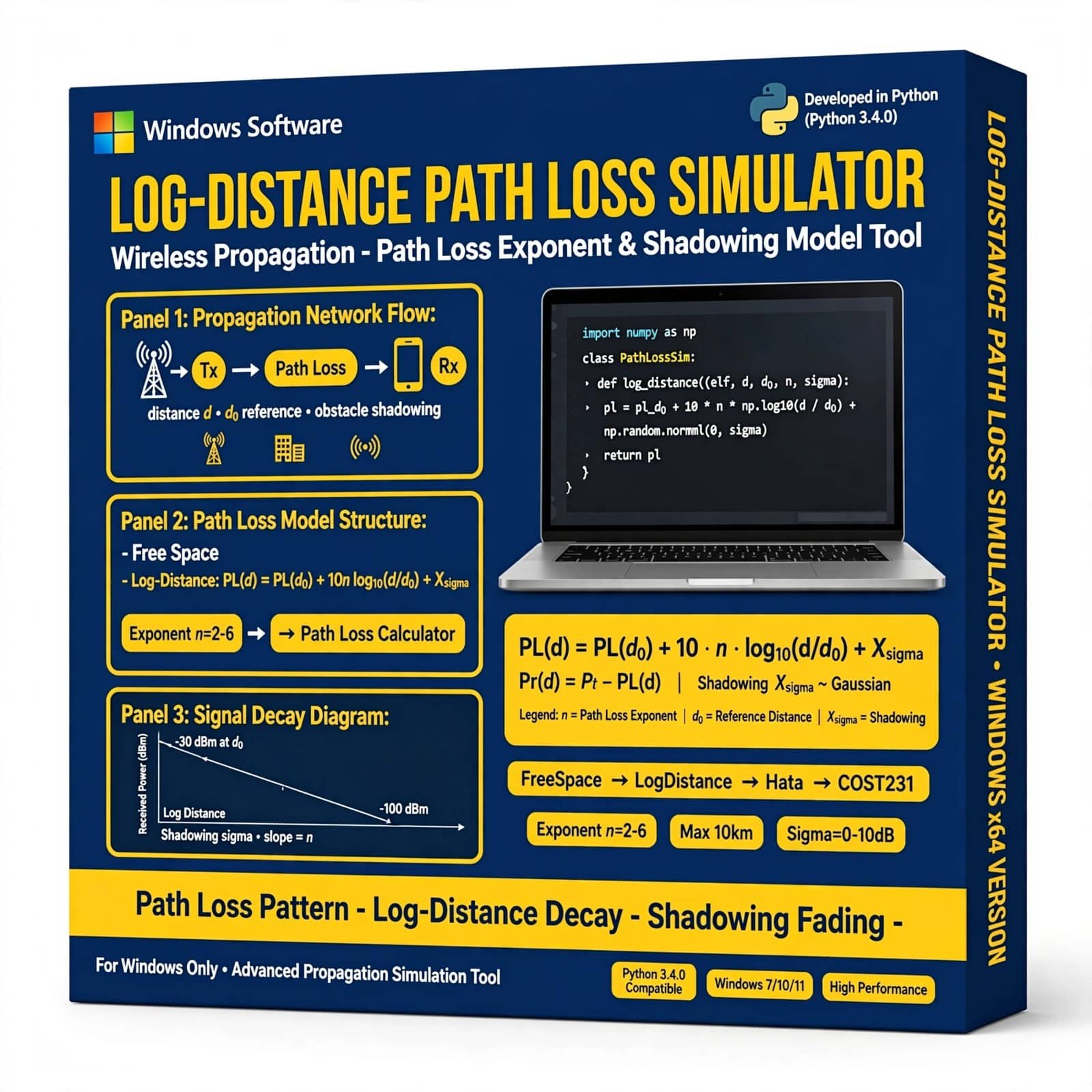
The Log-Distance Path Loss Simulator is a powerful wireless communication simulation tool designed to analyze and visualize signal attenuation over distance. It helps students, researchers, engineers, and RF professionals understand path loss, received signal strength, wireless propagation, and network performance using the log-distance path loss model. Ideal for academic projects, RF research, wireless network analysis, and communication system simulations.
₹6,999.00 -
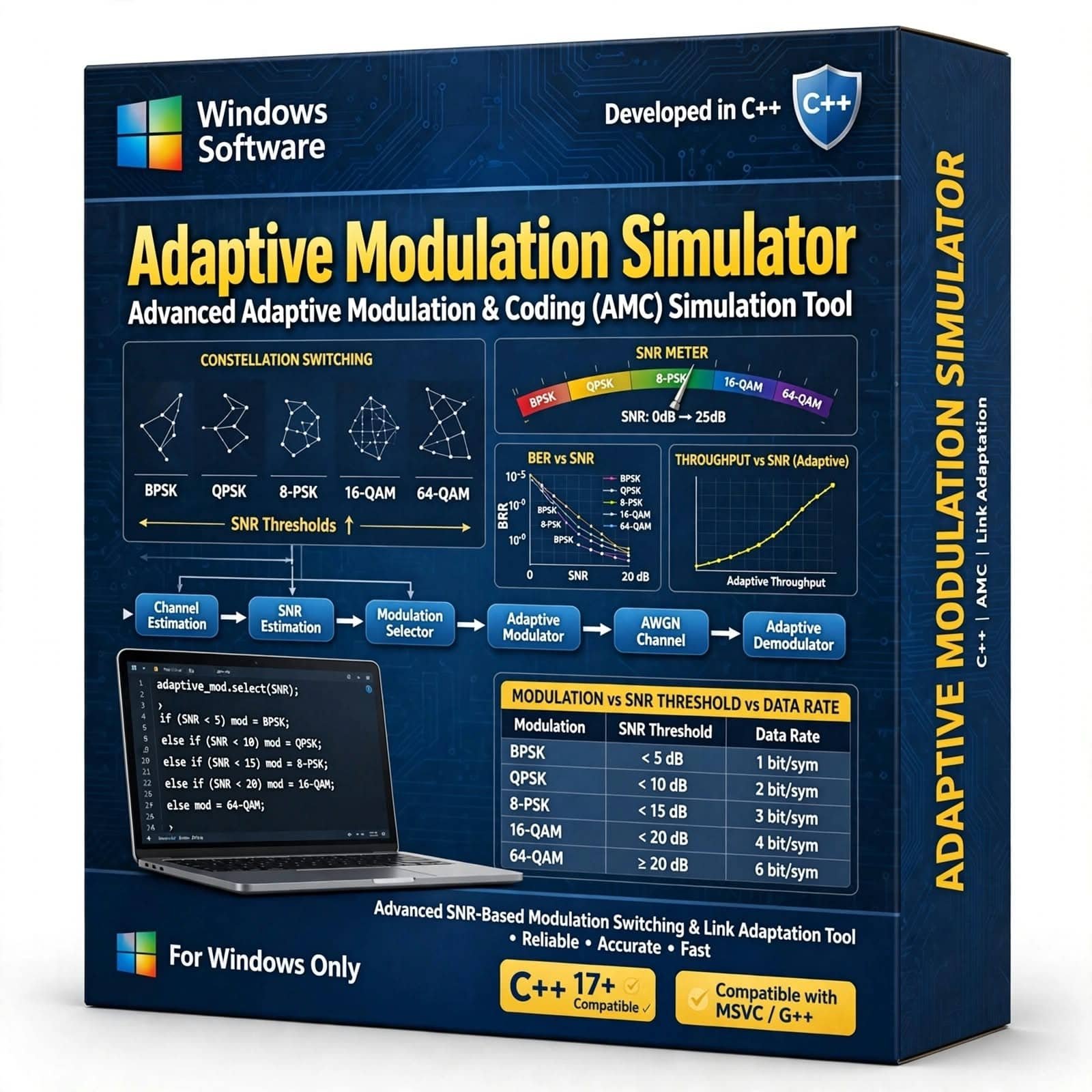
The Adaptive Modulation Simulator is a C++-based software solution designed for students, researchers, engineers, developers, and telecommunications professionals working with digital communication and adaptive modulation techniques. The simulator provides a practical environment for studying how modulation schemes can be selected or adapted according to communication-system conditions.
Developed using C++, the simulator is suitable for academic projects, digital communication research, laboratory demonstrations, signal-processing studies, algorithm development, and educational applications.
Available for sale as a software product. Contact us for pricing, licensing, technical specifications, customization, and purchase information.
₹1,999.00


Reviews
There are no reviews yet.