
New
92% Off

6G XR – Metaverse Over 6G Simulator


Original price was: ₹600,000.00.₹50,000.00Current price is: ₹50,000.00.
In StockThe 6G XR – Metaverse Over 6G Simulator with Python is a simulation-based solution for exploring extended reality (XR), immersive metaverse applications, and next-generation wireless communication networks. Using Python-based modeling and performance analysis, researchers can investigate latency, bandwidth requirements, data throughput, quality of service (QoS), and network resource allocation for immersive virtual environments. Ideal for students, researchers, and telecommunications engineers, this simulator supports the study of 6G-enabled virtual reality (VR), augmented reality (AR), mixed reality (MR), and real-time interactive digital experiences.
Description
6G XR – Metaverse Over 6G Simulator with Python
The 6G XR – Metaverse Over 6G Simulator with Python is a simulation-based framework designed to explore how sixth-generation (6G) wireless communication technologies could support immersive extended reality (XR) and metaverse applications. XR combines virtual reality (VR), augmented reality (AR), and mixed reality (MR) to create interactive digital experiences. These applications can require high data rates, responsive communication, reliable connectivity, and efficient processing to deliver smooth and realistic user experiences.
As wireless technology evolves beyond 5G, 6G research is investigating advanced networking capabilities for immersive communication, intelligent environments, and real-time digital interaction. Python offers a flexible platform for modeling these scenarios and evaluating their network performance under different conditions.

Key Features of the 6G XR Metaverse Simulator
A Python-based 6G XR simulator can be designed to investigate important communication parameters, including bandwidth requirements, end-to-end latency, throughput, packet loss, jitter, and quality of service (QoS). Researchers can configure virtual users, immersive application workloads, network traffic patterns, and communication conditions to study how these variables influence the XR experience.
Depending on the implementation, the simulator may support multiple XR users, varying data rates, edge computing scenarios, adaptive resource allocation, and comparisons between different network configurations. Graphs and statistical reports can help users understand performance changes as network loads and application requirements increase.

Python-Based Modeling for Immersive Communication
Python is widely used for scientific computing, simulation, data analysis, and visualization. Libraries such as NumPy, pandas, SciPy, and Matplotlib can support numerical modeling, traffic analysis, statistical evaluation, and graphical reporting.
A typical simulation workflow involves defining an XR application scenario, configuring network parameters, generating virtual traffic, measuring performance metrics, and comparing the results across different experiments. Researchers can investigate how user density, content complexity, communication delays, and available bandwidth affect immersive application performance.
More advanced implementations can incorporate network simulation frameworks, machine learning models, or edge computing models to explore intelligent resource management and application-aware communication strategies.

Applications of 6G Metaverse Technology
The 6G XR Metaverse Simulator can support research into virtual collaboration, immersive education, remote assistance, digital twins, interactive gaming, virtual training, and industrial extended reality. These use cases may require continuous data exchange between users, applications, rendering systems, and remote computing resources.
Researchers can study how future wireless networks might support synchronized virtual environments, real-time interactions, and multi-user immersive experiences. Simulation can also help evaluate the potential benefits of edge computing, intelligent traffic scheduling, and adaptive network resource allocation.
The actual level of XR realism or interactivity represented depends on whether the implementation models only network behavior or also includes application-level rendering and user experience.
Benefits for Students and Researchers
Python-based simulation enables repeatable experiments without requiring a complete physical 6G network. Users can modify network parameters, compare traffic scenarios, analyze performance bottlenecks, and visualize results using configurable scripts.

This approach is valuable for academic projects, telecommunications research, XR application development, and next-generation network optimization. It can help students understand the relationship between communication performance and immersive application requirements while supporting the evaluation of alternative system designs.
Conclusion
The 6G XR – Metaverse Over 6G Simulator with Python provides a useful starting point for investigating immersive communication over future wireless networks. By combining Python-based modeling with network performance analysis, researchers can explore bandwidth demands, latency constraints, traffic behavior, and resource allocation strategies for XR and metaverse environments.
Whether used for academic research, wireless communication projects, or immersive technology experimentation, this simulator can help users investigate the networking challenges and opportunities associated with next-generation interactive digital experiences.
Related products
-
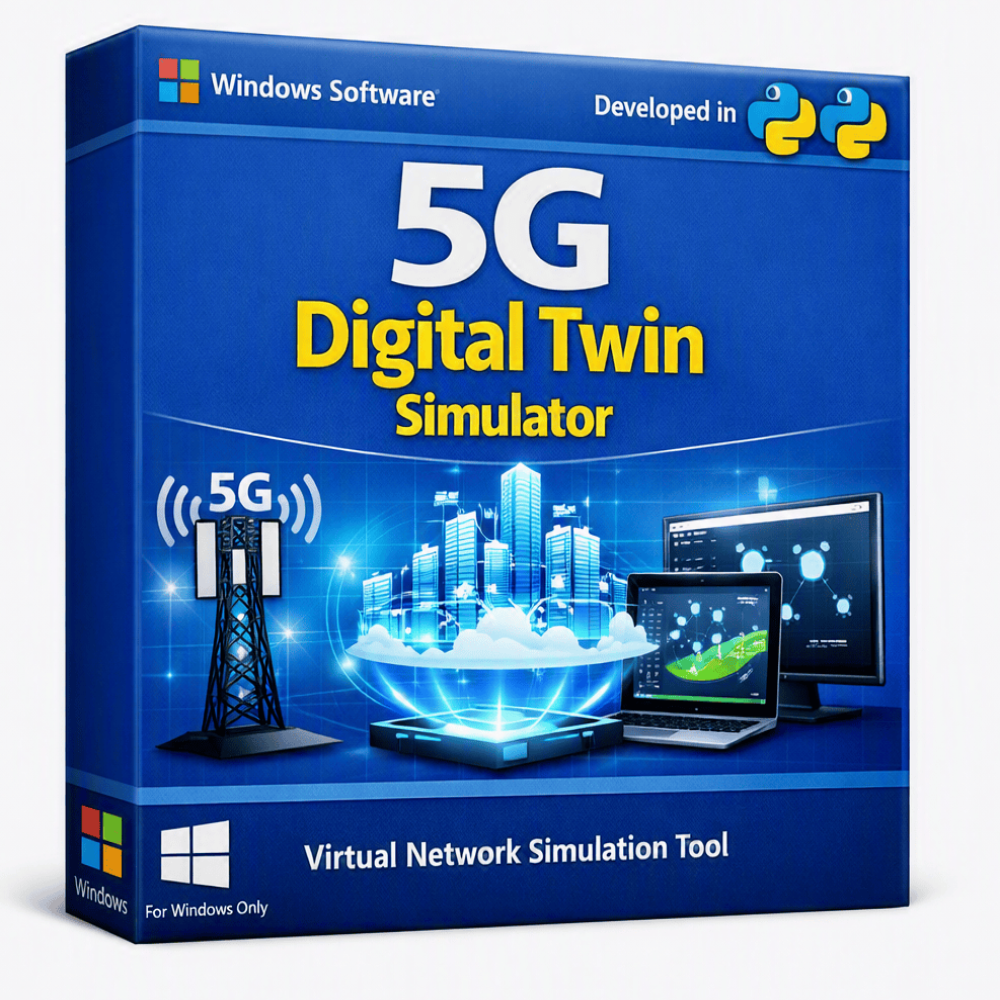
A Python-based 5G Digital Twin solution for creating a virtual representation of 5G network environments, components, and operational behavior. Designed for 5G research, network analysis, simulation, optimization, and academic projects, it enables users to model network scenarios, monitor virtualized network behavior, and experiment with different configurations in a controlled software environment.
Ideal for telecom engineers, researchers, developers, students, and academic institutions working on 5G network planning, performance analysis, intelligent network management, and digital twin research.
Original price was: ₹249,999.00.₹24,999.00Current price is: ₹24,999.00. -
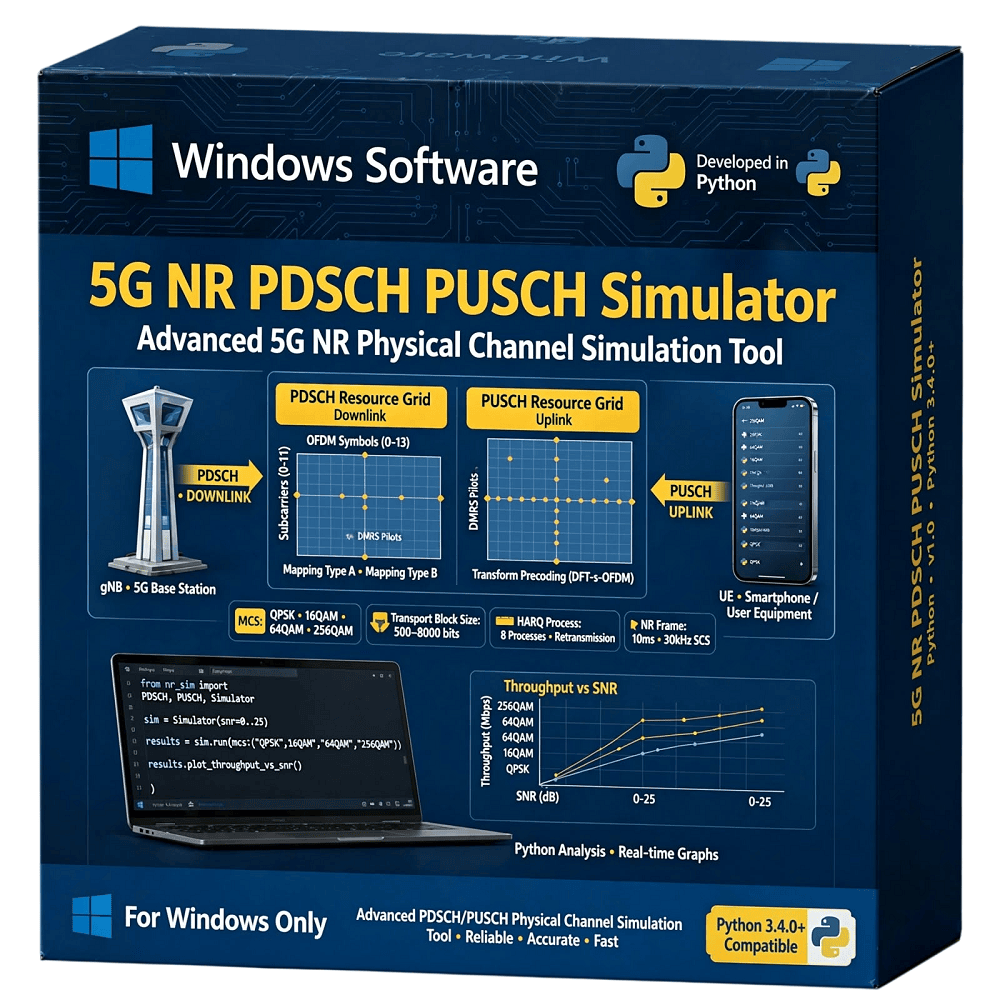
The 5G NR PDSCH PUSCH Simulator is a Python-based simulation software solution designed for researchers, engineers, students, and telecommunications professionals working with 5G New Radio (NR) physical-layer technologies. The simulator provides a practical environment for studying and experimenting with PDSCH (Physical Downlink Shared Channel) and PUSCH (Physical Uplink Shared Channel) transmission concepts.
Developed using Python, the simulator is suitable for academic research, algorithm development, demonstrations, testing, and educational applications related to 5G NR communication systems.
Available for sale as a software product. Contact us for product details, licensing, and purchase information.
Original price was: ₹129,999.00.₹12,999.00Current price is: ₹12,999.00. -
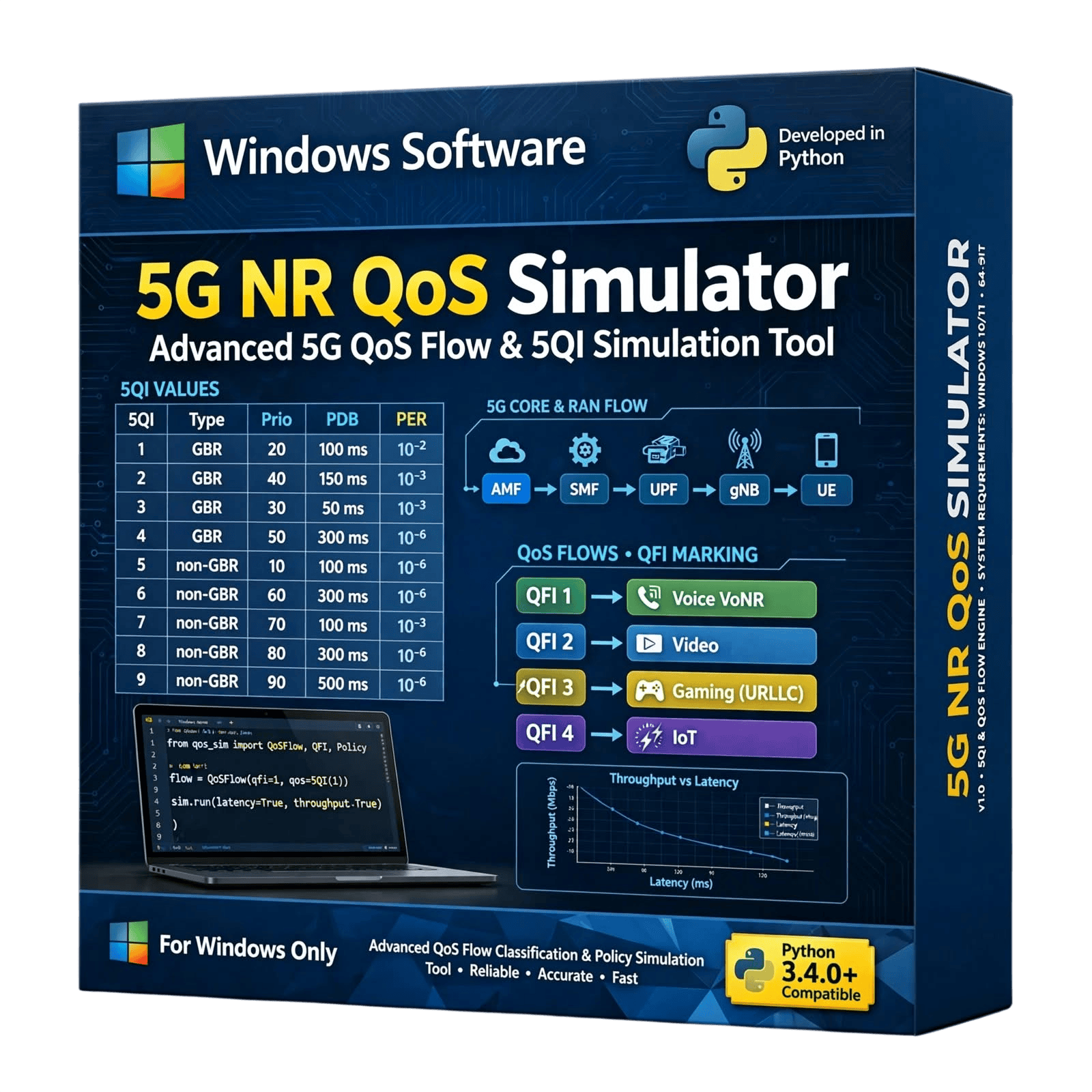
The 5G QoS Simulator is a Python-based software solution designed for researchers, engineers, students, developers, and telecommunications professionals working with 5G Quality of Service (QoS) concepts. The simulator provides a software-based environment for studying and analyzing QoS-related aspects of 5G communication networks, including service performance, traffic behavior, resource management, and network performance evaluation.
Developed using Python, the simulator is suitable for academic research, telecommunications projects, demonstrations, experimentation, algorithm development, and educational applications.
Available for sale as a software product. Contact us for pricing, licensing, features, customization, and purchase information.
Original price was: ₹74,999.00.₹9,999.00Current price is: ₹9,999.00. -
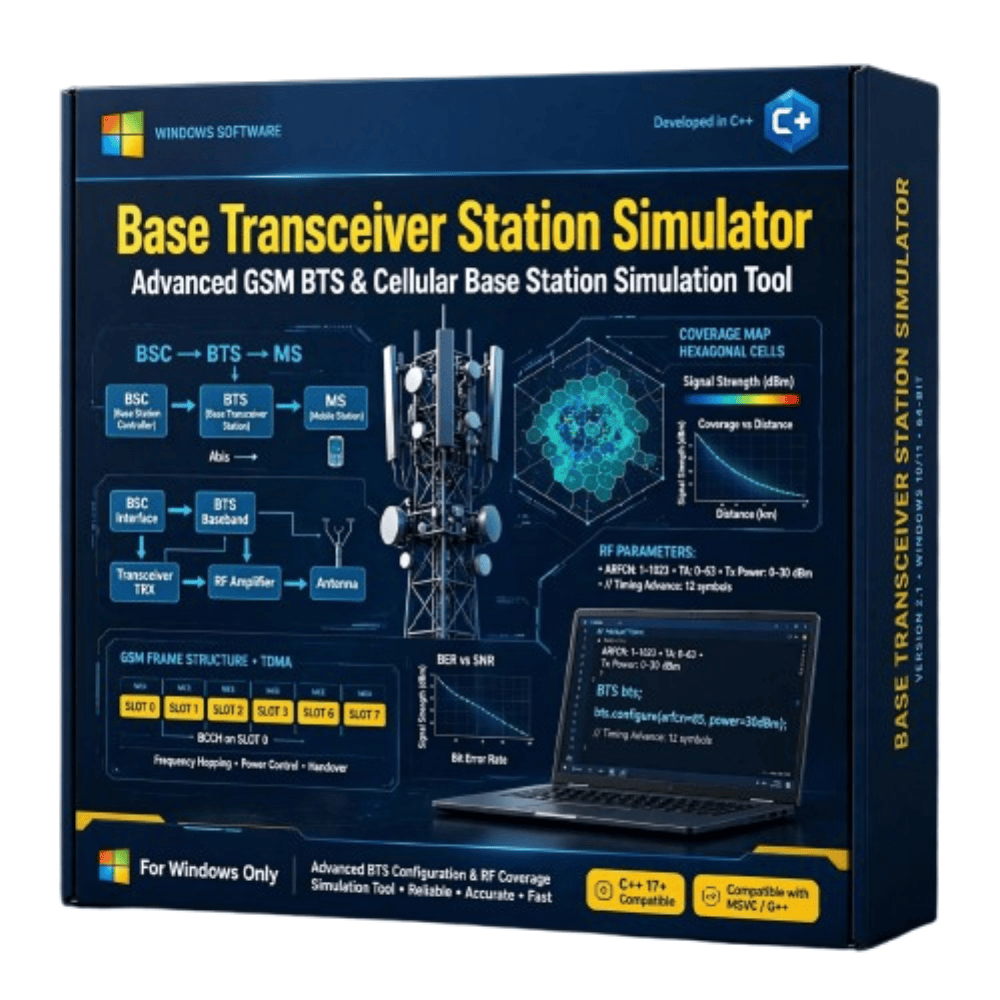
The Base Transceiver Station Simulator Using C++ is a practical cellular communication simulation project designed to demonstrate the basic operation of a BTS in a mobile communication network. Developed using C++, the simulator can model communication between mobile users and a base station, including signal handling, user connectivity, channel allocation, and basic network operations. This BTS Simulator project is suitable for engineering students, researchers, and learners working on GSM, wireless communication, cellular networks, and C++ programming projects.
Original price was: ₹750.00.₹250.00Current price is: ₹250.00. -
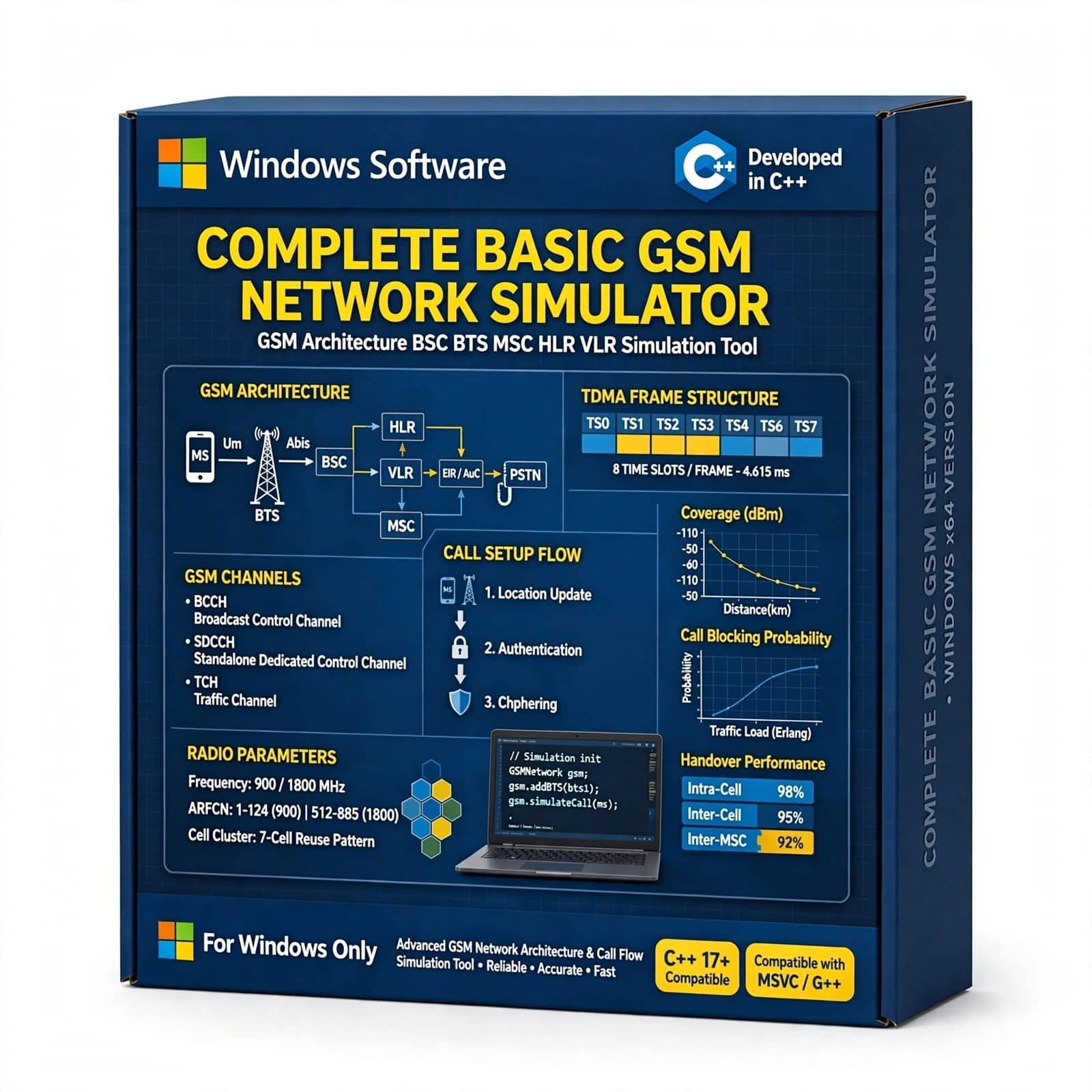
Complete Basic GSM Network with C++ is an educational and simulation-based project that demonstrates the fundamental architecture and operation of a GSM network using C++. It helps students and researchers understand GSM components, mobile communication, call and message handling, network signaling, and basic cellular network operations through a practical C++ implementation.
Original price was: ₹3,999.00.₹2,399.00Current price is: ₹2,399.00. -
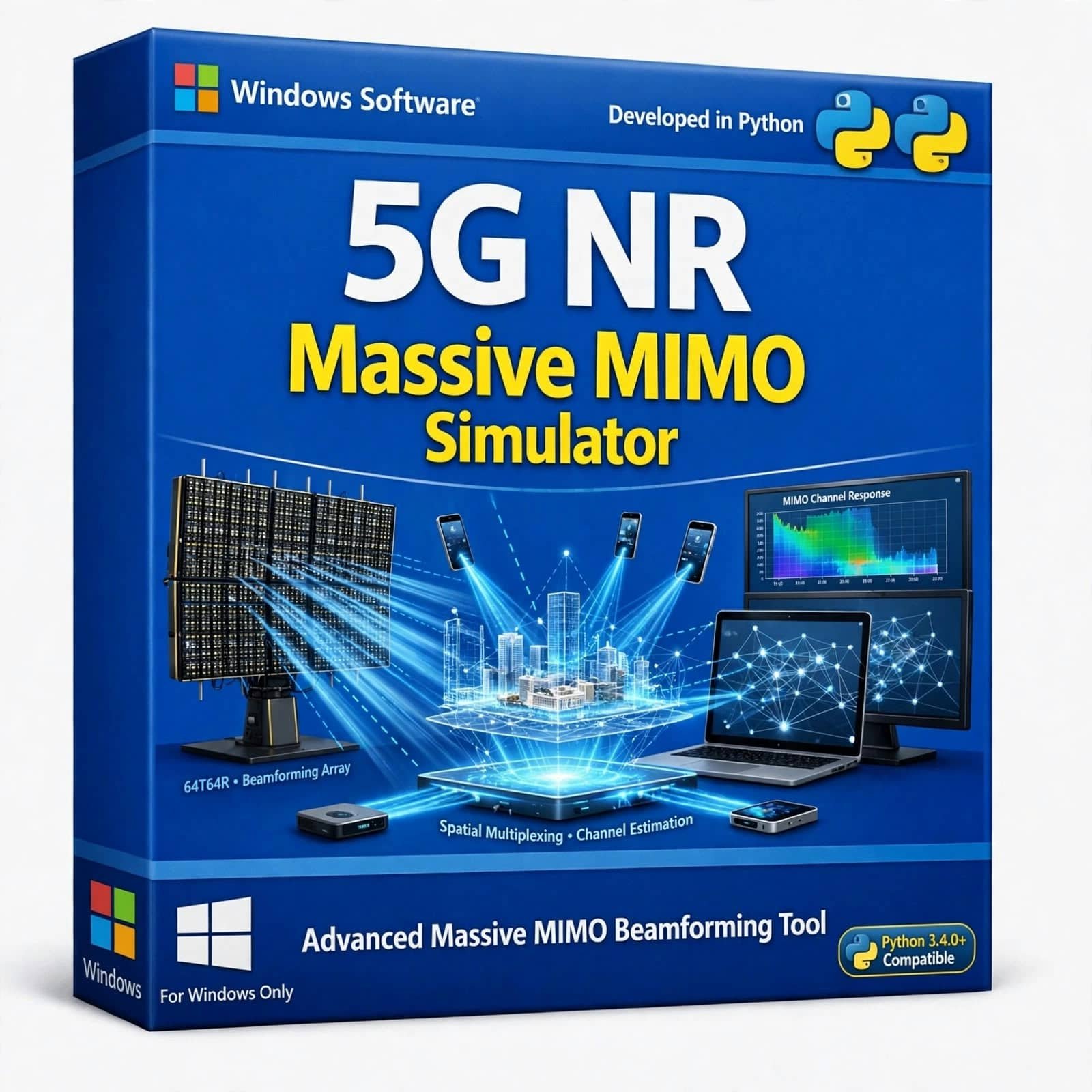
5G NR Massive MIMO Simulator is an advanced simulation solution for modeling and analyzing Massive Multiple-Input Multiple-Output (MIMO) technologies in 5G New Radio networks. It enables users to study large-scale antenna arrays, beamforming, precoding, spatial multiplexing, multi-user MIMO, channel estimation, and interference under configurable channel conditions. The simulator supports analysis of throughput, spectral efficiency, SINR, BER, BLER, MIMO capacity, beamforming gain, and multi-user performance, making it ideal for 5G NR research, algorithm development, academic projects, and 5G/6G wireless system optimization.
Original price was: ₹149,999.00.₹14,999.00Current price is: ₹14,999.00.


Reviews
There are no reviews yet.