
New
94% Off

6G Holographic Telepresence Simulator


Original price was: ₹400,000.00.₹25,000.00Current price is: ₹25,000.00.
In Stock6G Holographic Telepresence Simulator with Python is an innovative simulation project designed to explore next-generation communication technologies, holographic communication, ultra-low-latency networking, and real-time 3D telepresence. Built using Python, this project demonstrates how emerging 6G concepts can support immersive virtual interactions, holographic data transmission, network performance analysis, and intelligent communication systems.
Description
6G Holographic Telepresence Simulator with Python
The 6G Holographic Telepresence Simulator with Python is an innovative technology project that explores the future of immersive communication using next-generation wireless networking concepts. As communication technologies continue to evolve beyond 5G, sixth-generation (6G) networks are expected to support advanced applications such as holographic communication, real-time 3D visualization, intelligent connectivity, and ultra-low-latency data transmission. This project provides a simulation-based environment for understanding how these technologies could enable realistic virtual interactions across remote locations.
Developed using Python, the simulator can be designed to model holographic data exchange, communication delays, network performance, and the requirements of immersive telepresence applications.
Project Overview
Holographic telepresence aims to create a more realistic remote communication experience by representing people, objects, or environments as three-dimensional visual content. Unlike conventional video conferencing, holographic telepresence can involve spatial information, depth representation, and interactive 3D visualization.
The proposed 6G Holographic Telepresence Simulator demonstrates key concepts behind this technology through software-based simulations. Python provides a flexible development platform for implementing network models, processing simulated communication data, analyzing performance metrics, and visualizing results.
Depending on the implementation, the simulator can incorporate configurable network conditions, virtual communication endpoints, latency measurements, bandwidth requirements, and holographic data transmission scenarios.
Key Features
- 6G Network Simulation: Model next-generation wireless communication scenarios and investigate their potential impact on immersive applications.
- Holographic Telepresence Modeling: Represent the communication requirements of virtual 3D participants and interactive remote environments.
- Latency Analysis: Evaluate simulated communication delays and understand their importance for real-time holographic experiences.
- Bandwidth and Data Transmission: Explore the data-intensive requirements of transmitting high-quality spatial and visual information.
- Python-Based Development: Use Python libraries and modular programming techniques to build, test, and extend simulation components.
- Performance Visualization: Present simulation outputs through charts, graphs, and other visual representations when supported by the implementation.
- Flexible Experimentation: Adjust simulation parameters to compare different network conditions and communication scenarios.
Technologies Used
Python serves as the primary programming language for developing the simulator. Depending on the selected implementation, libraries such as NumPy can support numerical calculations, Matplotlib can visualize performance metrics, and SimPy can model discrete-event communication processes. Optional 3D visualization tools may be integrated to represent holographic scenes or virtual participants.
The project can also be extended with network simulation frameworks, artificial intelligence techniques, edge computing models, and quality-of-service analysis.

Applications
The 6G Holographic Telepresence Simulator can support academic research, engineering education, wireless communication studies, and experimentation with future networking concepts. Potential application areas include immersive remote collaboration, virtual classrooms, telepresence demonstrations, digital twin environments, remote technical assistance, and advanced human-machine interaction.
By simulating different communication conditions, developers and students can investigate the challenges associated with real-time 3D content delivery and understand why latency, bandwidth, reliability, and synchronization matter for immersive communication.
Benefits of the Project
This Python-based project provides a practical starting point for learning about emerging 6G technologies without requiring a complete physical 6G network or commercial holographic communication infrastructure. Its modular design can support future improvements, including more detailed network models, adaptive transmission strategies, AI-assisted optimization, and interactive visualization.
The simulator is intended as an experimental and educational tool. Its results depend on the implemented models and assumptions and should not be interpreted as proof of real-world 6G network performance.
Conclusion
The 6G Holographic Telepresence Simulator with Python offers an engaging way to explore the intersection of wireless communication, immersive 3D technology, and software-based network modeling. By combining Python programming with configurable simulation scenarios, the project helps illustrate the potential of next-generation networks for future holographic communication systems. It is a useful foundation for students, researchers, and developers interested in 6G networking, virtual collaboration, and intelligent communication technologies.
Related products
-
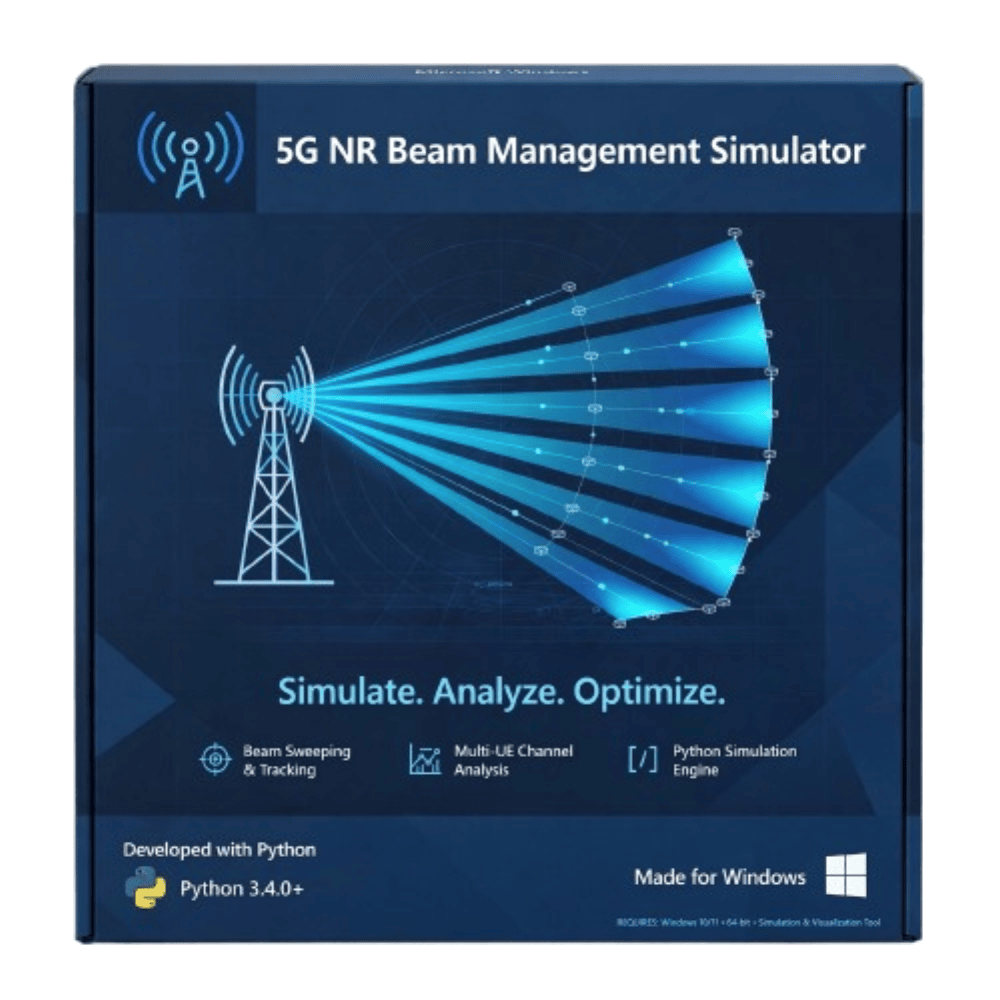
5G NR Beam Management Simulator is an advanced simulation solution designed to model, analyze, and optimize beam management procedures in 5G New Radio (NR) networks. It enables engineers and researchers to evaluate beam sweeping, beam measurement, beam selection, beam reporting, and beam recovery under diverse network and channel conditions. The simulator supports performance analysis of directional communication, helping users assess beamforming strategies, mobility scenarios, link reliability, and system-level performance before real-world deployment.
Original price was: ₹74,999.00.₹12,999.00Current price is: ₹12,999.00. -
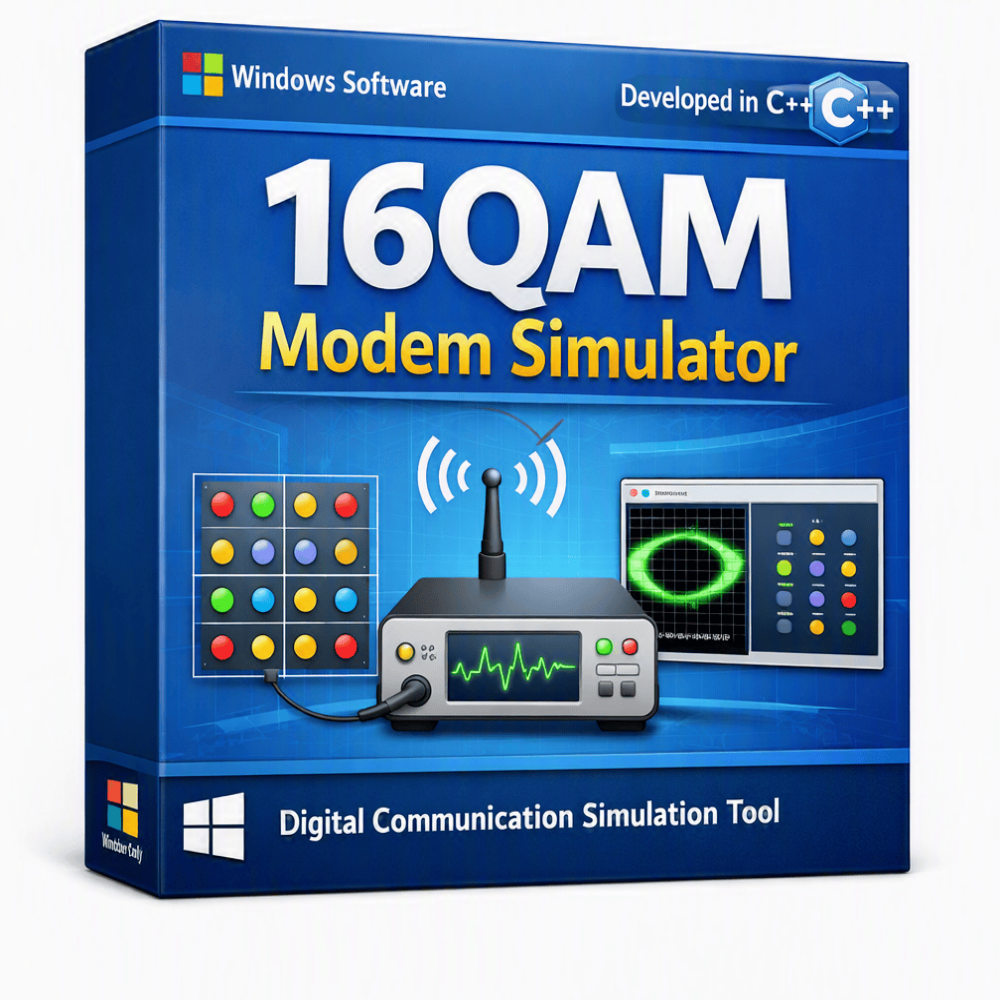
The 16QAM Modem Simulator is a C++-based software application designed to simulate and analyze a 16-QAM digital communication system. It demonstrates the complete modulation and demodulation process, including symbol mapping, signal generation, transmission, and data recovery. The simulator helps users understand key concepts of digital communication and evaluate system performance under different channel conditions.
₹1,999.00 -
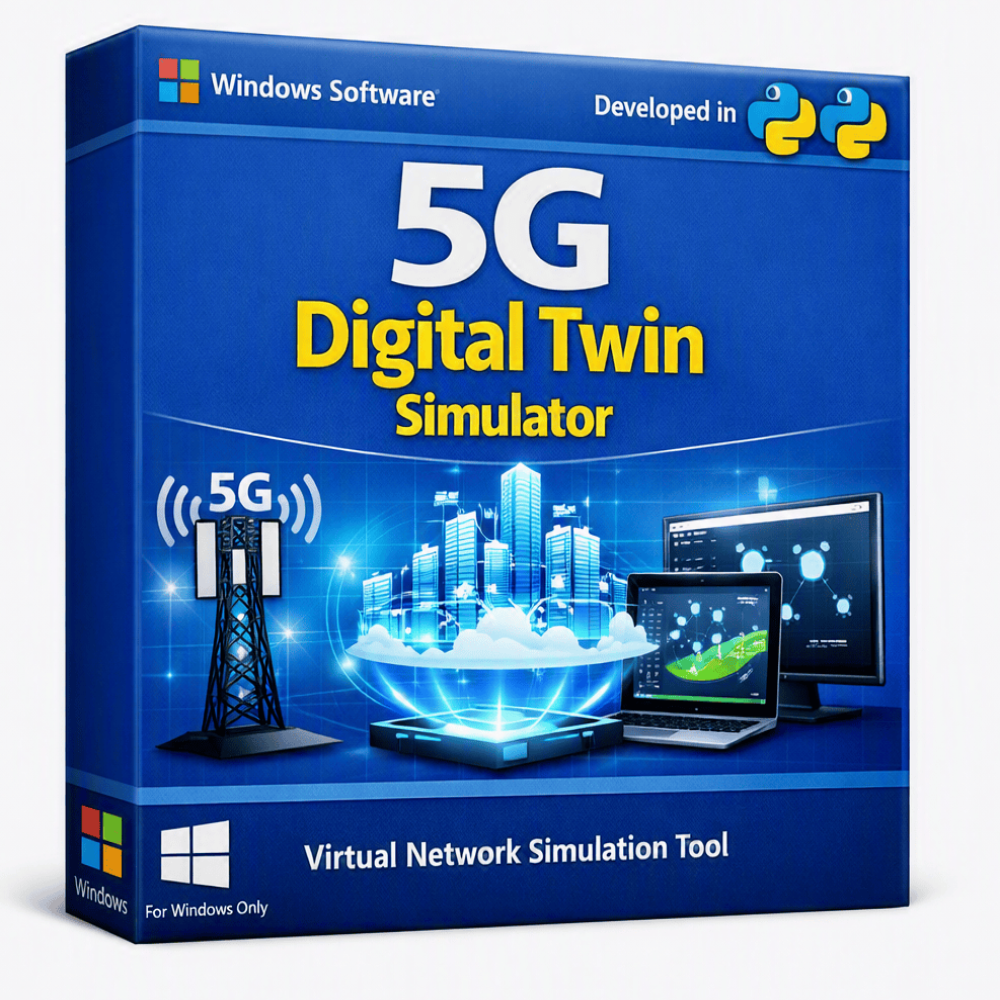
A Python-based 5G Digital Twin solution for creating a virtual representation of 5G network environments, components, and operational behavior. Designed for 5G research, network analysis, simulation, optimization, and academic projects, it enables users to model network scenarios, monitor virtualized network behavior, and experiment with different configurations in a controlled software environment.
Ideal for telecom engineers, researchers, developers, students, and academic institutions working on 5G network planning, performance analysis, intelligent network management, and digital twin research.
Original price was: ₹249,999.00.₹24,999.00Current price is: ₹24,999.00. -
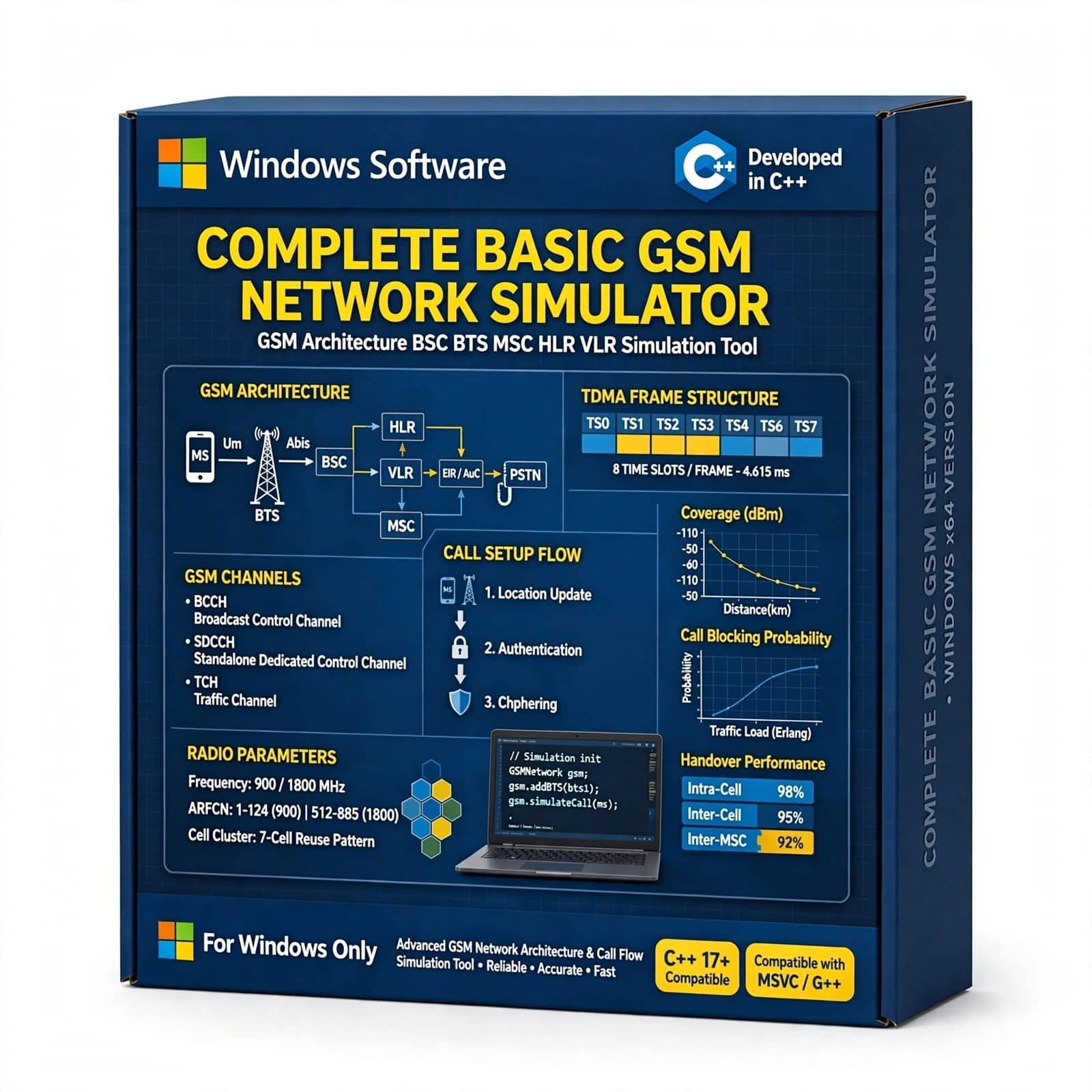
Complete Basic GSM Network with C++ is an educational and simulation-based project that demonstrates the fundamental architecture and operation of a GSM network using C++. It helps students and researchers understand GSM components, mobile communication, call and message handling, network signaling, and basic cellular network operations through a practical C++ implementation.
Original price was: ₹3,999.00.₹2,399.00Current price is: ₹2,399.00. -
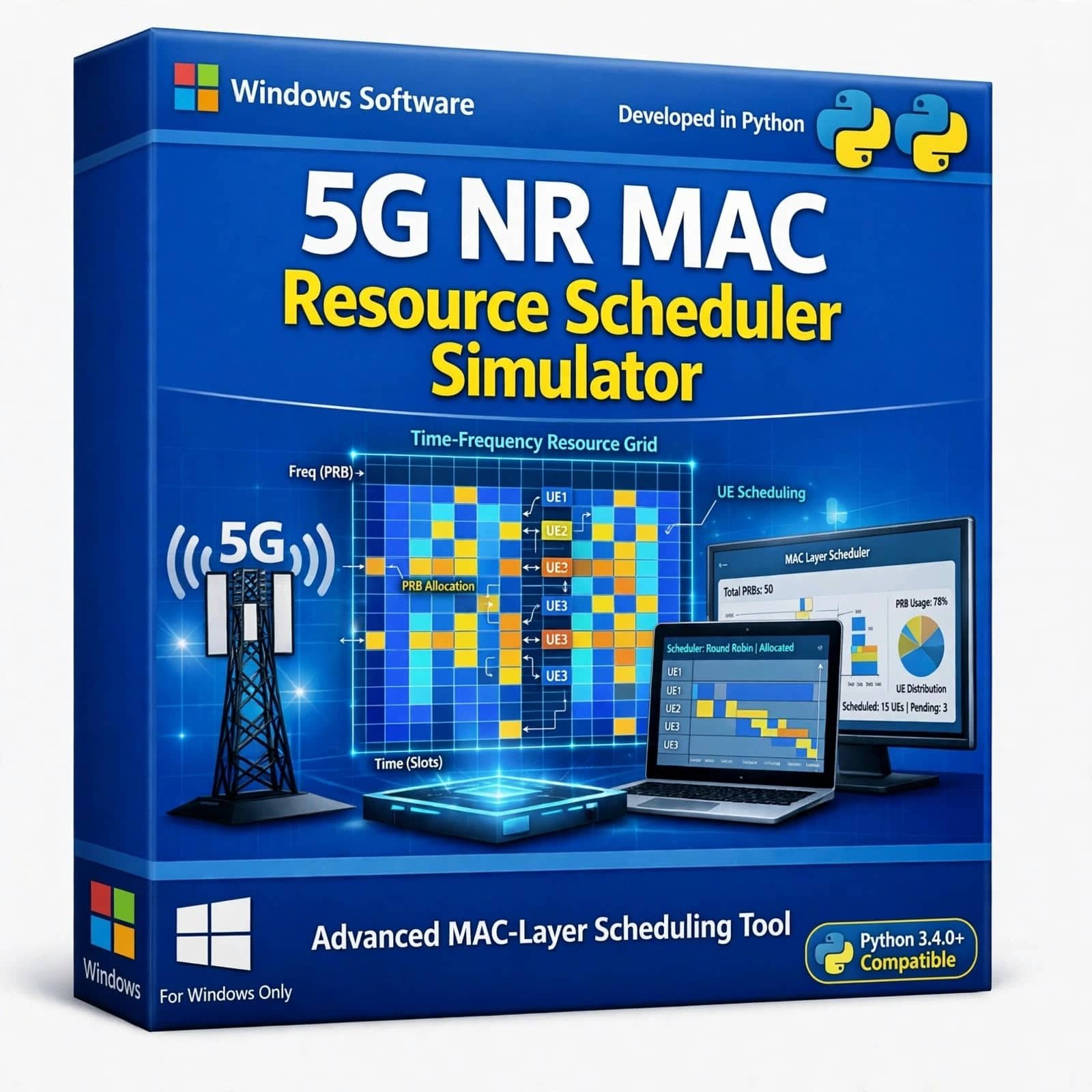
5G NR MAC Resource Scheduler Simulator is an advanced simulation solution for modeling and analyzing Medium Access Control (MAC) layer resource scheduling in 5G New Radio networks. It enables users to evaluate dynamic resource allocation, multi-UE scheduling, uplink and downlink resource management, QoS-aware scheduling, traffic conditions, and scheduling algorithms. The simulator supports analysis of throughput, latency, fairness, spectral efficiency, resource utilization, packet loss, and QoS performance, making it ideal for 5G NR research, scheduler algorithm development, academic projects, and wireless network optimization.
Original price was: ₹129,999.00.₹12,999.00Current price is: ₹12,999.00. -
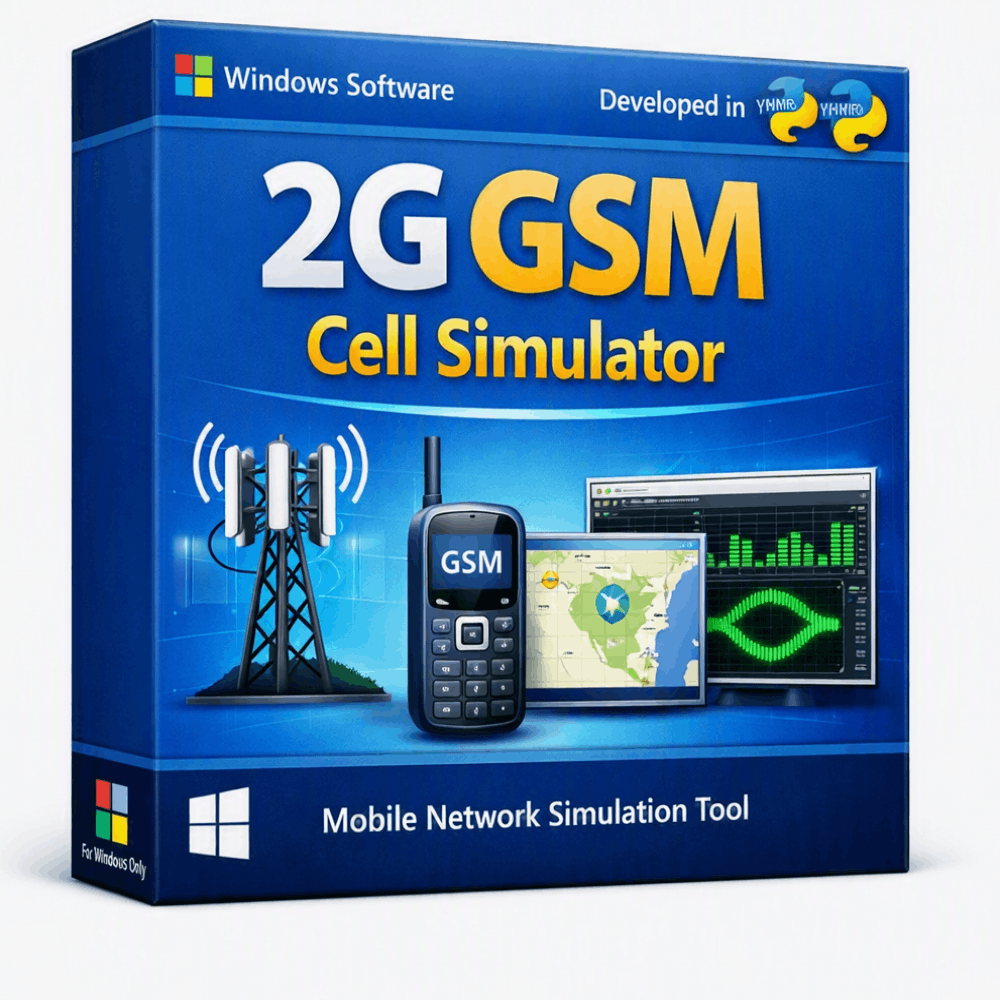
The 2G GSM Cell Simulator is a Python-based software project designed to simulate fundamental GSM cellular-network concepts. It provides a practical environment for understanding mobile stations, GSM cells, base stations, cellular coverage, mobility, communication channels, and basic network behavior. The project includes Python source code that can be studied, customized, and extended for academic projects, demonstrations, research, and learning. It is ideal for Electronics & Communication Engineering, Telecommunications, Computer Science, and related students looking to explore 2G GSM technology and cellular network simulation through a software-based implementation.
₹3,999.00


Reviews
There are no reviews yet.