
New
90% Off

6G Energy Efficiency Simulator


Original price was: ₹200,000.00.₹20,000.00Current price is: ₹20,000.00.
In StockThe 6G Energy Efficiency Simulator is an advanced simulation tool designed to analyze, model, and optimize energy consumption in next-generation wireless networks. Explore 6G network energy efficiency, power optimization, sustainable wireless communication, and intelligent resource management through simulation-based analysis.
Description
6G Energy Efficiency Simulator – Optimize Energy Consumption in Next-Generation Networks
The 6G Energy Efficiency Simulator is a simulation-based tool designed to explore, analyze, and optimize energy consumption in next-generation wireless communication networks. As research into sixth-generation (6G) technology advances, energy efficiency has become a key consideration for building sustainable, intelligent, and high-performance wireless systems. This simulator helps researchers, students, engineers, and telecommunications professionals understand how network parameters influence energy consumption, communication performance, and overall system efficiency.
Understanding Energy Efficiency in 6G Networks
Sixth-generation wireless communication is expected to support advanced applications such as intelligent connectivity, immersive extended reality, connected autonomous systems, massive Internet of Things (IoT) deployments, and AI-driven network services. These applications may require high data rates, low latency, and reliable connectivity. Meeting these requirements while controlling energy consumption is an important research challenge.
The 6G Energy Efficiency Simulator provides a framework for studying this challenge through computational models and configurable network scenarios. Users can investigate the relationship between transmission power, bandwidth, data throughput, network load, and energy consumption to better understand potential efficiency improvements.
Key Features of the 6G Energy Efficiency Simulator
The simulator can support the analysis of important energy-related parameters in wireless networks, depending on its implemented models and functionality. These may include transmission power optimization, energy consumption estimation, spectral efficiency, resource allocation, and network performance evaluation.
By adjusting simulation parameters, users can compare different network configurations and study how changes affect energy efficiency. Researchers can also use simulation results to evaluate proposed optimization strategies before considering practical implementation in real-world communication systems.
Applications in Wireless Communication Research
The 6G Energy Efficiency Simulator is relevant to academic research, telecommunications engineering, wireless network design, and postgraduate projects. It can help students understand energy-efficient communication principles and assist researchers in evaluating algorithms for next-generation wireless systems.
Potential research areas include AI-based energy optimization, green wireless communication, intelligent resource management, sustainable network architecture, and power-aware transmission strategies. The simulator can also support comparative studies of different network configurations, provided the corresponding models are implemented.

Benefits of Using a 6G Energy Efficiency Simulator
Simulation offers a controlled environment for analyzing complex wireless network behavior without requiring immediate deployment of physical infrastructure. Users can test multiple parameter combinations, evaluate performance trends, and identify promising approaches to reducing energy consumption.
The tool can support learning, experimentation, algorithm development, and research validation. It also provides an opportunity to study the balance between energy consumption and communication performance, helping users investigate potential trade-offs between network capacity, reliability, and efficiency.
The Future of Sustainable 6G Communication
Energy efficiency is expected to remain an important consideration in the development of future wireless communication systems. Research into intelligent network management, advanced radio technologies, and energy-aware computing may contribute to more sustainable telecommunications infrastructure.
The 6G Energy Efficiency Simulator offers a practical starting point for exploring these concepts through simulation and quantitative analysis. By examining energy consumption and network performance under different scenarios, users can develop a clearer understanding of the challenges and opportunities associated with energy-efficient 6G networks.
Conclusion
The 6G Energy Efficiency Simulator is a valuable concept for researchers, students, and wireless communication professionals investigating sustainable next-generation networks. Whether used for academic projects, algorithm evaluation, or network performance studies, simulation-based analysis can help explore strategies for improving energy efficiency in emerging 6G communication systems. It connects wireless technology research with the broader goal of developing intelligent, high-performance, and energy-conscious networks for the future.
Related products
-
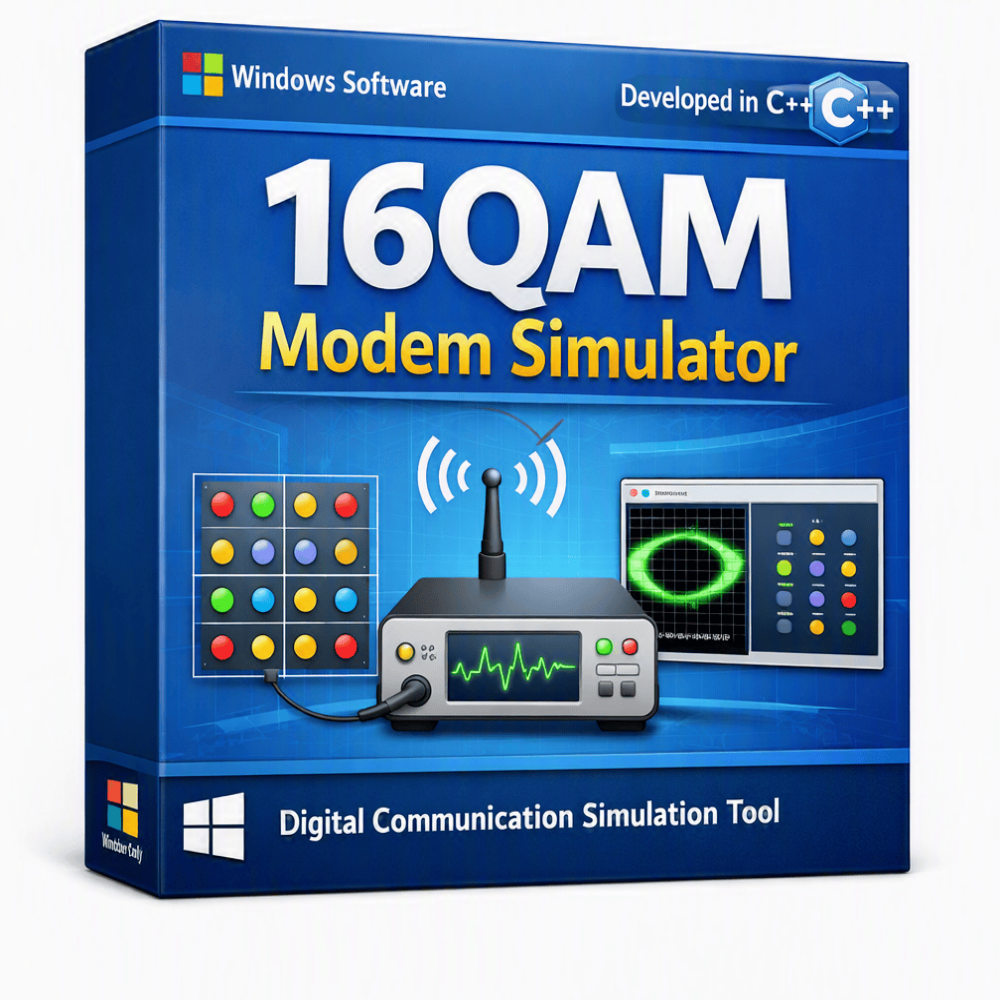
The 16QAM Modem Simulator is a C++-based software application designed to simulate and analyze a 16-QAM digital communication system. It demonstrates the complete modulation and demodulation process, including symbol mapping, signal generation, transmission, and data recovery. The simulator helps users understand key concepts of digital communication and evaluate system performance under different channel conditions.
₹1,999.00 -
A Python-based 5G Digital Twin solution for creating a virtual representation of 5G network environments, components, and operational behavior. Designed for 5G research, network analysis, simulation, optimization, and academic projects, it enables users to model network scenarios, monitor virtualized network behavior, and experiment with different configurations in a controlled software environment.
Ideal for telecom engineers, researchers, developers, students, and academic institutions working on 5G network planning, performance analysis, intelligent network management, and digital twin research.
Original price was: ₹249,999.00.₹24,999.00Current price is: ₹24,999.00. -
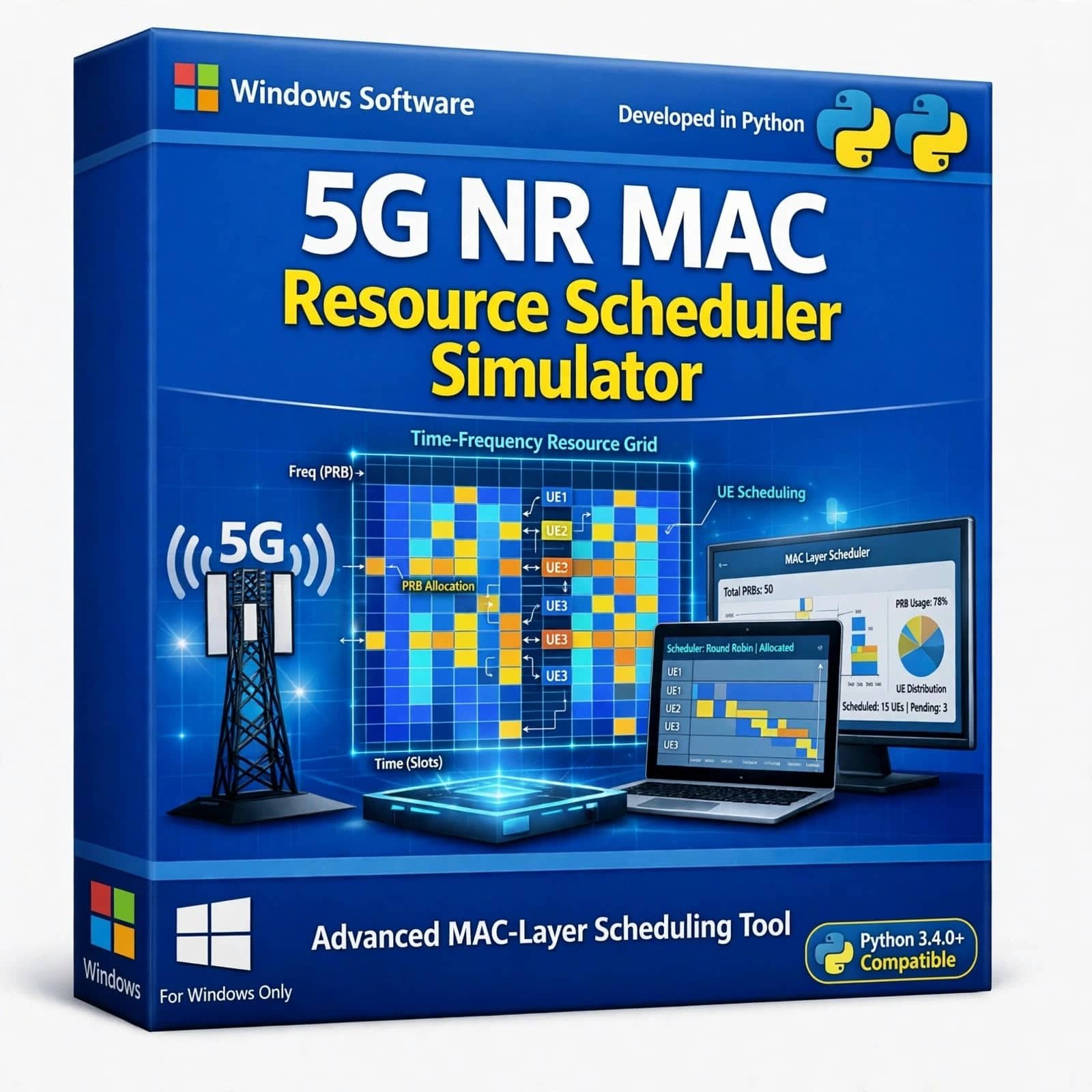
5G NR MAC Resource Scheduler Simulator is an advanced simulation solution for modeling and analyzing Medium Access Control (MAC) layer resource scheduling in 5G New Radio networks. It enables users to evaluate dynamic resource allocation, multi-UE scheduling, uplink and downlink resource management, QoS-aware scheduling, traffic conditions, and scheduling algorithms. The simulator supports analysis of throughput, latency, fairness, spectral efficiency, resource utilization, packet loss, and QoS performance, making it ideal for 5G NR research, scheduler algorithm development, academic projects, and wireless network optimization.
Original price was: ₹129,999.00.₹12,999.00Current price is: ₹12,999.00. -
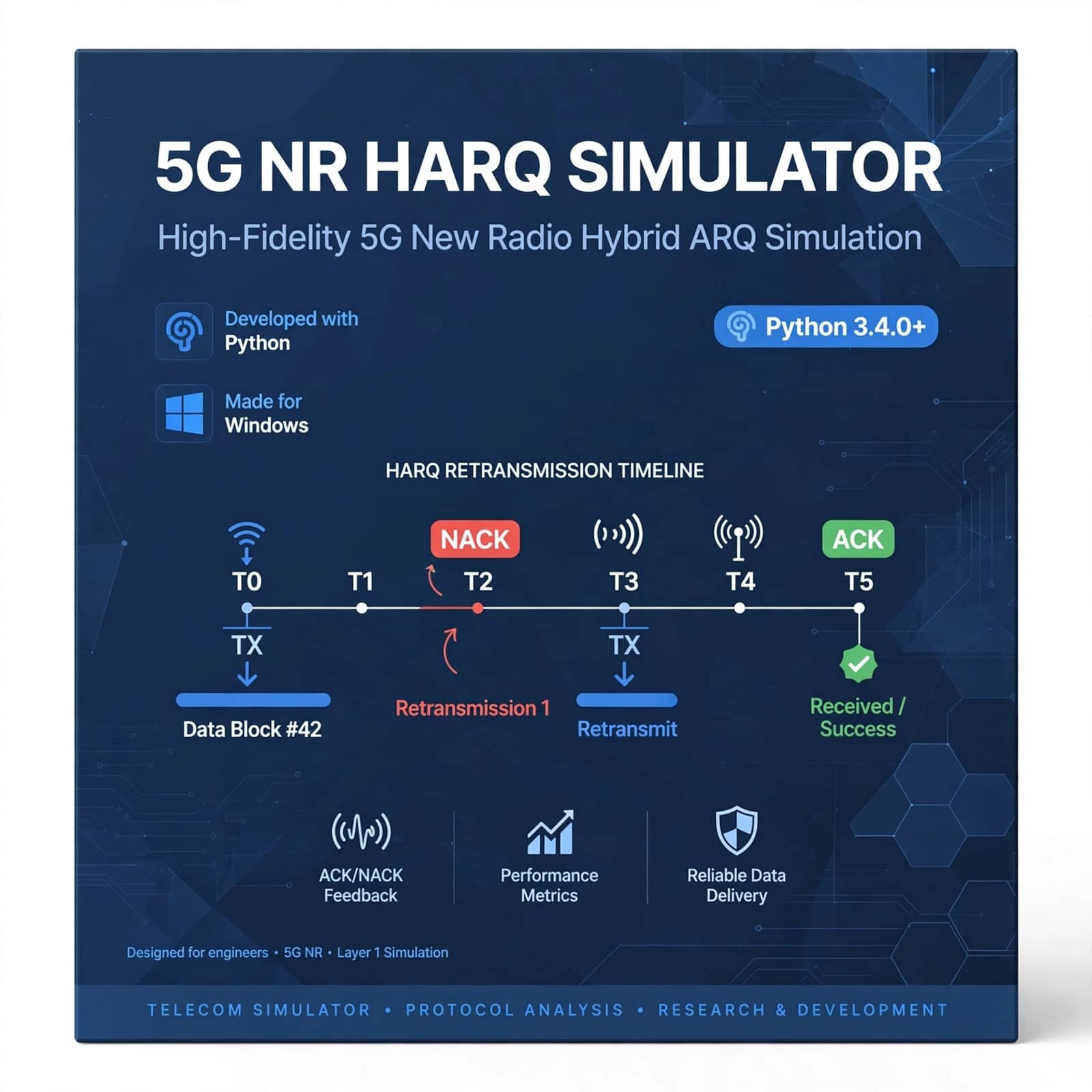
5G NR HARQ Simulator is an advanced simulation solution for modeling and analyzing Hybrid Automatic Repeat Request (HARQ) mechanisms in 5G New Radio networks. It enables users to study HARQ processes, ACK/NACK feedback, retransmissions, link adaptation, channel errors, and communication reliability under configurable network conditions. The simulator supports analysis of throughput, BLER, latency, retransmission rate, packet errors, spectral efficiency, and other key performance metrics, making it suitable for 5G NR research, algorithm development, academic projects, and wireless communication system optimization.
Original price was: ₹74,999.00.₹9,999.00Current price is: ₹9,999.00. -
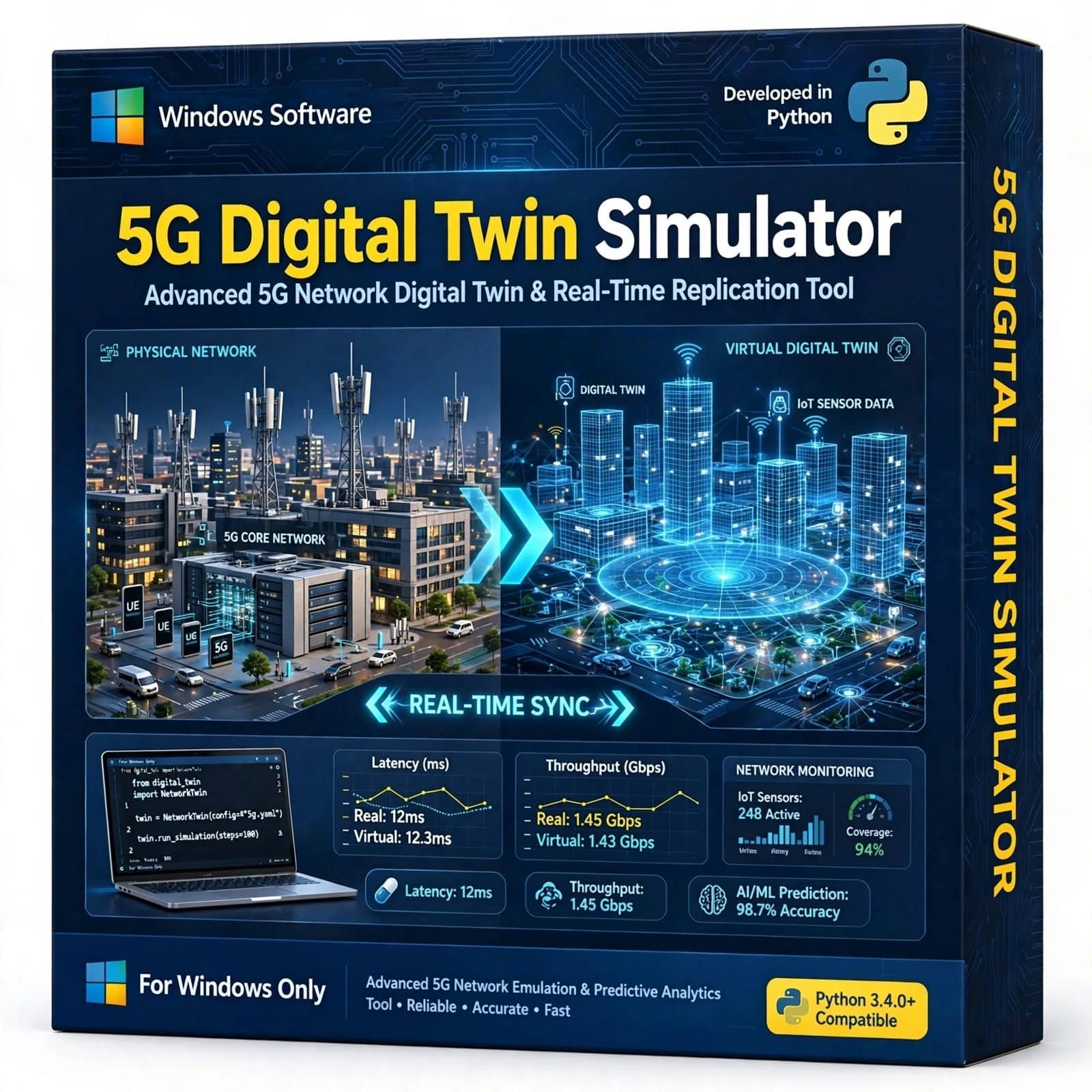
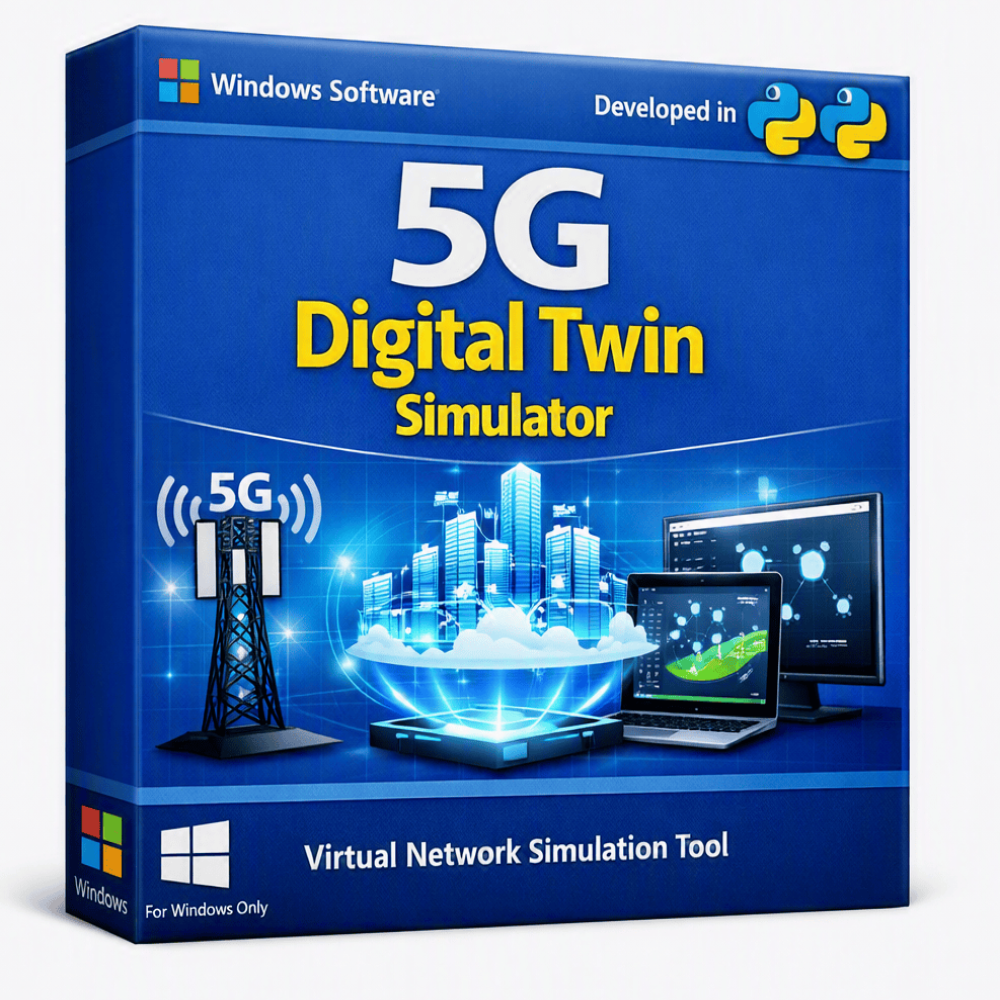
The 5G Digital Twin is a Python-based software solution designed for researchers, engineers, developers, students, and telecommunications professionals interested in modeling, simulating, and analyzing 5G communication networks and their real-world behavior in a virtual environment.
A digital twin provides a virtual representation of a physical or network system, enabling users to study system behavior, evaluate scenarios, analyze performance, and experiment with different configurations. Developed using Python, this 5G Digital Twin can support research, education, network analysis, experimentation, and proof-of-concept development.
Available for sale as a software product. Contact us for pricing, licensing, technical specifications, customization, and purchase information.
₹9,999.00 -
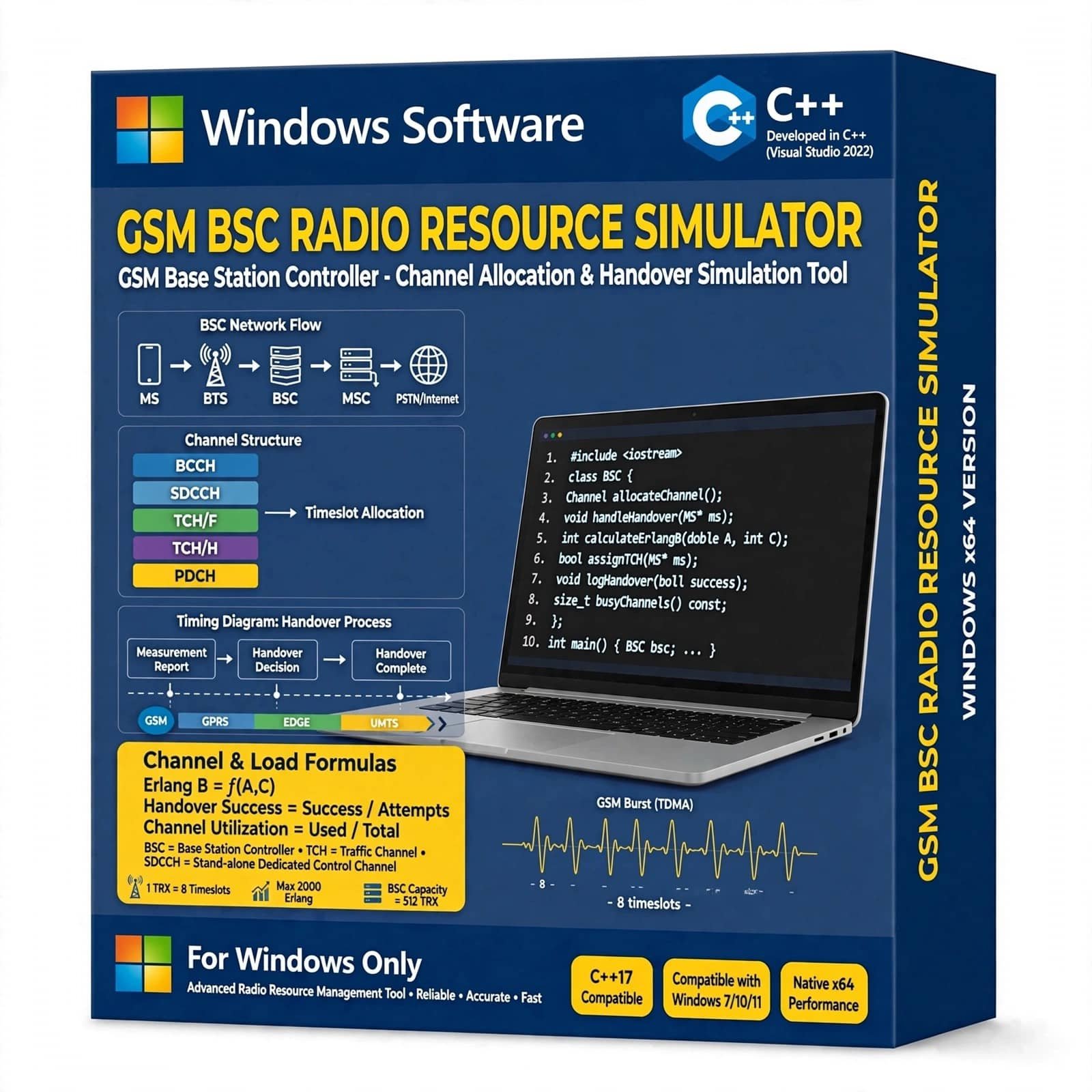
GSM BSC Radio Resource Simulator is a professional telecom training and development solution designed to simulate GSM Base Station Controller (BSC) radio resource management functions. It helps students, telecom engineers, researchers, and network professionals understand GSM radio resource allocation, channel management, call handling, handover concepts, and BSC-related network procedures in a controlled simulation environment.
Original price was: ₹750.00.₹100.00Current price is: ₹100.00.


Reviews
There are no reviews yet.