
90% Off

5G NR MAC Resource Scheduler Simulator


Original price was: ₹129,999.00.₹12,999.00Current price is: ₹12,999.00.
In Stock5G NR MAC Resource Scheduler Simulator is an advanced simulation solution for modeling and analyzing Medium Access Control (MAC) layer resource scheduling in 5G New Radio networks. It enables users to evaluate dynamic resource allocation, multi-UE scheduling, uplink and downlink resource management, QoS-aware scheduling, traffic conditions, and scheduling algorithms. The simulator supports analysis of throughput, latency, fairness, spectral efficiency, resource utilization, packet loss, and QoS performance, making it ideal for 5G NR research, scheduler algorithm development, academic projects, and wireless network optimization.
Description
5G NR MAC Resource Scheduler Simulator
The 5G NR MAC Resource Scheduler Simulator is an advanced simulation software solution designed for researchers, wireless communication engineers, telecom developers, students, and academic professionals working with 5G New Radio (NR), Medium Access Control (MAC), radio resource management, scheduling algorithms, and wireless network optimization. The simulator provides a flexible environment for modeling, analyzing, and evaluating MAC-layer resource scheduling strategies under different 5G NR network configurations and traffic conditions.
Radio resource scheduling is a critical function in 5G NR networks, as it determines how available time-frequency resources are allocated among multiple User Equipments (UEs). The 5G NR MAC Resource Scheduler Simulator enables users to study and compare different scheduling strategies and evaluate their impact on throughput, latency, fairness, spectral efficiency, resource utilization, and Quality of Service (QoS).
Key Features
- 5G NR MAC Scheduling Simulation: Model and analyze MAC-layer scheduling mechanisms in 5G New Radio systems.
- Dynamic Resource Allocation: Simulate the allocation of available radio resources among multiple UEs and traffic flows.
- Scheduling Algorithm Analysis: Evaluate and compare different scheduling strategies and resource allocation approaches.
- Multi-UE Simulation: Analyze scheduler behavior with multiple users competing for shared radio resources.
- QoS-Aware Scheduling: Study resource allocation for users and services with different Quality of Service requirements.
- Traffic Modeling: Evaluate scheduler performance under different traffic profiles, loads, and application requirements.
- Uplink and Downlink Scheduling: Analyze resource scheduling scenarios for both uplink and downlink communication.
- Configurable Network Parameters: Modify bandwidth, numerology, resource blocks, UE configurations, traffic loads, and other simulation parameters.
- Performance Evaluation: Measure throughput, latency, fairness, resource utilization, spectral efficiency, packet loss, and scheduling efficiency.
- Algorithm Development: Provide an environment for developing, testing, comparing, and optimizing advanced 5G NR scheduling algorithms.
5G NR MAC Resource Scheduling Simulation
The 5G NR MAC Resource Scheduler Simulator provides a dedicated environment for studying how radio resources are managed at the MAC layer of a 5G NR network. In a multi-user wireless system, available time-frequency resources must be efficiently distributed among connected UEs while meeting application and service requirements.
Users can configure multiple UEs with different traffic demands, channel conditions, QoS requirements, and resource needs. The simulator then enables analysis of how different scheduling strategies distribute available resources and how those decisions influence overall network performance.
This makes the simulator particularly useful for understanding the relationship between resource allocation, traffic demand, channel quality, QoS requirements, and network capacity.
Scheduling Algorithm Evaluation
Researchers can use the simulator to develop and evaluate different MAC scheduling algorithms. Scheduling strategies can be compared based on their ability to maximize system throughput, maintain fairness among users, minimize latency, and efficiently utilize available radio resources.
The simulator can be used to study commonly researched scheduling approaches such as Round Robin, Proportional Fair, Maximum Throughput, QoS-aware scheduling, and customized or research-oriented scheduling algorithms.
By changing network conditions and traffic characteristics, users can determine how a scheduling algorithm performs under light, moderate, and heavily loaded network conditions.
Multi-User and QoS Analysis
5G NR networks support a wide range of applications with significantly different performance requirements. The 5G NR MAC Resource Scheduler Simulator enables users to model multiple users and traffic flows and evaluate resource allocation according to different service requirements.
Researchers can investigate how schedulers handle users with varying latency, throughput, reliability, and priority requirements. This is particularly valuable for research involving enhanced Mobile Broadband (eMBB), Ultra-Reliable Low-Latency Communications (URLLC), and massive Machine-Type Communications (mMTC) scenarios.
The simulator can also help analyze trade-offs between maximizing aggregate throughput and maintaining fairness or QoS guarantees among users.
Uplink and Downlink Resource Allocation
The simulator supports research into both uplink and downlink resource scheduling. Users can evaluate how radio resources are distributed between multiple UEs and analyze the resulting impact on data transmission performance.
Different bandwidth configurations, resource block allocations, traffic loads, and channel conditions can be tested to understand scheduler behavior under diverse network scenarios.
Performance Metrics
The 5G NR MAC Resource Scheduler Simulator enables users to evaluate a broad range of important network performance parameters, including:
- User and system throughput
- Average and per-user latency
- Resource utilization
- Spectral efficiency
- Scheduling fairness
- Packet loss
- Queue performance
- QoS satisfaction
- Resource allocation efficiency
- UE-level performance
- Network capacity
These metrics allow researchers to compare scheduling algorithms objectively and identify opportunities for improving radio resource utilization.

Applications
The 5G NR MAC Resource Scheduler Simulator can be used for:
- 5G NR MAC-layer research
- Radio resource scheduling studies
- Scheduling algorithm development
- Multi-user resource allocation
- QoS-aware scheduling research
- Uplink and downlink scheduling analysis
- Throughput and latency optimization
- Network load and capacity analysis
- Resource utilization studies
- Academic projects and thesis research
- Telecom algorithm validation
- 5G/6G wireless network research
Ideal for Research and Education
The simulator is suitable for universities, research institutions, telecom companies, wireless communication engineers, network developers, and students working on 5G NR MAC and radio resource management technologies.
Students can use the simulator to understand MAC-layer scheduling concepts, resource allocation, multi-user communication, QoS management, and scheduler performance. Researchers can develop new scheduling algorithms and evaluate their behavior under controlled and repeatable network scenarios.
The software-based simulation environment also allows users to perform extensive experiments without requiring physical 5G network infrastructure or dedicated radio hardware for every test.
Why Choose the 5G NR MAC Resource Scheduler Simulator?
The 5G NR MAC Resource Scheduler Simulator provides a practical and configurable platform for studying radio resource allocation and scheduling in modern 5G NR networks. By enabling users to model multiple UEs, traffic conditions, channel variations, QoS requirements, and scheduling strategies, it simplifies the evaluation of complex MAC-layer resource management techniques.
Whether you are developing a new scheduling algorithm, researching multi-user resource allocation, optimizing QoS performance, evaluating network capacity, or conducting an academic study, this simulator provides an effective environment for 5G NR MAC scheduling simulation, resource allocation analysis, performance evaluation, and 5G/6G wireless network research.
Related products
-
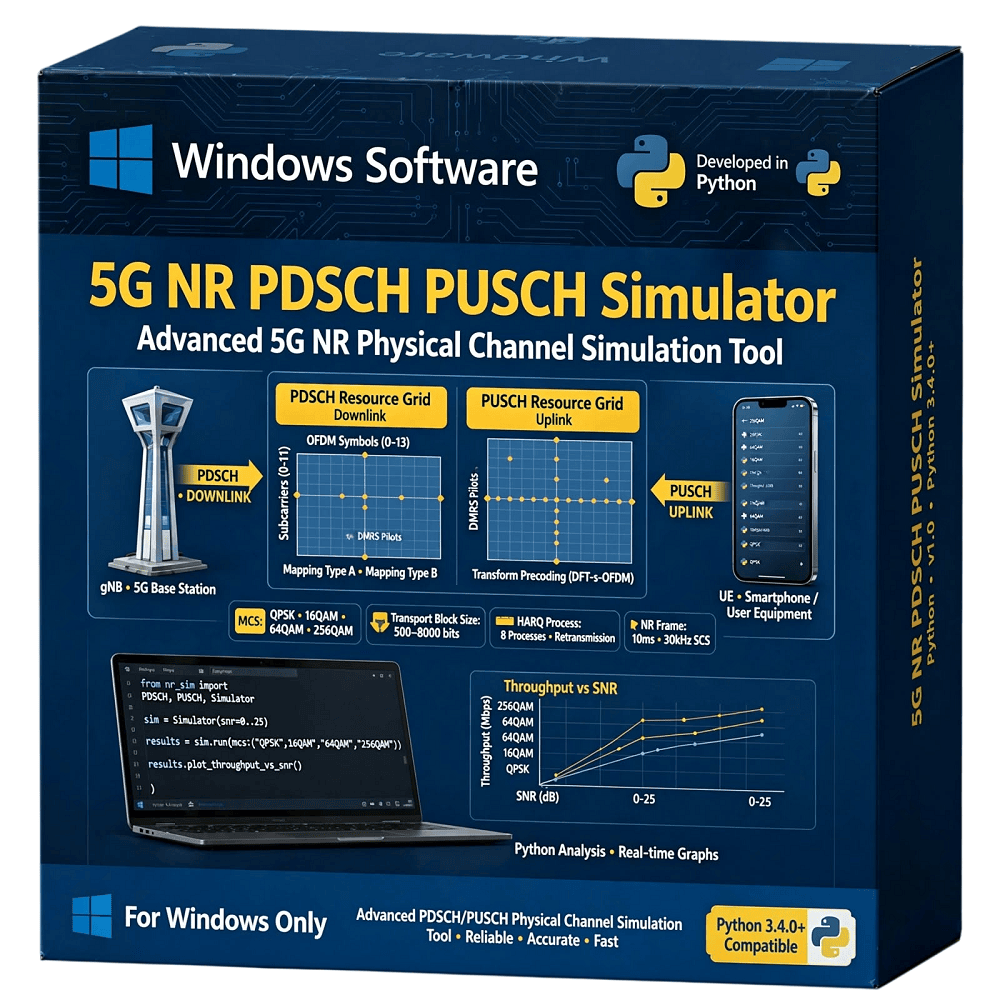
The 5G NR PDSCH PUSCH Simulator is a Python-based simulation software solution designed for researchers, engineers, students, and telecommunications professionals working with 5G New Radio (NR) physical-layer technologies. The simulator provides a practical environment for studying and experimenting with PDSCH (Physical Downlink Shared Channel) and PUSCH (Physical Uplink Shared Channel) transmission concepts.
Developed using Python, the simulator is suitable for academic research, algorithm development, demonstrations, testing, and educational applications related to 5G NR communication systems.
Available for sale as a software product. Contact us for product details, licensing, and purchase information.
Original price was: ₹129,999.00.₹12,999.00Current price is: ₹12,999.00. -
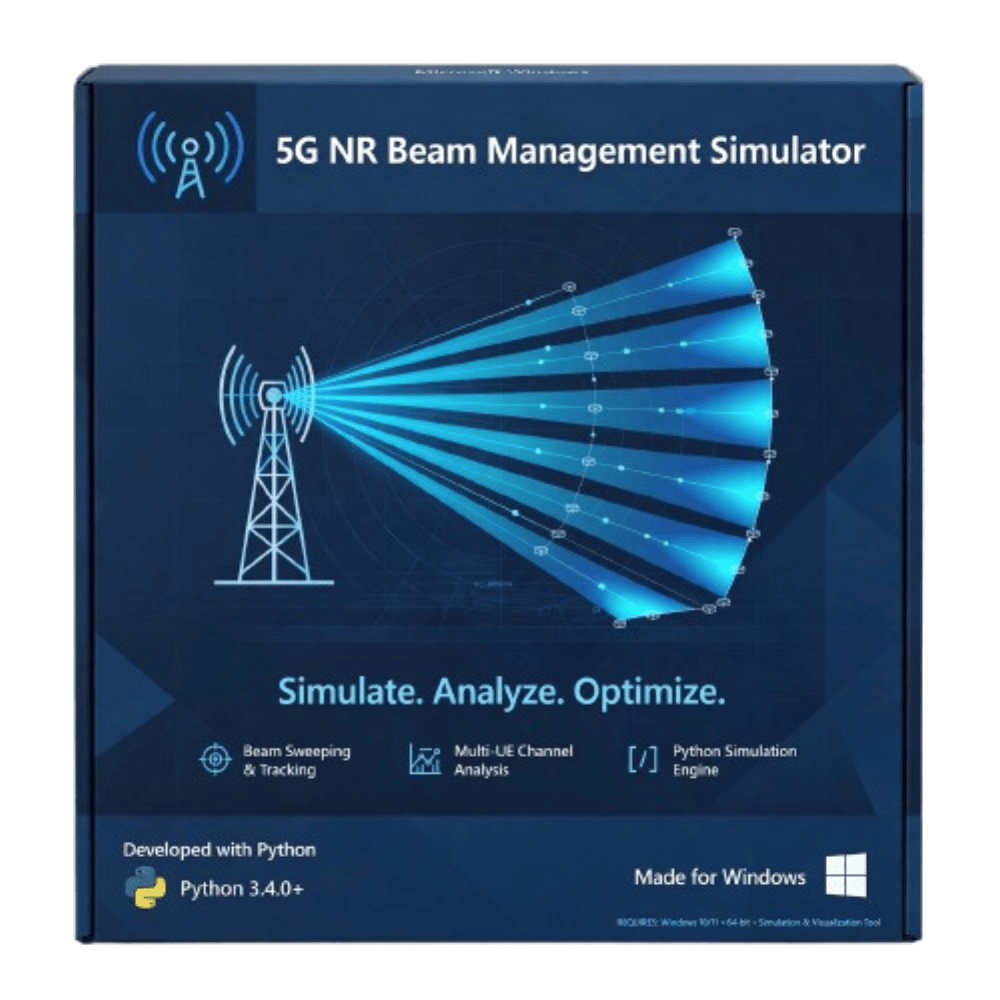
5G NR Beam Management Simulator is an advanced simulation solution designed to model, analyze, and optimize beam management procedures in 5G New Radio (NR) networks. It enables engineers and researchers to evaluate beam sweeping, beam measurement, beam selection, beam reporting, and beam recovery under diverse network and channel conditions. The simulator supports performance analysis of directional communication, helping users assess beamforming strategies, mobility scenarios, link reliability, and system-level performance before real-world deployment.
Original price was: ₹74,999.00.₹12,999.00Current price is: ₹12,999.00. -
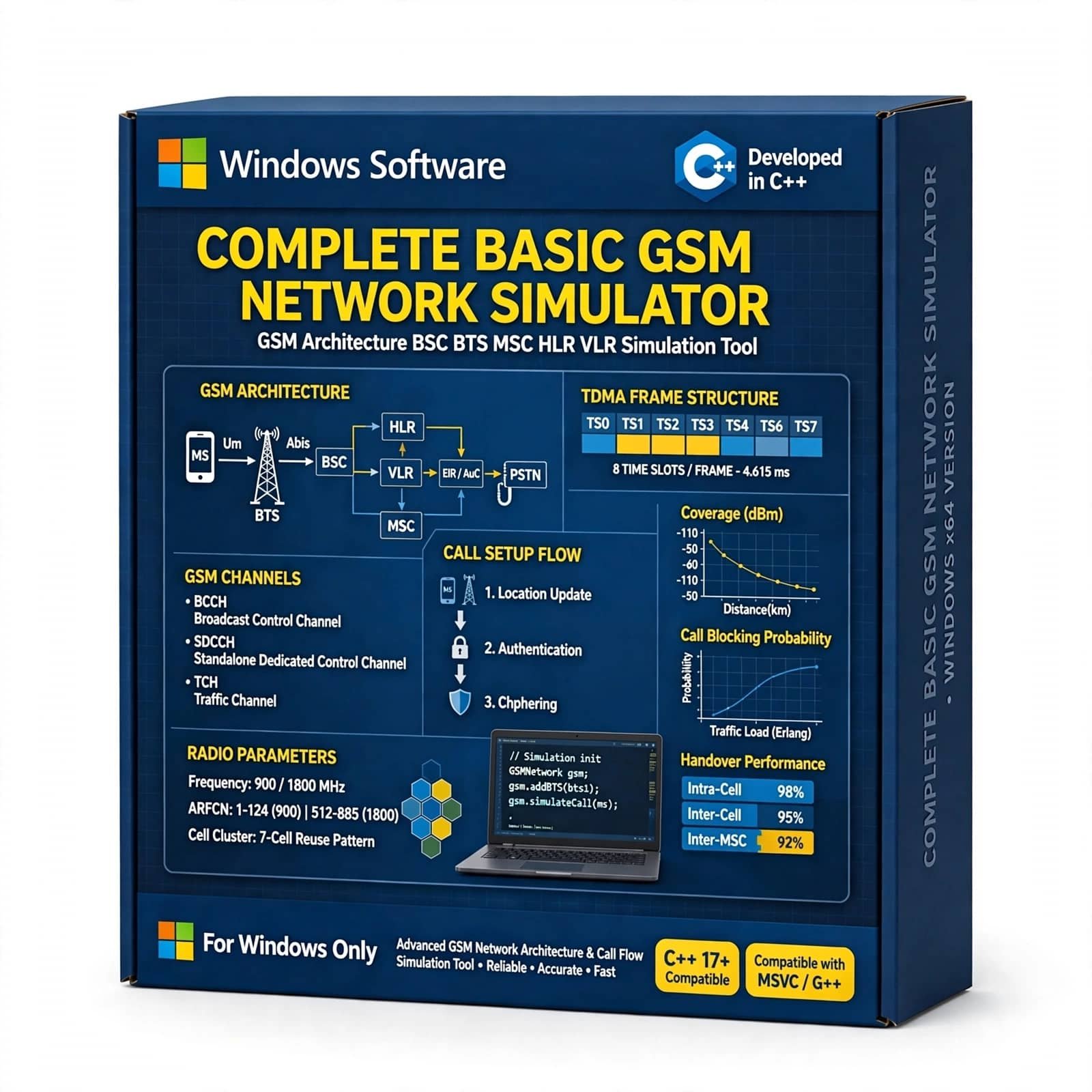
Complete Basic GSM Network with C++ is an educational and simulation-based project that demonstrates the fundamental architecture and operation of a GSM network using C++. It helps students and researchers understand GSM components, mobile communication, call and message handling, network signaling, and basic cellular network operations through a practical C++ implementation.
Original price was: ₹3,999.00.₹2,399.00Current price is: ₹2,399.00. -
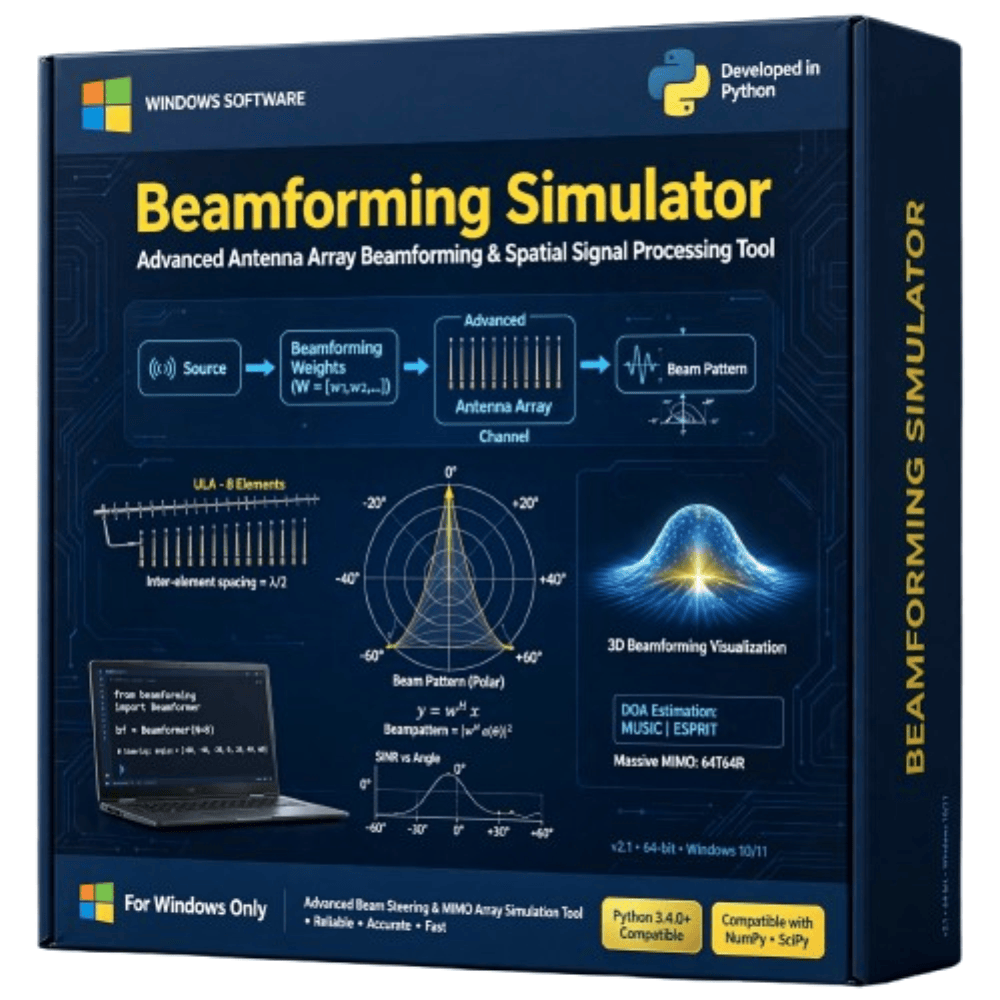
The Beamforming Simulator is a practical wireless communication simulation project designed to demonstrate how antenna arrays can control and direct radio-frequency signals toward desired users or directions. The simulator helps visualize beam patterns, signal direction, antenna-array behavior, and beam steering under different parameters. It is suitable for studying beamforming, antenna arrays, MIMO, 5G communication, wireless networks, and signal processing. This project is ideal for engineering students, researchers, and learners working on wireless communication and advanced antenna technologies.
₹1,999.00 -
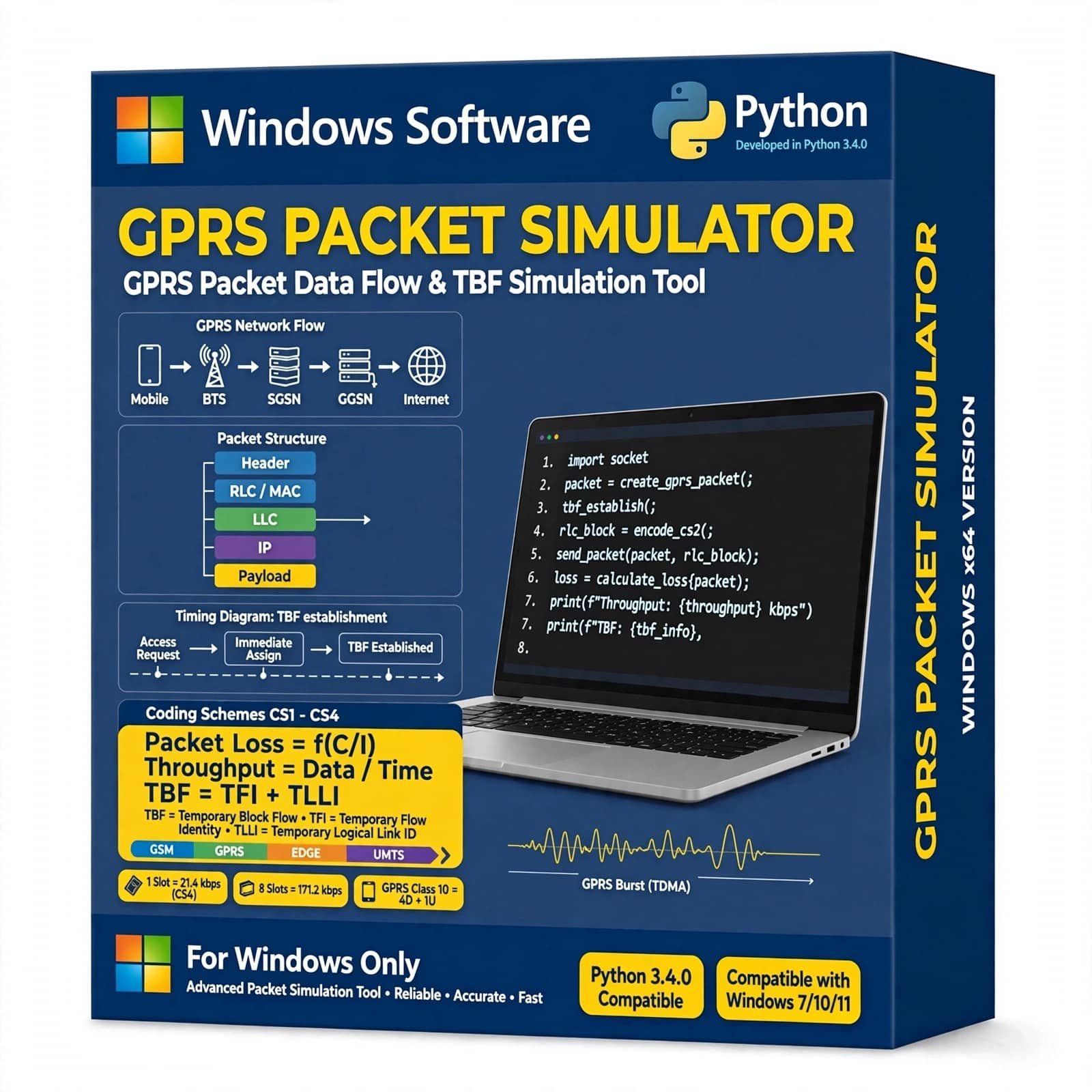
GPRS Packet Simulator is a powerful software solution for simulating GPRS data packets and testing GSM/GPRS communication systems. It helps developers, engineers, and testing teams generate, analyze, and validate packet-based communication in a controlled environment without requiring extensive physical network infrastructure. Ideal for GPRS testing, protocol development, IoT applications, and telecom system validation.
₹3,999.00 -
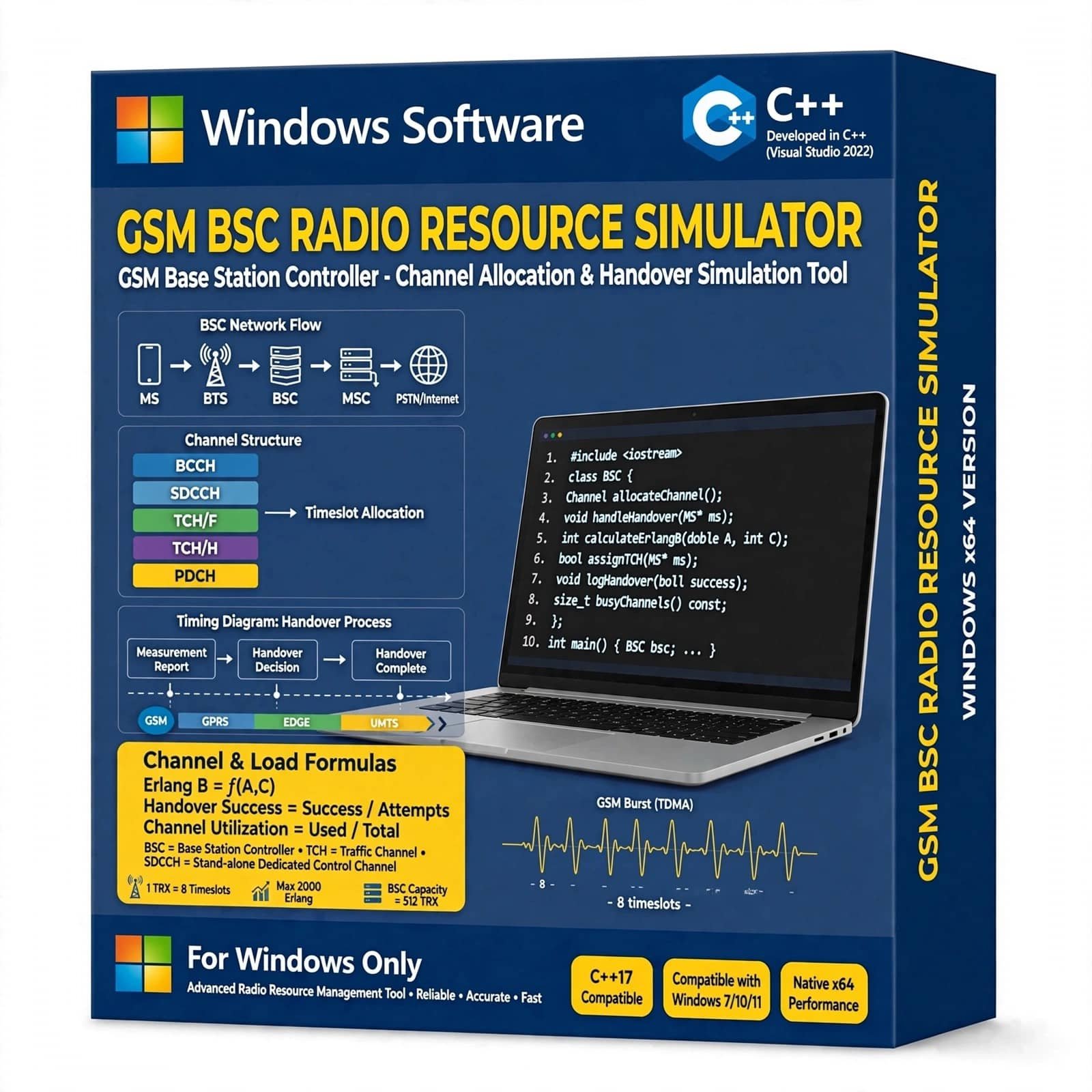
GSM BSC Radio Resource Simulator is a professional telecom training and development solution designed to simulate GSM Base Station Controller (BSC) radio resource management functions. It helps students, telecom engineers, researchers, and network professionals understand GSM radio resource allocation, channel management, call handling, handover concepts, and BSC-related network procedures in a controlled simulation environment.
Original price was: ₹750.00.₹100.00Current price is: ₹100.00.


Reviews
There are no reviews yet.