
New
95% Off


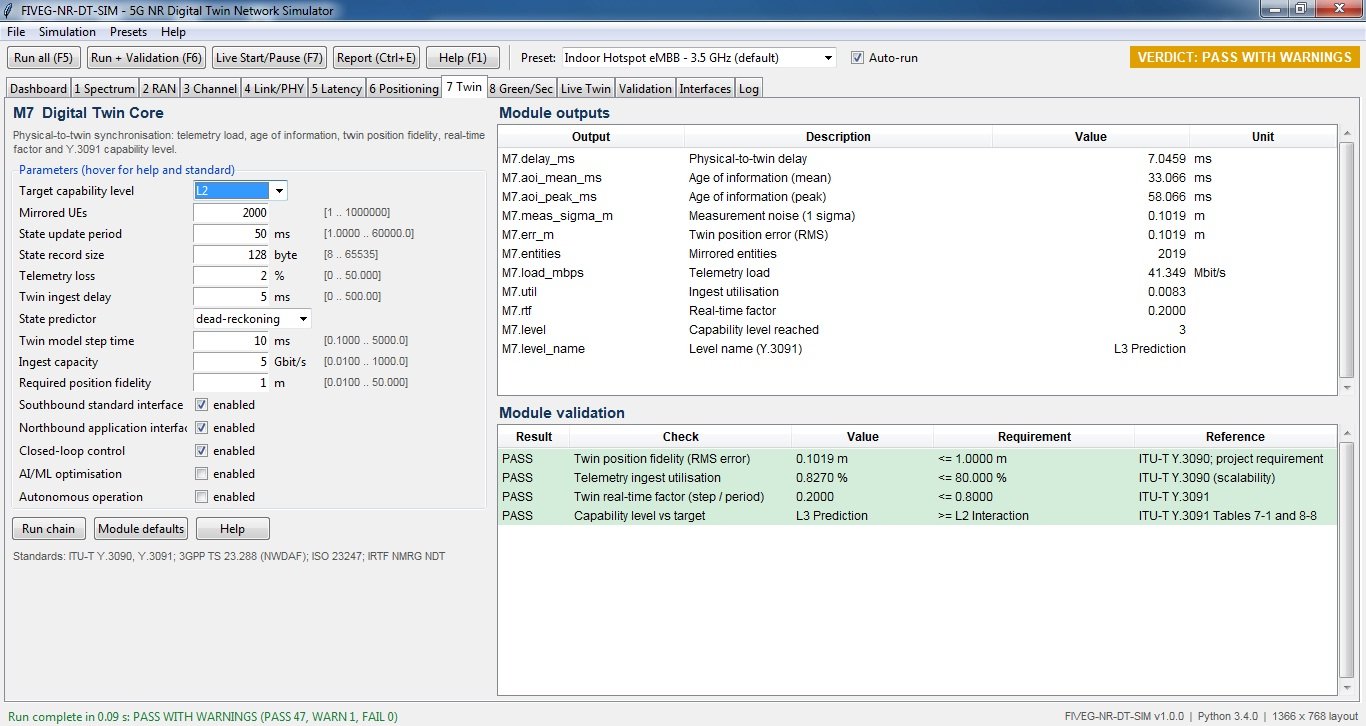
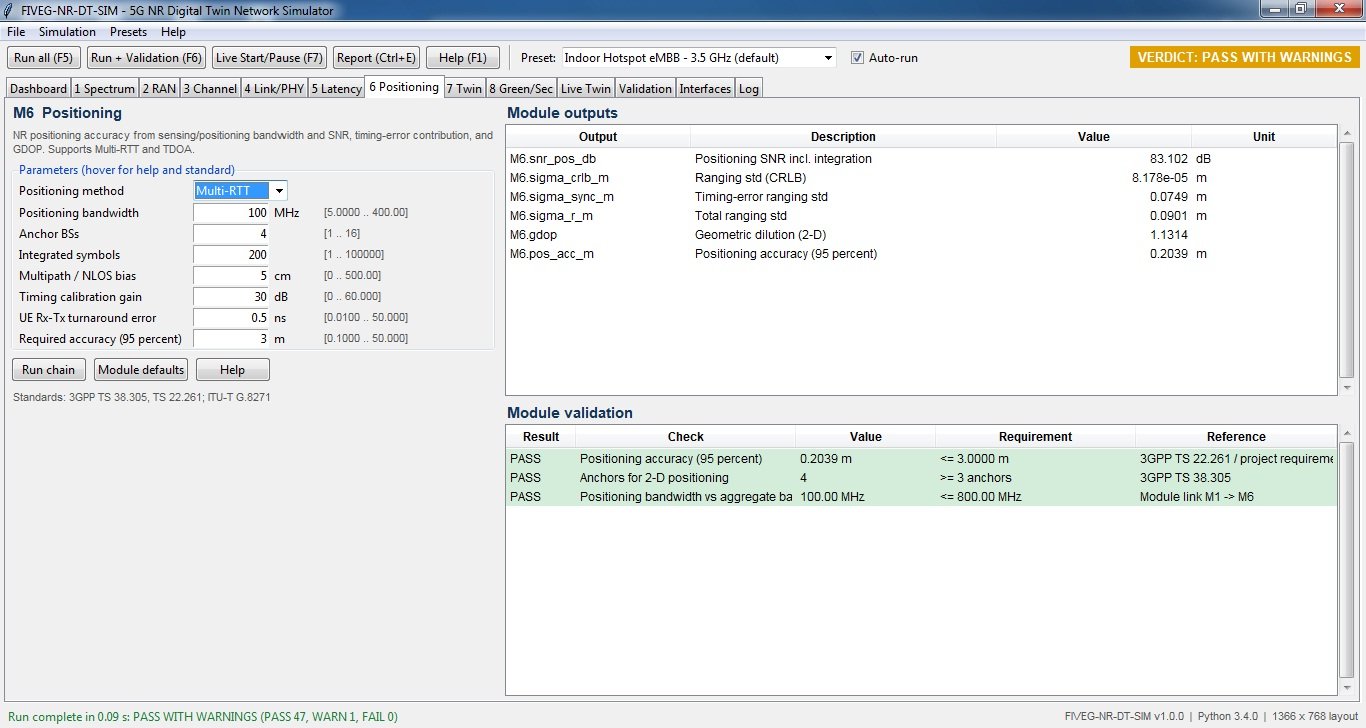
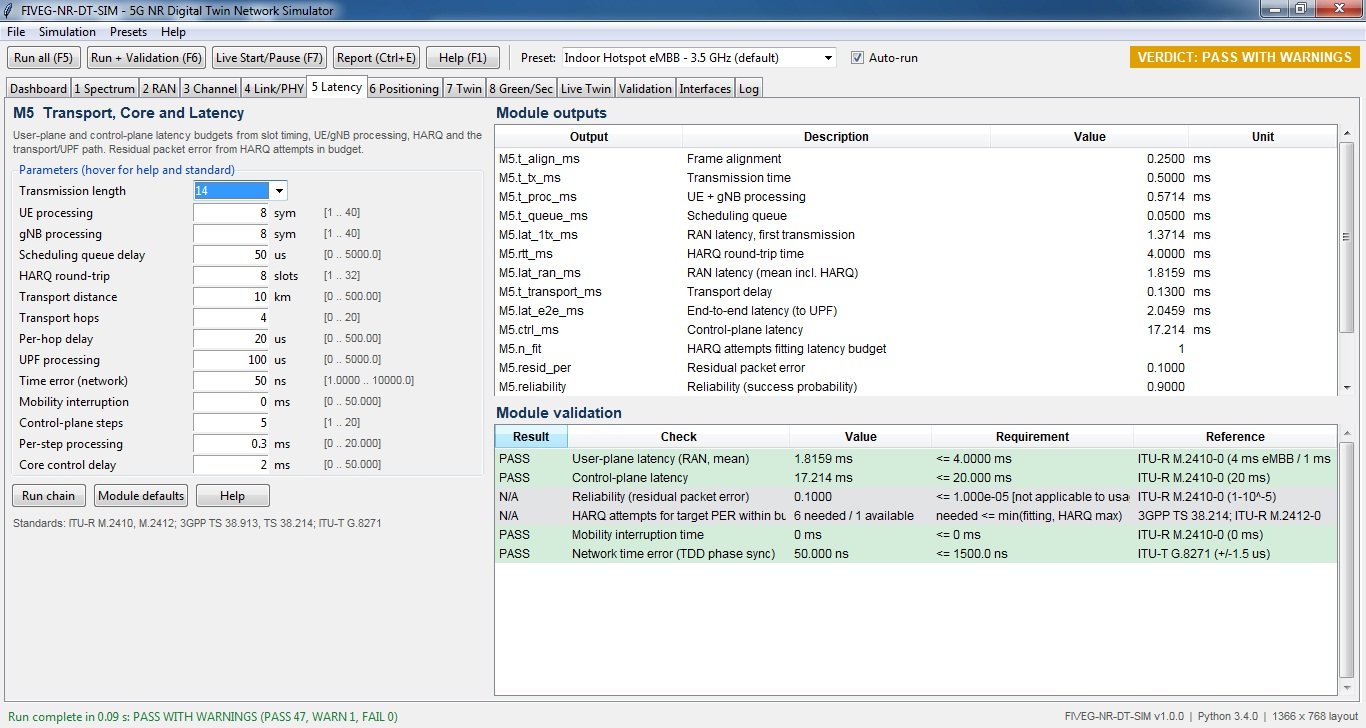
5G NR Digital Twin Parametric Validation


Original price was: ₹800,000.00.₹40,000.00Current price is: ₹40,000.00.
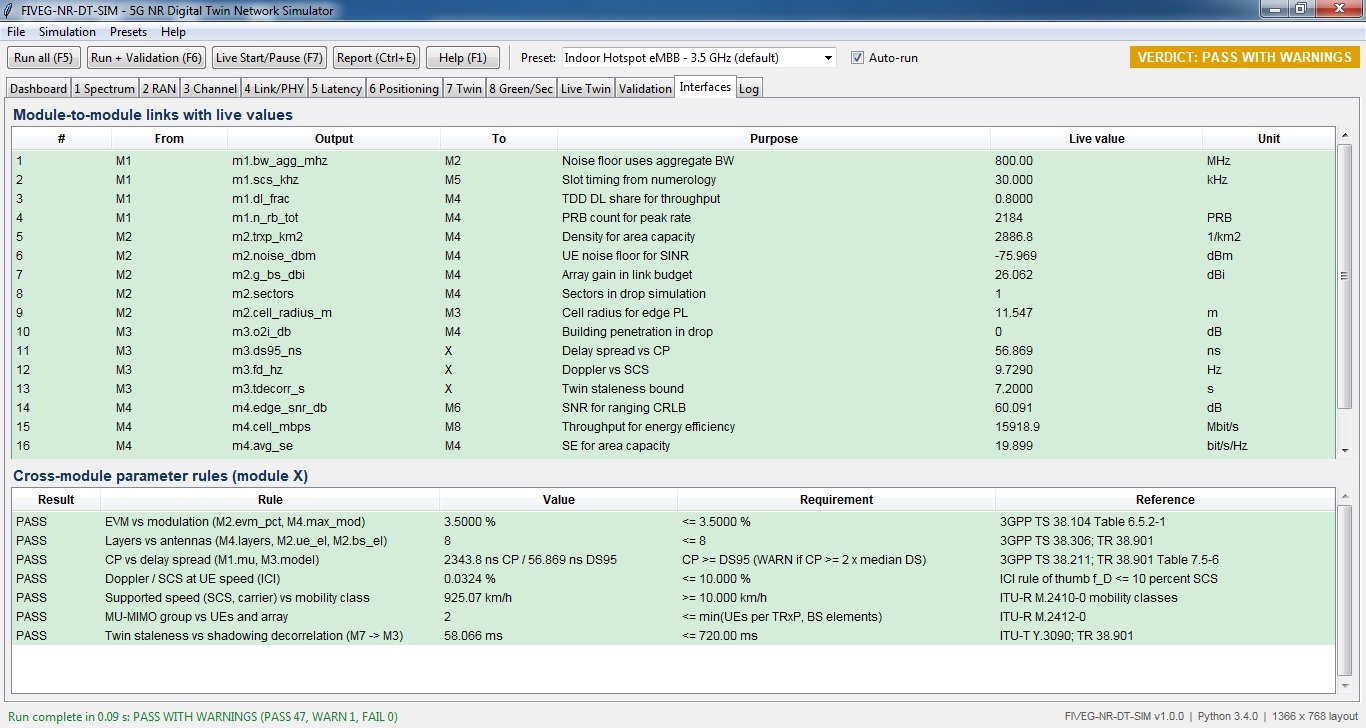
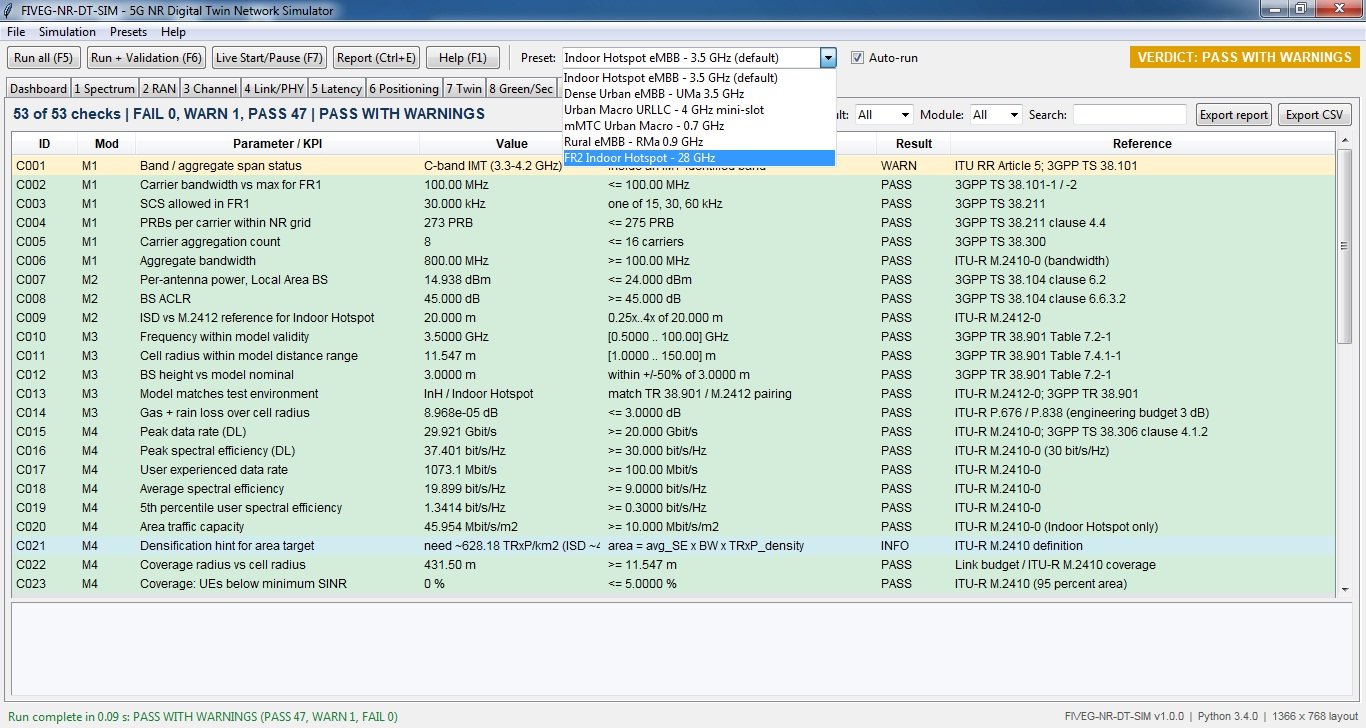
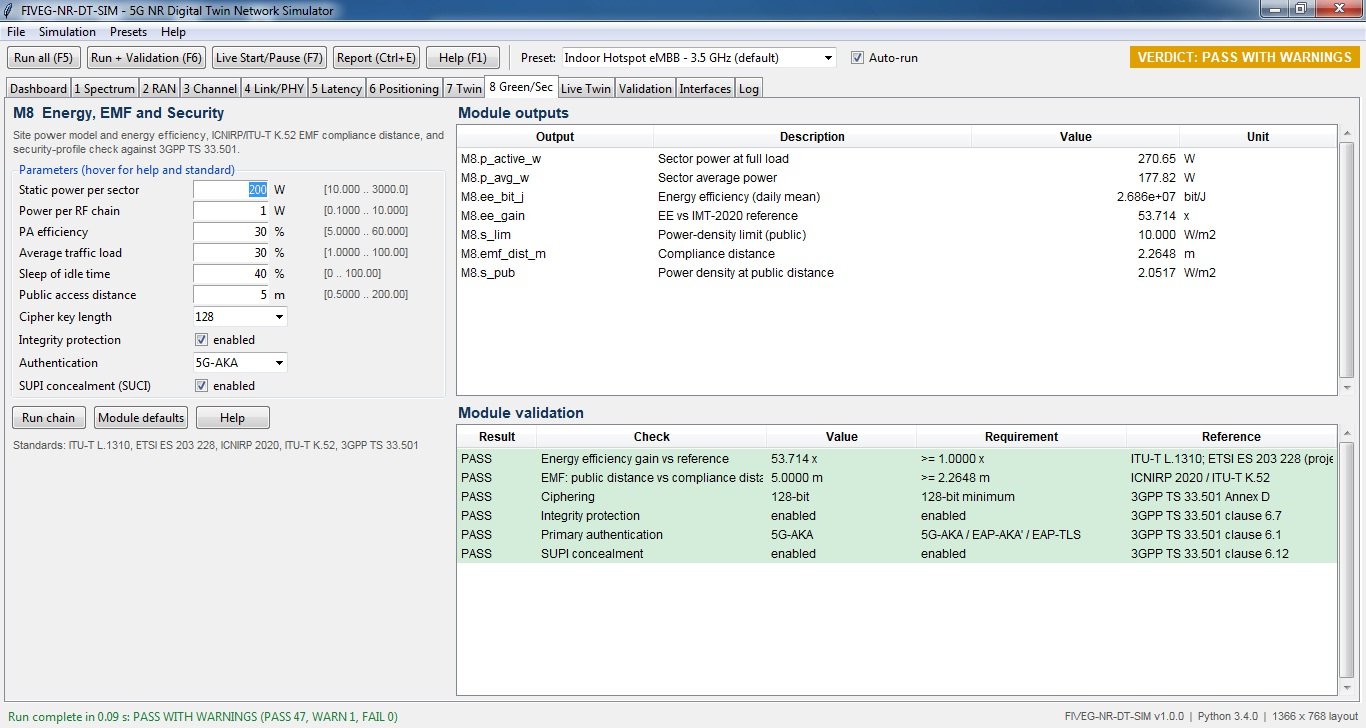
In Stock5G NR Digital Twin Parametric Validation with Python is a simulation-based solution for modeling, analyzing, and validating the performance of 5G New Radio (NR) communication networks. Using Python-based modeling and data analysis, researchers can evaluate radio parameters, channel conditions, throughput, latency, signal quality, and resource allocation under different network scenarios. Ideal for telecommunications research, 5G network optimization, digital twin development, and wireless performance evaluation, this approach supports systematic parametric testing and data-driven validation of next-generation cellular communication systems.
Description
5G NR Digital Twin Parametric Validation with Python
5G NR Digital Twin Parametric Validation with Python is a simulation-based approach for modeling, testing, and validating the performance of 5G New Radio (NR) wireless communication systems. 5G NR is the radio access technology developed to support high-speed mobile broadband, improved network responsiveness, massive device connectivity, and flexible radio resource management. Digital twin technology enables researchers to create virtual representations of communication systems and investigate how changes in network parameters influence overall performance.
Python provides a flexible environment for developing simulation models, processing network measurements, automating experiments, and visualizing performance results. By combining digital twin modeling with parametric validation, researchers can evaluate network configurations and compare simulated behavior with reference data.

Key Features of 5G NR Parametric Validation
Parametric validation focuses on systematically changing input parameters and measuring their effects on network performance. In a 5G NR digital twin, relevant parameters may include carrier frequency, channel bandwidth, subcarrier spacing, transmit power, antenna configuration, modulation and coding schemes, user density, and propagation conditions.
A Python-based implementation can automate parameter sweeps, execute simulation scenarios, calculate performance metrics, and generate comparison reports. Depending on the implemented models, it may also support sensitivity analysis, error measurement, model calibration, and visualization of performance trends.
These capabilities help researchers identify important configuration variables and investigate how different radio conditions affect communication quality.

Python-Based 5G NR Digital Twin Modeling
Python is widely used for scientific computing, numerical analysis, data processing, and machine learning. Libraries such as NumPy, pandas, SciPy, and Matplotlib can support numerical calculations, measurement processing, statistical analysis, and result visualization.
A typical workflow begins by defining a virtual representation of a 5G NR network and selecting the parameters to investigate. The simulation then evaluates different configurations and records relevant outputs, such as throughput, latency, signal-to-interference-plus-noise ratio (SINR), block error rate (BLER), and spectral efficiency.
When real network measurements or reference simulation results are available, the digital twin can be calibrated and evaluated against those data. This helps determine whether the model represents the intended system with sufficient accuracy for its research objectives.

Applications of 5G NR Digital Twin Technology
5G NR digital twin parametric validation can support research in radio access networks, network planning, massive multiple-input multiple-output (MIMO), beamforming, spectrum utilization, and intelligent resource allocation.
Researchers can investigate the effects of changing bandwidth, antenna settings, traffic loads, and channel conditions on network performance. Potential applications include cellular coverage analysis, network capacity planning, interference evaluation, mobility studies, and optimization of radio resource management.
The same framework can be extended to study private 5G networks, industrial Internet of Things (IIoT), edge computing, and AI-assisted network optimization when suitable models and data are available.

Benefits for Students, Researchers, and Engineers
Python-based parametric validation enables repeatable experiments, flexible model configuration, and automated performance analysis. Users can compare multiple scenarios, visualize network behavior, identify performance bottlenecks, and document the results systematically.
For students and telecommunications engineers, this approach offers a practical way to explore 5G NR principles and understand the relationship between radio parameters and network performance. It can also reduce the need for repeated physical experiments during early-stage development, although simulation results should not be treated as a substitute for real-world validation when deployment decisions require it.

Conclusion
5G NR Digital Twin Parametric Validation with Python provides a useful framework for investigating wireless network behavior through virtual modeling and systematic parameter testing. By combining Python-based simulation, performance measurement, and reference-data comparison, researchers can evaluate configuration choices and improve their understanding of 5G NR network performance.
Whether used for academic projects, telecommunications research, radio network optimization, or digital twin development, this approach supports repeatable experimentation and data-driven analysis of modern cellular communication systems.
Related products
-
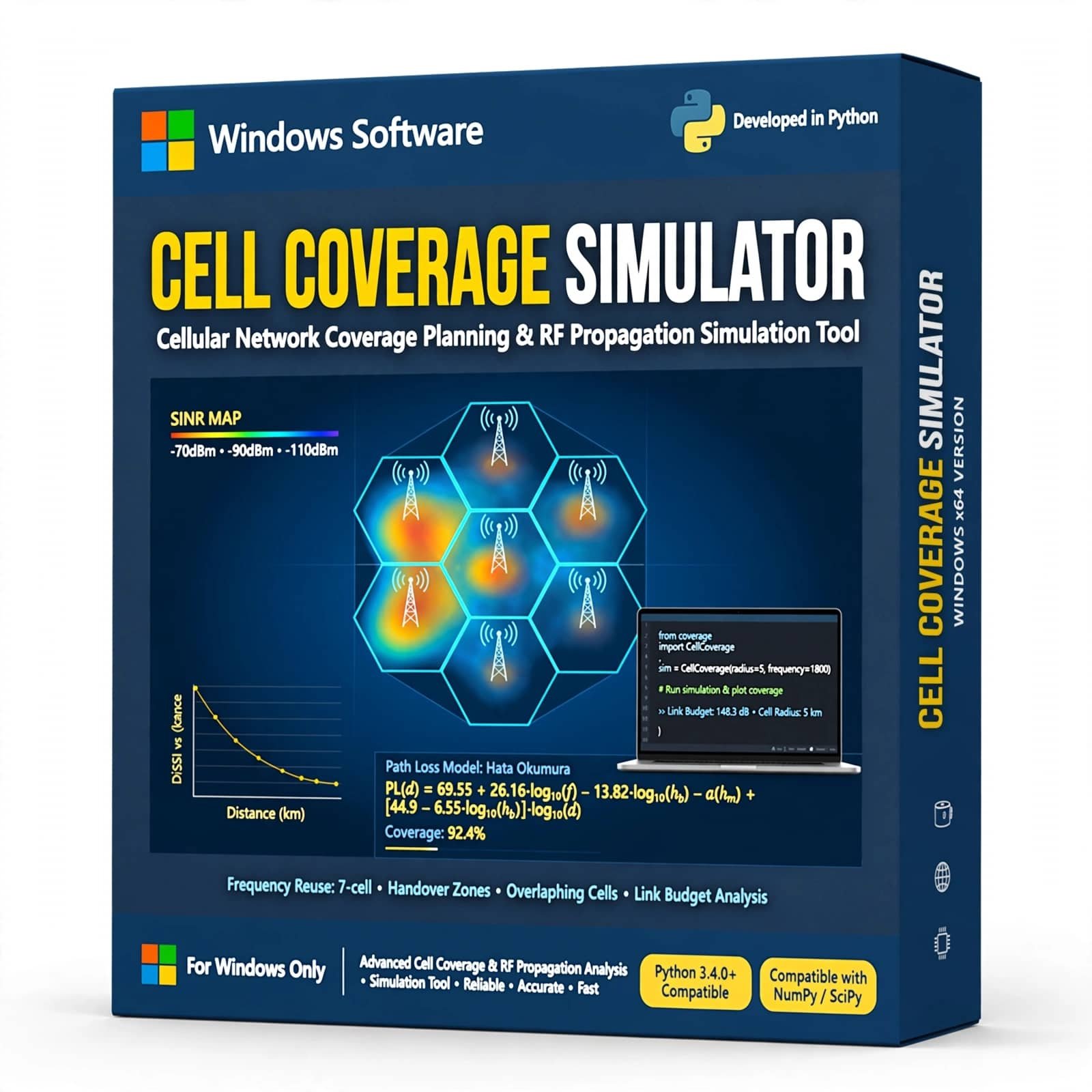
Cell Coverage Simulator is a wireless communication simulation tool designed to model and analyze cellular network coverage using Python. It helps students, researchers, and telecom professionals visualize cell coverage, signal propagation, coverage areas, and network planning concepts through practical simulation and analysis.
₹6,999.00 -
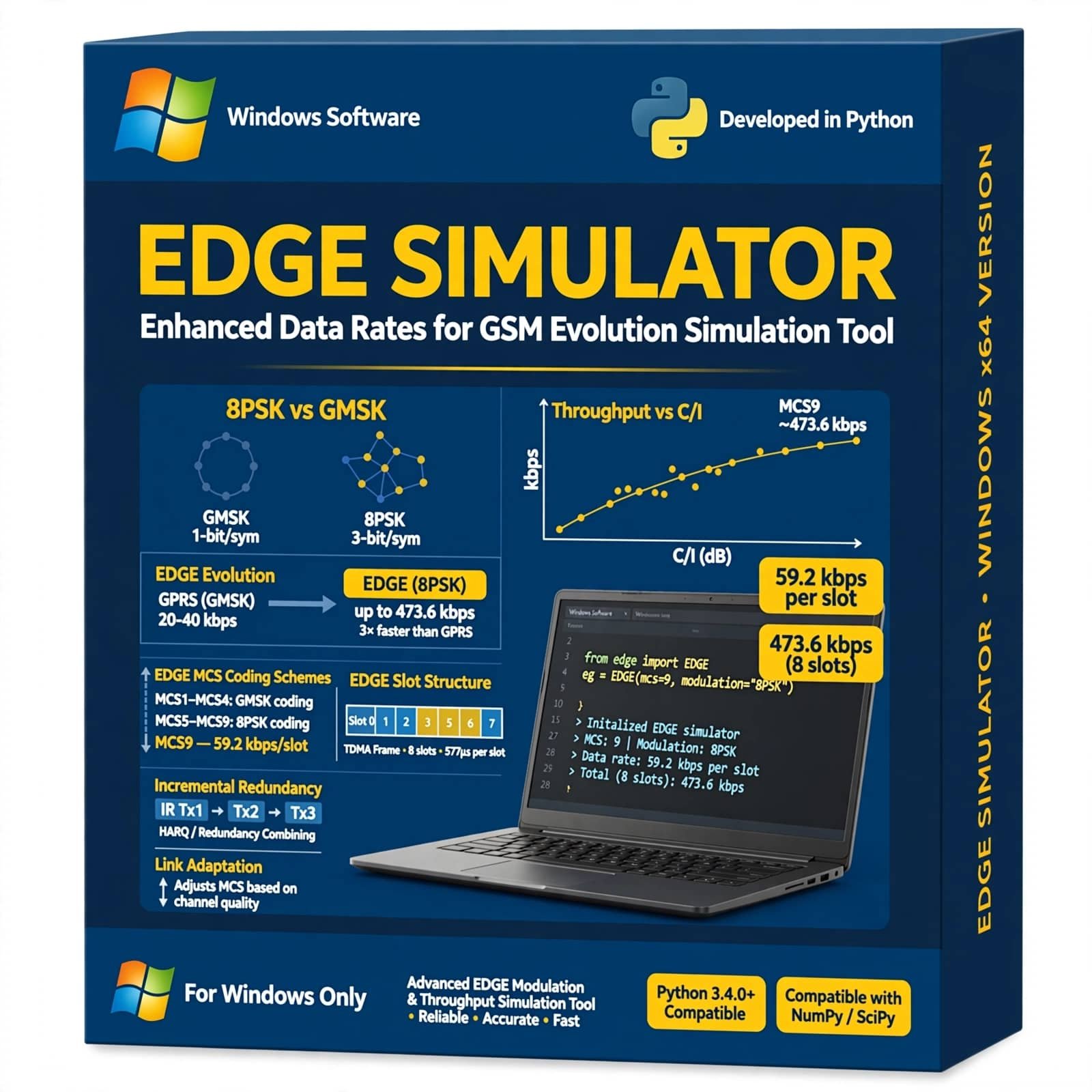
EDGE Simulator Using Python is a practical mobile communication simulation tool designed to demonstrate and analyze Enhanced Data rates for GSM Evolution (EDGE) technology. It helps students, researchers, and communication engineers study GSM/EDGE data transmission, modulation, channel conditions, bit error rate, data rates, and wireless communication performance using Python-based simulation.
₹3,499.00 -
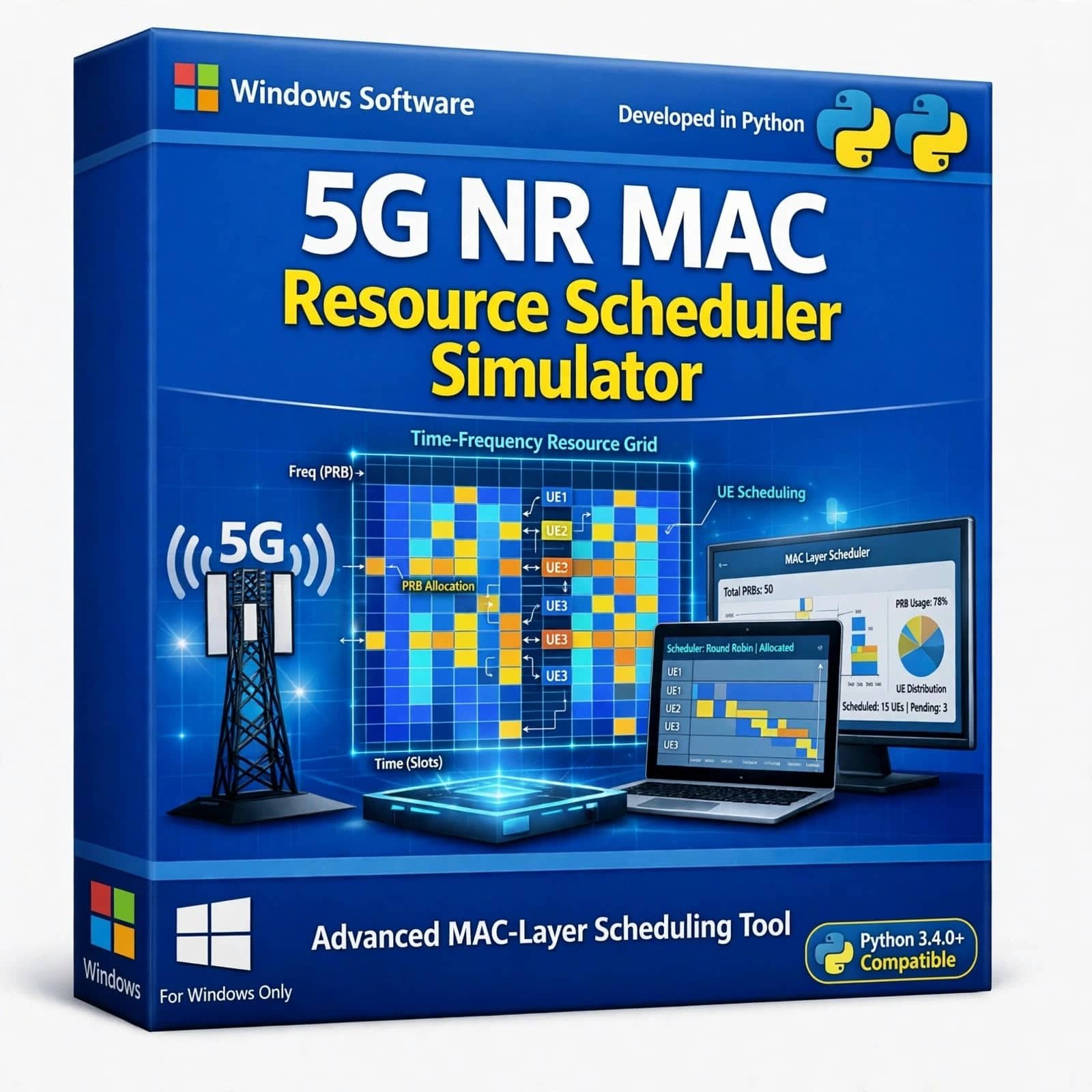
5G NR MAC Resource Scheduler Simulator is an advanced simulation solution for modeling and analyzing Medium Access Control (MAC) layer resource scheduling in 5G New Radio networks. It enables users to evaluate dynamic resource allocation, multi-UE scheduling, uplink and downlink resource management, QoS-aware scheduling, traffic conditions, and scheduling algorithms. The simulator supports analysis of throughput, latency, fairness, spectral efficiency, resource utilization, packet loss, and QoS performance, making it ideal for 5G NR research, scheduler algorithm development, academic projects, and wireless network optimization.
Original price was: ₹129,999.00.₹12,999.00Current price is: ₹12,999.00. -
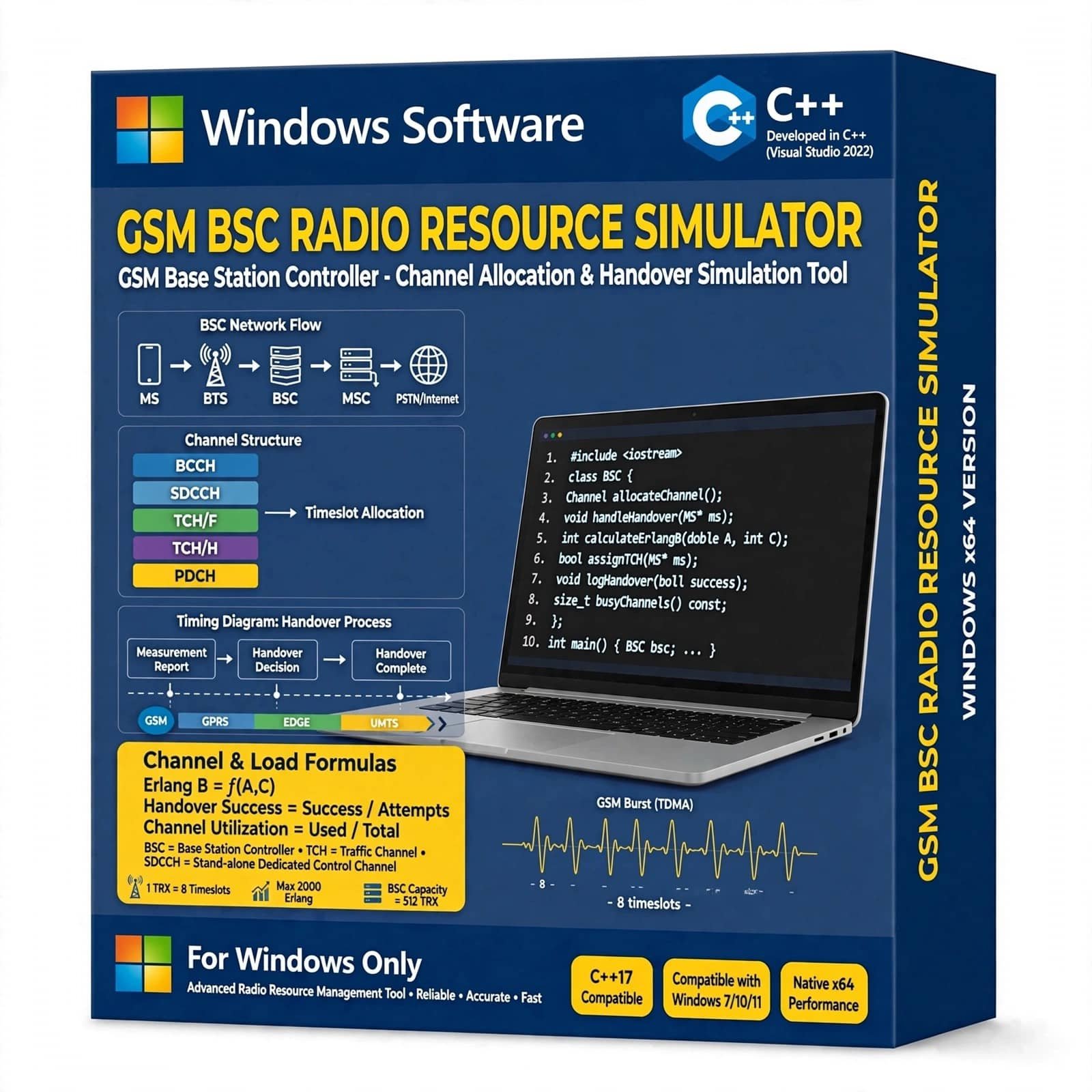
GSM BSC Radio Resource Simulator is a professional telecom training and development solution designed to simulate GSM Base Station Controller (BSC) radio resource management functions. It helps students, telecom engineers, researchers, and network professionals understand GSM radio resource allocation, channel management, call handling, handover concepts, and BSC-related network procedures in a controlled simulation environment.
Original price was: ₹750.00.₹100.00Current price is: ₹100.00. -
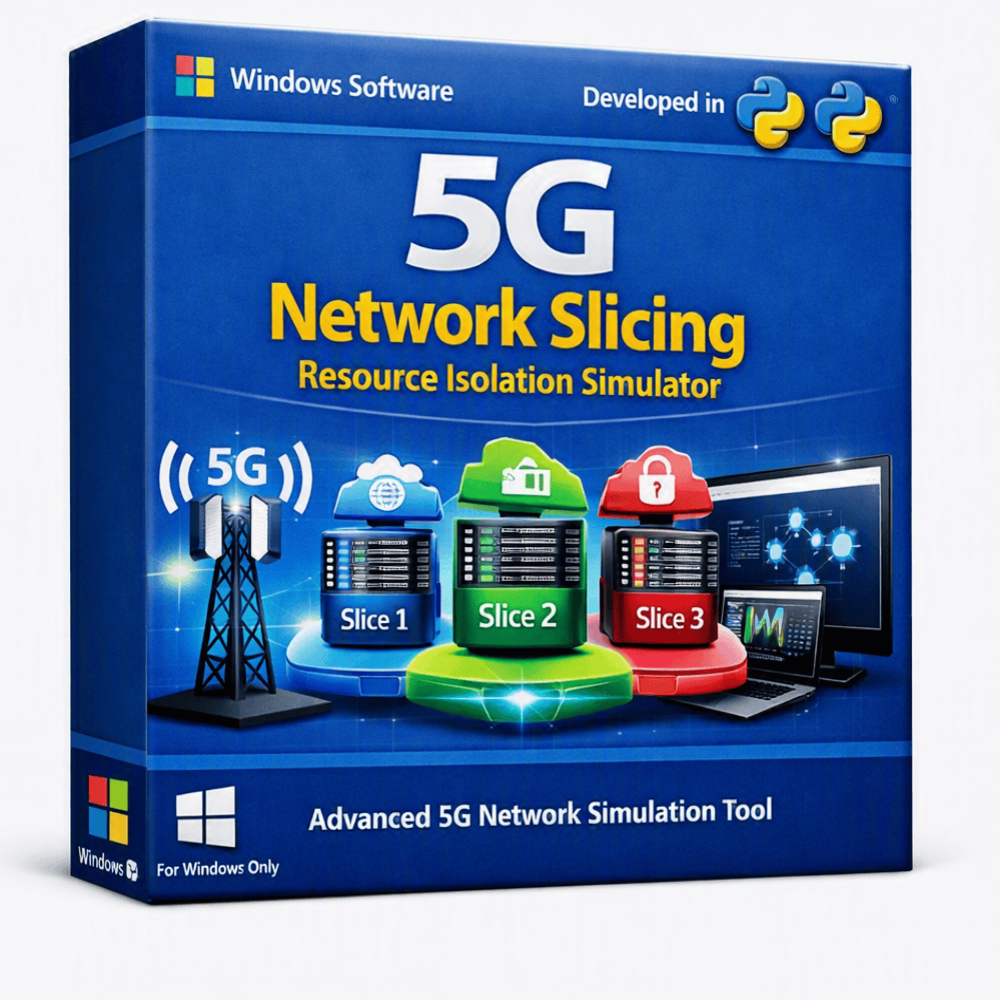
A Python-based 5G Network Slicing and Resource Isolation Simulator designed to model and analyze how multiple logical network slices can share physical 5G infrastructure while maintaining resource isolation. The simulator enables users to study CPU, memory, bandwidth, network capacity, traffic allocation, and resource management across different 5G network slices.
Ideal for 5G research, telecom engineering, academic projects, network optimization, resource allocation studies, and university laboratories.
Original price was: ₹199,999.00.₹19,999.00Current price is: ₹19,999.00. -
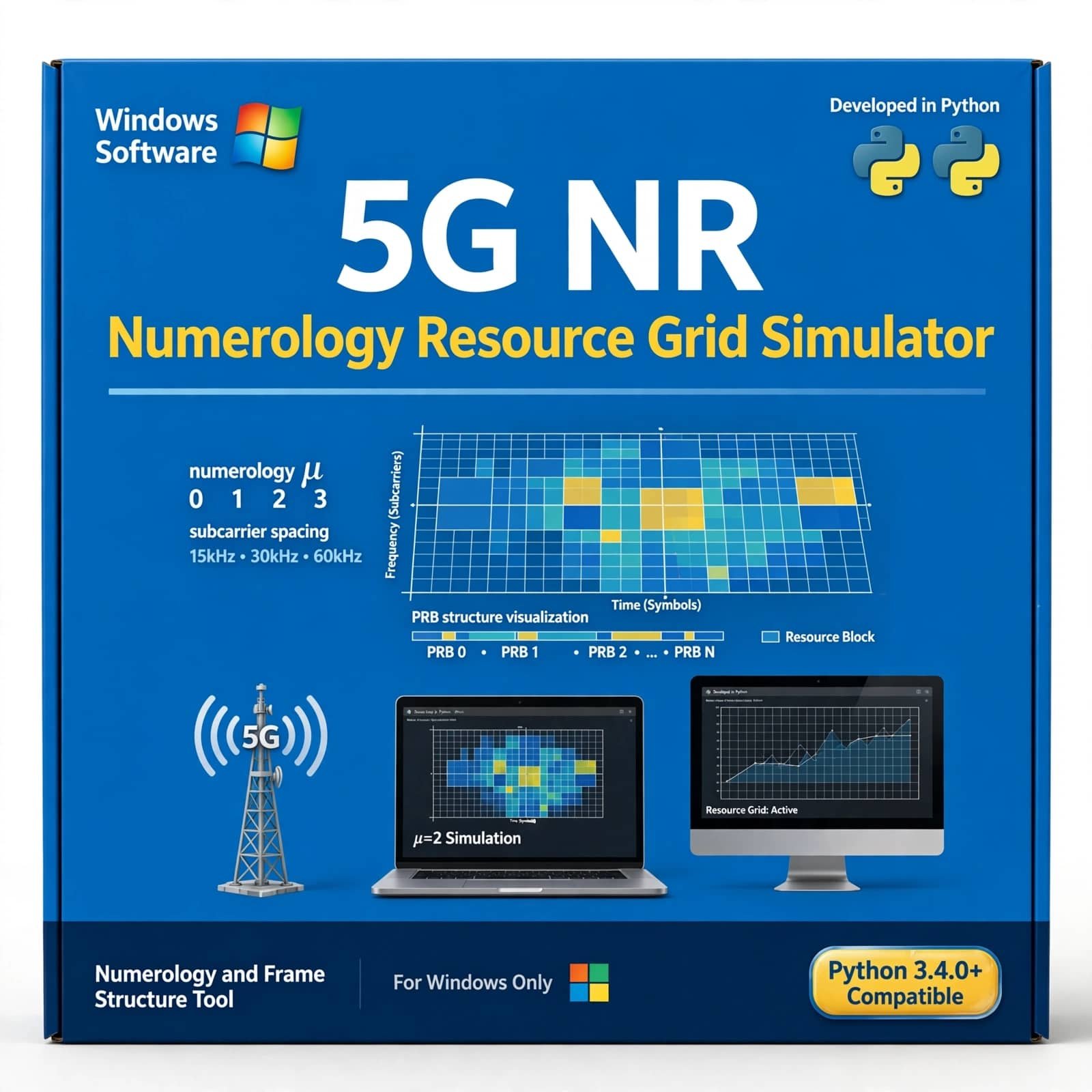
5G NR Numerology Resource Grid Simulator is an advanced simulation solution for modeling and analyzing 5G New Radio numerology and time-frequency resource grid structures. It enables users to study subcarrier spacing, OFDM symbols, slot structure, cyclic prefix, Physical Resource Blocks (PRBs), Resource Elements (REs), bandwidth configurations, and resource mapping. The simulator is ideal for 5G NR physical-layer research, numerology analysis, resource allocation studies, academic projects, waveform development, and 5G/6G wireless communication research.
Original price was: ₹99,999.00.₹9,999.00Current price is: ₹9,999.00.


Reviews
There are no reviews yet.