

LTE Uplink SC-FDMA Simulator


₹6,999.00
In StockLTE Uplink SC-FDMA Simulator developed with Python is a software-based simulation solution designed to study and analyze the SC-FDMA transmission technique used in the LTE uplink. It provides a practical environment for understanding DFT-spread OFDM, subcarrier mapping, signal generation, modulation, transmission, and receiver processing. Ideal for 4G LTE physical-layer research, wireless communication studies, academic projects, signal-processing experiments, and Python-based telecom simulation.
Description
LTE Uplink SC-FDMA Simulator
The LTE Uplink SC-FDMA Simulator developed with Python is a software-based simulation solution designed to help students, researchers, telecom engineers, and developers understand and experiment with Single Carrier Frequency Division Multiple Access (SC-FDMA) technology used for uplink transmission in 4G LTE wireless communication systems.
SC-FDMA is an important component of LTE uplink communication. It is based on a DFT-spread OFDM transmission approach and was selected for LTE uplink because of its favorable signal characteristics, particularly its lower peak-to-average power ratio compared with conventional OFDM transmission.
Understanding the LTE uplink physical layer and SC-FDMA processing can be challenging through theory alone. An LTE Uplink SC-FDMA Simulator provides a practical environment for exploring the different stages of the transmission chain, including data processing, modulation, DFT spreading, subcarrier mapping, signal generation, and receiver-side processing.
Developed using Python, this simulator provides a flexible platform for academic learning, wireless communication research, signal-processing experiments, and LTE project development.
Understand LTE Uplink Transmission
The LTE uplink is responsible for transmitting data from user equipment to the LTE base station. Unlike the LTE downlink, which uses OFDM, LTE uplink employs an SC-FDMA-based waveform.
The choice of SC-FDMA is closely related to the requirements of mobile devices. A lower peak-to-average power ratio can help improve power-amplifier efficiency, which is particularly relevant to battery-powered user equipment.
The LTE Uplink SC-FDMA Simulator developed with Python can help users understand this important difference between LTE uplink and downlink transmission and explore how SC-FDMA is used to construct the uplink signal.

Python-Based SC-FDMA Simulation
The simulator is developed using Python, providing a flexible environment for implementing and studying digital communication and signal-processing algorithms.
Python is widely used for scientific computing, numerical analysis, data processing, machine learning, and wireless communication research. Its accessibility makes it suitable for students and researchers who want to investigate LTE physical-layer concepts while also developing practical programming skills.
A Python-based SC-FDMA simulator can serve as a foundation for experimenting with different transmission parameters, signal-processing stages, and LTE uplink scenarios.
Explore DFT-Spread OFDM
A fundamental characteristic of SC-FDMA is the use of DFT spreading before subcarrier mapping. This processing differentiates SC-FDMA from conventional OFDM and contributes to its single-carrier-like signal characteristics.
The simulator can be used to explore the conceptual processing chain associated with DFT-spread OFDM and understand how data symbols are transformed before being mapped onto the available subcarriers.
This makes the simulator useful for students studying digital communications, OFDM, SC-FDMA, LTE physical-layer processing, and signal processing.

Study SC-FDMA Subcarrier Mapping
Subcarrier mapping is an important stage in LTE uplink signal generation. After DFT processing, the resulting symbols are mapped onto designated subcarriers before the signal is converted into the time domain.
An LTE SC-FDMA Simulator in Python can help users study this process and understand how frequency-domain resources are organized for uplink transmission.
By examining the mapping process, users can develop a better understanding of the relationship between DFT spreading, subcarrier allocation, and time-domain waveform generation.
Understand LTE Physical Layer Processing
LTE uplink transmission involves several signal-processing stages. Studying these stages individually can help users understand how raw data is converted into a signal suitable for wireless transmission.
Depending on the implementation, an SC-FDMA simulation environment can be used to explore processes such as:
- Input data generation
- Symbol modulation
- DFT processing
- Subcarrier mapping
- IFFT processing
- Cyclic prefix concepts
- SC-FDMA waveform generation
- Receiver-side signal processing
These concepts provide an important foundation for understanding LTE uplink physical-layer communication.

Study LTE Uplink Waveforms
Waveform analysis is an important part of wireless communication research. Simulation allows users to generate and examine signals without requiring a physical LTE transmitter.
The LTE Uplink SC-FDMA Simulator developed with Python can provide a controlled environment for studying the characteristics of simulated uplink signals and examining how different processing stages influence the resulting waveform.
This can be useful for signal-processing experiments, academic demonstrations, and research projects involving LTE uplink technologies.
Applications of LTE Uplink SC-FDMA Simulator
The simulator can be useful for a wide range of academic, research, and development applications, including:
- 4G LTE uplink simulation
- SC-FDMA waveform generation
- DFT-spread OFDM studies
- LTE physical-layer research
- Subcarrier mapping experiments
- Digital communication research
- Wireless signal-processing studies
- LTE waveform analysis
- Telecommunications academic projects
- Final-year engineering projects
- LTE laboratory demonstrations
- Python-based communication projects
- LTE protocol and physical-layer learning
- 4G wireless communication research
It is particularly suitable for students and researchers studying telecommunications, electronics and communication engineering, digital signal processing, wireless communication, computer engineering, and related fields.
Ideal for Academic and Final-Year Projects
The Python LTE SC-FDMA Simulator can serve as a practical foundation for university assignments, laboratory work, final-year engineering projects, and research studies.
Students can use the simulator to demonstrate the LTE uplink transmission chain and explain the role of SC-FDMA in 4G LTE.
A project can investigate different stages of the signal-processing chain, examine simulated waveforms, compare transmission approaches, or explore how different parameters influence signal behavior.
The simulator can therefore help bridge the gap between theoretical LTE concepts and practical software-based experimentation.

Explore LTE Uplink Signal Processing
Digital signal processing plays an important role in the LTE physical layer. SC-FDMA combines several signal-processing operations to produce an uplink waveform suitable for transmission.
Through simulation, users can explore these operations in a controlled environment. This can make concepts such as Fourier transforms, DFT spreading, subcarrier mapping, and IFFT-based waveform generation easier to understand.
For researchers, the simulator can also provide a starting point for investigating customized signal-processing techniques and LTE uplink scenarios.
Flexible Environment for Wireless Research
A software-based simulator provides an alternative to physical radio hardware for many early-stage research and educational experiments. Users can create repeatable scenarios, change parameters, examine simulated signals, and compare results.
The Python implementation makes the environment particularly accessible for experimentation. Researchers and developers can use their Python knowledge to examine simulation logic and potentially extend the platform for project-specific requirements.
This makes the simulator suitable for LTE research, wireless communication education, signal-processing experiments, and telecom software development.
Benefits of LTE Uplink SC-FDMA Simulator
A Python-based LTE SC-FDMA simulation solution offers several potential benefits:
- Practical understanding of LTE uplink transmission
- Python-based programmable environment
- SC-FDMA waveform simulation
- Study of DFT-spread OFDM
- Subcarrier mapping experimentation
- LTE physical-layer learning
- Wireless signal-processing analysis
- Useful for academic demonstrations
- Suitable for telecom research
- Can serve as a foundation for customized experiments
By combining LTE theory with software simulation, users can develop a clearer understanding of how SC-FDMA supports uplink communication in 4G LTE systems.
Why Choose an LTE SC-FDMA Simulator?
SC-FDMA is a defining technology of the LTE uplink and is an important subject for anyone studying 4G wireless communication. Understanding its processing chain helps students and researchers appreciate how LTE user equipment generates and transmits uplink signals.
The LTE Uplink SC-FDMA Simulator developed with Python combines these telecommunications concepts with a flexible programming environment. It can be used to explore signal generation, frequency-domain processing, subcarrier mapping, and other aspects of LTE uplink communication.
Conclusion
The LTE Uplink SC-FDMA Simulator developed with Python provides a practical software environment for studying the SC-FDMA transmission technique used in 4G LTE uplink communication. It can help users understand DFT spreading, subcarrier mapping, waveform generation, signal processing, and LTE physical-layer concepts.
Whether you are working on an LTE academic project, final-year engineering project, wireless communication research project, SC-FDMA study, digital signal-processing experiment, or Python-based telecom simulation, this simulator can provide a useful foundation for learning and experimentation.
Explore LTE Uplink SC-FDMA simulation with Python and gain practical insight into the signal-processing technology used to support efficient uplink communication in 4G LTE wireless networks.
Related products
-
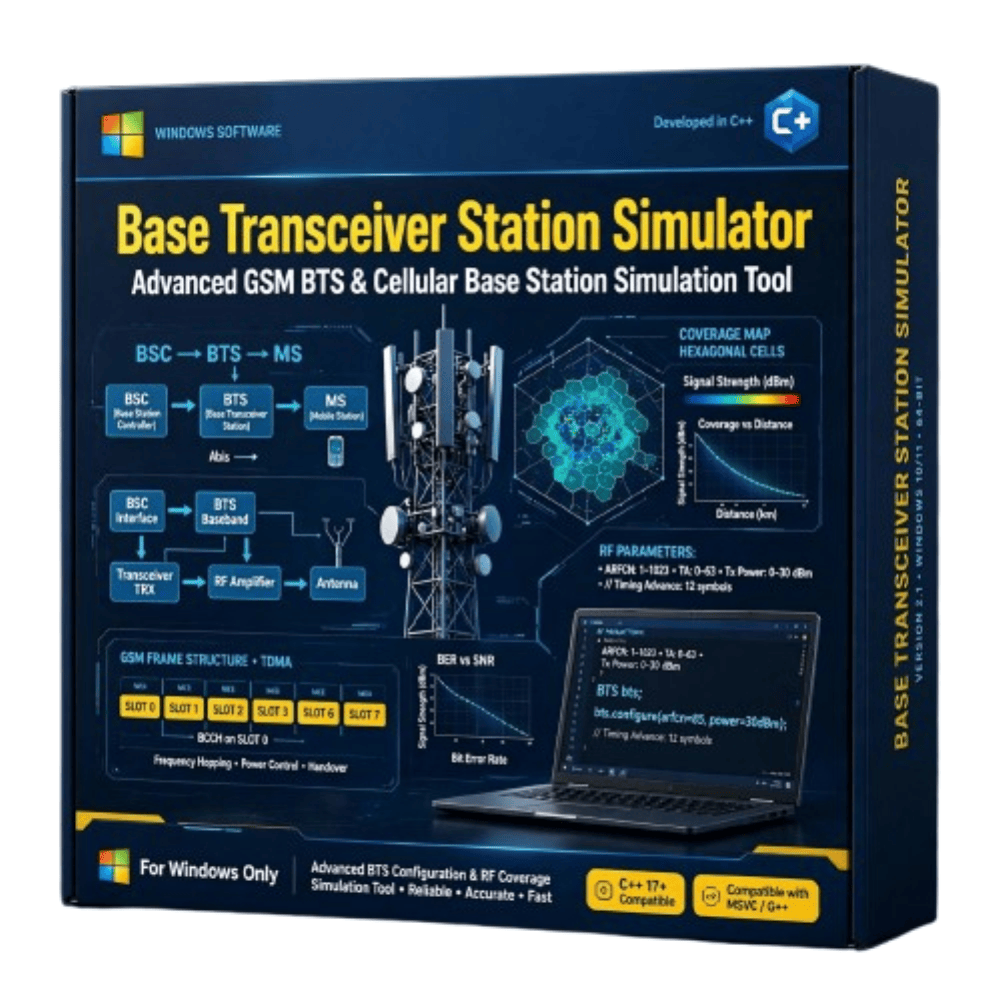
The Base Transceiver Station Simulator Using C++ is a practical cellular communication simulation project designed to demonstrate the basic operation of a BTS in a mobile communication network. Developed using C++, the simulator can model communication between mobile users and a base station, including signal handling, user connectivity, channel allocation, and basic network operations. This BTS Simulator project is suitable for engineering students, researchers, and learners working on GSM, wireless communication, cellular networks, and C++ programming projects.
Original price was: ₹750.00.₹250.00Current price is: ₹250.00. -
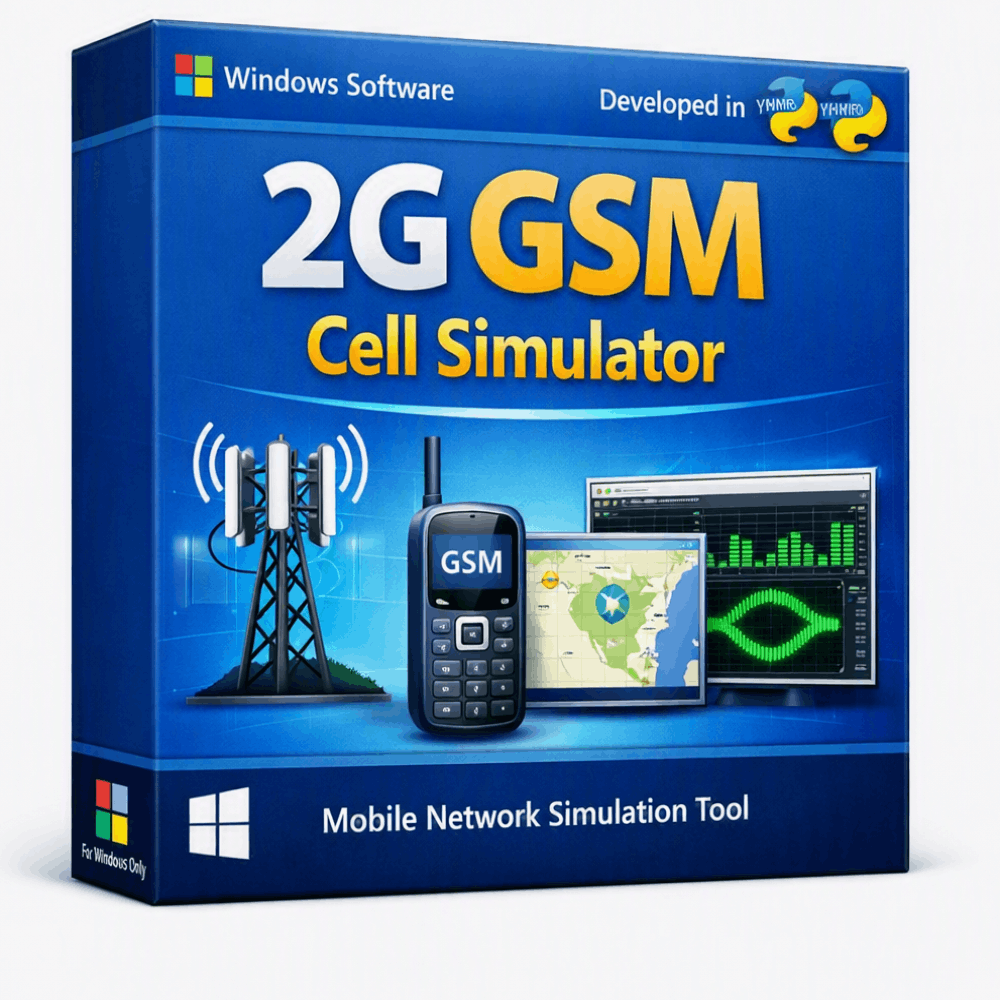
The 2G GSM Cell Simulator is a Python-based software project designed to simulate fundamental GSM cellular-network concepts. It provides a practical environment for understanding mobile stations, GSM cells, base stations, cellular coverage, mobility, communication channels, and basic network behavior. The project includes Python source code that can be studied, customized, and extended for academic projects, demonstrations, research, and learning. It is ideal for Electronics & Communication Engineering, Telecommunications, Computer Science, and related students looking to explore 2G GSM technology and cellular network simulation through a software-based implementation.
₹3,999.00 -
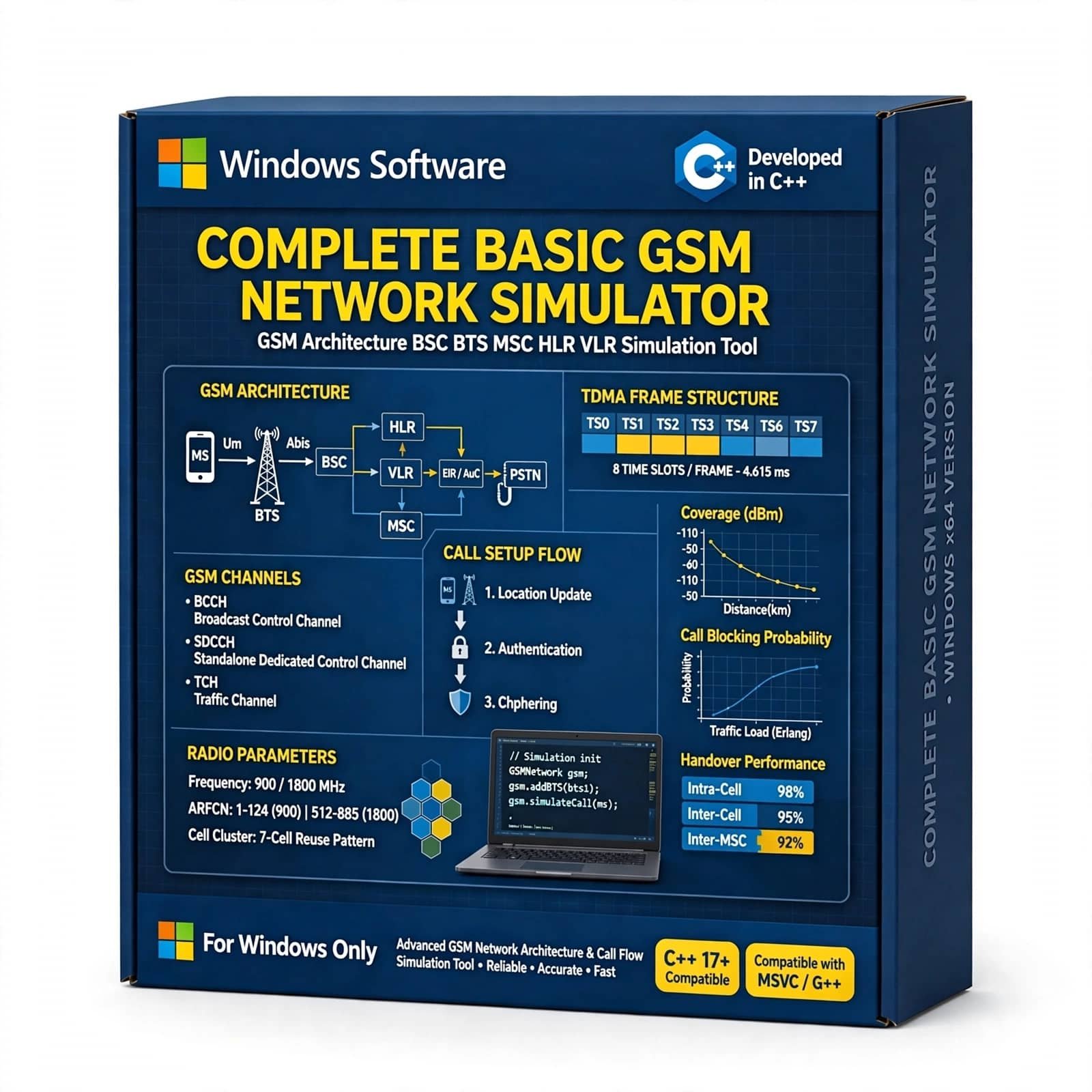
Complete Basic GSM Network with C++ is an educational and simulation-based project that demonstrates the fundamental architecture and operation of a GSM network using C++. It helps students and researchers understand GSM components, mobile communication, call and message handling, network signaling, and basic cellular network operations through a practical C++ implementation.
Original price was: ₹3,999.00.₹2,399.00Current price is: ₹2,399.00. -
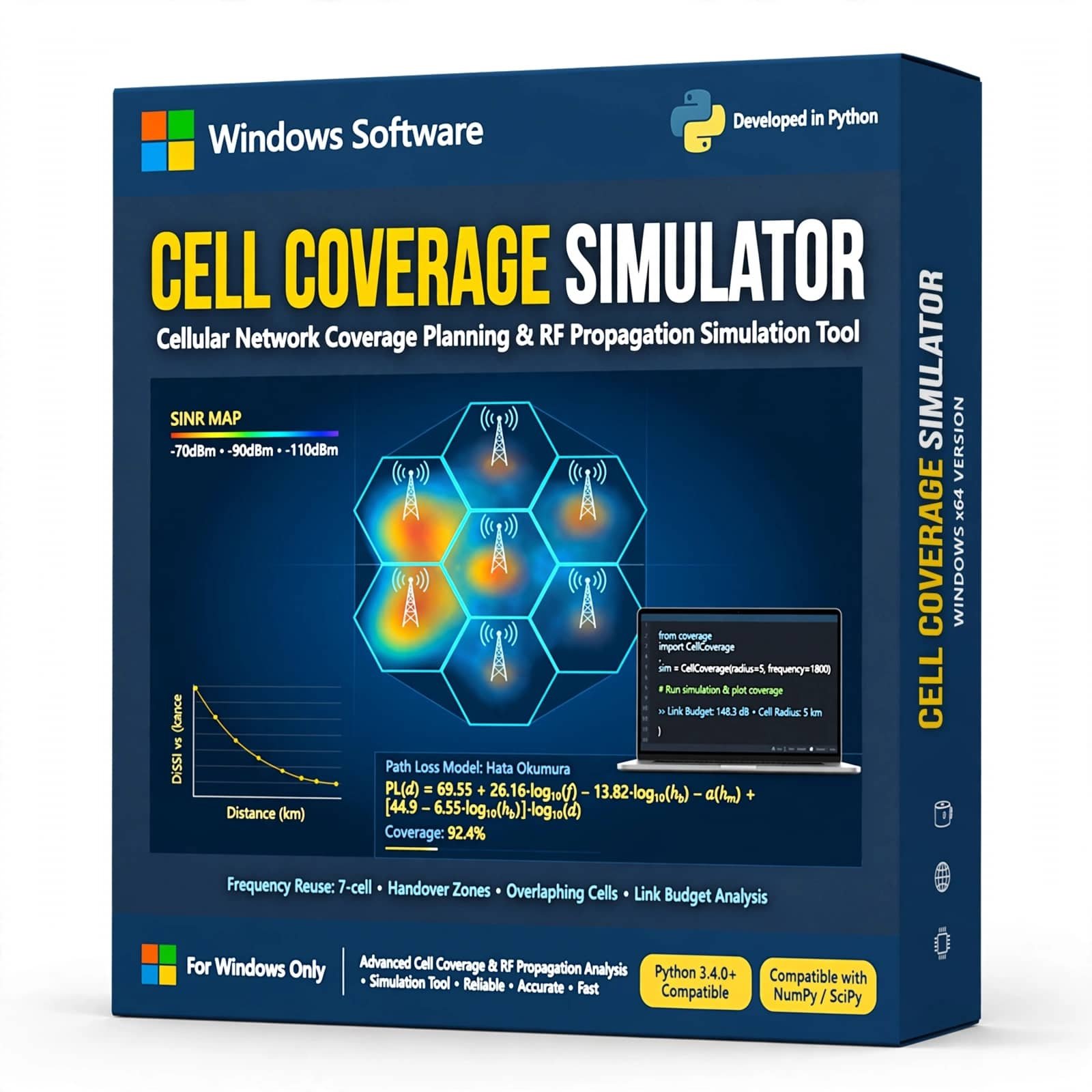
Cell Coverage Simulator is a wireless communication simulation tool designed to model and analyze cellular network coverage using Python. It helps students, researchers, and telecom professionals visualize cell coverage, signal propagation, coverage areas, and network planning concepts through practical simulation and analysis.
₹6,999.00 -
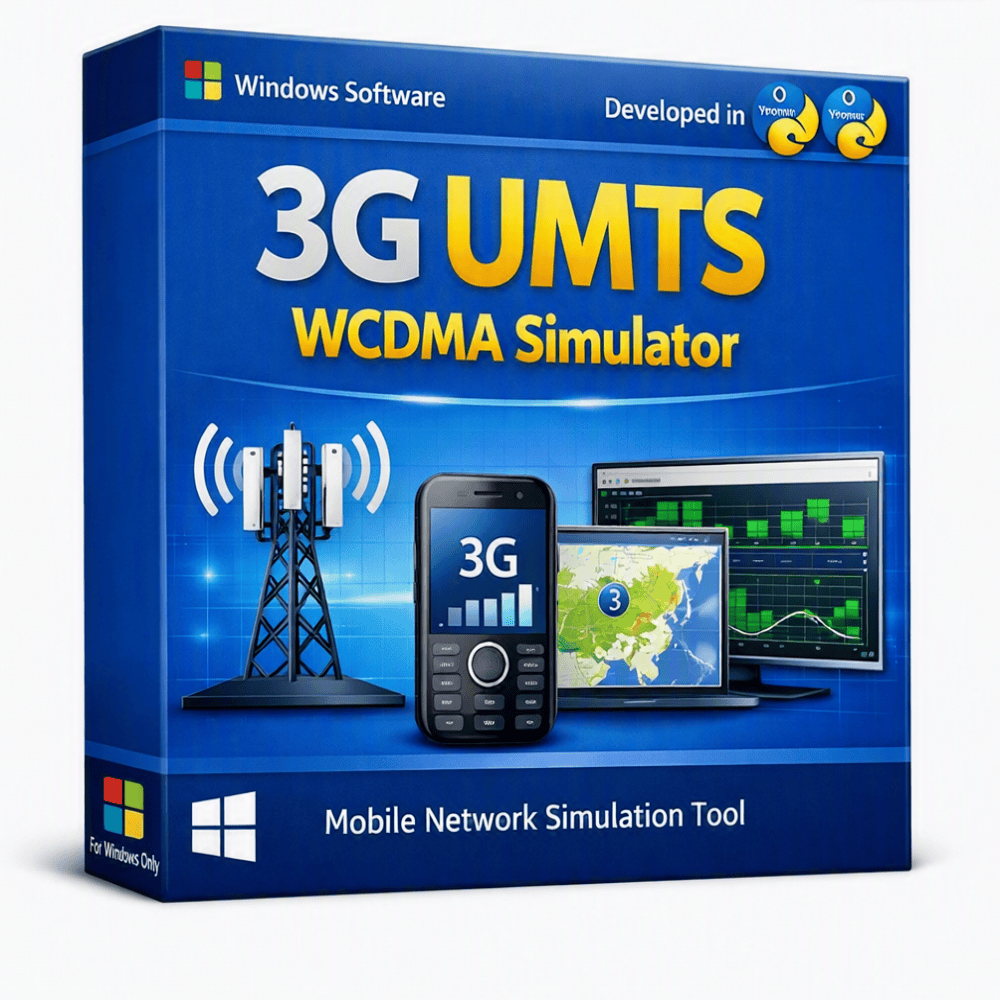
The 3G UMTS – WCDMA Simulator is a software-based simulation project designed to demonstrate the fundamental concepts of 3G Universal Mobile Telecommunications System (UMTS) and Wideband Code Division Multiple Access (WCDMA) technology. It provides a practical environment for studying cellular communication, spreading codes, signal transmission, mobile users, network connectivity, and WCDMA-based communication principles. The simulator is suitable for students, researchers, and developers working on telecommunications and wireless communication projects. It can be used for academic demonstrations, engineering projects, research, experimentation, and learning about 3G mobile communication and WCDMA network technologies.
₹3,999.00 -
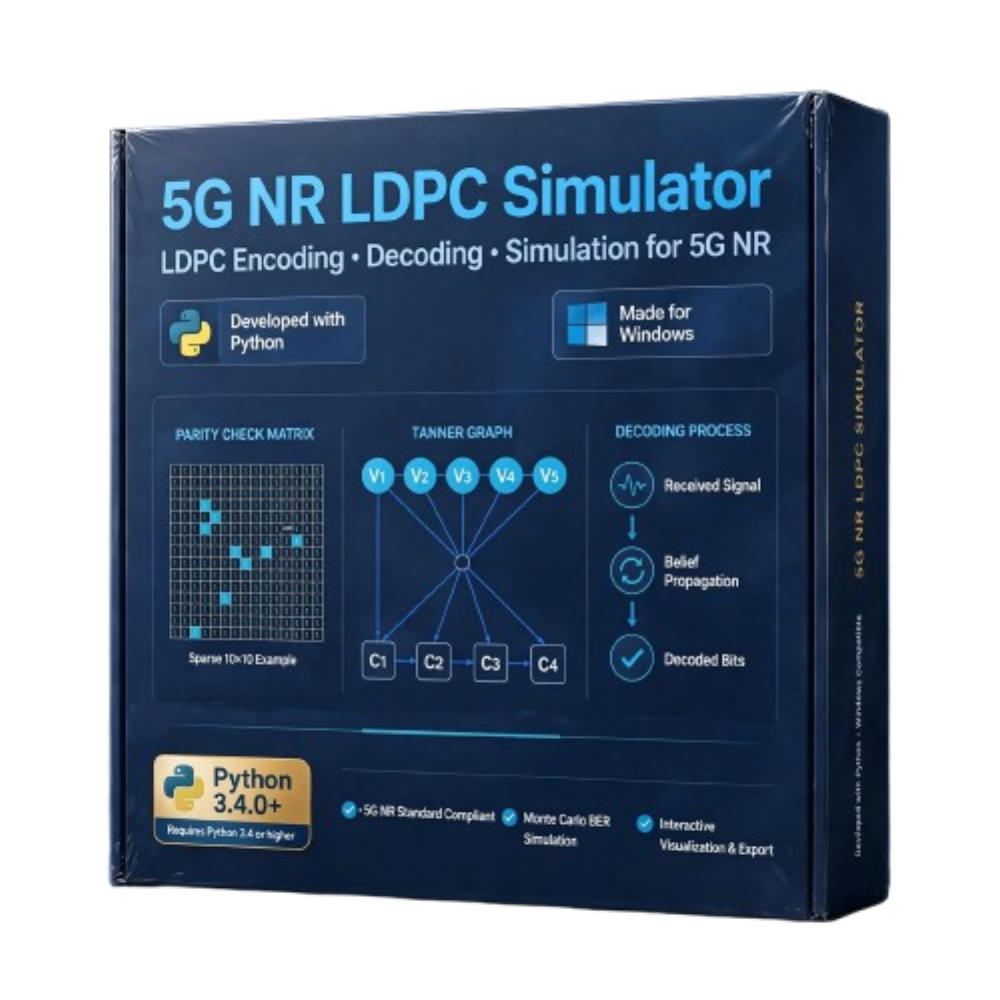
5G NR LDPC Simulator is an advanced simulation solution for modeling and analyzing Low-Density Parity-Check (LDPC) channel coding used in 5G New Radio systems. It enables users to simulate LDPC encoding and decoding, evaluate error correction performance, and analyze BER, BLER, SNR, coding rate, decoding iterations, throughput, and convergence under configurable channel conditions. The simulator is ideal for 5G NR channel coding research, algorithm development, academic projects, decoder performance analysis, and next-generation wireless communication system optimization.
Original price was: ₹129,999.00.₹12,999.00Current price is: ₹12,999.00.


Reviews
There are no reviews yet.